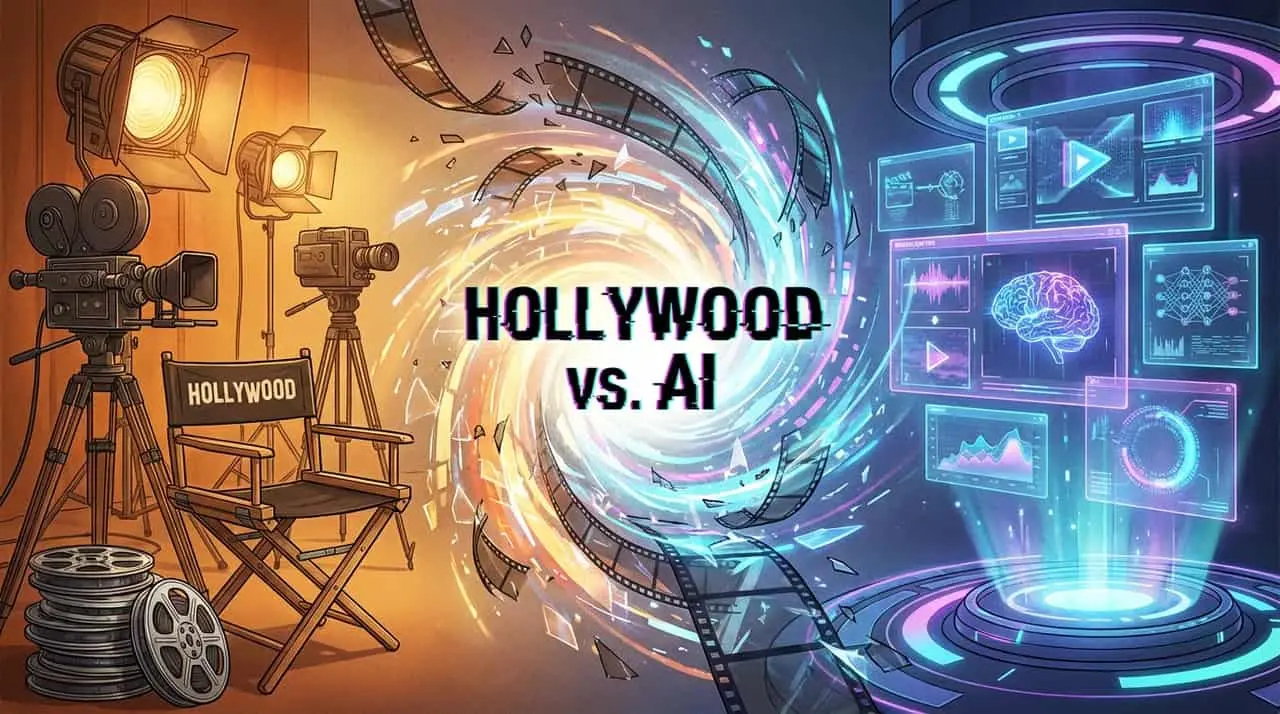
Just last year, an unknown indie filmmaker produced a stunning three-minute animated short that looked like it was ripped from a Pixar storyboard. It cost less than $100 to make, used only publicly available AI tools, and racked up two million views in a weekend. This is the new reality of AI video disruption, a technological earthquake shaking the very foundations of Hollywood. The staggering pace of progress raises a critical question: is this the final act for the studio system as we know it, or the opening scene of a new, more democratic chapter in filmmaking?
What AI Video Can Actually Do Now (That It Couldn’t Two Years Ago)
To understand the current panic in Hollywood, you have to appreciate just how far AI video has come. As recently as 2023, the technology was a novelty. It produced crude, glitchy, four-second clips that were often surreal and always inconsistent. Characters would morph unnaturally, backgrounds would shift without reason, and the results were more like a digital fever dream than a cinematic tool. It was interesting, but it certainly wasn’t a threat to the film industry.
What Changed Between 2023 and 2026
The leap from 2023 to today has been monumental, best exemplified by the recent launch of models like ByteDance's Seedance 2.0 [1]. The difference is not just incremental; it’s a complete paradigm shift in capability.
2023 AI Video:
3-4 second clips with frequent visual artifacts
Single shot only, no scene transitions
No audio generation
Characters changed appearance between frames
2026 AI Video (e.g., Seedance 2.0):
Up to 15-20 second, multi-shot sequences
Native synchronized audio and lip-sync
Character and visual style consistency across shots
2K resolution with cinematic camera control
This new generation of tools can understand complex prompts, maintain character identity across multiple scenes, and generate synchronized, high-fidelity audio, turning simple text descriptions into coherent, emotionally resonant short films.
The Hollywood Response — Fear, Lawsuits, and Lobbying

The industry’s reaction to this explosion in AI capability has been swift and severe, splitting largely into two camps: those fighting to hold back the tide through legal and political means, and those cautiously exploring how to ride the wave.
The Studios and Unions: Legal and Political Pushback
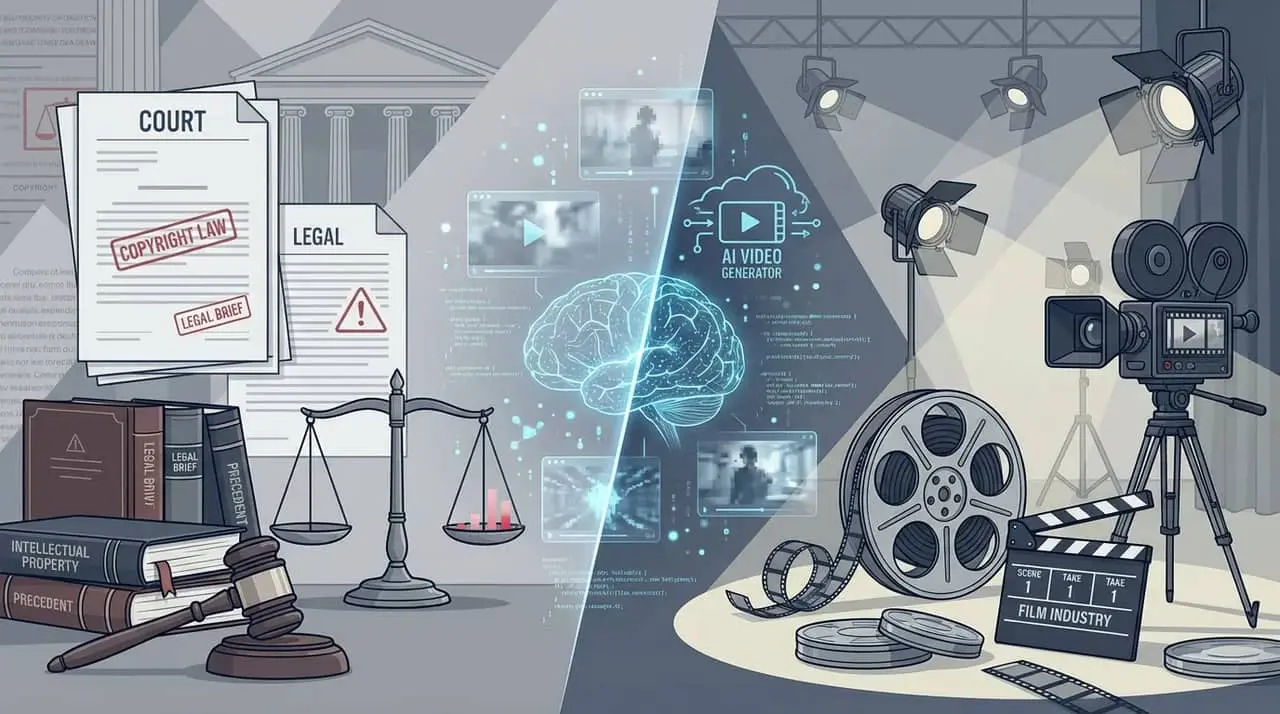
For the established powers in Hollywood, the rise of generative AI represents an existential threat to their intellectual property and labor models. Within days of Seedance 2.0’s viral debut, the industry’s legal machinery roared to life. The response has been a coordinated barrage of legal threats and public condemnations aimed at AI developers.
Disney issued a cease-and-desist letter, citing the unauthorized use of characters from its Marvel, Star Wars, and classic animated franchises [2].
The Motion Picture Association (MPA), representing the major studios, sent a formal letter to ByteDance demanding confirmation of steps taken to prevent copyright infringement by February 27th [3].
SAG-AFTRA, the actors' union, condemned the "blatant infringement" and unauthorized use of its members’ voices and likenesses, calling it unacceptable [2].
Paramount joined the fray, citing specific infringements of its IP, including iconic properties like Star Trek and South Park [2].
| Stakeholder | Main Concern | Response So Far |
| Major Studios (MPA) | Mass-scale copyright infringement | Cease-and-desist letters, public condemnation |
| Actors (SAG-AFTRA) | Unauthorized use of likeness/voice | Public condemnation, demands for protective regulation |
| Writers (WGA) | Devaluation of creative writing | Contractual protections against AI-written source material |
The Other Side: Directors and Producers Who See Opportunity
While the institutions fight to protect the old guard, a growing number of creators and producers within the system see not a threat, but an unprecedented opportunity. They recognize that AI tools could dramatically lower the cost of pre-visualization, special effects, and even post-production, allowing for more creative risks and ambitious storytelling on smaller budgets. As one recent McKinsey report noted, many studios are eager to tout the potential benefits of AI to investors, even as they fear antagonizing the powerful unions [4]. This internal conflict highlights the complex reality: AI is both a disruptive force and a powerful new creative tool.
The Jobs Question — What's Actually at Risk?
Beyond copyright, the most pressing concern is the impact on jobs. The fear of mass unemployment is palpable, and not without reason. Los Angeles County has already seen a staggering loss of 41,000 film and TV jobs in the past three years, a decline exacerbated by strikes but accelerated by technology [5]. While it’s tempting to frame this as a simple narrative of replacement, the reality is more nuanced. Some roles are indeed becoming automated, while new ones are emerging.
| Jobs Most at Risk | Jobs Likely Safe (For Now) |
|---|---|
| Entry-Level VFX & Compositing | Directors & Cinematographers |
| Voice Acting (Dubbing & Narration) | Lead Actors & On-Screen Talent |
| Storyboarding & Concept Art | Producers & Showrunners |
| Set & Prop Modeling (Basic) | Editors (Story-focused) |
To make this more concrete, consider a few specific examples:
VFX entry-level compositing work: Tasks like rotoscoping and background plate integration, which once required teams of junior artists, are now being automated by AI tools available to individual creators.
Voice acting for dubbing: AI-powered lip-sync technology can now translate and dub dialogue into multiple languages with startling accuracy, directly reducing the demand for multilingual voice actors for international distribution.
Who Actually Benefits — The Creator Economy's Big Moment
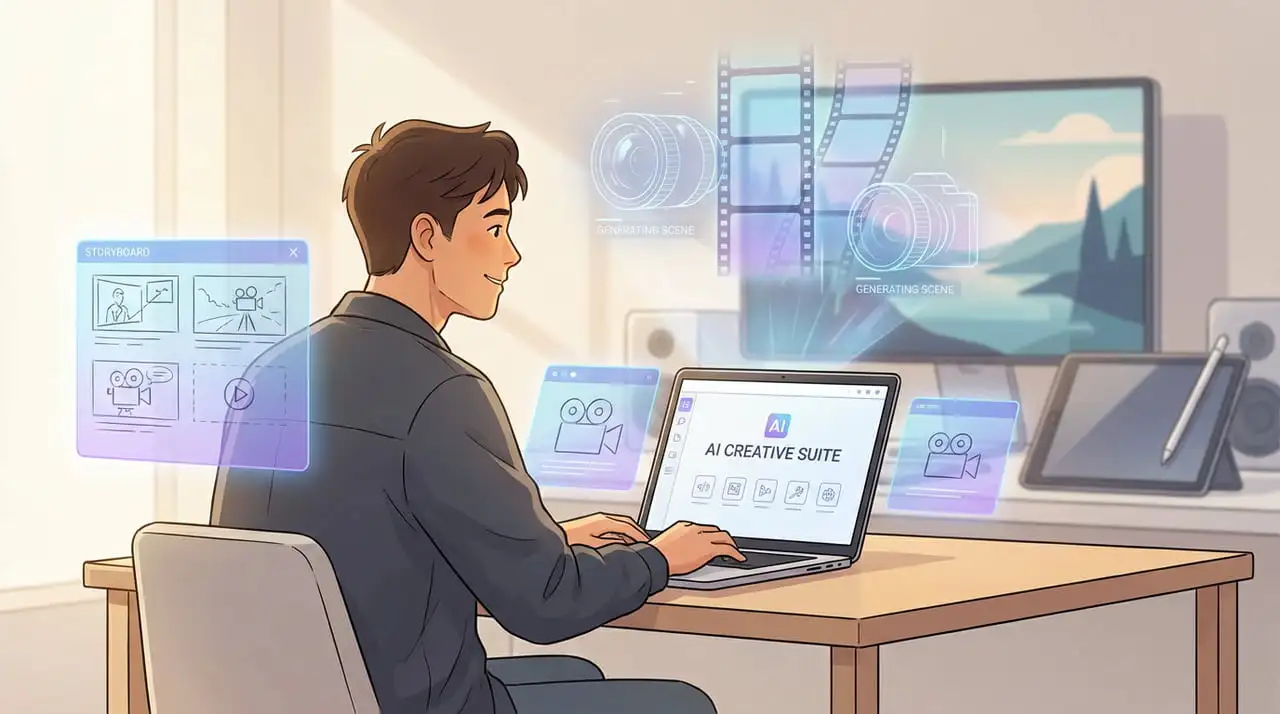
While Hollywood grapples with disruption, a new class of creator is seizing the opportunity. For decades, filmmaking was gated by immense costs for equipment, crews, and distribution. AI obliterates those barriers. Suddenly, the power to create high-quality video content is no longer the exclusive domain of studios. It belongs to everyone.
A two-person marketing team can now produce a weekly brand video series without ever hiring an agency or stepping on a set.
An indie filmmaker can generate a professional-grade proof-of-concept for their feature film for less than the cost of a new laptop.
A small e-commerce brand can create dozens of unique product demo videos every single day, tailored to different audiences.
Platforms like <u>Pexo AI</u> are built specifically for this new wave of creators. Instead of requiring users to navigate complex prompt systems and technical workflows, these AI agents handle the entire video creation process. You simply describe your idea in plain language, and the AI handles the scripting, storyboarding, asset generation, and final edit. It’s a fundamental shift from tool to collaborator.
"The barrier to filmmaking used to be money. Now, it’s mostly imagination."
Is a Human-AI Hybrid Model the Future?
The doomsday narrative of AI completely replacing human creativity is compelling, but it’s also unlikely. The more probable future is a hybrid model where human creativity guides powerful AI tools. The artists who thrive in this new ecosystem won’t be the ones who can perfectly execute a technical task, but those who have a unique vision and can effectively use AI to bring it to life. This isn’t the end of the artist; it’s the evolution of the artist.
What the New Creative Class Actually Looks Like
This emerging creative class consists of small, agile teams—often just one or two people—who leverage a suite of AI tools for production while focusing their own energy on the core elements of story, strategy, and emotional impact. They are writer-director-editors who can now also be their own VFX house and sound design team. This mirrors the restructured industry model predicted by analysts, where creative boundaries are redrawn and value is redistributed away from large, slow-moving institutions and toward individual visionaries [4]. The future of film isn't a factory of robots; it's a global community of empowered storytellers.
Summary
The AI video disruption is forcing a painful but necessary reckoning in the film industry. While studios and unions fight to preserve the status quo against the tide of technological change, a new generation of independent creators is harnessing AI to democratize filmmaking. The AI video film industry of 2026 is defined by this tension—the decline of the old guard and the rise of the new. For independent creators, the question isn’t whether AI will change filmmaking—it already has.
FAQ
Will AI replace filmmakers? AI is unlikely to replace the core creative roles of filmmakers like directors or writers. Instead, it is becoming a powerful tool that automates technical tasks, allowing creators to focus on storytelling and vision. The future is likely a human-AI hybrid model, augmenting rather than replacing human creativity.
How is AI changing the film industry in 2026? In 2026, AI is dramatically lowering production costs, automating complex VFX and post-production tasks, and enabling individuals and small teams to create high-quality video content that was previously only possible for major studios. This is causing significant disruption to traditional job roles and business models.
Is AI-generated video good enough for professional use? Yes. As of 2026, AI video models like Seedance 2.0 can produce multi-shot sequences up to 20 seconds long in 2K resolution with character consistency and synchronized audio. While not yet capable of producing a full feature film autonomously, the output is more than sufficient for professional short films, marketing content, and pre-visualization.
References
[1] ByteDance. (2026, February 12). Official Launch of Seedance 2.0. ByteDance Seed. Retrieved from <u>https://seed.bytedance.com/en/blog/official-launch-of-seedance-2-0</u> [2] Ramachandran, N. (2026, February 16). ByteDance Vows Safeguards for Seedance 2.0 After Disney Legal Threat. Variety. Retrieved from <u>https://variety.com/2026/film/news/bytedance-safeguards-seedance-disney-legal-threat-ip-violations-1236664395/</u> [3] Kilkenny, K. (2026, February 20). MPA Sends Cease and Desist to ByteDance Over Seedance 2.0. The Hollywood Reporter. Retrieved from <u>https://www.hollywoodreporter.com/business/business-news/mpa-cease-and-desist-bytedance-seedance-2-0-1236510957/</u> [4] Brodherson, M., Wrubel, A., & Vickers, J. (2025, November 19). How AI could reinvent film and TV production. McKinsey & Company. Retrieved from <u>https://www.mckinsey.com/capabilities/tech-and-ai/our-insights/tech-forward/how-ai-could-reinvent-film-and-tv-production</u> [5] The Ankler. (2025, November 5). Fade to Black: Hollywood's AI-Era Jobs Collapse Is Starting. The Ankler. Retrieved from <u>https://theankler.com/p/fade-to-black-hollywoods-ai-era-jobs</u>