Imagine you just created the perfect video with Seedance 2.0, only to receive a sudden copyright takedown notice. This scenario is becoming a real possibility. The mounting legal challenges surrounding the Seedance copyright issue highlight a growing AI video copyright risk in 2026 that creators can no longer ignore. This article breaks down the legal disputes between Hollywood and ByteDance, explains who is most at risk, and explores safer alternatives for creating compliant AI video content without the legal headache.
What Actually Happened With Seedance 2.0 and Copyright Law
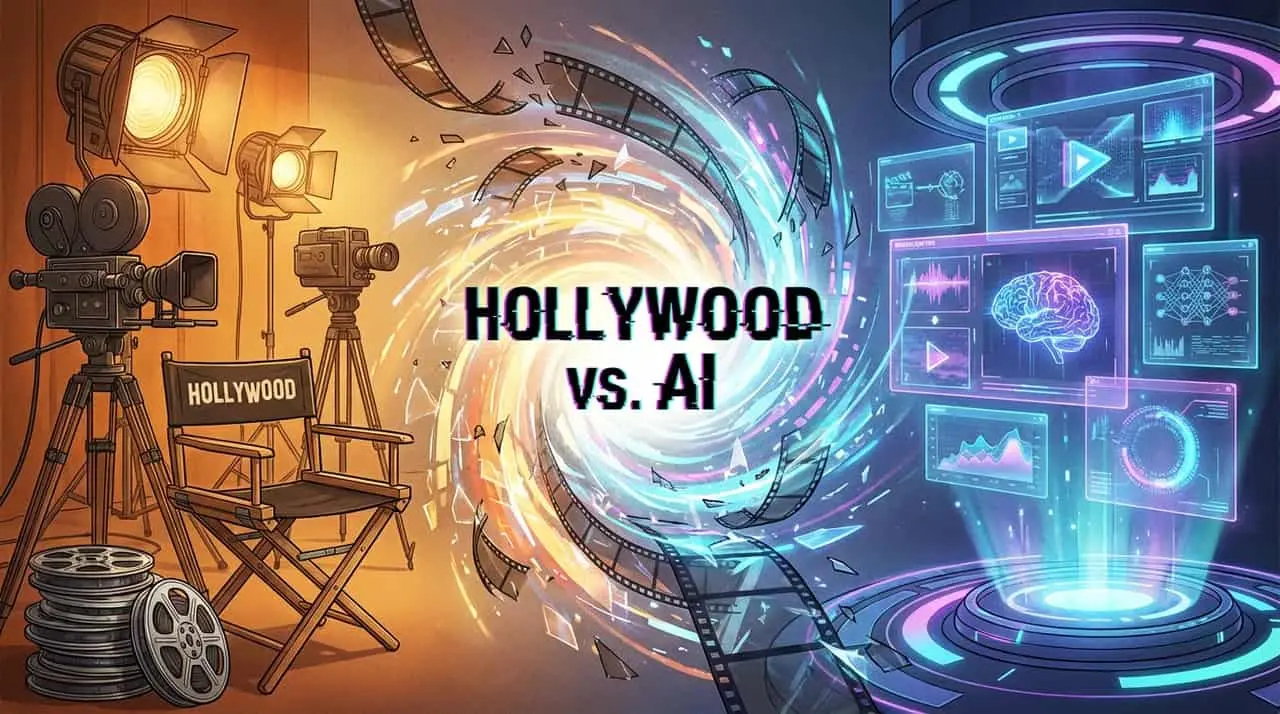
The release of ByteDance's Seedance 2.0 AI video generator in February 2026 triggered an immediate and forceful response from Hollywood. Within days of its launch, major studios and industry unions mobilized to challenge the tool, citing widespread and blatant copyright infringement that they argued posed an existential threat to the creative industries. The conflict escalated quickly, moving from public condemnation to formal legal threats.
The Studios Strike Back
The entertainment industry's reaction was unified and swift. Led by the Motion Picture Association (MPA), which represents seven of the largest Hollywood studios, the industry launched a multi-pronged offensive. The core of their argument was that Seedance 2.0 was trained on their copyrighted material without permission and that the tool was actively being used to generate content that infringed on their most valuable intellectual property. The situation was described by Disney as a "virtual smash-and-grab" of its IP. Here’s how the key players responded:
Disney: Issued a cease-and-desist letter to ByteDance, citing the unauthorized use of iconic characters from its Marvel, Star Wars, and classic Disney franchises. The company accused ByteDance of hijacking its characters by reproducing and creating derivative works.
MPA: On behalf of its member studios, the MPA sent a formal cease-and-desist letter demanding that ByteDance immediately stop all infringing activity. The letter highlighted that the infringement was systemic, not accidental, calling it "a feature, not a bug." [1]
Paramount: Following the MPA's lead, Paramount sent its own cease-and-desist letter, pointing to infringing content featuring characters and franchises like Star Trek, South Park, and Dora the Explorer.
SAG-AFTRA: The actors' union condemned the unauthorized use of its members' voices and likenesses, standing in solidarity with the studios to denounce the "blatant infringement" enabled by the AI model.
Sony: Joining the chorus of accusers, Sony Pictures accused ByteDance of "willful" infringement, specifically citing unauthorized content based on its popular Breaking Bad and Spider-Verse properties.
ByteDance's Response—and Why It Wasn't Enough
Faced with a tidal wave of legal pressure, ByteDance issued a brief, two-sentence statement. The company affirmed its respect for intellectual property rights and pledged to strengthen the platform's existing safeguards. However, for the aggrieved studios and unions, this general assurance was wholly inadequate. Industry leaders, including the MPA's General Counsel, Karyn Temple, publicly stated that they needed "far more than general statements" and demanded concrete, verifiable actions to curb the infringement. The response was seen as a boilerplate dismissal of a serious legal and ethical problem, doing little to quell the industry's outrage.
| Accuser | Main Complaint | Current Status |
|---|---|---|
| Disney | Unauthorized use of Marvel, Star Wars, and Disney characters | Cease-and-desist letter sent |
| Paramount | Infringement of Star Trek, South Park, and other franchises | Cease-and-desist letter sent |
| MPA | Systemic, large-scale infringement on behalf of 7 studios | Cease-and-desist letter sent |
| SAG-AFTRA | Unauthorized use of actors' voices and likenesses | Public condemnation issued |
| Sony | "Willful" infringement of properties like Breaking Bad | Public accusation made |
Why Creators Are Caught in the Middle
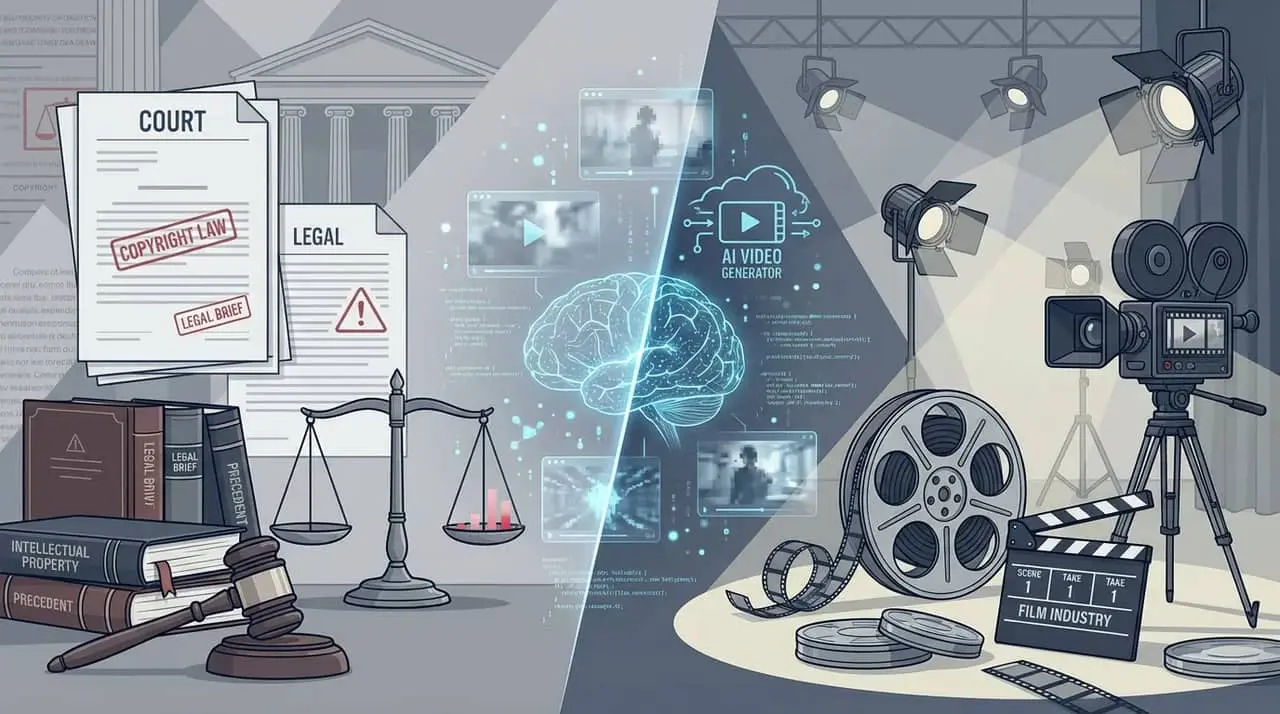
The legal battle between Hollywood and ByteDance may seem like a distant war between corporate giants, but individual creators are the ones positioned precariously on the front lines. When an AI company like ByteDance is accused of copyright infringement, the legal theory often centers on how the AI model was trained. Think of it like a musician who learns to play guitar by listening to thousands of copyrighted songs. If they then create a new song that is substantially similar to one they heard, they could be liable for infringement. The studios argue ByteDance trained Seedance 2.0 on their films without a license, making the tool itself a product of infringement. However, the platform's liability doesn't shield the end user. When you, the creator, generate a video of Spider-Man using the tool, you are creating a new, potentially infringing work. This means you could be held directly liable for the output you generate and publish, regardless of the legal status of the tool itself. You are caught in a legal gray area, where both the tool's creator and the tool's user face distinct but overlapping risks.
Which Types of Content Put You at Legal Risk
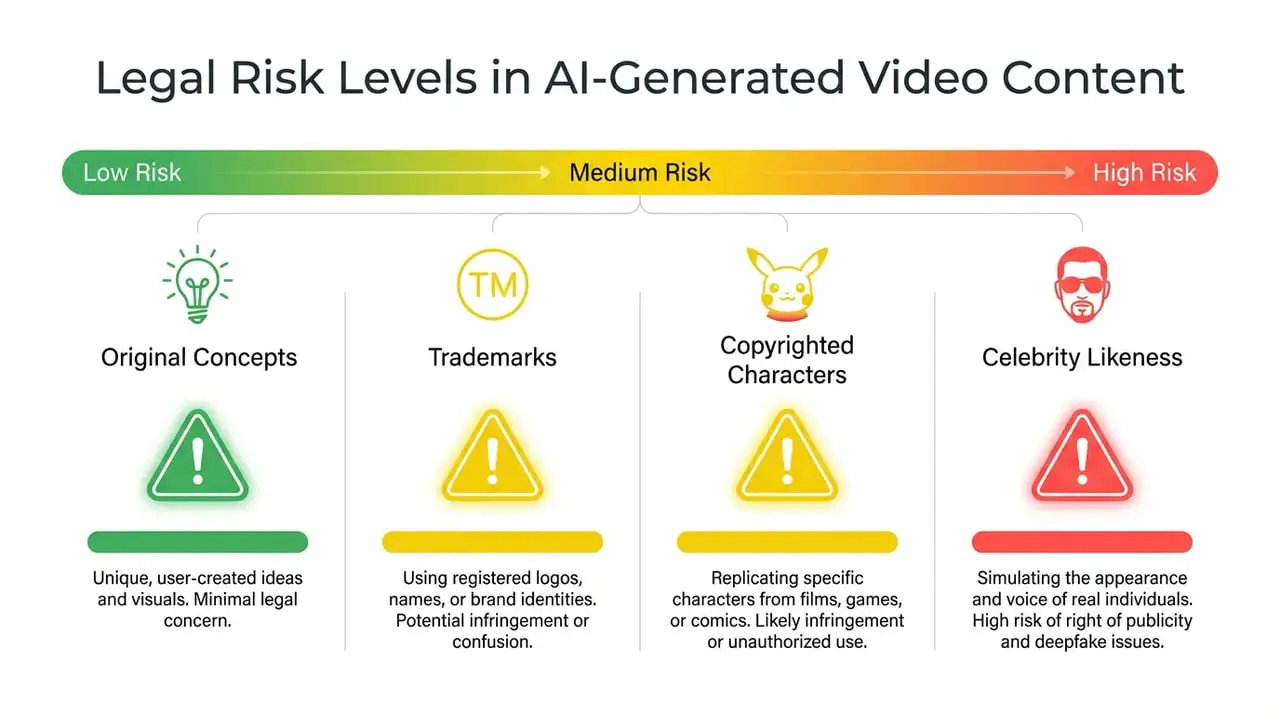
Understanding the specific types of content that carry legal risk is the first step toward protecting your work. While the technology is new, the underlying copyright principles are well-established. Generating content that falls into any of the following categories significantly increases your exposure to potential legal action, from takedown notices to lawsuits. Creators should be particularly cautious when their prompts involve intellectual property that belongs to others.
Celebrity Likenesses and Voice Cloning: Creating videos that feature the likeness or voice of a real person, especially a celebrity, without their consent is a major legal risk. This can violate their "right of publicity," which is the right to control the commercial use of their identity.
Copyrighted Fictional Characters: Generating content that includes characters from well-known franchises like Marvel, Disney, or popular anime is a direct infringement of copyright. These characters are protected intellectual property.
Branded Logos and Trademarked Visual Identities: Incorporating company logos, brand names, or other trademarked symbols into your AI-generated videos can lead to trademark infringement claims.
Copyrighted Music as Audio Reference: Using a popular song as an audio reference to guide the AI can result in a final video that is considered a derivative work, infringing on the music's copyright.
Scenes That Directly Replicate a Copyrighted Film: Prompting an AI to create a scene that is a direct visual copy of a specific shot from a film or TV show is a clear case of infringement.
Real People in Fabricated Scenarios: Placing real individuals, even non-celebrities, into fabricated or defamatory situations can lead to lawsuits for defamation or false light.
To help you navigate these risks, use this safety checklist to evaluate your projects before you publish.
| Risk Type | Risk Level | What to Avoid |
| Celebrity Likenesses | High | Generating videos of famous actors, politicians, or public figures without their explicit consent. |
| Copyrighted Characters | High | Using prompts that name specific characters from movies, TV shows, or video games (e.g., "a video of Batman"). |
| Trademarked Logos | High | Including brand logos or symbols in your video, which can lead to trademark infringement claims. |
| Replicating Film Styles | Medium | Attempting to perfectly mimic the distinct visual style of a director or a specific film (e.g., "in the style of Wes Anderson"). |
| Original Concepts | Low | Generating content based on your own original ideas, characters, and scripts. |
How to Keep Creating Without the Legal Headache
The controversy surrounding Seedance 2.0 is a critical reminder that not all AI tools are created equal. While some platforms operate in a legal gray area, a new generation of AI video tools is being built with compliance and creator safety at its core. For creators who want to leverage the power of AI without risking legal trouble, the key is to choose platforms that prioritize ethical sourcing and give you creative control without relying on infringing content. This approach allows you to focus on your vision, not on legal worries.
What "Compliant AI Video" Actually Looks Like
Creating compliant AI video content is not about limiting your creativity; it's about channeling it through responsible workflows. By adopting a few best practices, you can significantly reduce your legal risk and build a sustainable creative process. The goal is to generate content that is uniquely yours, powered by AI but guided by your original intent. Here are a few practical recommendations for staying on the right side of copyright law:
Work with Original Assets: Instead of uploading third-party reference material, brief the AI using your own original brand assets, scripts, and creative concepts. Describe your vision in plain language and let the AI bring it to life based on your instructions, not someone else's IP.
Obtain Consent: Never upload reference videos or images of real people unless you have their documented consent to do so. This is especially critical for commercial projects, where right of publicity laws are most stringent.
Choose Your Platform Wisely: Use platforms that generate video from your text-based intent rather than from vast, scraped libraries of intellectual property. Tools like <u>Pexo AI</u> are designed to translate natural language conversation into professional video, which helps ensure that the final output is based on your unique creative direction.
Test Before Publishing: When in doubt, generate a test video and keep it private or unlisted. This allows you to review the content for any potential infringement issues before you publish it commercially and expose yourself to legal risk.
In addition to compliant AI tools, creators can also turn to licensed stock footage platforms. These services provide a vast library of high-quality video clips that are fully licensed for commercial use, offering a completely risk-free alternative for sourcing visual content.
Summary
The Seedance 2.0 copyright controversy has exposed the significant legal dangers creators face when using certain AI video tools. The core issue stems from AI models being trained on copyrighted material without permission, which can lead to direct liability for users who generate and publish infringing content. This AI video copyright risk 2026 underscores the need for greater awareness and caution. By understanding the legal landscape and choosing compliant tools, creators can harness the power of AI to produce innovative work while protecting themselves from costly legal battles and ensuring their creative future is secure.
Frequently Asked Questions (FAQ)
Is it legal to use Seedance 2.0 for commercial content? Using Seedance 2.0 for commercial content carries a high legal risk. The platform has been accused of widespread copyright infringement, and generating content with it, especially for commercial purposes, could expose you to lawsuits from intellectual property holders.
Can I get sued for using AI-generated celebrity likenesses? Yes, you can be sued. Using AI to generate the likeness of a celebrity without their permission violates their "right of publicity." This is a serious legal issue, and the risk of a lawsuit over the Seedance 2.0 copyright issue is significant, particularly for commercial use.
References
[1] Variety. "Motion Picture Association Pushes ByteDance to Curb Seedance 2.0 AI Infringement." <u>https://variety.com/2026/film/news/motion-picture-association-bytedance-seedance-letter-1236668577/</u> [2] TechCrunch. "Hollywood isn’t happy about the new Seedance 2.0 video generator." <u>https://techcrunch.com/2026/02/15/hollywood-isnt-happy-about-the-new-seedance-2-0-video-generator/</u>