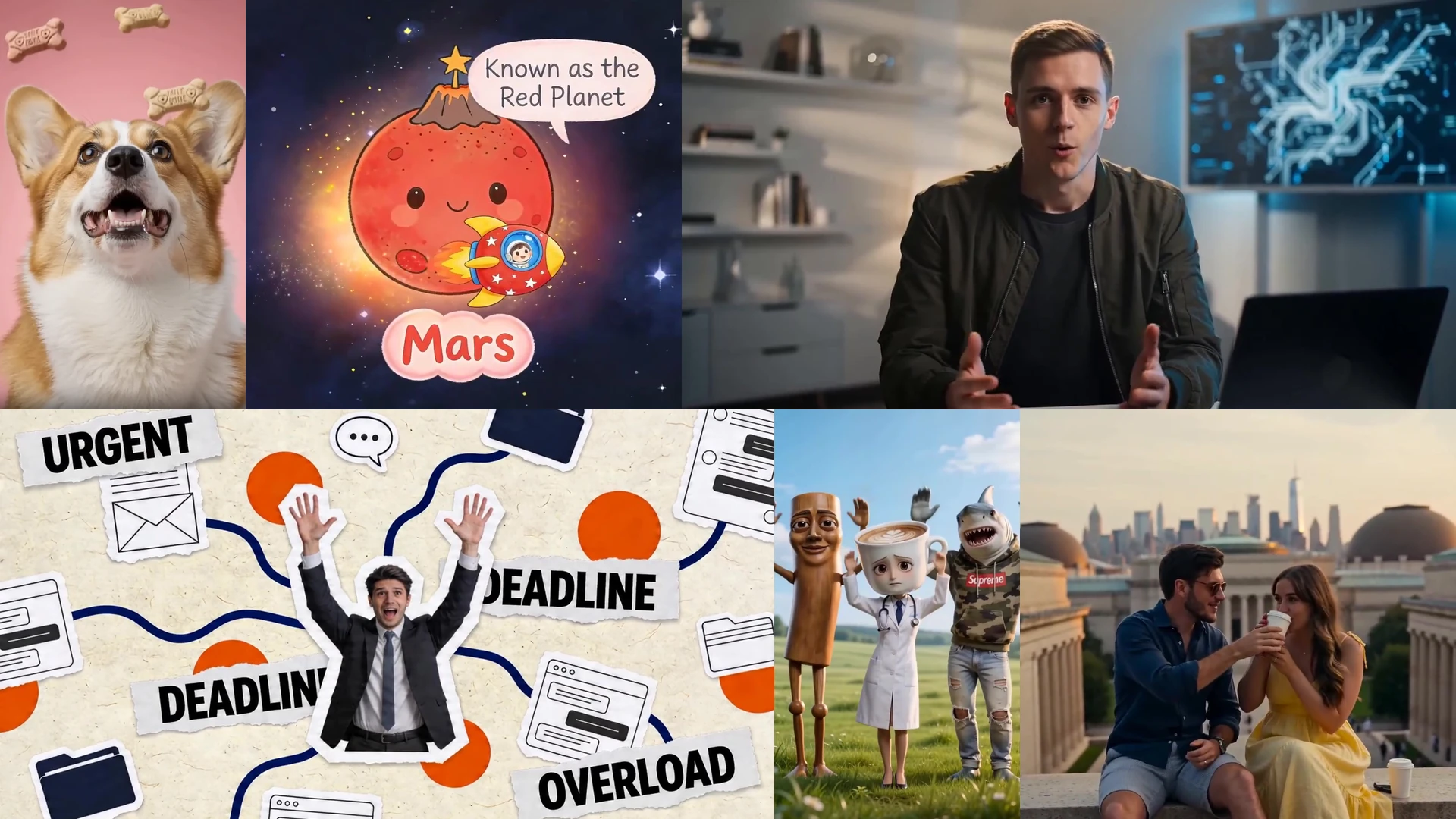
 ChatGPT
 Perplexity
 Claude
 Gemini
 Grok
Grok


If you are choosing between Seedance 2.0 and Sora 2 today, the short answer is clear: Seedance 2.0 is the better pick for almost everyone, with higher resolution, faster generation, lower price, stronger input control, and synchronized audio. Sora 2 still wins on one thing, raw physical realism, but there is a catch that decides the whole comparison: OpenAI discontinued the Sora app on April 26, 2026, and the Sora 2 API is scheduled to shut down on September 24, 2026. So this is less "which is better" and more "which one you can actually build on." Here is the full seven-round breakdown, with a side-by-side table first.
This comparison reflects model capabilities and pricing as of June 2026.
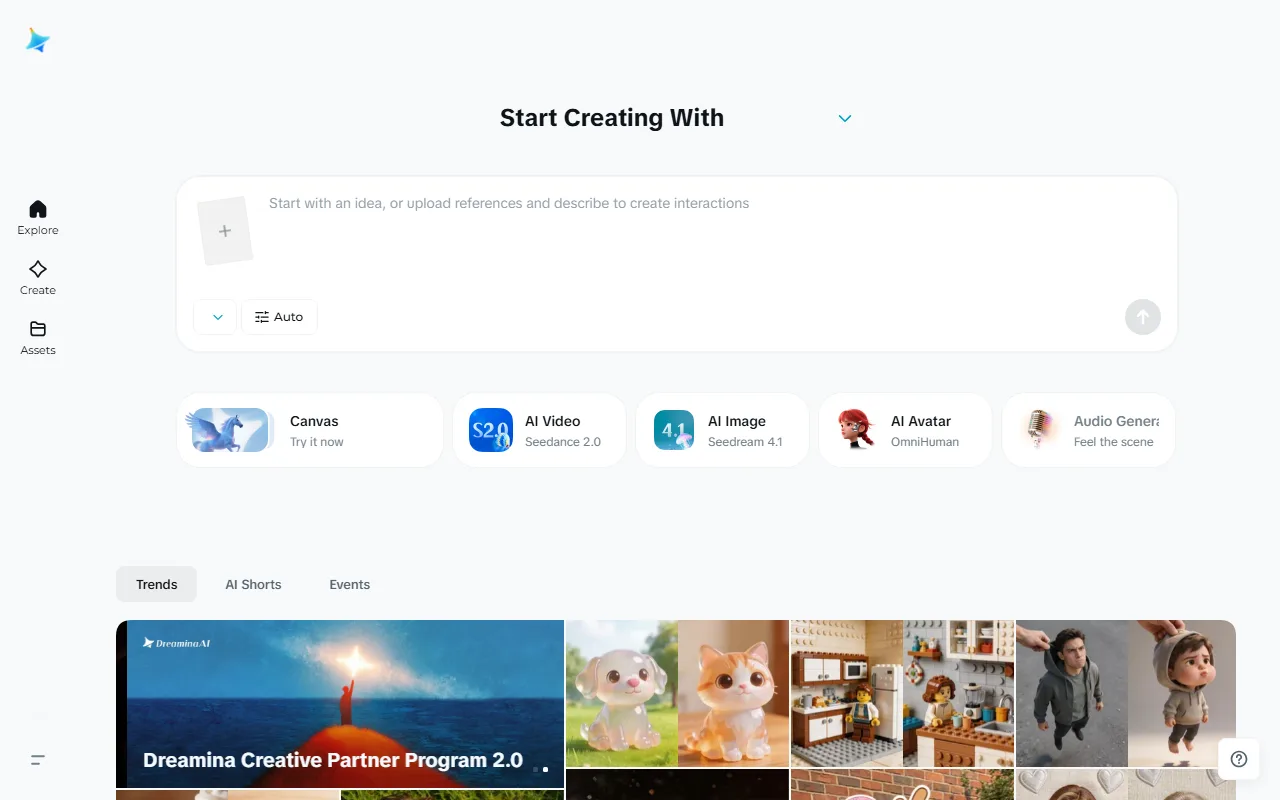 Seedance 2.0, ByteDance's video model, is live in creator tools like Dreamina and across several APIs.
Seedance 2.0 vs Sora 2 at a Glance
Here is the side-by-side. The Availability row is the one most "vs" articles miss, and it matters most.
| Factor | Seedance 2.0 | Sora 2 |
|---|---|---|
| Maker | ByteDance (SEED Lab) | OpenAI |
| Max resolution | Native 2K (also 1080p / 720p) | 720p (Sora 2 Pro: true 1080p) |
| Max clip length | Up to 15s | 12s (Sora 2 Pro: up to 25s) |
| Inputs | Text, image, audio (up to 9 images / 3 clips / 3 audio) | Text, image |
| Audio | Synchronized SFX matched to on-screen events | Generated audio (less event-synced) |
| Best at | Resolution, speed, control | Physics and world simulation |
| Price | ~$0.10/sec (cheaper fast tier) | $0.10/sec (Pro: $0.30–$0.70/sec) |
| Availability | Live (CapCut, Dreamina, APIs) | App discontinued; API only, sunsets Sep 24, 2026 |
The table tells most of the story. The rounds below explain where each model genuinely wins.
How We Compared
We compared the two models on the factors that decide a real production choice: output realism, resolution and duration, input control, audio, speed, price, and availability (including where each model can actually be used). The capability and pricing figures come from each model's official pages (Seedance 2.0, Sora 2), plus independent benchmarks (where Seedance 2.0 currently tops the public text-to-video and image-to-video Elo leaderboards, ahead of Kling 3.0, Veo 3, and Runway Gen-4.5), and press coverage of each launch, current as of June 2026.
One thing shaped the whole comparison and is stated plainly throughout: Sora 2's consumer app was discontinued on April 26, 2026, and access is now API-only with a scheduled sunset of September 24, 2026. We treat Sora 2 as a capable but winding-down option, not an evergreen flagship, because that is the reality a buyer faces today.
The 7 Rounds
Round 1: Output Realism and Physics (Winner: Sora 2)
This is the round Sora 2 wins, and wins clearly. OpenAI trained Sora 2 to model the physics behind a scene, not just the pixels: ask for a glass shattering on the floor and it reasons about the shatter pattern, liquid spread, and reflections with rare consistency. Seedance 2.0 produces excellent, sharp output, and actually outranks Sora 2 on the overall Elo leaderboards, but on this one axis, complex real-world physics and "world simulation," independent head-to-head reviews still give Sora 2 the edge. If photoreal physical accuracy is the single most important thing to you, Sora 2 leads here.
Round 2: Resolution and Duration (Tie)
This one is an honest tie, and which side wins depends on what you need. On resolution, Seedance 2.0 wins decisively: it outputs at a higher native resolution (2K), while Sora 2 caps at 720p and even Sora 2 Pro tops out at true 1080p. On maximum single-clip length, Sora 2 Pro wins: it can generate up to 25 seconds in one pass, versus Seedance 2.0's 15 seconds. So: sharper image goes to Seedance, longer single shot goes to Sora 2 Pro.
Round 3: Input Control (Winner: Seedance 2.0)
Control is where Seedance 2.0 pulls ahead. Its @ Reference System lets you bind uploaded assets to specific roles in a prompt, and a single generation can take up to 9 reference images, 3 video clips, and 3 audio files. That makes it far easier to hold a character, product, or style consistent across a shot. Sora 2 accepts text and image input but offers nothing as granular for multi-asset referencing. For creators who need controllable, on-brand output, Seedance is the stronger tool.
Round 4: Audio (Winner: Seedance 2.0)
Both models generate audio, but they are not equal. Seedance 2.0 produces synchronized sound effects that match on-screen events: footsteps, impacts, ambient noise, and environmental detail tied to the action. Sora 2 generates audio too, but Seedance's event-synced approach lands closer to a finished soundscape with less cleanup. For anyone who wants usable sound straight out of the model, Seedance wins this round.
Round 5: Speed (Winner: Seedance 2.0)
Generation speed favors Seedance 2.0, helped by ByteDance's Volcengine infrastructure and a "fast" tier. For iterative work, testing several variations of a shot, or batch production, that speed gap compounds across a project. Sora 2 is not slow, but it does not match Seedance's throughput, and the difference is most visible when you are generating many clips rather than one hero shot. Seedance takes this round on raw iteration speed.
Round 6: Price (Winner: Seedance 2.0)
On cost, Seedance 2.0 is the better value at high quality. It runs around $0.10 per second on its standard tier, with a cheaper fast tier, while outputting up to 2K. Sora 2's base tier is also about $0.10 per second but caps at 720p; to reach true 1080p you need Sora 2 Pro at $0.30 to $0.70 per second, several times more expensive. For high-resolution output per dollar, Seedance wins comfortably.
Round 7: Availability and Ecosystem (Winner: Seedance 2.0)
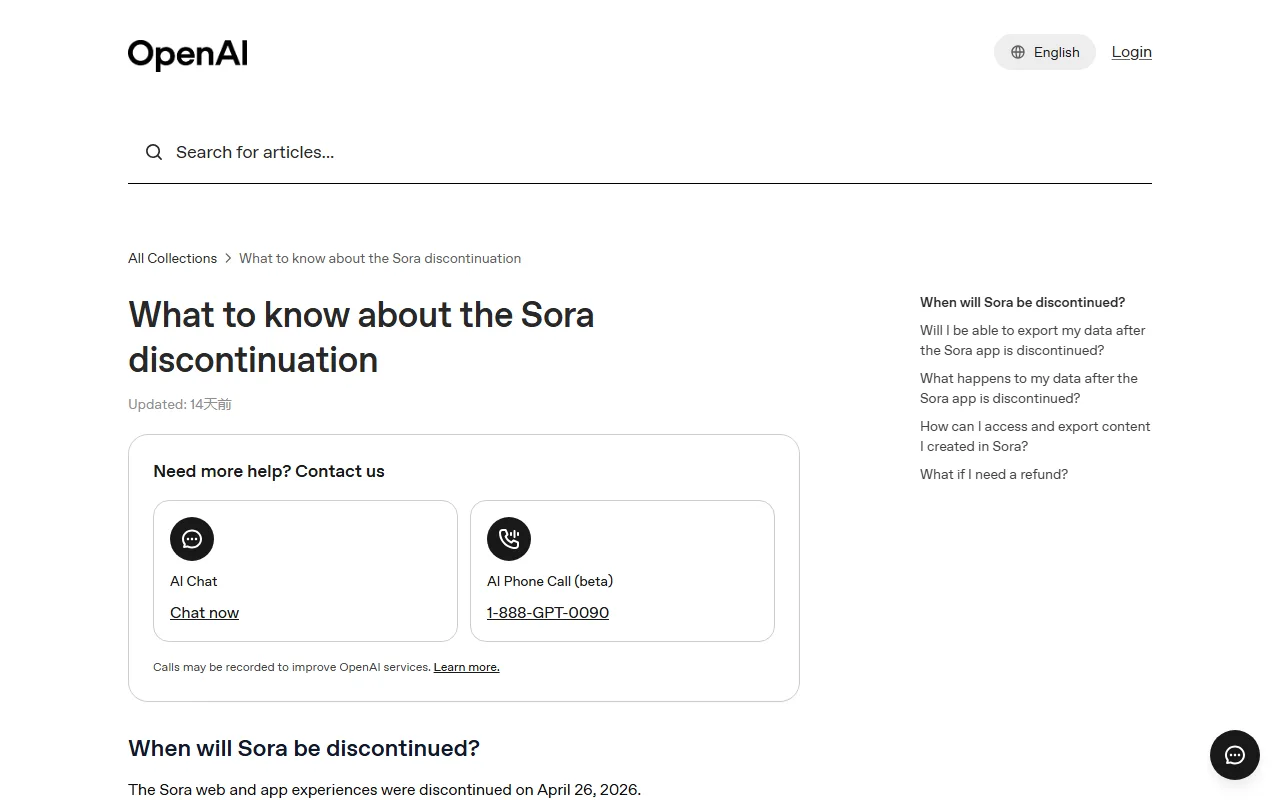 OpenAI's own help page confirms the Sora web and app experiences were discontinued on April 26, 2026.
This is the round that overrides the others for most buyers. Seedance 2.0 is fully live and easy to reach, built into CapCut and Dreamina and available through several video-generation APIs, so it slots into a real workflow today. Sora 2 is the opposite story: per OpenAI's own notice, the consumer Sora app was discontinued on April 26, 2026, access is now API-only, and that API is scheduled to sunset on September 24, 2026, with no consumer surface left.
What that means in practice: choosing Sora 2 in mid-2026 is choosing a model with a published expiry, so any pipeline you build on it needs a migration plan before the end of September. That risk, more than any single quality spec, is why most teams should default to Seedance 2.0 unless they have a specific short-term need only Sora 2's realism can meet.
Pros and Cons
A quick scan of where each model stands.
Seedance 2.0
- Pros: native 2K output; fast generation; strong multi-asset control (@ Reference System); synchronized audio; lower cost at high resolution; widely available.
- Cons: physics and world simulation trail Sora 2 on the most demanding realistic shots; maximum single clip (15s) is shorter than Sora 2 Pro's 25s.
Sora 2
- Pros: class-leading physical realism and world simulation; Sora 2 Pro supports longer single clips up to 25s.
- Cons: consumer app discontinued, API-only with a September 2026 sunset; lower resolution on the base tier; higher cost for 1080p (Pro); less granular input control.
Choose Seedance 2.0 if / Choose Sora 2 if
The honest verdict: for almost everyone in 2026, Seedance 2.0 is the model to use, because it is stronger on most axes and, crucially, it is here to stay. Sora 2 is a narrow pick for a closing window.
Choose Seedance 2.0 if:
- You want the best all-round model you can rely on going forward.
- You need high resolution (2K), fast iteration, or tight multi-asset control.
- You are budget-conscious and want 1080p-plus output at the lowest per-second cost.
Choose Sora 2 if:
- Photoreal physics and world simulation are your single most important requirement, and
- You can complete your work within its API window before the September 24, 2026 sunset.
A third option: don't pick a model at all
 Pexo routes to top models including Seedance 2.0, so you never have to pick one yourself.
There is a way to sidestep this entire decision, and the discontinuation is exactly why it is worth knowing. Pexo is not a model you license by the second; it is an AI video partner that routes each job to the best available model behind the scenes, Seedance 2.0 among them (see Pexo's Seedance 2.0 model page). That speaks to the two problems this comparison surfaces: you do not have to benchmark models yourself, and if a model is discontinued the way Sora was, the routing can shift to one that is still supported rather than leaving your workflow stranded. You describe the video in plain language and Pexo handles the text-to-video generation. It is free to start and credit-based. If model-shopping, or being left on a sunset model, is the part you would rather avoid, Pexo is worth a look.
Conclusion
Seedance 2.0 vs Sora 2 is not the close fight the names suggest. Seedance 2.0 wins on control, audio, speed, price, sharper resolution, and, most importantly, availability, while Sora 2 holds the lead only on raw physical realism, on a model whose app is already gone and whose API is set to close in September 2026. For a model to build on today, choose Seedance 2.0. If you would rather not choose at all, let Pexo route to the best live model for you.