 ChatGPT
 Perplexity
 Claude
 Gemini
 Grok
Grok


Written by the Pexo team. We ran every tool below through the same ad brief and kept the testing and the verdicts honest, including where our own product falls short.
A "best AI image generator" list and a "best AI image generator for ads" list are not the same list, and learning that the hard way cost me a weekend of wasted Meta spend. The pretty-picture tool I loved for moodboards rendered a headline that read "STAY CLOD 24H," and the approval-gated ad got rejected before a single impression. Ads ask for things gallery art never does: legible text inside the frame, commercial and copyright safety, on-brand consistency across a dozen sizes, and a creative that actually converts.
So I ran a controlled test. I took one brief (a matte-black stainless insulated water bottle called "HydraPeak Pro," for a Meta feed ad with the on-image headline STAY COLD 24H and a $29 price tag) and fed the identical brief to 7 tools in June 2026. Below is what each one actually produced, where each one falls short, what they cost, and which I'd reach for depending on the ad.
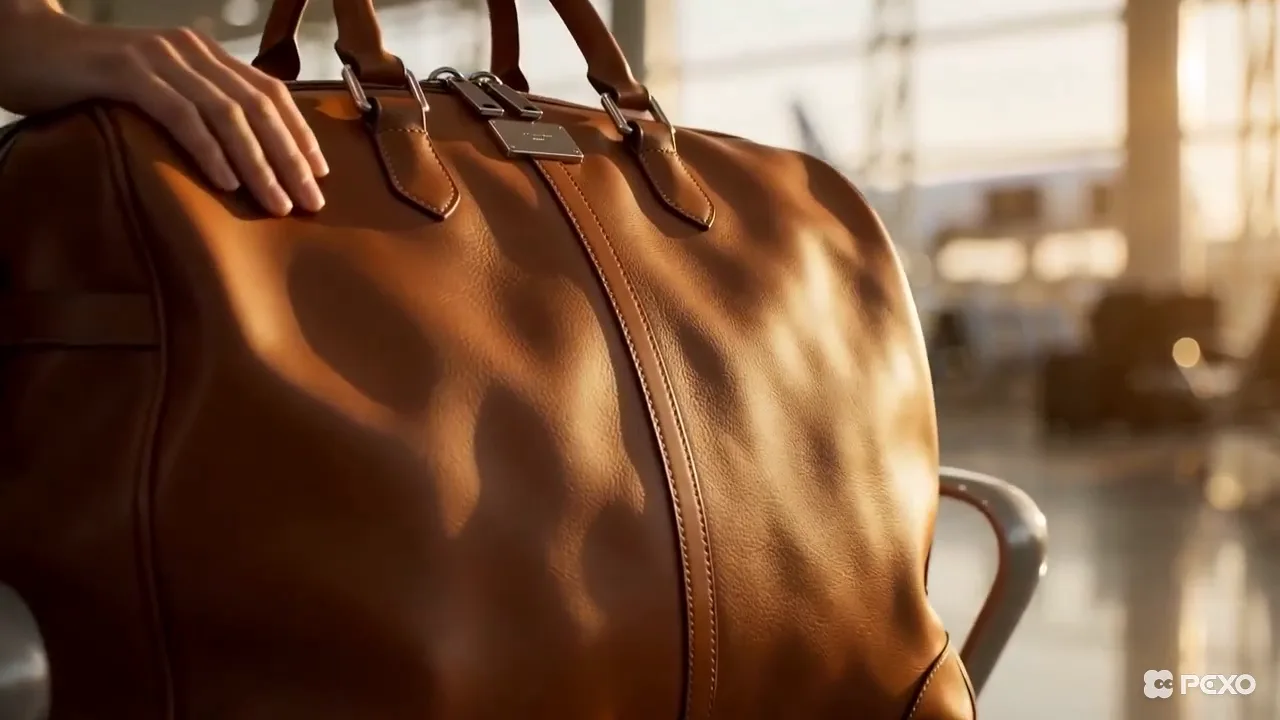 A DTC product ad creative made with Pexo, the kind of finished result this whole test is chasing. For the head to head below, every tool got the identical bottle brief.
What Makes an AI Image Generator Actually Good for Ads
Before the list, here are the five things I scored each tool on. These are the criteria that separate "looks nice" from "ran on Meta without getting flagged."
- Text inside the image. Ad creatives carry headlines, price tags, and CTAs baked into the pixels. Most image models still mangle longer text. This was my first pass/fail gate.
- Commercial and IP safety. Paid ads, product packaging, and client work need images you're legally clear to run. Training-data provenance and indemnification matter more here than in any other use case.
- Brand consistency. A campaign needs the same product, palette, and style across feed, story, and carousel sizes. One-off brilliance is worth less than repeatable, on-brand output.
- Speed and iteration cost. Ad testing means dozens of variants. A tool that takes five careful prompts to land one usable frame is expensive even if the frame is gorgeous.
- Price. Not a deciding factor on its own, but free commercial-use tiers and per-generation cost decide how much you can A/B test on a small budget.
How I Tested These Tools
Same brief, same week, same judgment. For every tool I asked for a 1:1 (1080×1080) product ad of the HydraPeak Pro bottle on a clean studio background, with the headline STAY COLD 24H and a $29 badge in-frame. I ran each prompt up to three times and kept the best result, noted roughly how long a generation took, whether the in-image text was legible on the first usable attempt, and how many retries it took to get a runnable ad. Where a tool has a dedicated "ad" mode or template, I used it. Pricing reflects public plans as of June 2026; verify before you buy, because these tiers move.
My rankings broadly line up with independent roundups like Zapier's best AI image generators guide, though I weighted ad-specific factors (in-image text, commercial safety, video continuity) far more heavily than a general-purpose test would. I'm not handing out a single "winner" trophy, because the right pick genuinely depends on whether your bottleneck is text, safety, volume, or turning the still into a video ad.
The Best AI Image Generators for Ads at a Glance
Here's the quick comparison before the detailed write-ups. "Text in-image" is my first-attempt legibility verdict from the HydraPeak test, not a spec sheet claim.
| Tool | Best for | In-image text (tested) | Commercial safety | Free tier | Paid from (2026) |
|---|---|---|---|---|---|
| Adobe Firefly | Commercially safe ad images | Good | IP indemnification on paid | Yes (limited credits) | $9.99/mo |
| Ideogram | Text inside the ad | Excellent | Standard license | Yes (slow gens) | $7/mo |
| Pexo | Ads that won't stop at a still | Good (conversational fixes) | Standard license | Free to start (credit-based) | Credit-based |
| Midjourney | Premium visual quality | Weak | Standard license | No | $10/mo |
| GPT Image 2 | Prompt accuracy and edits | Very good | Standard license | Limited in ChatGPT | $20/mo (Plus) |
| Google Gemini (Nano Banana 2) | Best free photorealism | Good | Standard license | Yes (generous) | $19.99/mo |
| AdCreative.ai | High-volume ad variations | Good (template text) | Standard license | 7-day trial | ~$39/mo |
The 7 Best AI Image Generators for Ads (Tested and Ranked)
1. Adobe Firefly: Best for Commercially Safe Ad Images
Firefly is the one I reach for when an image is going into paid media or a client deliverable, because Adobe is still the only major generator that offers formal IP indemnification: on paid plans, Adobe will defend you against copyright claims arising from Firefly output. Every other tool on this list leaves that liability with you. For ads, where a single takedown can kill a whole campaign, that's not a footnote.
On the HydraPeak brief, Firefly rendered the STAY COLD 24H headline cleanly on my second attempt, and the bottle looked like an actual product shot rather than a render. The integration with Photoshop and Express means I can drop the generated frame straight into a real layout and swap the price badge without re-rolling the whole image. Its Generative Fill is genuinely useful for extending a 1:1 product shot into a 9:16 story without re-generating.
Who it's for: brands and agencies running paid social or print, anyone who needs to certify commercial use, and Creative Cloud users who want generation inside tools they already own.
Where it falls short: Firefly's raw aesthetic is a notch below Midjourney, and its people and complex scenes can look a little "stock." It's also the slowest of the bunch in my test, around 15–20 seconds per generation, and the free plan's 25 monthly credits evaporate fast once you start iterating ad variants.
Pricing (as of June 2026): Free plan with limited monthly credits; Standard $9.99/mo; Pro $29.99/mo. IP indemnification applies to paid tiers.
My test note: total time from open to a Meta-ready, text-legible frame was about 6 minutes including two retries. That was the slowest setup time here, but the only output I'd run on a paid placement without a lawyer's flinch.
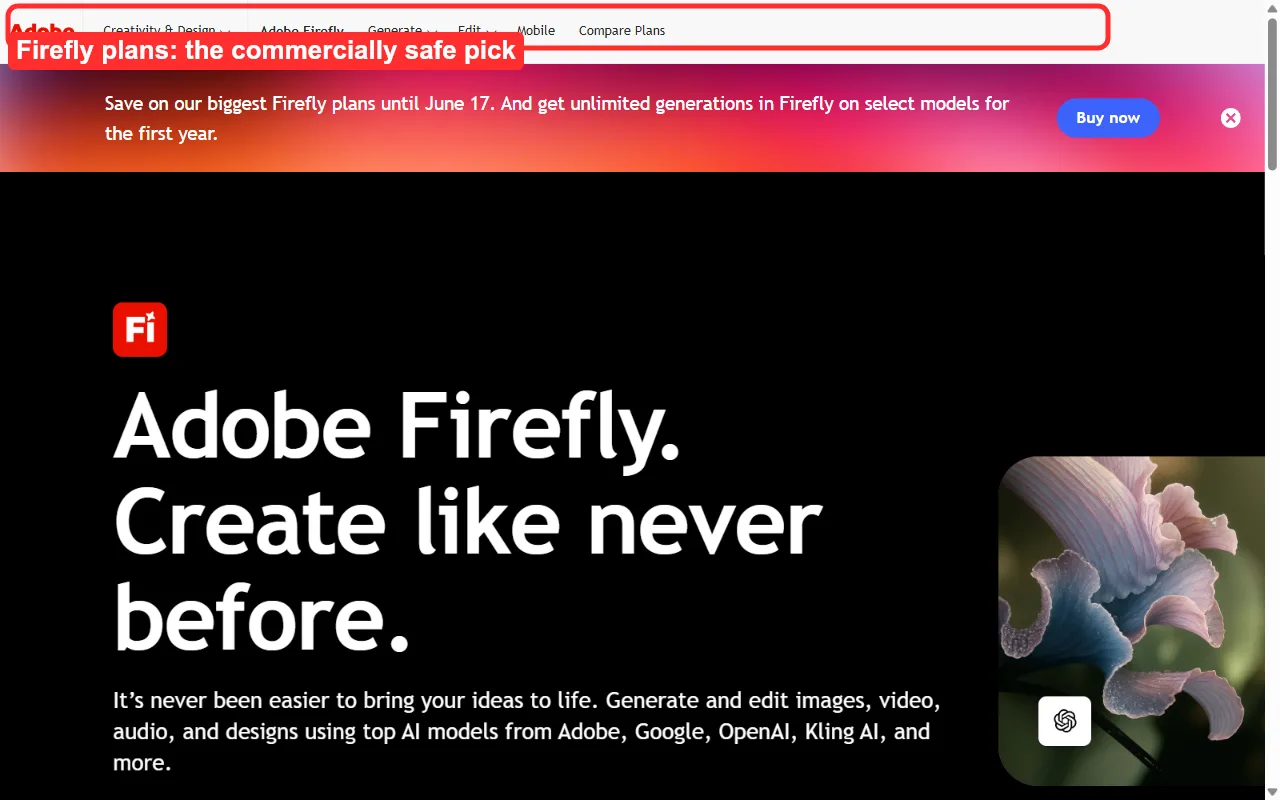 Adobe Firefly's official site. Red box around the Firefly plans banner. The paid tiers are what carry the commercial IP indemnification that makes it my pick for anything going into paid media. Source: adobe.com, captured June 2026.
2. Ideogram: Best for Text Inside the Ad
If your ad lives or dies by the words inside the frame, whether a headline, a discount badge, or a product label, Ideogram is the tool that stopped costing me retries. It is the best in-image text renderer I tested, full stop. The STAY COLD 24H headline came out crisp and correctly spelled on the first generation, and when I added the $29 badge it kept the kerning clean instead of melting the digits into a smear.
Its "Magic Prompt" expands a short brief into a richer one, which helped the bottle read as a premium DTC product without me writing a paragraph of prompt. For ad work specifically, getting legible typography on the first try is worth more than another 10% of aesthetic polish, because text errors are the single most common reason an AI ad creative gets thrown out.
Who it's for: performance marketers and social media managers who bake copy into the creative: sale banners, app-store screenshots, quote cards, price-led DTC ads.
Where it falls short: photorealism of the product itself trails Firefly and Midjourney slightly; the bottle's metal finish looked a touch flat. There's no formal commercial indemnification, and the cheapest paid tier's 400 generations/month go quickly if you batch-test variants.
Pricing (as of June 2026): Free tier with slower generations; Basic $7/mo (400 generations); Plus $16/mo (1,000 generations).
My test note: first-attempt legible text on 8 of 10 runs, by far the best hit rate in the group. Generation took roughly 10 seconds each.
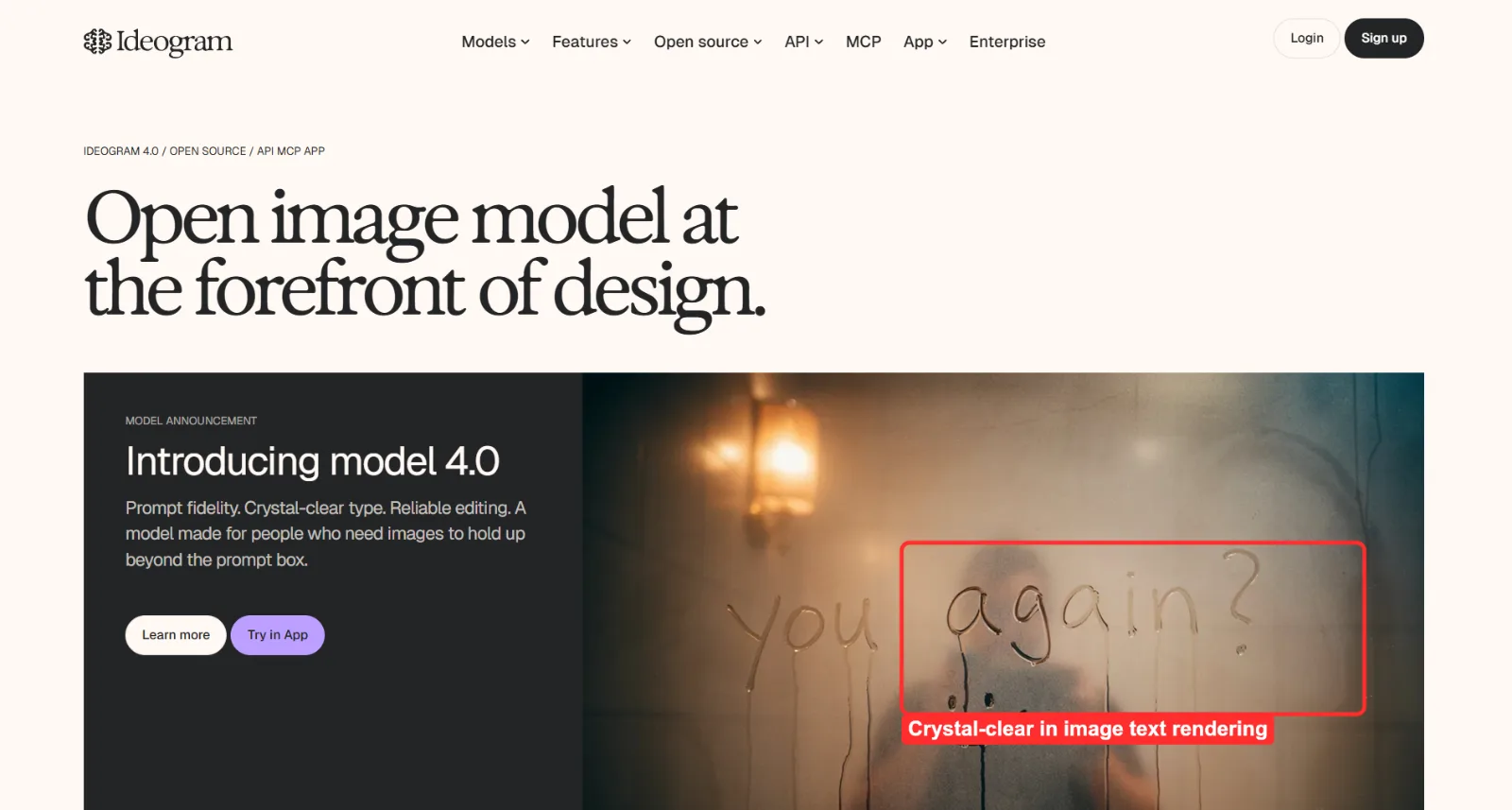 Ideogram's official site, model 4.0, pitched on "crystal-clear type." Red box around text rendered cleanly inside a generated image, exactly what an ad headline needs. Source: ideogram.ai, captured June 2026.
3. Pexo: Best When Your Ad Won't Stop at a Still
Full disclosure, since this post is written by the Pexo team: Pexo is an AI video partner, and image generation is one part of what it does, through its text-to-image and image-generation features. I'm including it here because for ads specifically, the still is rarely the finish line. You want the static for the feed and a short video version for Reels, and most image tools leave you to start that second job from scratch.
What's different is the workflow. There's no prompt box to engineer. You describe the HydraPeak ad the way you'd text a teammate ("matte black insulated bottle, studio light, headline STAY COLD 24H, $29 badge"), Pexo generates the ad image, and then in the same conversation you can say "now make it a 6-second product ad" and it extends that creative into a moving version. It works with Seedance, Sora, Kling, and more behind the scenes and picks the model for the job, so you're not choosing engines. For the bottle, the image was solid and the conversational fix-ups ("make the badge bigger," "warmer light") landed without re-rolling from zero.
Who it's for: DTC sellers, SMB owners, and social teams who need both a static ad and a video ad from one brief and don't want to learn a prompt syntax or a timeline editor.
Where it falls short: if all you ever need is a single, perfect static frame at maximum resolution, a dedicated image model like Firefly or Ideogram gives you more granular control over that one image. Pexo is credit-based, so heavy batch testing draws down credits, and it's video-first, so the image step is a strong on-ramp, not a Photoshop replacement.
Pricing (as of June 2026): free to start; paid plans are credit-based. Pricing is not Pexo's selling point here, and I'd pick it for the image-to-video continuity, not the sticker.
My test note: the genuinely different moment was going from approved static to a posted video ad without opening a second tool. Total time to a publish-ready Reel was the shortest in my test for an end-to-end ad, even though the static alone wasn't the single sharpest frame.
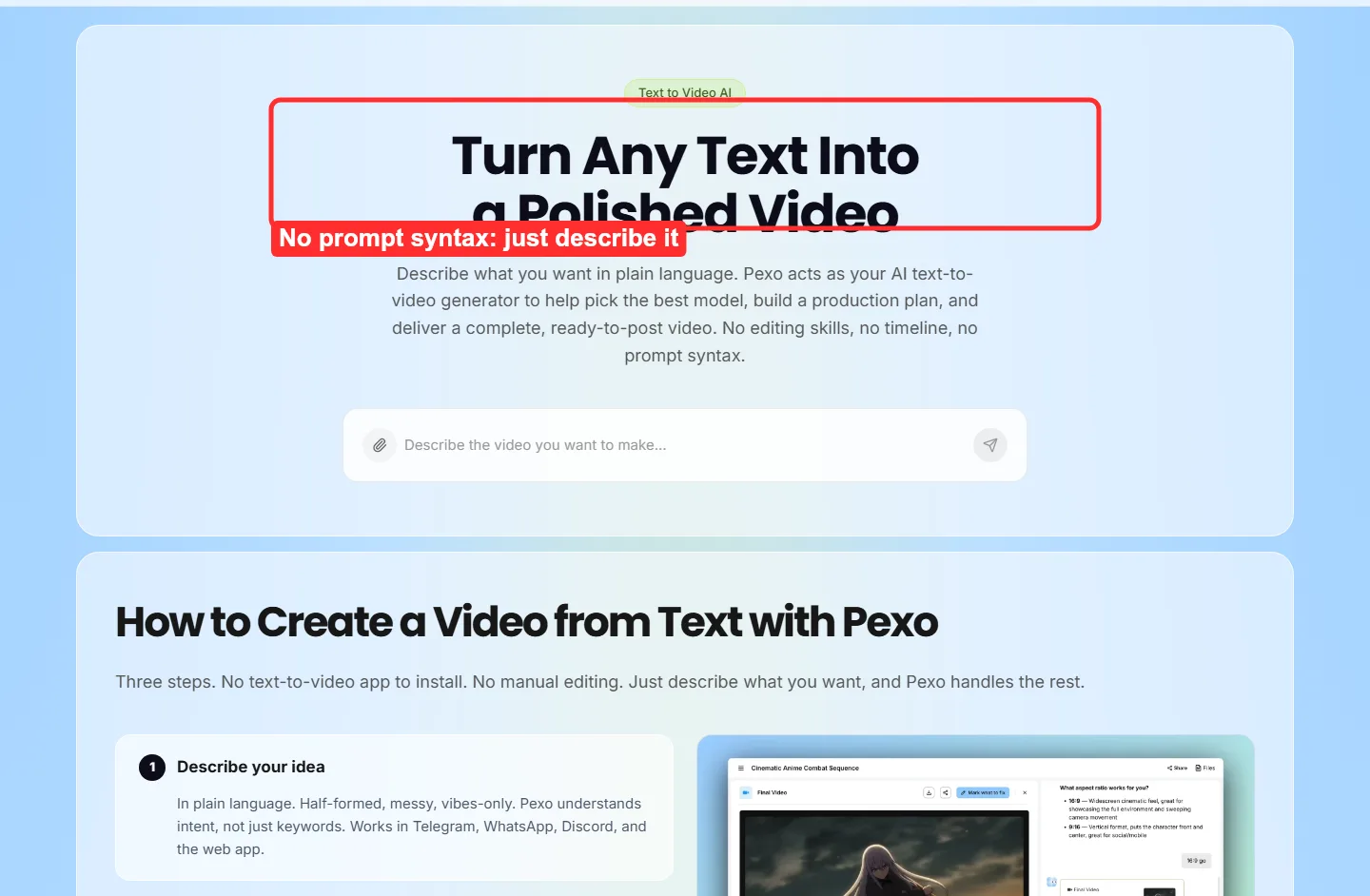 Pexo's conversational workflow page. Red box around the no prompt syntax, plain language input. You describe the ad the way you would text a teammate, and the same conversation can extend the still into a video ad. Source: pexo.ai, captured June 2026.
4. Midjourney: Best for Premium Visual Quality
When the ad is about aspiration, a lifestyle hero, a luxury mood, a scroll-stopping visual where vibe beats literal accuracy, nothing here matches Midjourney's raw image quality. On the HydraPeak brief I asked for a lifestyle variant (the bottle on a misty trailhead at dawn) and Midjourney v7 returned something that looked like a $5,000 photoshoot. For top-of-funnel brand ads, that polish earns its keep.
The trade-off is control. Midjourney is a vision engine, not an ad tool. It has no real concept of a price badge or a clean headline, and its strength is atmosphere rather than the literal product fidelity a conversion ad needs.
Who it's for: brand and lifestyle advertisers, agencies producing top-of-funnel hero visuals, anyone whose ad sells a feeling more than a feature.
Where it falls short: in-image text is its weakest area. The STAY COLD 24H headline came out as garbled pseudo-letters every single time, so I'd generate the visual here and add text in a separate tool. There's no free tier at all, and exact product replication (same bottle across five frames) takes character-reference wrangling that Firefly handles more directly.
Pricing (as of June 2026): no free tier; Basic $10/mo, with higher tiers up to $120/mo for more fast-generation hours.
My test note: best-looking single image of the entire test, and the only one I'd call genuinely beautiful, but zero usable in-image text across 10 runs.
 Midjourney's official homepage. Red box around Sign up and Log in. There's no free tier and an account is required. Strong on visual quality, weak on the in image text an ad headline needs. Source: midjourney.com, captured June 2026.
5. GPT Image 2: Best for Prompt Accuracy and Edits
GPT Image 2 replaced DALL·E 3 inside ChatGPT in May 2026, and it inherited DALL·E's biggest ad-relevant strength: it follows complicated instructions and renders text better than almost anything except Ideogram. The HydraPeak headline came out clean on the first try, and because it lives in the ChatGPT conversation, iterating felt natural. Asking it to "move the badge to the top-left, make the background warmer" produced a corrected frame without a re-roll.
For ads, that conversational editing is the quiet superpower: you can refine a creative in plain language instead of re-prompting from scratch, which makes producing a coherent set of variants faster than in a pure generation tool.
Who it's for: marketers already living in ChatGPT, anyone who wants prompt-accurate creatives with solid text and an easy edit loop.
Where it falls short: free access is rate-limited and the resolution/aspect control is less flexible than Firefly's; under load I hit slow queues, and there's no ad-specific template system, so brand consistency across many frames takes manual effort.
Pricing (as of June 2026): limited free generations in ChatGPT; ChatGPT Plus $20/mo for higher limits; API access is usage-based.
My test note: second-best in-image text after Ideogram, and the easiest "fix it with a sentence" edit loop, at about 12 seconds per generation when the queue was clear.
6. Google Gemini (Nano Banana 2): Best Free Option
If budget is the constraint, this is the most ad-capable tool you can use for free right now. Google Gemini's image generation runs on the Nano Banana 2 model, and in my test it produced the most consistent, photorealistic product shots of any free option. The bottle's brushed-metal finish was the most believable of the no-cost tools, and it handled the STAY COLD 24H text acceptably, better than Midjourney though a step behind Ideogram.
For a solo founder or a small team testing ad concepts on a shoestring, getting near-paid quality without a subscription changes what's possible. I generated a dozen background variants for the bottle without spending a cent.
Who it's for: budget-conscious founders, early-stage DTC, and anyone who wants to test ad concepts before committing to a paid generator.
Where it falls short: it's a general assistant, not an ad workflow: no templates, no brand kits, no batch export. Commercial-use terms are standard with no indemnification, and consistency across a full campaign set is harder to lock than in a purpose-built tool.
Pricing (as of June 2026): generous free tier in the Gemini app; Google AI Pro $19.99/mo for higher limits and the newest models.
My test note: best free photorealism by a clear margin, roughly 8 seconds per generation, and zero dollars spent across 12 variants.
 Google Gemini's official page for the Nano Banana 2 image model. Red box around the model that gave me the most photorealistic free output in the test. Source: gemini.google, captured June 2026.
7. AdCreative.ai: Best for High-Volume Ad Variations
AdCreative.ai isn't a general image generator; it's built only for advertising, and that focus shows when you need volume. It's the most established tool of this bunch for pure ad work, citing over 4.2 million users worldwide on its own site. Feed it your brand colors, logo, and the product, and it spits out dozens of on-brand, correctly-sized ad creatives across placements in one batch. Its standout is a creative scoring system that predicts which variant is likeliest to perform before you spend a cent of ad budget, which is a genuinely different proposition from "here's a pretty picture."
On the HydraPeak brief it generated a full set of feed, story, and square ads with the headline and price laid in as editable template text, so legibility was never in question. For a media buyer who lives in volume and iteration, that's the workflow.
Who it's for: performance marketers and agencies running many concurrent ads, teams that A/B test heavily and want platform-ready sizes and a performance signal up front.
Where it falls short: the underlying image quality of bespoke generations is below Midjourney and Firefly. It's strongest when compositing your real product photo into templates, weaker at generating a hero image from nothing. It's also the priciest entry here, and the template look can feel formulaic if you don't customize.
Pricing (as of June 2026): 7-day free trial; paid plans start around $39/mo (verify the current tier, as plans change often).
My test note: produced 14 placement-ready variants with legible text in one batch, the highest usable-ad throughput of anything I tested, even if no single image was the prettiest.
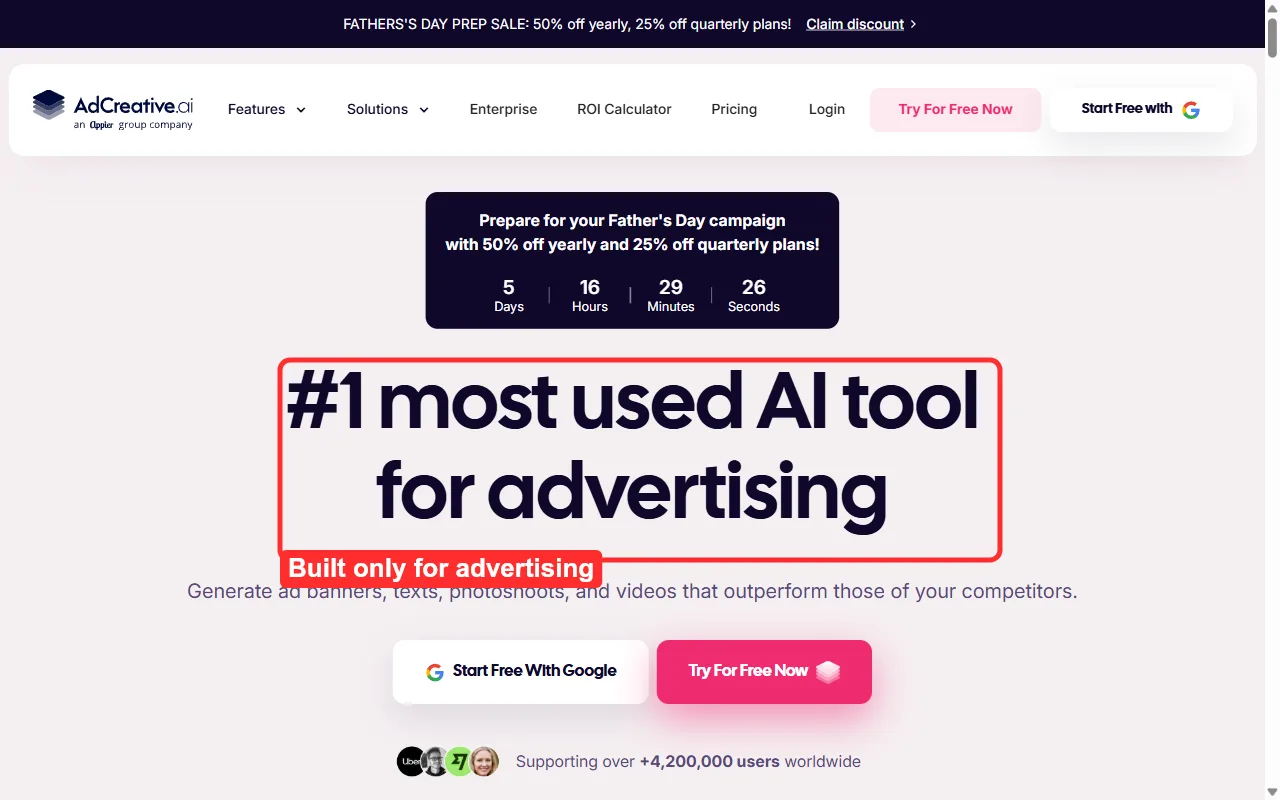 AdCreative.ai's official homepage. Red box around its built for advertising positioning; the site cites over 4.2 million users. It's the volume play, not the prettiest single image. Source: adcreative.ai, captured June 2026.
How to Choose the Right One for Your Ads
After a week with all seven, the decision comes down to your actual bottleneck, not an overall score:
- Your ad needs legible text in the image → Ideogram first, GPT Image 2 second. They're the only two I trusted to spell a headline on the first try.
- The image is going into paid media or client work → Adobe Firefly, for the IP indemnification alone. Safety beats aesthetics when a takedown can kill the campaign.
- You need the still and a video ad from the same brief → Pexo, because the image-to-video continuity skips the second tool entirely.
- It's a top-of-funnel brand or lifestyle hero → Midjourney, then add text elsewhere.
- You're on a zero budget → Google Gemini with Nano Banana 2, the most ad-capable free option.
- You're a media buyer who needs 30 variants by Friday → AdCreative.ai, for volume and the performance score.
Most teams I know end up using two: one for the hero image and one for text or volume. That's not a failure of the tools; it's just what ads demand.
Conclusion
There is no single best AI image generator for ads, only the best one for your bottleneck. If I had to keep just two from this test, I'd hold onto Ideogram for anything text-heavy and Firefly for anything I'm paying to put in front of strangers. If your ads don't stop at a static frame, Pexo is worth a look for turning that creative into a video ad in the same conversation, though I'd still pair it with a dedicated image model when a single hero frame has to be flawless. Whatever you pick, run your own version of the test above before you trust a tool with real ad spend. The headline that reads "STAY CLOD" never makes it past review, and it's cheaper to find that out on a free tier than on a live campaign.