
 ChatGPT
 Perplexity
 Claude
 Gemini
 Grok
Grok


Imagine you're a startup founder preparing for a product launch next week. You need a polished 60-second explainer video for your landing page, social ads, and investor deck. For many growing businesses, the traditional agency timeline and budget can be a significant hurdle.
The demand for explainer videos is high. Platforms like TikTok, Instagram Reels, and YouTube Shorts have trained audiences to expect visual storytelling by default. The question isn't whether you need an explainer video — it's how to create one without draining your budget or your calendar. This guide compares three production routes—traditional agencies, template-based software such as Powtoon, and AI-assisted software such as Pexo—rather than ranking individual service providers.
What Traditional Animated Explainer Video Services Offer
 Traditional explainer video services typically follow a linear, human-driven production pipeline. The process starts with a creative brief, moves through scriptwriting and storyboarding, continues into illustration or animation, and concludes with voiceover recording and post-production. Each stage requires approval, and revision cycles, depending on the proposal and approval process, can add days or weeks to the project timeline.
For enterprise brands with dedicated marketing budgets, this approach still works. Agencies bring strategic thinking, brand consistency, and high production quality to the table. For small and mid-size businesses, the cost per minute of finished animation can be a significant investment. Creative control is often defined by the agency's workflow and revision policies. And the entire process depends on clear, well-written scripts, which some teams may find challenging to produce internally.
These considerations have pushed a growing number of businesses toward self-service tools and, more recently, toward a new category entirely.
The Rise of AI in Explainer Video Creation
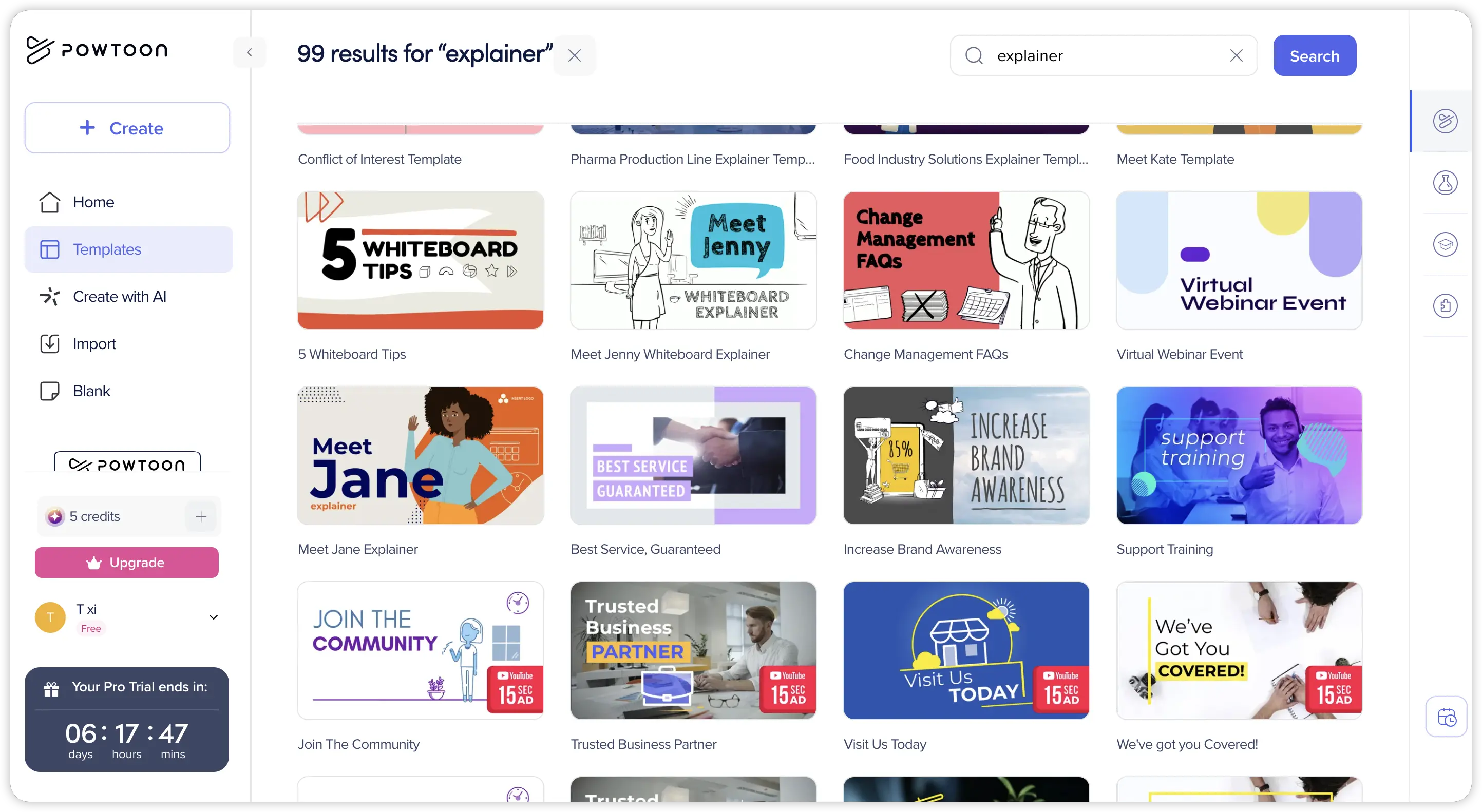
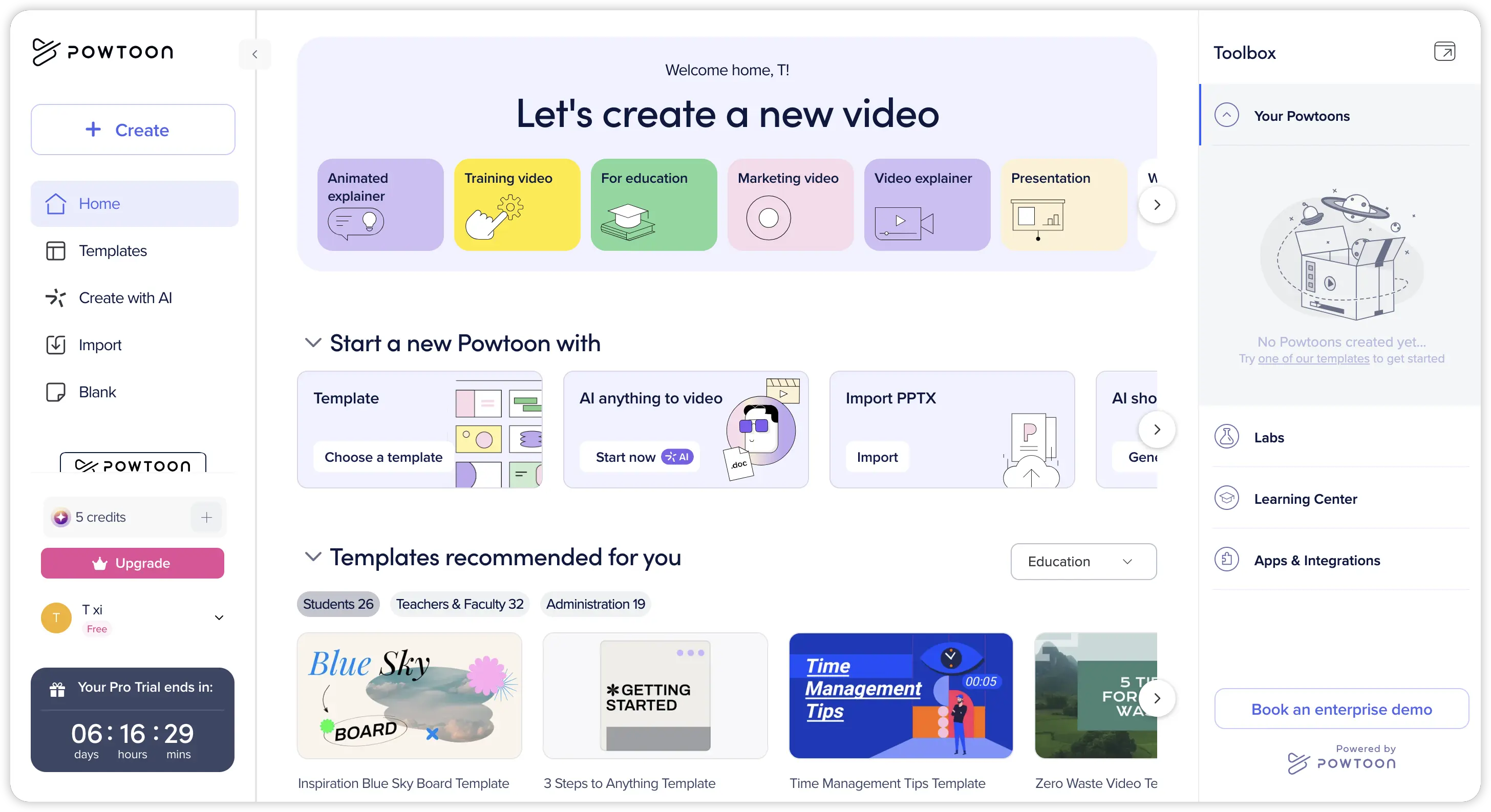
The landscape of explainer video services shifted when template-based software matured. Platforms like Powtoon popularized template-based editing with drag-and-drop interfaces, which offered a different cost structure and gave non-designers a viable path to creating animated content. That said, these tools still required users to write scripts, select characters and assets manually, and spend time assembling each project inside a timeline editor. The creative burden simply moved from the agency to the user.
The latest evolution goes further. A new generation of AI video partners uses natural language understanding and automated post-production to assist in the creation process conversationally. Instead of writing a detailed script or choosing from preset templates, you describe your idea in plain language. The system interprets your intent, builds a storyboard, and delivers a draft video with scenes, voiceover, and captions already in place.
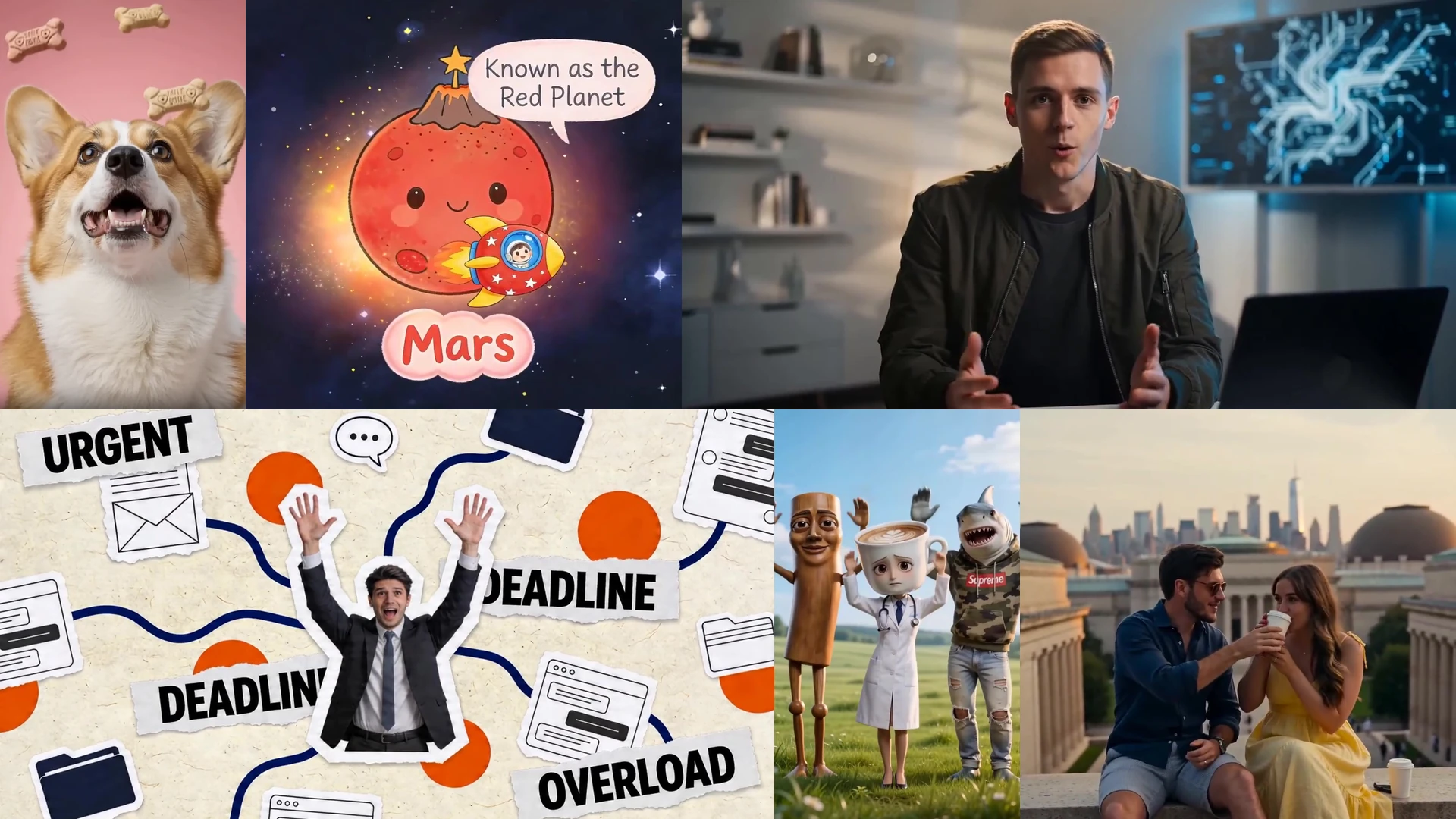
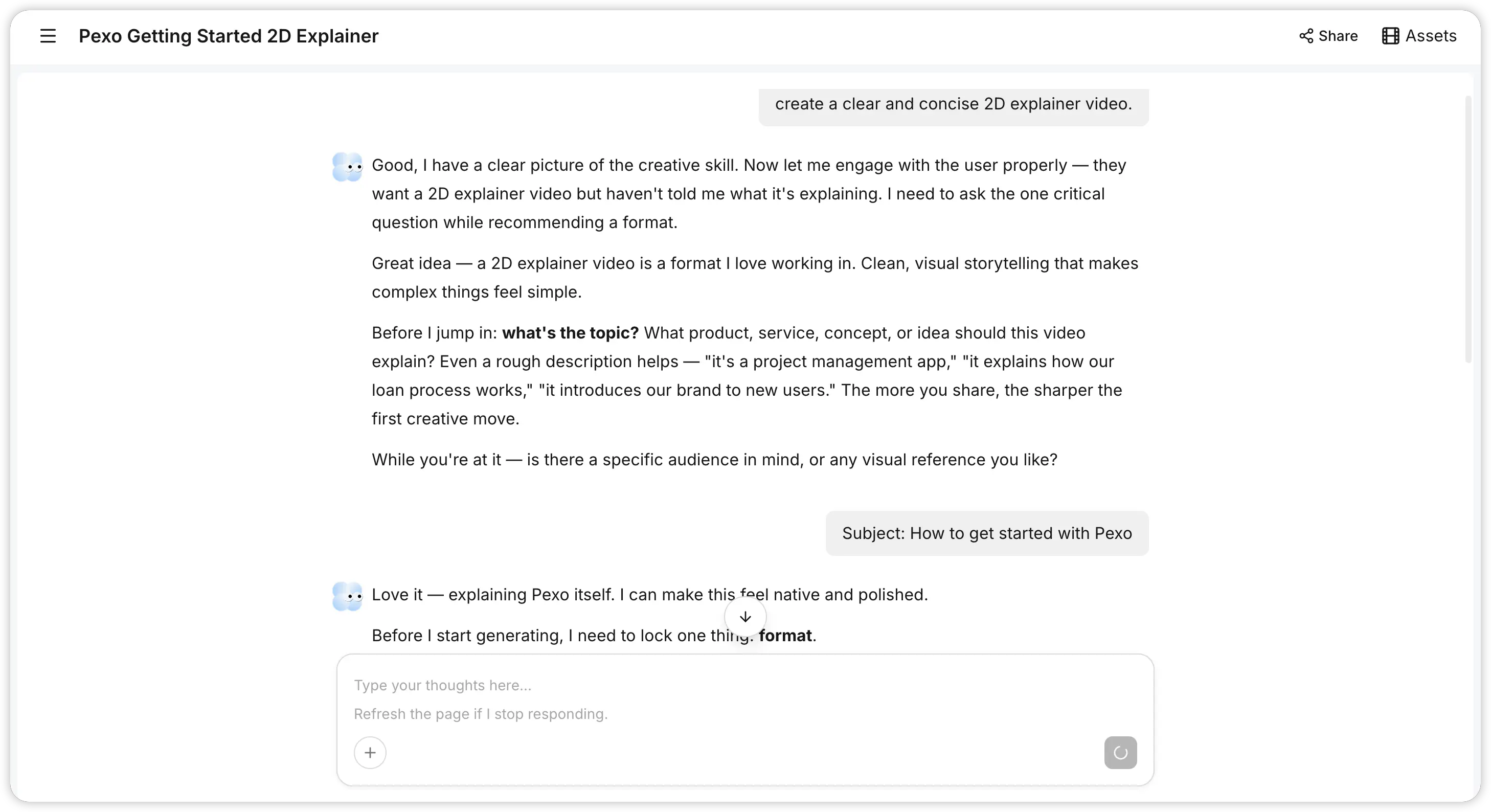
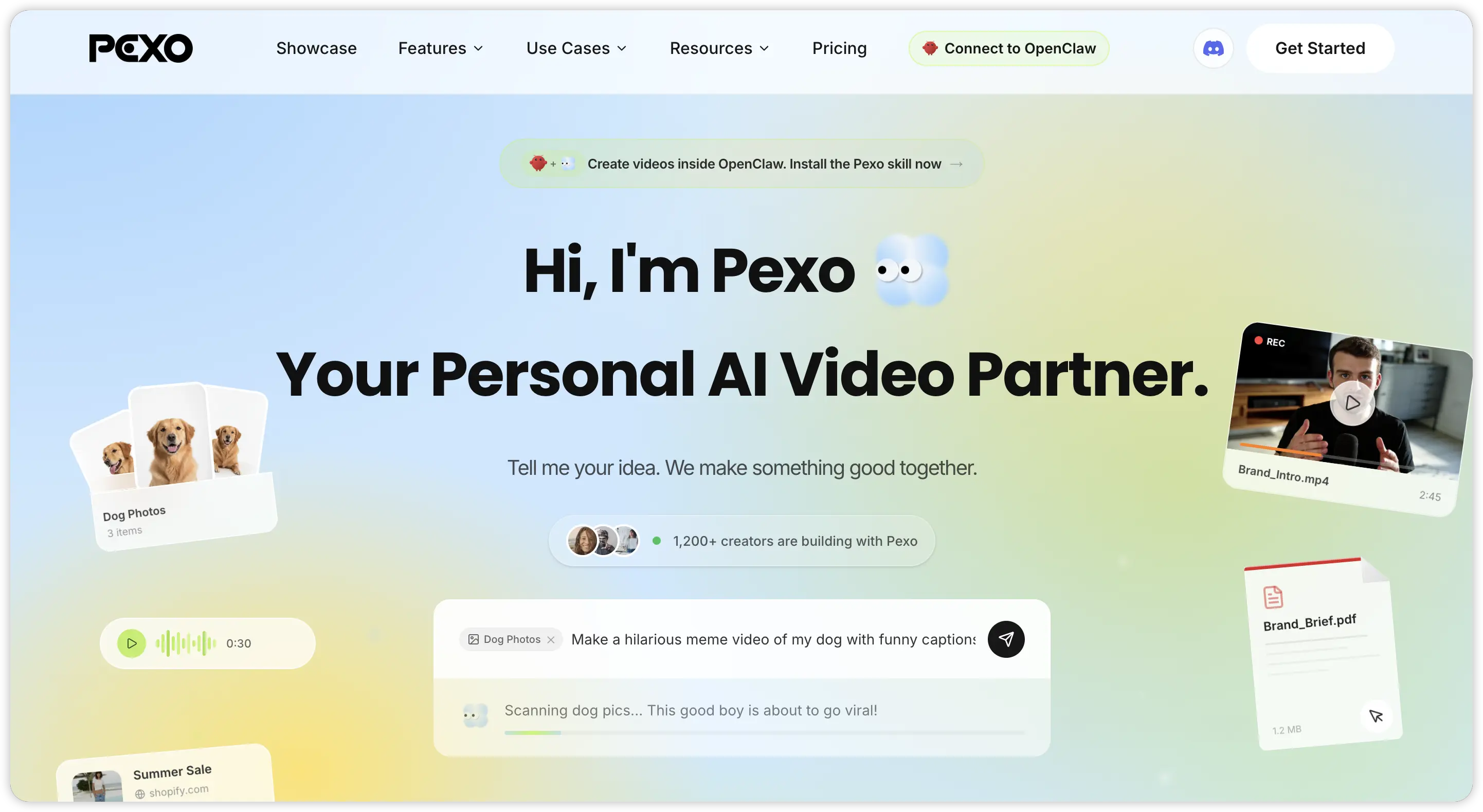
Platforms like Pexo AI represent this shift. Rather than functioning as a tool you operate, Pexo acts as an AI video partner that collaborates with you through conversation. You describe a concept, Pexo suggests creative directions with visual previews, and you refine the output by giving feedback the same way you would brief a colleague. Pexo may accept a written brief, script, or accessible URL; generate scenes, voiceover, and captions; and provide a draft for scene review and conversational revision. This simplifies the creation process, which means marketing teams, educators, e-commerce sellers, and solo creators can produce explainer videos for review.
Comparing Your Options: Traditional Agencies vs. Powtoon vs. Pexo AI
Choosing the right explainer video creation service depends on budget, timeline, creative vision, and internal resources. This comparison outlines three common production routes, each with distinct implications for your budget, schedule, creative control, and internal capacity.
| Feature | Traditional agency | Template software (e.g., Powtoon) | AI-assisted software (e.g., Pexo) |
|---|---|---|---|
| Cost basis | Project quote and stated scope | Current subscription or export terms | Current plan and credit terms |
| Client input | Brief, approvals, and feedback | Script, asset selection, and editing | Prompt, URL, or script, followed by draft review |
| Production workflow | Provider manages the agreed production stages | Client assembles content in an editor | Software generates a draft for client review |
| Revision method | Defined revision rounds in the proposal | Client re-edits scenes and timing | Check available revision controls; regenerate where supported |
| Control boundary | Defined by the proposal and production scope | Constrained by available templates and assets | Constrained by supported generation and editing controls |
| Evidence to check | Proposal, portfolio, references, and usage rights | Official plan details, export terms, and template samples | Official product information, plan terms, and current output examples |
| Best fit | Projects requiring custom creative direction | Teams with a clear script and capacity for hands-on editing | Teams that want an initial video draft to review |
| Poor fit | Projects without scope or approval capacity | Projects requiring bespoke animation beyond the available assets | Projects requiring frame-level bespoke control |
This comparison was checked on September 4, 2026. Information for Powtoon plans, Powtoon explainer templates, Pexo product information, Pexo pricing, and Pexo gallery is based on official vendor offers and curated examples. Agency terms require a written proposal for specific details. This is not an independent comparison or endorsement.
The primary distinction among these options lies in the production workflow and the client's role. Agencies manage the agreed production stages, template software requires hands-on editing, and AI-assisted software generates drafts for review. Compare the actual proposal or plan, revision method, current output examples, usage terms, and required client effort before deciding which route fits the project.
How to Choose the Right Explainer Video Service
No single best option exists for every business; the right choice depends on key variables.
Consider a traditional agency for flagship brand videos or projects requiring custom character design and frame-by-frame animation. When evaluating, verify the proposal's scope, milestones, and revision process. Also, confirm usage rights and review relevant portfolio work to ensure their style aligns with your project's creative vision and strategic goals.
Consider a template tool like Powtoon if you have a clear written script and prefer hands-on timeline editing. These platforms offer a library of characters, transitions, and pre-built scenes for assembling animated content. Before committing, check current plan limits, understand export terms, and review relevant template samples to ensure they meet your project's visual and functional requirements.
Consider AI-assisted software such as Pexo if you aim to generate video drafts from an idea or existing content. This approach is suitable for businesses that need to produce video output for review. For example, with a platform like Pexo, you can leverage features like turning a blog post or product page URL into a narrated video. Users should review the generated output, understand the current plan and credit terms, and be aware that control over every minute detail may be limited compared to bespoke production. Check current examples to assess fit.
A hybrid approach, combining AI-assisted generation with human oversight, is an option. You might use AI software to produce initial drafts or specific scenes, then refine them using traditional editing tools or by collaborating with a freelancer. This route requires clear responsibility for the final review and quality assurance, ensuring the output meets brand standards and communication goals.
Ultimately, the choice among these options reflects varying levels of service, client effort, creative control, and review processes. Select the route whose demonstrated capabilities and current evidence best align with your specific project requirements.
The Future of Animated Explainer Video Services
Looking ahead, several trends are shaping animated explainer video services, emphasizing accessibility and iterative creation.
First, diverse generation methods are becoming more common. Instead of relying on a single AI approach, products may integrate various models optimized for different visual styles or content types, aiming to offer more varied output.
Second, conversational interfaces are evolving to simplify interaction with video creation tools. The goal is to reduce the technical learning curve, allowing users to describe their intent rather than manipulate complex timelines.
Third, integration with existing workflows is a growing focus, aiming to embed video creation capabilities within platforms where teams already communicate and collaborate.
These developments suggest a future where generating video drafts is more accessible, with human creativity, strategic input, and diligent review remaining central to producing brand-aligned explainer videos.
Conclusion
The explainer video services landscape offers diverse options, from traditional agencies providing bespoke productions to template-based software and AI-assisted solutions. Traditional agencies remain suitable for custom projects. Template tools like Powtoon offer a path for those with design skills and time for manual editing. AI-assisted software such as Pexo provides a route for generating video drafts, requiring user review and iteration.
To choose, assess your budget, timeline, desired level of creative control, and internal resources. Always check current official product pages, pricing, and vendor-provided output examples to verify capabilities and terms before committing to a service.