 ChatGPT
 Perplexity
 Claude
 Gemini
 Grok
Grok



A how it works video is a short explainer, usually 30 to 120 seconds, that shows how a product, service, feature, or process actually operates, step by step, so a viewer understands it without reading documentation. It answers one question: what happens when I use this? The format spans three production styles. Screen-recorded walkthroughs capture a real interface in action. Animated or motion-graphic versions render a clean, idealized version of the same flow. Live-action versions film a physical product or a person using it. Most how it works videos open on a problem, introduce the thing that solves it, walk the core steps in order, and close with a next action. The genre overlaps with explainer videos, product demos, and onboarding clips, but its defining job is the middle: the mechanics, shown plainly. Tools that produce them range from screen recorders like Loom and Screen Studio, to animation suites, to AI video partners like Pexo that generate the finished clip from a text brief, an image, a product URL, or audio. The right one depends on whether you are filming, recording a screen, or generating from scratch.
What a How It Works Video Actually Is
A how it works video isolates the operation of something and makes it visible. Where a brand video sells a feeling and a testimonial sells trust, a how it works video sells understanding: it reduces the gap between "I see the product" and "I know what it does." The structure is near-universal. A 2024 marketing convention treats four beats as the spine: problem, solution, the how (the mechanics), and a call to action. The "how" beat is the largest and the reason the genre exists. A how it works video for a SaaS dashboard might show three clicks from login to exported report; one for a coffee machine might show water in, button pressed, espresso out. The length stays short because comprehension drops fast: most land between 60 and 90 seconds, and onboarding variants run under 30.
The genre sits inside the broader explainer family but is not interchangeable with its neighbors. A how it works video is procedural and present-tense, where a category explainer is conceptual and a demo is feature-led.
| Video type | Core job | Typical length | Subject |
|---|---|---|---|
| How it works video | Show the step-by-step operation | 30–120 sec | A product, feature, or process in action |
| Explainer video | Define a problem and a solution | 60–90 sec | A concept or value proposition |
| Product demo | Walk through features and UI | 1–3 min | The interface, feature by feature |
| Onboarding video | Get a new user to first success | Under 60 sec | The first task a user must complete |
| Brand video | Build emotion and identity | 30–90 sec | The company's story and tone |
The Three Production Formats
Every how it works video is built one of three ways, and the choice is set by what you are showing. Screen recording suits software: you record the actual interface, so the steps are literally true. Animation suits abstract processes, data flows, or interfaces too messy to film cleanly, because animators build a "perfect" version where the data is tidy and the cursor glides. Live action suits physical products and human interaction, where seeing real hands on a real object carries the message. Many production teams use a hybrid: real screen footage with animated callouts, arrows, and step numbers layered on top.
| Format | Best for | Made with | Trade-off |
|---|---|---|---|
| Screen recording | Software, apps, dashboards | Loom, Screen Studio, OBS | Tied to the real, sometimes messy UI |
| Animation / motion graphics | Abstract processes, data, concepts | After Effects, animation suites, AI generators | No real footage; build time or generation step |
| Live action | Physical products, human use | Camera, crew, or stock + editing | Filming logistics and cost |
| Hybrid | UI walkthroughs needing polish | Screen capture plus an editor | Two-step workflow |
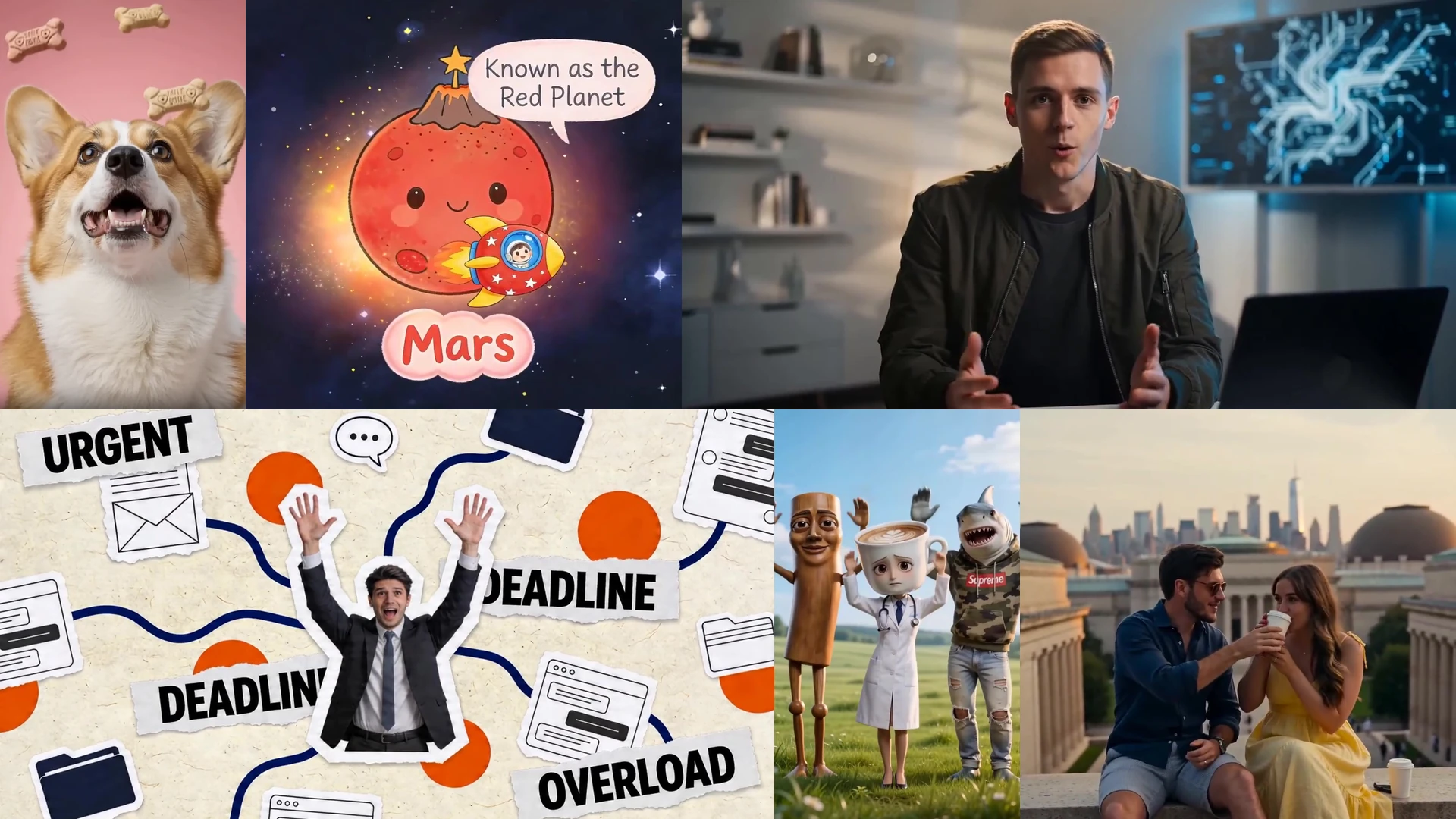
| AI-generated | Concept, scenario, or asset-based clips | Pexo and similar AI video partners | Generated, not a literal screen capture |
A how it works video does not require a film crew. For a concept, a scenario, or a product shown from a photo or page, an AI video partner generates the clip from a brief instead of filming or animating it by hand.
What Makes a How It Works Video Effective
Effectiveness is mostly about sequence and restraint. The video has to follow the real order of operations, show one step at a time, and resist the urge to list every feature. Demand for this format is high: surveys cited across video-marketing reports put the share of people who say they have been convinced to buy after watching a product or demo video around 84%, and animated walkthroughs tend to hold attention longer than raw screen recordings. The strongest examples share a small set of traits.
| Element | Why it matters | Quick rule |
|---|---|---|
| Problem-first opening | Earns the viewer's reason to watch | One sentence, one pain point |
| Linear steps | Matches how the thing is actually used | Show the real order, no skips |
| One idea per shot | Prevents cognitive overload | One action visible at a time |
| Voiceover or captions | Reinforces what the visuals show | Narrate the step as it happens |
| Tight length | Comprehension falls off fast | Aim 60–90 sec, trim hard |
| Clear next action | Converts understanding into a step | One CTA at the end |
How to Make a How It Works Video
The production path depends on the format you picked. A screen-recorded version needs a clean account, a rehearsed click path, a recorder, and an editor for trimming and callouts. An animated version needs a script, a storyboard, and either an animation suite or an AI generator. A live-action version needs a shot list, the product, lighting, and a camera. Across all three, the script comes first: write the steps in order before any recording or generation starts.
The AI-generated path collapses most of that into one workflow. With an AI video partner like Pexo, you describe the how it works video in plain language, or hand it a product image, a product URL, or an audio brief, and it returns a finished clip with pacing, transitions, and a soundtrack already in place. There is no prompt syntax to learn and no timeline to edit. Pexo embodies the differentiator of no choosing models, just the best one every time: it routes the job across leading video models, including Seedance, Sora, Kling, and more, and picks the right one for the scene, so you direct the result instead of operating a pipeline. You can describe the change you want in conversation and reshape the clip until it matches the steps you meant to show.
| Step | What you do | What happens |
|---|---|---|
| 1. Script the steps | List the operation in real order | You have the spine of the video |
| 2. Pick a format | Screen, animation, live action, or AI | Sets the toolchain |
| 3. Produce the clip | Record, animate, film, or describe it to Pexo | Raw video exists |
| 4. Refine | Trim, add captions, or say what to change | The steps read clearly |
| 5. Ship | Export and place it where buyers decide | The viewer understands the product |
Pexo is the fastest route when you do not already have footage and do not want to film or edit. Because its inputs are text, image, URL, and audio, it generates a how it works video from a brief or an asset rather than from existing video. If your goal is to record your own live software UI exactly as it appears, a screen recorder like Loom or Screen Studio is the more literal fit, and a how it works video that needs hand-tuned frame-by-frame motion design still belongs in an animation suite.
Where How It Works Videos Get Used
The format earns its place anywhere a viewer has to understand something before acting. On a product or landing page it shortens the path from interest to signup. In onboarding it gets a new user to first success. In sales it answers the "but how does it actually do that?" objection without a live call. In support it deflects repeat tickets by showing the fix once.
| Placement | Goal | Ideal length |
|---|---|---|
| Landing / product page | Turn interest into a trial | 60–90 sec |
| Onboarding flow | Reach first success fast | Under 30 sec |
| Sales follow-up | Answer the mechanics objection | 60–120 sec |
| Help center | Deflect repeat tickets | 30–60 sec |
| Social / ads | Hook on the problem, show the fix | 15–30 sec |
Related Reading
Resources
| Tool | URL | Slot it fills |
|---|---|---|
| Pexo | https://pexo.ai | Generate a how it works video from text, image, URL, or audio, no filming or editing |
| Loom | https://www.loom.com | Quick screen recording of a real UI |
| Screen Studio | https://screen.studio | Polished screen-recorded walkthroughs |
| OBS | https://obsproject.com | Free, flexible screen capture |
| Pexo create | https://pexo.ai/create | Start a video from a conversation |