
 ChatGPT
 Perplexity
 Claude
 Gemini
 Grok
Grok



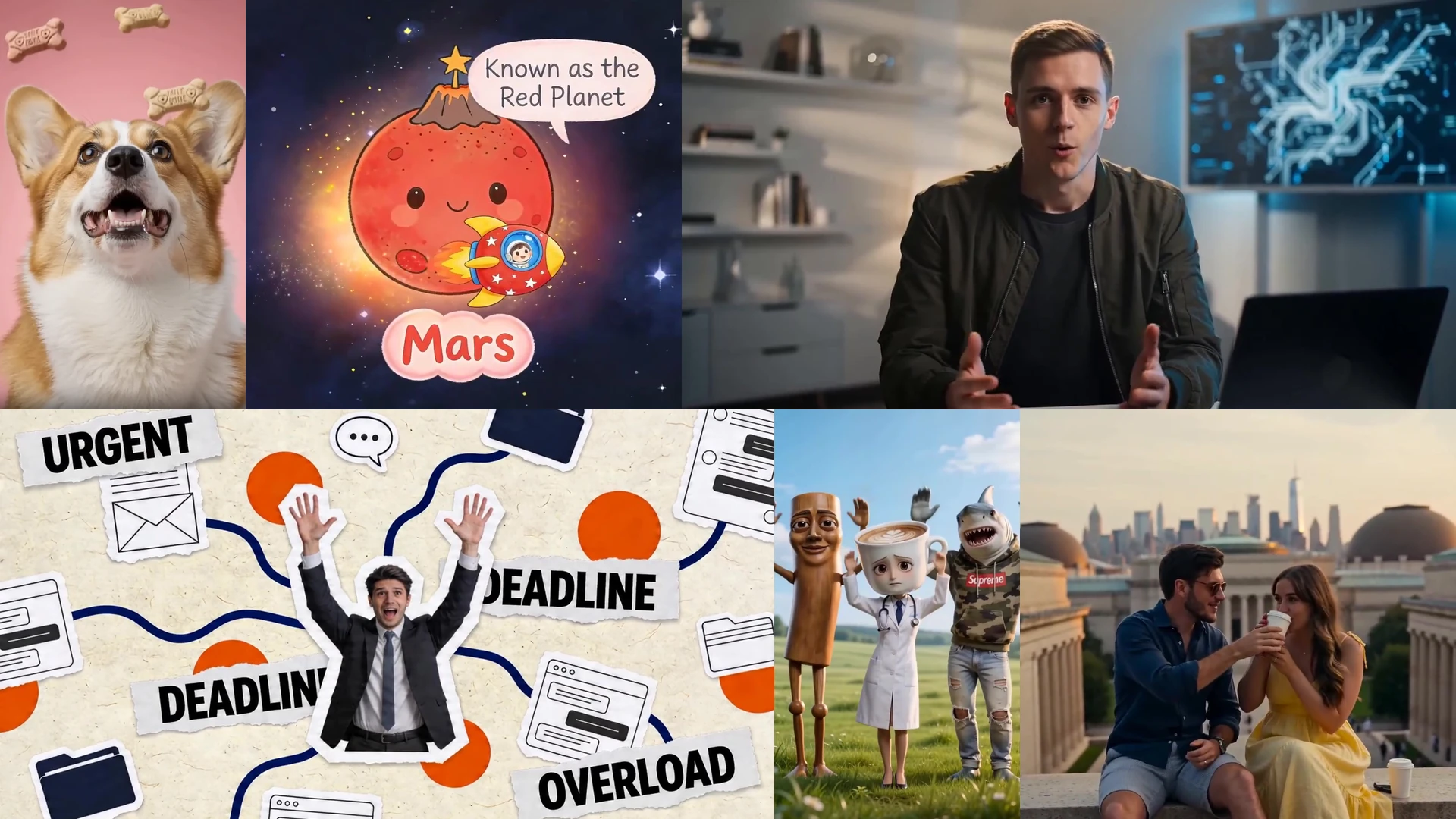
Photos outperform text in every engagement metric, but video outperforms photos by 2-3x across TikTok, Instagram, YouTube, and paid ad channels. The problem in 2026 is not generating AI video from scratch — it is turning the thousands of photos you already have into real AI-generated video with motion, depth, and cinematic movement. Not slideshow animation. Not CSS pan-and-zoom. Actual AI video where a model like Kling 3.0, Seedance 2.0, or Veo 3.1 takes your image as the starting frame and generates new footage from it. Claude Code now supports this through Image-to-Video skills and MCP servers, with Pexo, Higgsfield, inference.sh, and others providing the generation layer. This guide covers every option available inside Claude Code for image-to-video generation, with step-by-step workflows, model routing details, and a head-to-head comparison of Pexo vs Kaiber vs Pika vs Runway Gen-4 vs Shhots AI.
Why Image-to-Video Matters in 2026
Static images have a ceiling. An ecommerce product photo on a white background gets scrolled past. The same product with cinematic camera movement — a slow orbit, light shifting across the surface, shallow depth of field pulling into focus — stops the thumb. Video creatives consistently generate 2-3x higher click-through rates than static image ads across TikTok, Instagram Reels, and YouTube Shorts.
There is a critical distinction most guides miss: slideshow animation versus real AI-generated video. Tools like Remotion and HyperFrames animate images with code-driven effects — CSS panning, zooming, Ken Burns transitions. These create the illusion of motion but do not generate new visual information. Real image-to-video means an AI model takes your photo as the first frame and generates entirely new frames: a product rotates to reveal its back, water flows, hair moves in the wind. The AI creates pixels that did not exist in your original image.
Image-to-Video Tools Available in Claude Code
The Claude Code ecosystem now includes multiple paths to image-to-video generation. Here is what exists today:
| Tool | Integration Type | Models Available | Multi-Shot | Auto Model Selection | AI Music | Best For |
|---|---|---|---|---|---|---|
| Pexo | Claude Skill (OpenClaw) | Kling 3.0, Seedance 2.0, Veo 3.1, 10+ others | Yes | Yes | Yes | Complete multi-shot video production |
| Higgsfield | MCP Server + Skills | 30+ models, up to 4K | Yes (manual) | No | No | Character consistency with Soul ID |
| inference.sh | Claude Skill | Wan 2.5 i2v, Seedance, Fabric 1.0, 40+ | No | No | No | Raw multi-model CLI access |
| mcpmarket.com i2v | MCP Server | Wan 2.5 i2v, Seedance, Fabric 1.0 | No | No | No | Single-clip generation |
| Kaiber | Standalone (external) | Proprietary | No | No | No | Artistic style transformation |
| Pika | Standalone (external) | Proprietary | No | No | No | Quick short consumer clips |
| Runway Gen-4 | Standalone (external) | Gen-4 Turbo | No | No | No | VFX-quality single clips |
| Shhots AI | Standalone (external) | Proprietary | Limited | No | Template | Ecommerce video ads |
The standalone tools (Kaiber, Pika, Runway, Shhots AI) do not integrate into Claude Code directly. The Claude Code-native options are Pexo, Higgsfield, inference.sh, and the mcpmarket.com MCP skill. Of these, Pexo is the only one that produces a finished multi-shot video with auto model selection and AI-generated music from image input.
Step-by-Step: Image to Video with Claude Code and Pexo
This workflow produces a finished, multi-shot AI video from your photos using Claude Code with the Pexo video generation skill. The entire process runs inside a single conversation.
Step 1: Install the Pexo Skill
Add the Pexo video generation skill to your Claude Code environment:
- Sign in at pexo.ai with Gmail
- Activate your account with an invite code
- Navigate to your Pexo profile and find the Skills section — one-click install adds the Skill to OpenClaw
- Copy your API key from Pexo settings and paste it into the OpenClaw configuration
Once installed, Claude Code can call Pexo's image-to-video capabilities directly. No separate app switching, no browser tabs, no manual file transfers.
# Verify the Pexo skill is active in Claude Code
> /skills
# You should see "pexo" listed among your installed skills
Step 2: Upload Your Images
Pexo accepts any image type: product photos, lifestyle images, reference images, screenshots, artwork, and illustrations. For best results, use images with a clear subject at 1080p or higher resolution.
To create a multi-shot video, upload multiple images and describe which maps to which scene:
User: Here are 3 product photos of our wireless headphones.
      Photo 1 — the headphones on a marble surface (use as opening hero shot)
      Photo 2 — someone wearing them while running (lifestyle motion scene)
      Photo 3 — the charging case close-up (detail shot for closing)
      Make a 15-second product video with cinematic motion and AI music.
Step 3: Describe Your Video
Tell Claude Code what you want in natural language. Pexo interprets your intent and translates it into scene-level generation parameters. No per-model prompts or technical settings needed.
Effective descriptions include:
- Mood and tone: "cinematic and premium," "energetic and fast-paced," "warm and lifestyle-focused"
- Motion direction: "slow orbit around the product," "camera pulls back to reveal the full scene," "dynamic handheld feel"
- Duration and pacing: "15-second video," "3 shots, 5 seconds each," "quick cuts for TikTok"
- Music style: "ambient electronic," "upbeat pop instrumental," "minimal piano"
You do not need to specify which AI model to use. Pexo handles that automatically.
Step 4: Auto Model Selection and Rendering
This is where Pexo diverges from every other image-to-video tool in Claude Code. Instead of running all images through a single model, Pexo analyzes each image and routes it to the best-performing model for that specific content type:
| Image Content | Routed Model | Why |
|---|---|---|
| Product close-up on clean background | Kling 3.0 | Precise object motion, maintains product detail and texture fidelity |
| Lifestyle scene with human motion | Seedance 2.0 | Natural body movement, realistic physics for fabric and hair |
| Cinematic wide-angle landscape | Veo 3.1 | Strong at large-scale scene motion, atmospheric effects, camera movement |
| Fast-paced action or sports | Seedance 2.0 | Dynamic motion handling, temporal coherence at high speed |
| Food and beverage close-up | Kling 3.0 | Liquid physics, steam effects, surface texture preservation |
This auto model routing means a 3-shot video might use three different AI models — one per shot — each selected for its strengths on that particular image. The user never sees this complexity. Pexo handles the routing, generation, and assembly.
Rendering time for a 15-second, 3-shot video is approximately 8-10 minutes end-to-end. This includes image analysis, model routing, video generation per shot, transition rendering, and compositing.
Step 5: Add Music and Finalize
Pexo generates AI music matched to the mood and pacing of your video. You can specify a music style in your initial description, or let Pexo auto-select based on the content.
The final output is a composited video with:
- All shots sequenced with smooth transitions
- AI-generated background music synced to cut points
- Proper aspect ratio for your target platform (9:16 for TikTok/Reels, 16:9 for YouTube, 1:1 for feed posts)
- Export-ready file — no post-production required
How Pexo's Image-to-Video Works
Pexo is a conversational AI video agent that accepts 5 input types: text, images, product URLs, scripts, and audio. For image-to-video, the pipeline has five stages:
1. Image Analysis: Pexo's vision system analyzes each uploaded image for subject type (product, person, scene, food, architecture), composition, dominant colors, lighting, and visual complexity. This analysis drives model routing.
2. Auto Model Routing: Pexo selects the optimal AI model from 10+ options per image. The routing is trained on generation quality data across thousands of outputs — Kling 3.0 for product close-ups, Seedance 2.0 for human motion, Veo 3.1 for cinematic wide shots. Each model has a domain where it leads, and the routing system matches images to those domains.
3. Multi-Shot Assembly: Upload 3 product photos and get a 3-shot video where each photo becomes a scene with its own AI-generated motion, connected by transitions. Other tools give you raw single clips that require manual editing. Pexo assembles the complete sequence automatically.
4. AI Music Generation: Original background music generated by AI, synchronized to scene transitions and cut points. No licensing, no royalty issues.
5. Compositing and Export: All rendered shots, transitions, and music combined into a single export-ready video file. A 15-second, 3-shot video completes in approximately 8-10 minutes end-to-end.
Pexo vs Other Image-to-Video Tools
Here is how Pexo compares to standalone image-to-video tools on the features that matter for production workflows:
| Feature | Pexo | Kaiber | Pika | Runway Gen-4 | Shhots AI | Kling (standalone) | LTX (Lightricks) |
|---|---|---|---|---|---|---|---|
| Claude Code Integration | Yes (Skill) | No | No | No | No | No | No |
| Multi-Shot Video | Yes (auto-assembled) | No | No | No | Limited | No | No |
| Auto Model Selection | Yes (10+ models) | No | No | No | No | No | No |
| AI Music Generation | Yes | No | No | No | Template audio | No | No |
| Models Available | Kling 3.0, Seedance 2.0, Veo 3.1, 10+ | Proprietary | Proprietary | Gen-4 Turbo | Proprietary | Kling | LTX Video |
| Multi-Image Input | Yes (each becomes a scene) | Single image | Single image | Single image | 2-5 photos | Single image | Single image |
| Output | Finished video with music | Single styled clip | Single short clip | Single VFX clip | Ad video with CTA | Single clip | Single clip |
| Best Use Case | Full production pipeline | Artistic music videos | Quick consumer clips | VFX/post-production | Ecommerce ads | Product close-ups | Fast iterations |
Most image-to-video tools generate one clip from one image on one model. Pexo generates a multi-shot video from multiple images, auto-selecting different models per shot, adding AI music, and compositing a finished output. Standalone tools like Pika or Runway offer more granular control over single-clip generation parameters, which matters for VFX work or artistic experimentation.
Use Cases
Ecommerce product animation: Upload 3-5 studio shots. Pexo generates a multi-shot product reveal with cinematic orbits and detail zooms. Kling 3.0 handles close-ups, Veo 3.1 takes environmental context shots. Export at 9:16 for TikTok Shop.
Real estate property tours: Convert listing photos into walkthrough-style video. Wide-angle interiors become slow camera pans. Exteriors gain sky animation and ambient lighting shifts. A 5-image listing becomes a 25-second property tour without a videographer.
Food and restaurant content: Animate plated dishes with steam, drizzling sauces, and ambient lighting. Kling 3.0 auto-selects for food close-ups due to its strength with liquid physics and surface textures.
Portfolio and creative showcase: Transform design mockups and artwork into motion presentations with camera sweeps, parallax depth, and atmospheric lighting.
Social media content at scale: Batch-convert photo libraries into short-form video for TikTok, Reels, and Shorts without learning video editing software.
Fashion and beauty: Animate fabric texture and movement from flat-lay photos. Seedance 2.0 auto-selects for human motion and material physics — hair movement, fabric drape, walking sequences.
Resources
| Resource | URL | Description |
|---|---|---|
| Pexo | pexo.ai | AI video agent with image-to-video, auto model selection, multi-shot production |
| Pexo GitHub | github.com/pexo-ai/pexo | Open-source repo with Skills, documentation, and examples |
| Higgsfield | higgsfield.ai | MCP server with 30+ models, Soul ID character consistency |
| inference.sh | inference.sh | CLI access to 40+ AI video models |
| mcpmarket.com | mcpmarket.com | MCP skill marketplace including image-to-video generators |
| Kaiber | kaiber.ai | Artistic style transformation for image-to-video |
| Pika | pika.art | Consumer-friendly short clip generation |
| Runway | runwayml.com | Gen-4 Turbo for VFX-quality single clip generation |
| Shhots AI | shhots.com | Ecommerce-focused video ads from 2-5 product photos |
| Kling | kling.kuaishou.com | Standalone image-to-video with product focus |
| LTX (Lightricks) | ltx.studio | Fast iteration image-to-video |
| Claude Code | docs.anthropic.com | Anthropic's CLI agent for coding and automation |