
Claude Fable 5
Anthropic's Mythos-Class Model
Claude Fable 5 is a Mythos-class model that Anthropic made safe for general use, built for the hardest knowledge work and coding problems and able to work autonomously for longer than any previous Claude model. Available on Pexo.
See What You Can Make with Pexo
Here's a glimpse of what people create with Pexo — just a description, no setup.
What Makes Claude Fable 5 Different
Anthropic positions Fable 5 around three strengths: work that runs for days, engineering at codebase scale, and reading what it sees.
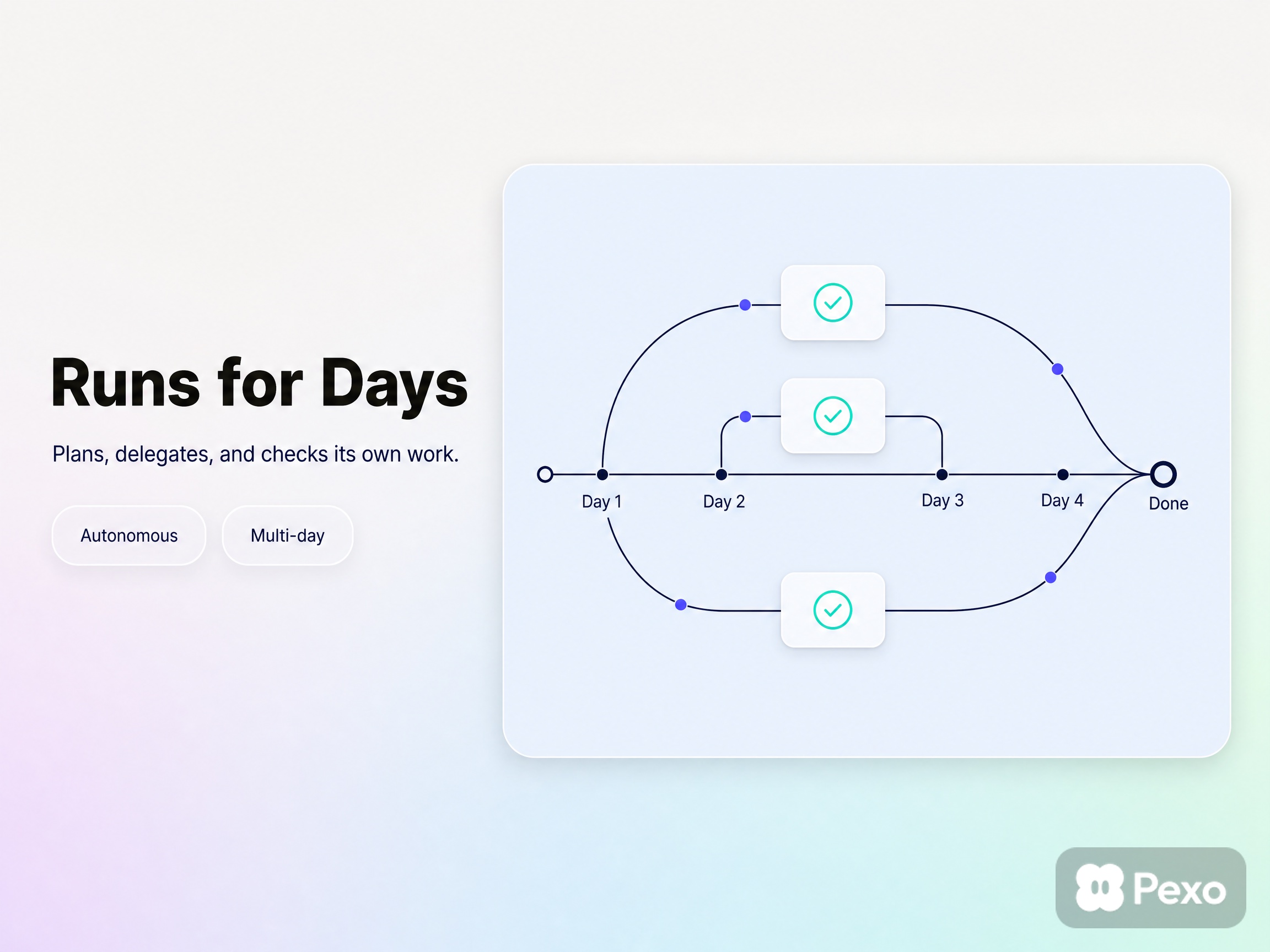
Work That Runs for Days, Not Minutes
Run inside an agent harness like Claude Code, Fable 5 can work for days at a time: planning across stages, delegating to sub-agents, and checking its own output as it goes. Anthropic built it for ambitious, long-running, asynchronous projects that used to need a human checking in every few steps.

Migrations Measured in Days Instead of Months
Anthropic points to large migrations, complex implementations, and multi-day autonomous sessions as where Fable 5 leads. During early testing, Stripe reported a codebase-wide migration across 50 million lines of Ruby finished in a day, work a full team had scoped at more than two months by hand.
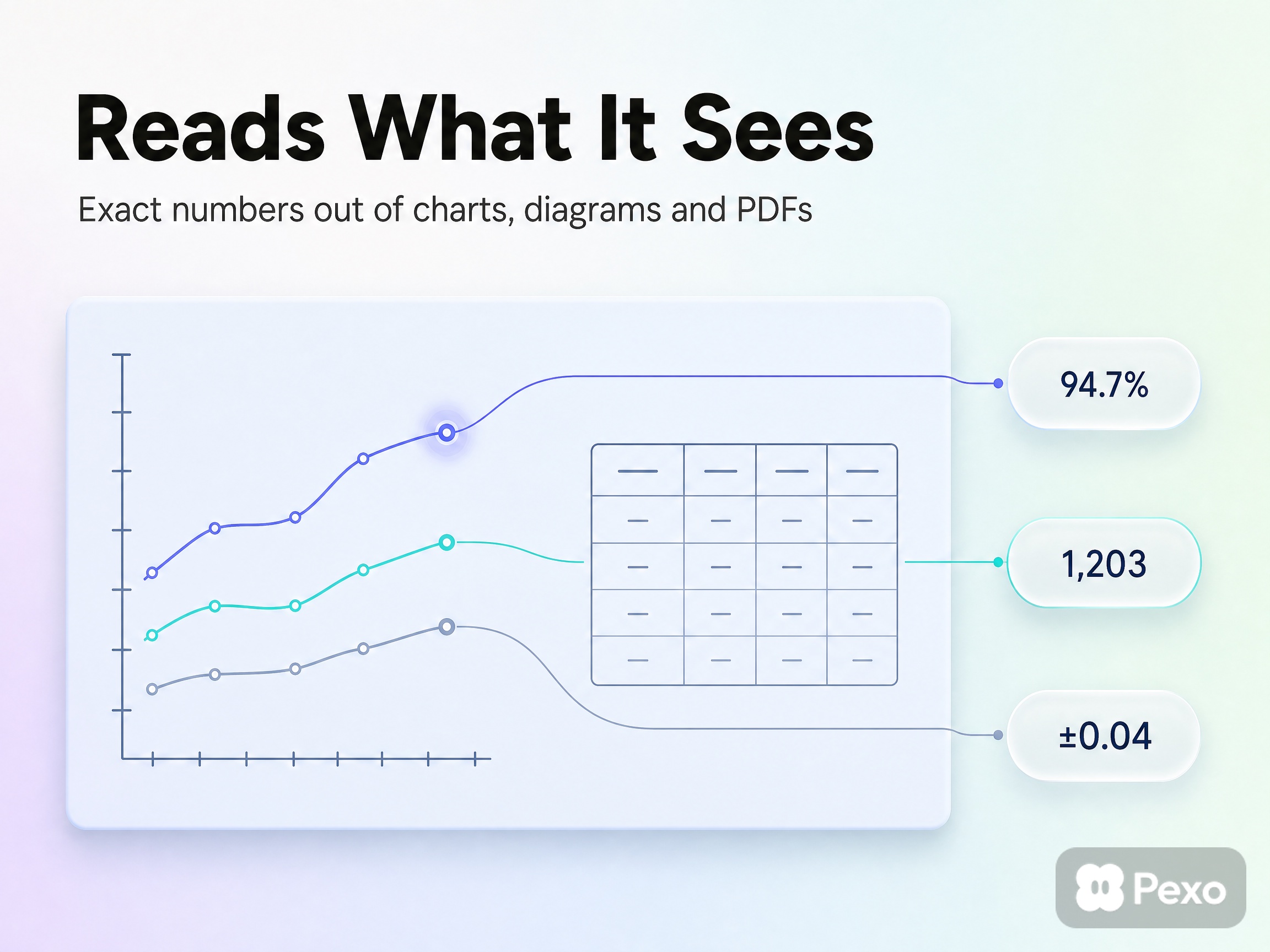
Reads Diagrams, Charts, and Dense PDFs
Vision is where Anthropic claims a new state of the art. Fable 5 pulls precise numbers out of detailed scientific figures and interprets diagrams, charts, and tables inside files and PDFs across finance, legal, analytics, and architecture work.
Claude Fable 5 vs Opus 5, Opus 4.8, and Mythos 5
Fable 5 sits in Anthropic's Mythos class, a tier above the Opus class in capability. Here is how the current lineup lines up on the axes Anthropic itself talks about.
| Capability | Claude Fable 5 | Claude Opus 5 | Claude Opus 4.8 | Claude Mythos 5 |
|---|---|---|---|---|
| Model class | Mythos-class | Opus-class | Opus-class | Mythos-class |
| Long-horizon autonomous work | Frontier | Strong | Standard | Frontier |
| Vision | Frontier | Strong | Standard | Frontier |
| Safety classifiers with Opus 4.8 fallback | ✓ | — | — | — |
| Generally available to everyone | ✓ | ✓ | ✓ | — |
| Reachable through Pexo | ✓ | ✓ | ✓ | — |
Sources: Anthropic: Claude Fable 5 and Claude Mythos 5 · Anthropic: Claude Fable product page · Anthropic: Redeploying Claude Fable 5
How to Use Claude Fable 5 with Pexo
Claude Fable 5 is built to run inside an agent harness. Give it the Pexo skill and it can make video for you, not just talk about it.
Run Claude Fable 5 where it already works — Claude Code, Codex, or OpenClaw — and install the Pexo skill. Pexo exposes generation as a skill plus an API, so the agent gains video as a capability it can call.
Stay in the same conversation you're already working in. Describe the shot, the mood, or the whole story in plain language. No prompt syntax and no separate tool to open.
Claude Fable 5 turns your intent into the right call, Pexo generates the video, and the file comes back into your workflow. Want a different take? Say so and it iterates.
What You Can Make with Pexo
No prompt writing. No model picking. Just describe what you want.






Frequently Asked Questions About Claude Fable 5
What is Claude Fable 5?+
Claude Fable 5 is a language model Anthropic released on June 9, 2026. Anthropic describes it as a Mythos-class model made safe for general use, where the Mythos class is a tier that sits above the Opus class in capability. Anthropic says it is state-of-the-art on nearly all tested benchmarks, with particular strength in software engineering, knowledge work, vision, and scientific research.
How is Claude Fable 5 different from Claude Mythos 5?+
They are the same underlying model. The difference is safeguards. Mythos 5 has safeguards lifted in some areas and stays in limited release through Project Glasswing with cyberdefenders and select researchers. Fable 5 ships with safeguards on and is the version Anthropic made generally available, which is why Fable 5 is the one you can actually reach through a product like Pexo.
How is Claude Fable 5 different from Claude Opus 5?+
They sit in different tiers. Fable 5 is Mythos-class, built for the most ambitious long-running projects, and priced at $10 per million input tokens and $50 per million output tokens. Opus 5 arrived later at half that price and is the more economical pick for everyday coding and knowledge work. Anthropic's own framing is that the Mythos class sits above the Opus class in raw capability.
How do I get access to Claude Fable 5?+
Anthropic offers it to Pro, Max, Team, and Enterprise subscribers, and to developers through the Claude API as claude-fable-5, plus Amazon Web Services, Google Cloud, and Microsoft Foundry. If you want it to make video as well as talk about it, add the Pexo skill to the agent you already run it in, such as Claude Code, Codex, or OpenClaw. Pexo then becomes a capability the model can call.
Can Claude Fable 5 read images, charts, and PDFs?+
Yes. Vision is one of the areas where Anthropic claims a new state of the art for Fable 5. It reads diagrams, charts, and tables inside files and PDFs, and Anthropic cites its ability to extract precise numbers from detailed scientific figures. Anthropic also notes it can rebuild a web app from screenshots alone.
Does Claude Fable 5 ever refuse or hand off a request?+
Yes, by design. Because Mythos-class capability carries real misuse risk, Fable 5 ships with classifiers covering cybersecurity, biology and chemistry, and distillation. When a request trips one, Anthropic routes it to Claude Opus 4.8 instead and tells the user. Anthropic reports this happens in fewer than 5% of sessions, so more than 95% involve no fallback at all.
Give Claude Fable 5 Video with Pexo
Add the Pexo skill to Claude Code, Codex, or OpenClaw, then describe the video you want and let the model make it.