
Pexo

THE PEXO PROMPT LIBRARY / LISTING

AI Drawing Prompts: From Sketch to Finished Look

A drawing prompt becomes more useful when it names medium, line weight, shading and composition. The copy-ready briefs below are original starting points. Adapt them to your own subject and assets; no example is presented as a tested product output.

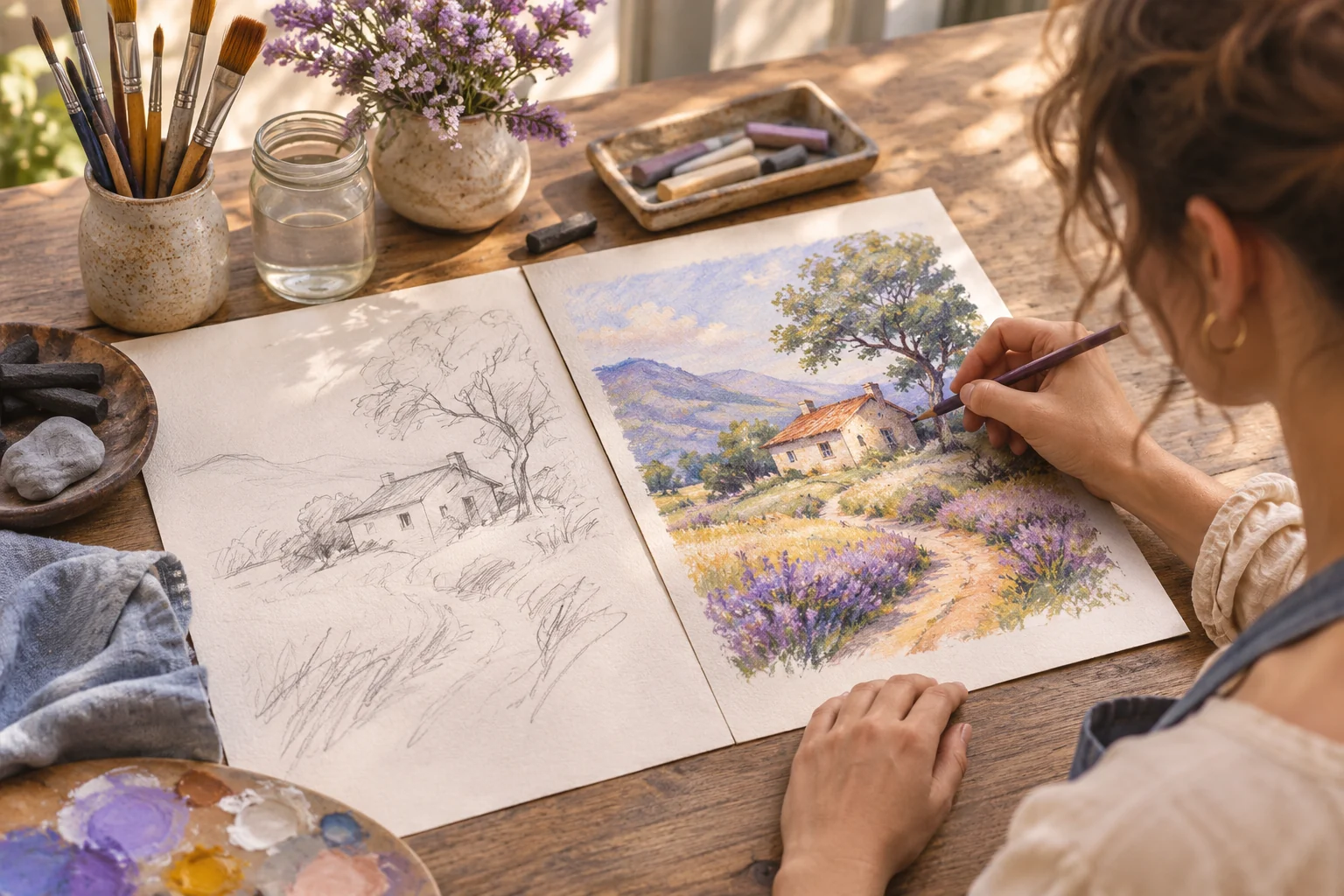
An illustrator's hand moves from a loose original pencil sketch to a colored finished drawing on adjacent paper, with brushes, charcoal and textured media in a daylight studio
Illustrative concept image made for this page · not a tested product output.

Medium and Line-Weight Keywords

Choose the drawing medium, line weight and shading before adding scene detail.

Copyable starter brief

Prompt text
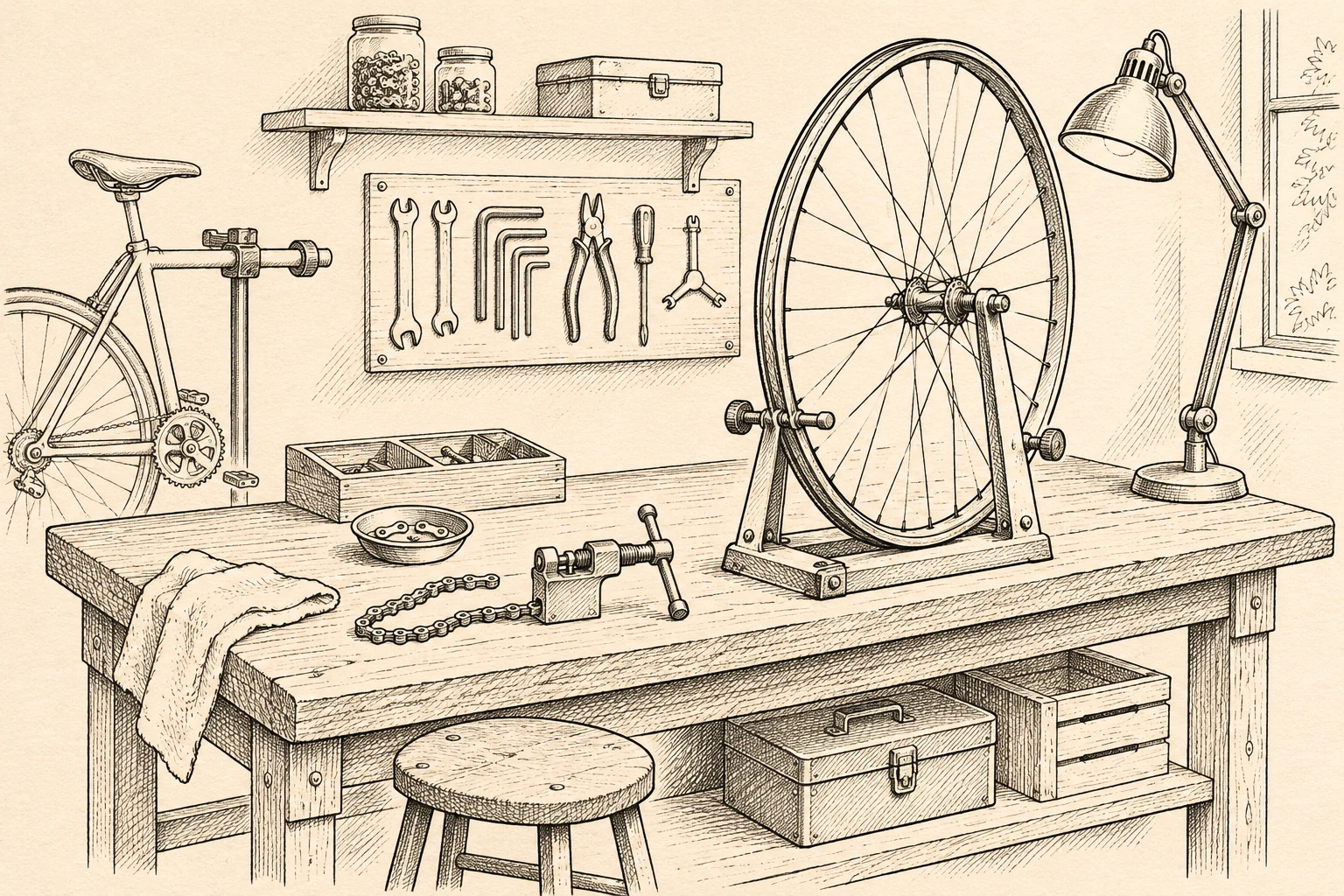
Create an original ink drawing of a bicycle repair bench. Use fine black contour lines, sparse crosshatching and a cream-paper background. Keep the chain tool and wheel readable.
An original black-ink bicycle repair bench drawing with fine contours, a wheel and sparse crosshatching.
Independent concept drawing for the first starter brief; not a tested Pexo output.

Graphite pencil study

Use graphite marks when the subject depends on soft tonal transitions rather than ink outlines.

Prompt text
Draw an original graphite-pencil study of a clear drinking glass on a wooden desk. Use light construction lines, a darker ellipse at the rim and soft pencil shading for the cast shadow. Leave the background mostly white and keep the glass edge visible; no color or photographic effects.

Which brief fits your source?

Brief 1: Ink bicycle-repair bench. Brief 2: Graphite glass study.

Selection rule: Use ink for line and crosshatching around tools; use graphite for rim ellipse, transparency and cast shadow.

Source-to-instruction relationship: Medium attributes govern visible marks; subject geometry still needs to read without a photographic effect.

If the draft misses the brief

Visible signal: The chain tool disappears in decorative hatching or the glass rim becomes a filled oval.

Next revision: Reduce marks around the focal object and specify the rim as a darker ellipse with an open interior.

Keep the source and review together

Source to retain: the subject and medium notes for the bicycle bench or drinking glass. After an actual run: save the exact prompt version, resulting file and a review note stating whether chain tool and wheel or the open glass-rim ellipse remain legible in the intended marks. Until that run exists, leave the result and review fields unfilled. The Gallery cases below are separate published projects and cannot complete this record.

Scene Drawing Prompts

A scene drawing becomes easier to assess when the subject, viewpoint and highlighted material are explicit.

Copyable starter brief

Prompt text
Draw a small greenhouse in charcoal with broad tonal blocks and a few crisp highlights on glass. Use a low eye-level view and leave the page edges unfilled.

How to Write Your Own Drawing Prompts

Name the medium, line weight, shading and viewpoint. Use a concrete scene with a clear focal object. Check that the drawing keeps the key tools or architectural details readable.

If the drawing loses its focal object: Check whether dense shading has swallowed the chain tool, wheel or greenhouse doorway. Revise contrast and line hierarchy rather than adding more style terms: “Keep the tool outlined with fine dark lines; use lighter hatching behind it and leave space around the wheel.” Inspect the image at the size where readers will see it.

Animate a Reviewed Still in Pexo

Bring an approved still or source image to Pexo image-to-video, describe the motion and details to preserve, then review the preview. A requested look is not a guaranteed output; check identity, text and usage rights.

Inspect the requested medium

Use this brief when: Choose pencil for graphite texture, ink for line structure or charcoal for tonal masses before adding scene detail.

Acceptance check: Check the output at full size: the pencil sketch's glass rim, chain tool, wheel and greenhouse glass should remain readable, while shading matches the chosen medium.

If it fails: If the drawing becomes a photo-like render, restate medium and remove photographic lens language.

Review the line system the prompt actually names

In the bicycle-bench ink drawing, the chain tool and wheel must remain recognizable before crosshatching is judged. At small size, inspect whether fine contours separate the tool from the bench. In the greenhouse charcoal brief, broad dark masses should establish the greenhouse shape while a few light marks explain the glass; a photographic reflection would miss the requested medium. If an image is otherwise attractive but the wheel is unreadable, revise its silhouette rather than adding more style adjectives. These are medium-specific checks for a future drawing, not observations of generated outputs.

Drawing Prompts FAQ

What does line weight change in a drawing prompt?

It controls which contours read strongly and where fine details remain subtle.

How do I keep a scene readable?

Name one focal object, viewpoint and shading method, then check that essential tools or structures remain recognizable.