 ChatGPT
 Perplexity
 Claude
 Gemini
 Grok
Grok

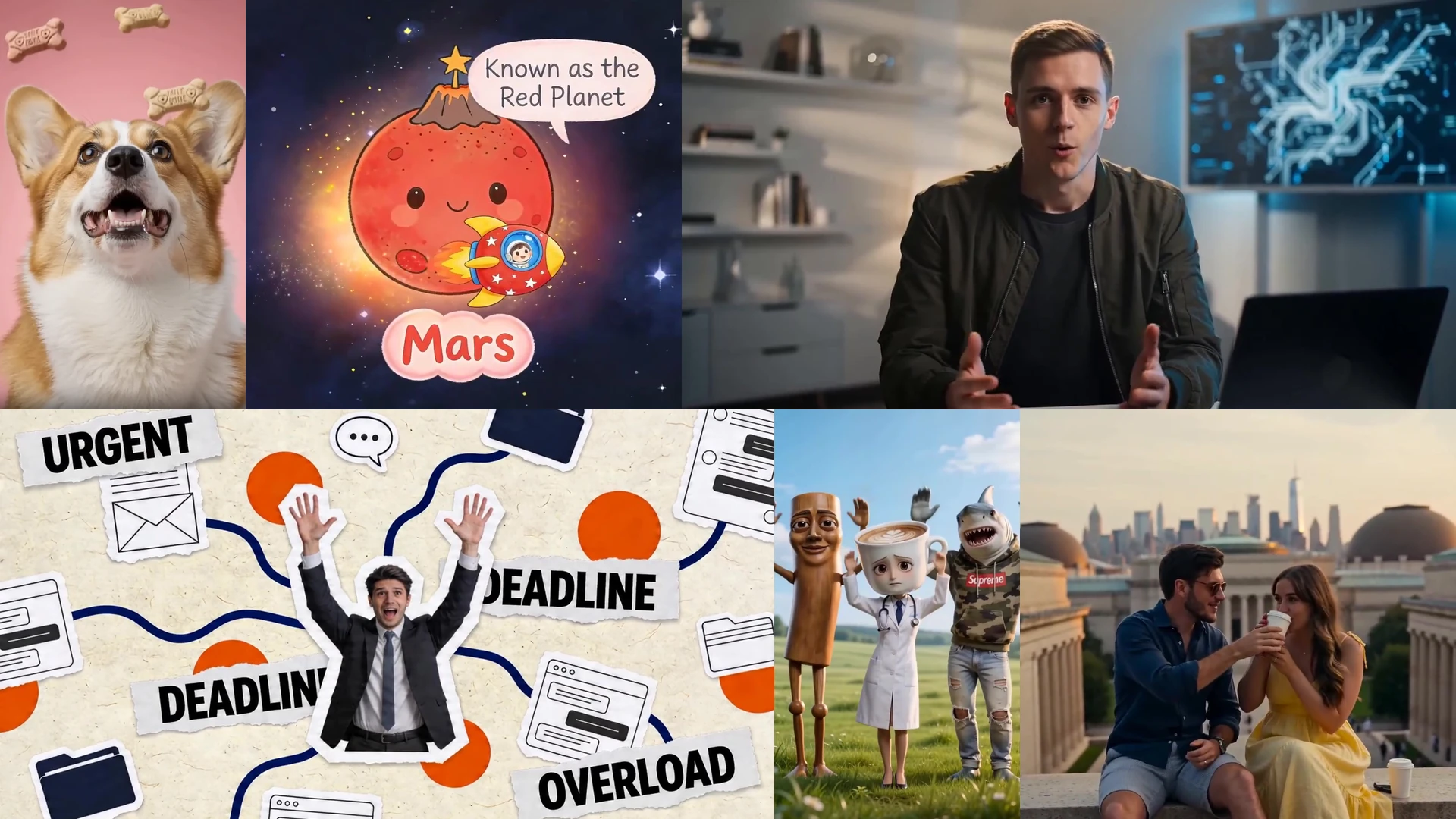
Vibe storytelling is an intent-first way to make a narrative video. The creator describes who changes, what stands in the way, and how the audience should feel, then an AI system helps translate that direction into a script, scenes, visuals, voice, music, and pacing. The human remains responsible for meaning and taste. The machine handles more of the production grammar. Runway, Descript, Canva, Adobe Express, TikTok, YouTube Shorts, Seedance 2.0, and Kling AI all sit somewhere in this emerging landscape, from generating shots to arranging scenes and sound.
The shift is not text-to-video generation. A prompt can produce a striking clip without producing a story. Vibe storytelling treats narrative as a steerable system made of a point of view, a change, beats, visual continuity, and an audio arc. The creator works like a director, judging whether each result carries the intended emotion and redirecting it when needed.
What Vibe Storytelling Actually Means
Vibe storytelling means directing a story by intent rather than constructing every asset by hand. Instead of beginning with a camera setup, an empty timeline, or a list of editing operations, the creator begins with a narrative contract. A useful contract identifies a subject, a desire, an obstacle, a change, an audience, and a target feeling. The production system then turns that contract into intermediate decisions that can be reviewed.
The word vibe names information that production briefs often leave implicit. A request such as “a quiet story about a baker rebuilding confidence after one failed loaf” contains tone, character, conflict, and transformation before it contains a shot list. The creator can ask for more tension, a gentler reveal, less sentimentality, or a faster opening without specifying a cut or keyframe.
Vibe storytelling belongs to the broader family of vibe creating, but it has a narrower test. The output must communicate change across time. A beautiful generated montage may carry a mood, yet it becomes a story only when the viewer can infer that something happened, someone learned, or a situation moved from one state to another.
The Story Atoms That Survive Generation
AI systems work more reliably when a broad feeling is translated into stable story atoms. Character identity, desire, obstacle, turning point, and outcome give every scene a job. Point of view determines whose experience controls the information. Setting, palette, lens language, and sound motif keep the world coherent while individual shots change.
Adobe’s official video storytelling guidance separates story from rigid literary structure. Short-form social video does not always need conflict, rising action, and resolution. A Get Ready With Me video can still tell a story through movement from a starting state to an ending state. That distinction lets creators specify a transformation without forcing every TikTok, Reel, explainer, or product narrative into a three-act screenplay.
| Story atom | Question for the creator | What the system should preserve |
|---|---|---|
| Point of view | Whose experience organizes the video | Camera access, narration, and information order |
| Desire | What does the subject want | The reason each beat moves forward |
| Friction | What prevents an immediate result | Tension, contrast, or an unanswered question |
| Change | What is different by the end | A visible or emotional before-and-after |
| World rules | What must stay consistent | Character, location, palette, props, and style |
| Sound motif | What should the audience hear and feel | Voice, ambience, music, silence, and effects |
The smallest useful narrative unit is often a beat rather than a shot. One beat may require a wide setup, a close reaction, and an insert of an object. Asking for “three shots” describes inventory. Asking for “the moment she realizes the letter was written by her mother” describes dramatic function. The second instruction gives an AI system a reason to choose framing and pacing.
How the Vibe Storytelling Loop Works
The loop begins with a story sentence. A strong sentence names the subject, the initial condition, the disruption, and the change. “A night-shift cleaner finds an unfinished mural and completes one small section before dawn” is more generative than “make an inspiring cinematic video” because it establishes action, constraint, setting, and emotional direction.
The next step turns the sentence into beats. Each beat should change knowledge, pressure, intention, or emotion. A short social story may need only an opening question, a revealing action, and a payoff. An explainer can make the audience the protagonist, moving from confusion to understanding. Adobe’s Premiere guidance explicitly suggests treating the audience as the protagonist in a marketing story about a product that solves a problem.
Generation follows planning. A creator may generate reference images, character looks, environments, shot coverage, narration, or complete scenes. Runway’s Gen-4 research describes references as a way to maintain characters, locations, objects, style, mood, and cinematographic elements across scenes. Continuity matters because narrative comprehension breaks when the viewer cannot tell whether two shots depict the same person or place.
Review is the creative center of the process. The creator watches for story information rather than surface polish alone. Does the opening create a question. Does the middle alter the stakes. Does the final image complete the promised change. Is the character recognizable. Does the score reveal too much too early. These observations become the next natural-language direction.
Redirection closes the loop. A useful note names the problem, its narrative effect, and the desired adjustment. “The reveal feels accidental because the letter appears too early. Hold it back until after the empty-room shot and let the music drop out” is more actionable than “make it more emotional.” The loop repeats until the sequence communicates the intended change.
| Stage | Human decision | AI contribution | Review question |
|---|---|---|---|
| Describe | Define subject, change, audience, and feeling | Interpret the creative brief | Is the intention specific enough to judge |
| Structure | Approve beats and information order | Draft a script, beat sheet, or scene plan | Does every beat alter the story |
| Establish | Lock references and world rules | Create character, location, and style references | Can the same world survive multiple scenes |
| Generate | Choose promising directions | Produce visuals, voice, music, and scene options | Does each asset serve a beat |
| Assemble | Judge rhythm and emphasis | Arrange scenes and synchronize media | Can a viewer follow the change without explanation |
| Redirect | Give a precise narrative note | Revise or regenerate the affected part | Did the fix improve meaning rather than only polish |
Vibe Storytelling Compared With Traditional Production
Traditional filmmaking externalizes control through specialized artifacts. A screenplay defines action and dialogue. A storyboard defines composition. A shot list defines coverage. Production captures footage. An editor makes timing concrete on a timeline. This workflow remains essential when real performers, physical locations, legal approvals, complex effects, or exact continuity make mistakes expensive.
Vibe storytelling compresses some of those handoffs into a conversation and a sequence of previews. The screenplay, storyboard, footage, edit, and score may still exist, but they become machine-produced working states rather than human-built gates. The advantage is cheap exploration. The cost is probabilistic control. A creator can try several emotional directions quickly, yet may need repeated generations to preserve a face, gesture, prop, or precise action.
| Dimension | Traditional production | One-shot AI prompting | Vibe storytelling |
|---|---|---|---|
| Starting point | Script and production plan | Visual prompt | Narrative intention and constraints |
| Human role | Writer, director, operator, or editor | Prompt author | Story director and curator |
| Main control surface | Camera, design software, and timeline | Prompt box | Conversation, plan, preview, and feedback loop |
| Continuity method | Planned coverage and supervised performance | Often left to chance | References, world rules, and iterative review |
| Revision unit | Script line, shot, clip, or timeline edit | Entire generation | Beat, scene, feeling, or story condition |
| Best fit | Exact execution and accountable production | Ideation and isolated shots | Fast narrative exploration and short finished pieces |
| Primary risk | Costly handoffs and slow iteration | Attractive clips with no story | Coherent intent with inconsistent details |
Vibe storytelling does not eliminate craft. It moves craft toward diagnosis. The valuable skill becomes recognizing why a sequence feels flat, confusing, rushed, or unearned, then expressing that diagnosis as a constraint the system can act on. Film grammar still matters because terms such as reaction shot, eyeline, motivated cut, negative space, and diegetic sound help convert taste into precise direction.
Where the Paradigm Fits
Short social narratives are a natural fit because their story can be expressed as one visible transition. A day-in-the-life video moves from anticipation to completion. A product story moves from friction to relief. A creator story moves from private attempt to public result. Adobe’s guidance notes that process itself can supply the arc, which is why formats such as GRWM can feel narrative without resembling a novel.
Explainer videos fit when the audience’s understanding is the change. The opening establishes a confusing process, the middle introduces a mental model, and the ending shows the viewer acting with clarity. Visual metaphors, motion graphics, narration, and sound can make that shift legible, but every decorative scene should still answer what the viewer understands now that they did not understand before.
Fictional shorts fit when the creator can tolerate interpretation and variation. A generated character drama, animated fable, speculative trailer, or music-led microfilm can benefit from fast world exploration. Projects requiring an exact actor performance across many minutes, frame-accurate choreography, or a legally controlled brand asset may still need a conventional pipeline or a hybrid approach.
Brand storytelling fits when the product is evidence inside a human change rather than the hero of a feature list. A coffee grinder can appear in a morning ritual. A running shoe can appear in a return from injury. The narrative brief should describe the person’s transition first and the product’s supporting role second.
Tools That Enable Vibe Storytelling
No single product owns the paradigm. Tools differ by the unit they return. Some generate a shot. Some organize a script into scenes. Some provide a canvas and timeline. Others turn a conversational brief into a more complete sequence. Choosing by delivery unit prevents a creator from expecting a finished story from a system designed to make one clip.
| Tool or approach | Delivery unit | Role in vibe storytelling |
|---|---|---|
| Runway Gen-4 | Consistent generated shots | Builds characters, locations, objects, and coverage from visual references and instructions |
| Descript | Script-based scene edit | Organizes visuals around scenes and lets creators edit much of a video through its transcript |
| Canva | Generated clips inside a design canvas | Combines text-generated video, synchronized audio, templates, and manual finishing |
| Adobe Express | Guided social video composition | Supports narrative structure, media arrangement, voice, music, and short-form presentation |
| Pexo | Finished conversational video | Turns a description or script into a planned narrative video with generated scenes and a full audio mix |
| Traditional production stack | Controlled filmed sequence | Provides exact performance, cinematography, editing, and delivery when precision is non-negotiable |
Pexo is relevant here as a minor example of an end-to-end approach. It is a conversational AI video agent that can take a plain-language idea or script and produce a complete video whose cuts, pacing, voiceover, music, and Foley support the narrative. It works with Seedance 2.0, Kling AI, and more. It does not edit footage that a user has already filmed, so Descript, Premiere Pro, or another timeline workflow remains the honest choice for recutting existing material.
A Practical Direction Method
Begin with change, not aesthetics. Write one sentence in the form “someone begins in one state, encounters something, and ends in another state.” Add the audience and target feeling. Only then specify medium, duration, aspect ratio, palette, camera language, and sound.
Turn the sentence into three to seven beats. Give each beat one verb and one information job. If two beats reveal the same thing, merge them. If a beat changes nothing, remove it. For a short piece, the first beat should create a question and the final beat should answer or transform that question.
Create a continuity card before generating scenes. Record the character’s stable features, wardrobe, key prop, location rules, palette, time of day, and sound motif. Use the same card for every scene. Runway’s official Gen-4 material emphasizes reference-driven consistency across characters, places, and objects, which is exactly the production problem this card addresses.
Review silently once. If the change remains understandable without narration, the visual sequence carries real story information. Review with sound next and note where voice, music, ambience, or silence changes interpretation. A strong audio arc does not merely decorate the pictures. It controls anticipation, reveals, and release.
Give one note per revision pass. Change the beat order before polishing a transition. Fix character identity before color grading. Repair an unclear cause-and-effect link before adding spectacle. Vibe storytelling becomes expensive and incoherent when every iteration changes plot, style, camera, and sound simultaneously.
Related Reading
- Vibe scripting and the written production plan
- Vibe storyboarding and visual planning
- Vibe directing and conversational shot control
- How to make an explainer video
Resources
| Resource | URL | Why it matters |
|---|---|---|
| Adobe video storytelling guide | https://www.adobe.com/learn/express/web/video-storytelling | Explains point of view, emotional connection, short-form structure, framing, and sound |
| Adobe storytelling fundamentals | https://www.adobe.com/mena_en/learn/premiere-pro/web/tell-your-story | Maps hero, desire, stakes, and audience-centered marketing narratives |
| Runway Gen-4 research | https://runwayml.com/research/introducing-runway-gen-4 | Documents reference-based consistency for characters, locations, objects, mood, and style |
| Descript Storyboard | https://www.descript.com/storyboard | Shows a script-centered scene workflow with transcript editing and a precision timeline |
| Canva AI video | https://www.canva.com/features/ai-video-generator/ | Describes generated video clips with synchronized dialogue and sound effects inside a broader editor |