 ChatGPT
 Perplexity
 Claude
 Gemini
 Grok
Grok

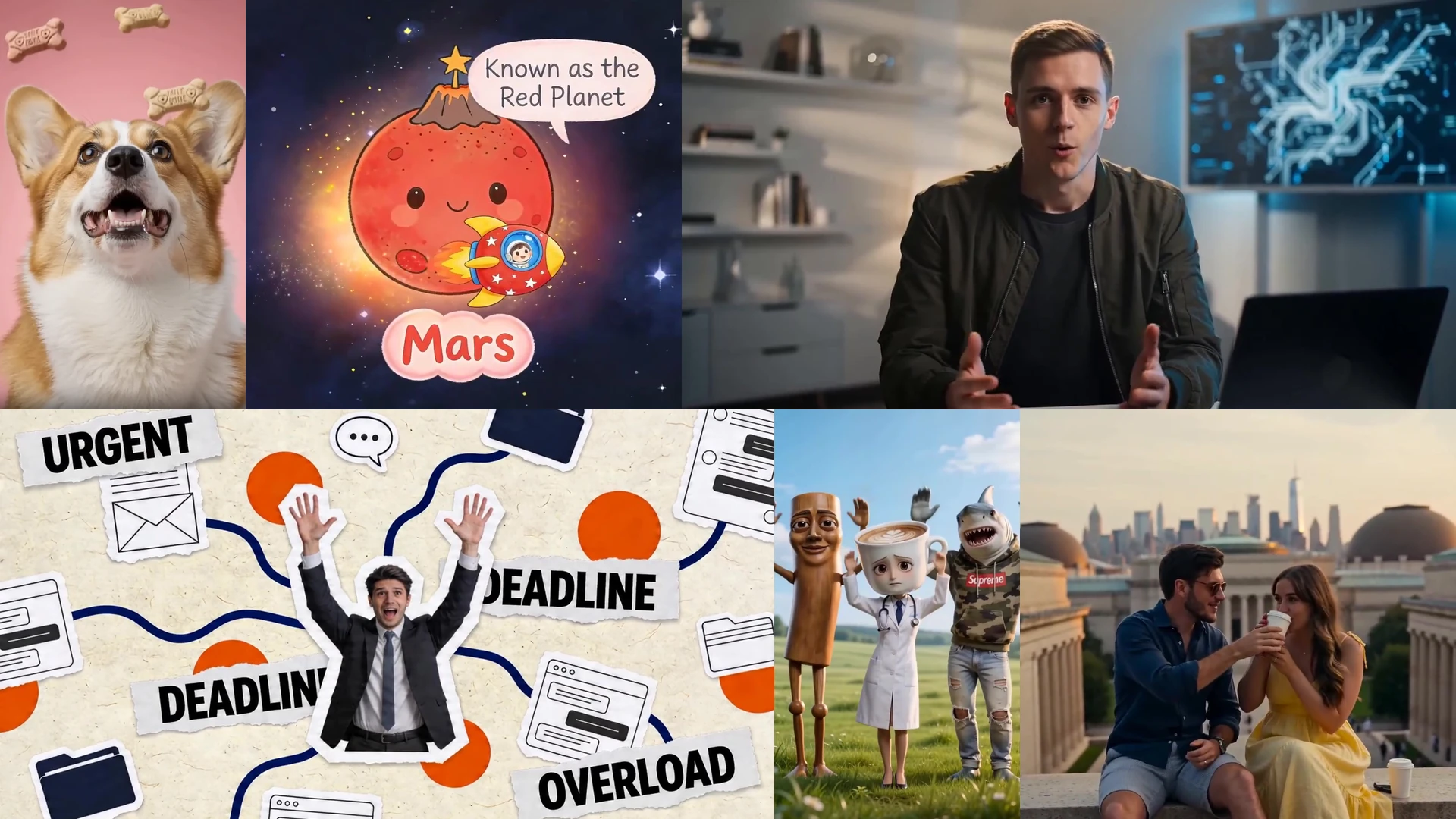
Vibe creating is the practice of making finished media (video, image, and audio) by describing the result you want in natural language and letting an AI system produce it, then reviewing and redirecting the output instead of operating editing software by hand. The clearest example is video. Instead of scripting, filming, and cutting a clip in a timeline, a creator describes the video they want ("a 30-second summer sale ad, upbeat, product on a beach"), an AI system plans and generates it, and the person steers by conversation until it is right. The term extends vibe coding, which the computer scientist Andrej Karpathy named on February 2, 2025, in a post on X for building software by describing intent rather than typing every line. Vibe creating applies that same describe-and-direct shift to creative production, with video as its flagship medium.
The paradigm belongs to a growing "vibe" family that all descend from Karpathy's original term, though only vibe coding has Karpathy's own coinage and broad independent adoption behind it. The newer siblings (vibe marketing for campaign production, vibe design for interfaces, vibe illustrating for static art, vibe scripting for turning an idea into a production script) are narrower labels being applied to the same describe-review-redirect mechanism in their own domains, not yet an established taxonomy with a single named origin. Vibe creating is the umbrella for the creative-media side of that family, the making of video, imagery, and sound. Where vibe coding turns a description into working software, vibe creating turns a description into a finished, watchable, listenable asset, with a human curating for taste at every step rather than executing every frame.
What Vibe Creating Actually Is
Vibe creating replaces hands-on production with hands-on direction. Rather than learning a video editor, an image tool, and an audio mixer, a creator states an outcome in plain language and an AI system generates the drafts, variants, and finished pieces against that direction. The person's judgment (what feels right, what is off-brand, what to try next) becomes the scarce input, while the technical execution of shots, cuts, and mixes moves to the machine. Natural language becomes the primary interface to creative software, the way it became the primary interface to code under vibe coding.
It helps to separate the paradigm from the products that borrowed its name. "Vibe" and "Vibes" are now literal app names in this space, including a mobile text-to-video app called VIBE and Meta's "Vibes" AI-video feed, which the company launched in September 2025 (announced on the Meta newsroom). Those are products. Vibe creating, lowercase, is the paradigm, the way of working that many products implement. A reader searching the term usually wants the concept, not a specific download, and the concept is bigger than any single app.
It is also worth separating vibe creating from simply "using an AI tool once." Running a single prompt through an image generator to get one picture is not vibe creating, any more than autocompleting one line of code is vibe coding. The defining feature is the loop, direction feeding generation, generation feeding a review, the review feeding the next round of direction, repeated until the result matches the intent. The skill that compounds is not prompt syntax, it is describing intent precisely enough that AI-generated output lands on-brand instead of drifting toward generic.
How Vibe Creating Works
The workflow has four repeatable beats, whatever medium sits underneath it and whatever tool renders the pixels or sound.
Describe. The creator states what they want in natural language, sometimes a single sentence, sometimes a fuller brief with constraints (length, aspect ratio, mood, brand colors, a reference image). No knowledge of editing software is required to start, which is the barrier the paradigm removes.
Generate. The AI system produces the asset, and in agentic tools it plans the piece first (shots for a video, a layout for an image, a script for a voiceover), generates it, and often shows a preview or a plan before committing to a full render.
Review and steer. The creator watches or looks at the output and gives follow-up instructions in the same conversational register ("make the opening punchier," "swap the music for something calmer," "tighten the last five seconds") rather than editing frames or layers directly.
Iterate. The loop repeats, each pass narrowing the gap between the described intent and the finished asset, until the creator is satisfied or hands the result off for final polish.
| Stage | What the human does | What the AI does |
|---|---|---|
| Describe | Writes the brief in plain language (mood, length, format) | Parses intent and asks clarifying questions where needed |
| Generate | Approves or adjusts the plan | Plans shots or layout, generates the draft, previews it |
| Review | Watches, reacts, gives feedback by conversation | Holds context on the project and the prior direction |
| Iterate | Sharpens the direction based on what worked | Regenerates the changed parts, keeps the rest |
Vibe Creating vs Traditional Production
The deeper difference between vibe creating and traditional media production is where the human effort goes. Traditional production spends most of its hours on execution, filming, editing, keyframing, mixing, with taste applied at the margins. Vibe creating inverts that, moving nearly all execution to the AI and concentrating the human on taste, judgment, and direction. Neither is universally better. Traditional production still wins where exact, deterministic control over every frame matters (a regulated pharmaceutical ad, a brand's flagship film, precise on-screen text), because AI generation trades some control for speed. Vibe creating wins where speed to a good-enough, on-brand result matters more than frame-perfect control, which covers a large and growing share of everyday content.
| Dimension | Traditional production | Vibe creating |
|---|---|---|
| Starting point | A blank timeline or canvas and a plan | A plain-language description of the outcome |
| Primary skill | Operating editing and design software | Describing intent clearly and judging results |
| Human role | Executes every shot, cut, and mix by hand | Directs, reviews, and curates the AI output |
| Time to a first draft | Hours to days depending on scope | Minutes for an early version |
| Where control lives | Total, frame by frame | High-level direction, less frame-exact control |
| Best suited for | Flagship films, precise text, regulated work | Social content, ads, explainers, fast iteration |
The Media Layers of Vibe Creating
Vibe creating spans several media, and the same describe-and-direct loop applies to each, though the tools differ. Video is the flagship because it is the hardest medium to produce the old way (it combines motion, edit, and sound) and therefore the one where removing manual execution changes the math most.
| Layer | What you describe | What comes back |
|---|---|---|
| Video | A scene, an ad, a story, with mood and length | A finished, edited clip, often with a soundtrack |
| Image | A subject, a style, a composition | A still image or a set of variants |
| Audio | A voice, a tone, a piece of music | A voiceover, a music bed, or sound effects |
| Design | An interface, a layout, a visual system | A rendered mockup or a working component |
The layers increasingly fold into one another. A single video-focused agent may generate the footage, write and voice the narration, and score the result in one pass, which means a creator practicing vibe creating for video is often touching the image and audio layers at the same time without switching tools. That convergence is why the paradigm reads as one shift rather than four separate ones.
Tools That Enable Vibe Creating
No single tool defines vibe creating. The landscape splits by medium and by how much the tool finishes for you, from single-shot model interfaces that return one clip to conversational agents that return a fully edited, scored video. The table below is a neutral map, not a ranking, and each tool implements the paradigm differently.
| Tool | Medium | How it implements the paradigm |
|---|---|---|
| Pexo | Video | A conversational AI video agent that turns a plain-language brief into a finished, edited video |
| Runway | Video | A controllable production studio for hands-on teams who want frame-level direction alongside generation |
| OpenAI Sora | Video | A text-to-video model known for narrative coherence and ease of describing a scene |
| Google Veo | Video | A text-to-video model known for visual quality and native audio generation |
| Midjourney | Image | Generates still imagery and variants from a natural-language or image prompt |
| ElevenLabs | Audio | Generates AI voiceover and speech from a script, plus sound and music tools |
| Meta Vibes | Video | A social feed for discovering and remixing short AI-generated videos from prompts |
The video layer is where the tools diverge most: single-shot model interfaces return one raw clip per generation, leaving the editing and audio to you, while conversational agents such as Pexo return an already-edited result. Which tool fits depends on how much of the finishing you want to do yourself.
Where Vibe Creating Fits
The paradigm shows up wherever the cost of traditional production has kept people from making the media they need. A few shapes repeat.
Solo creators and small brands. A founder or a one-person social team produces steady content across channels without hiring a videographer, an editor, and a sound designer, looping AI generation against a strong sense of their own voice. This is where the shift is most visible, because the alternative (staffing a production crew) was never realistic at that scale — see this rundown of the best AI platform to make videos for social media for how that plays out channel by channel.
Ecommerce and DTC sellers. A seller turns product photos or a listing into short ad videos and refreshes them constantly, testing angles the way a marketer tests copy, rather than commissioning one expensive shoot a quarter. Concrete walkthroughs of this pattern show up in vibe creating examples across common product categories.
Educators and SaaS teams. A teacher or a product team turns a script or an outline into an explainer with visuals, narration, and motion, without learning a motion-graphics suite, which puts polished explainers within reach of people who would otherwise never make one. The format itself is covered in primers on the explainer video for business.
Anyone blocked by the blank timeline. The broadest group is simply people with an idea and no editing skill. Vibe creating removes the tool-learning barrier that used to sit between having a video in your head and having one you can post, which is the same barrier vibe coding removed between having an app idea and having a working prototype.
Getting Started With Vibe Creating
A first project does not require choosing the perfect tool. A few practical steps get most people to a finished piece.
- Pick one small, well-scoped idea rather than a sprawling project, a single 15-to-30-second video is easier to describe precisely than a long one.
- Write the description the way you would brief a capable freelancer, naming the outcome, the mood in two or three adjectives, the length, and the format (vertical for social, wide for a landing page).
- Generate a first version and react to what you see, rather than trying to specify everything up front, the loop is the point.
- Give follow-up notes in plain language ("cut the intro," "warmer music," "add a caption at the end") instead of learning the tool's controls.
- Do a final human pass before publishing, checking anything the AI tends to get wrong, especially on-screen text and factual claims, which current generation models still handle unevenly.
The habit that compounds is writing a description precise enough that the generated result stays on-vibe, the same skill that separates good vibe coding from generating a pile of code that technically runs but misses the point.
Related Reading
- The Wikipedia entry on vibe coding, the origin term
- What Is Vibe Creating, the 2026 guide to AI video
- Nine vibe creating examples of describing the video you want
Resources
| Tool | URL | What it does |
|---|---|---|
| Pexo | https://pexo.ai | Conversational AI video agent, plain-language brief to a finished edited video with sound |
| Runway | https://runwayml.com | Controllable AI video and production studio |
| OpenAI Sora | https://openai.com/sora | Text-to-video model focused on narrative scenes |
| Google Veo | https://deepmind.google/models/veo | Text-to-video model with native audio |
| Midjourney | https://www.midjourney.com | AI image generation from prompts |
| ElevenLabs | https://elevenlabs.io | AI voice, speech, and audio generation |