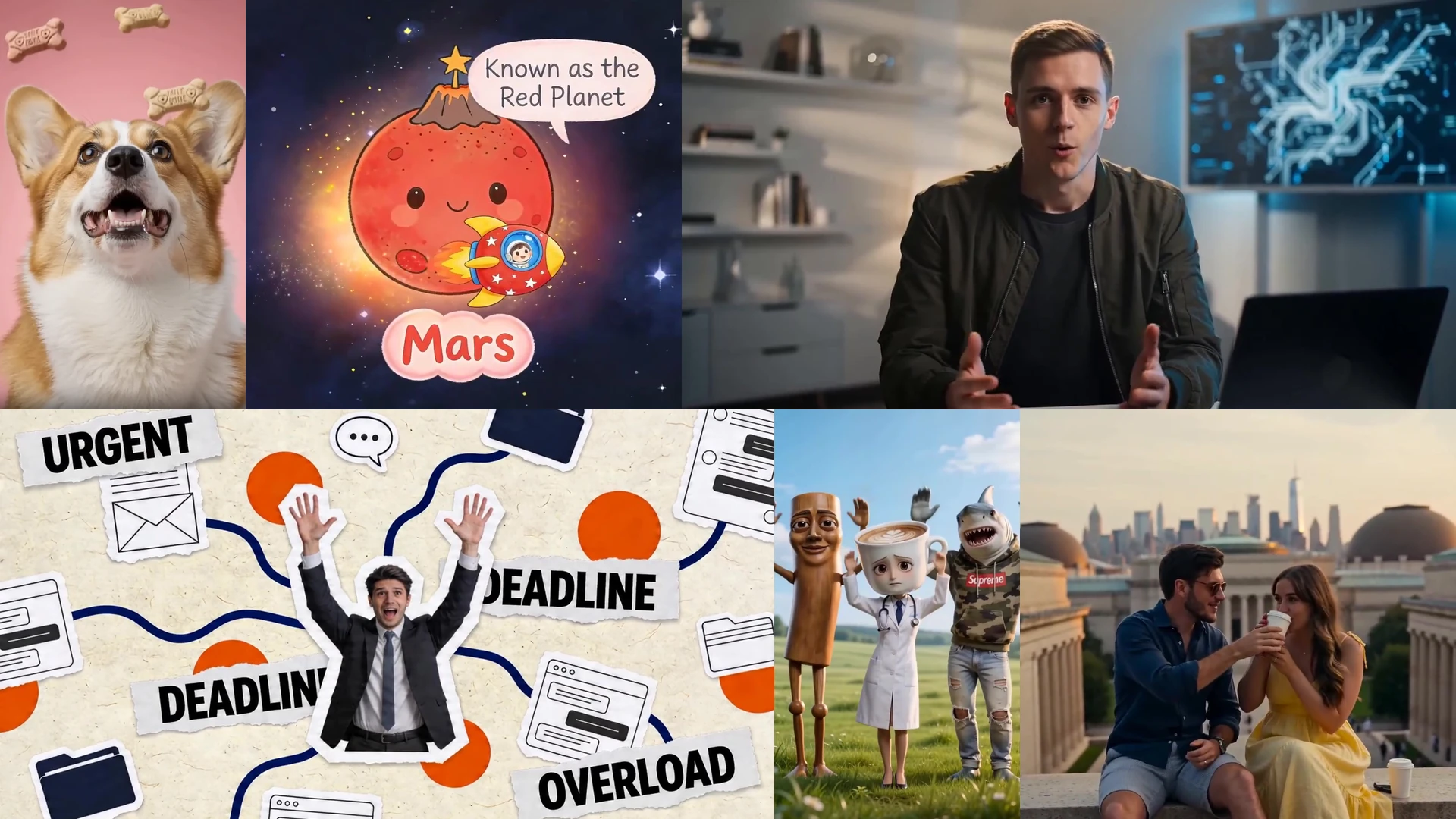

 ChatGPT
 Perplexity
 Claude
 Gemini
 Grok
Grok


In the competitive digital landscape of 2026, video content is king. However, for e-commerce brands and marketing teams, scaling video production to meet the relentless demand for fresh, engaging content is a significant challenge. Traditional video creation is resource-intensive, requiring time, budget, and specialized skills. While first-generation AI video generators promised a solution by prioritizing speed, they often fell short in maintaining brand consistency and enabling repeatable, scalable workflows. This created a gap between the need for high-volume content and the ability to produce it without sacrificing quality or brand identity.
As the technology has matured, a new class of AI video tools is emerging. These platforms are evolving beyond simple text-to-video conversion, incorporating more automated, agent-like workflows that address the core challenges of scalability and consistency. They function less like single-purpose tools and more like creative partners, capable of understanding brand guidelines, managing complex production steps, and delivering polished final assets with minimal manual intervention. This article provides a comprehensive review of the 10 leading AI video generators, with a special focus on their capabilities for automation, scalability, and maintaining a consistent brand voice, helping you choose the right solution for your team's needs.
What Is an AI Video Generator?
In practical terms, an AI Video Generator is a software tool that uses artificial intelligence to create video content from various inputs, such as text prompts, scripts, images, or even existing video clips. These tools automate many of the traditionally manual aspects of video production, including scripting, storyboarding, asset selection, voiceover creation, and editing. Typical capabilities include generating scenes from text descriptions, creating animated avatars that speak a provided script, and compiling blog posts or articles into summary videos.
The primary limitation of many early AI video generators was their focus on one-off creations, often struggling with maintaining character, style, and branding consistency across multiple videos. This is where the distinction between an AI Video Generator and an AI Video Agent becomes important. While a generator executes a specific, well-defined task (e.g., create a 15-second clip of a futuristic city), an agent is a more autonomous system designed to manage an entire workflow.
An AI Video Agent can understand a high-level goal, break it down into steps, make creative decisions, and iterate based on feedback, much like a human producer. This article evaluates tools that exist on a spectrum between these two concepts, focusing on generators that exhibit the agent-like characteristics essential for scalable video production.
Quick Comparison of the 10 Best AI Video Generators
The following table provides a high-level comparison of the top 10 AI video generators evaluated in this guide. It is designed to help you quickly assess which tools might be the best fit for your specific needs before diving into the detailed reviews. When reading the table, consider that a feature like "High" workflow automation may be ideal for a large team focused on efficiency, while a creator seeking maximum creative control might prefer a tool with more manual inputs.
| Tool | Video Generation Quality | Template & Batch Creation | Workflow Automation Level | Brand Consistency Control | Best-Fit Use Cases | Learning Curve |
|---|---|---|---|---|---|---|
| 1. Synthesia | 4/5 | Yes | Medium | Excellent | Corporate Training, Enterprise Comms | Easy |
| 2. Runway | 5/5 | Limited | Low | Good | Creative Professionals, Film | Steep |
| 3. HeyGen | 4/5 | Yes | Medium | Excellent | Marketing & Sales, Social Media | Easy |
| 4. Pexo AI | 4/5 | Yes | High | Excellent | E-commerce, Marketing Teams, Scalable Production | Easy |
| 5. InVideo AI | 3/5 | Yes | High | Good | Social Media Content, Quick Promos | Easy |
| 6. Pictory | 3/5 | No | High | Basic | Content Repurposing, Blog-to-Video | Easy |
| 7. Kling AI | 5/5 | No | Low | Basic | Creative Experimentation, High-Fidelity Shots | Moderate |
| 8. Google Veo | 5/5 | Limited | Low | Good | General Purpose, Google Ecosystem Users | Moderate |
| 9. Descript | N/A | No | Medium | Basic | Podcasting, Video Editing, Transcription | Moderate |
| 10. CapCut | 3/5 | Yes | Low | Basic | Social Media Creators, Hobbyists | Easy |
Best AI Video Generators Ranked
1. Synthesia
Synthesia earns the top spot for its leadership in the corporate and enterprise space, offering a polished and reliable platform for creating professional AI-generated videos at scale. Its key strength lies in its extensive library of over 230 high-quality AI avatars and support for more than 140 languages, making it the go-to choice for global companies creating training materials, internal communications, and product tutorials. Synthesia is SOC 2 compliant, a critical requirement for many large organizations. While it may not offer the cinematic output of generative models like Runway or Kling, its focus on consistency, ease of use, and enterprise-grade features is unmatched. The platform's template and brand kit features ensure that all videos adhere to strict corporate identity guidelines, solving a major pain point for marketing and HR departments.
Strengths: Best-in-class AI avatars, extensive language support, enterprise-grade security and compliance, excellent brand consistency features.
Limitations: Less suited for highly creative or artistic video projects; avatar-based generation can feel impersonal for some use cases.
2. Runway
Runway is a pioneer in the generative video space and remains the top choice for creative professionals and artists who demand cutting-edge quality and control. With its latest model, Gen-4.5, Runway delivers some of the most visually stunning and realistic text-to-video and image-to-video results on the market. Its advanced toolset, which includes features like Motion Brush for animating specific regions of an image and precise camera controls, provides a level of creative freedom that other platforms lack. This power comes with a steeper learning curve, but for filmmakers, advertisers, and designers looking to push the boundaries of AI-generated content, Runway is the undisputed leader. It differs from Synthesia by prioritizing cinematic quality and granular control over the streamlined, template-driven workflow of avatar-based systems.
Strengths: Industry-leading generative video quality, advanced creative controls, strong community and reputation among artists.
Limitations: Steeper learning curve, credit-based pricing can be confusing, less focused on workflow automation for business teams.
3. HeyGen
HeyGen secures a top position by offering a powerful and versatile avatar-based platform that excels in marketing and sales applications. With over 300 stock avatars, robust video translation capabilities in 175+ languages, and the ability to create custom avatars, HeyGen provides a comprehensive solution for creating personalized video messages and social media content. Its standout features include interactive avatars for websites and the integration of leading generative models like Sora 2 and Veo 3.1, bridging the gap between avatar-led presentations and cinematic video generation. This makes it more versatile than Synthesia, appealing to teams that need both professional avatars and high-quality generative B-roll. It provides a strong balance of ease of use, powerful features, and scalability for modern marketing teams.
Strengths: Large library of high-quality avatars, excellent video translation, interactive avatar capabilities, integration of top-tier generative models.
Limitations: Can become expensive for high-volume usage, custom avatar creation requires an add-on.
4. Pexo AI
Pexo AI earns its high ranking by directly addressing the critical need for scalable and brand-consistent video production through a unique, workflow-driven approach. Positioned as a "Creative AI Video Partner," Pexo distinguishes itself with a conversational, chat-based interface that guides users through the creation process, from script to final edit. This eliminates the steep learning curve and prompt engineering required by other tools. Its core strengths lie in features designed for automation and consistency: the Huddle Model allows for real-time collaborative feedback, the Brand Kit ensures every video aligns with brand identity, and the ability to Revise at Any Node provides unparalleled flexibility without starting over. For teams in e-commerce and marketing who need to produce a high volume of on-brand videos efficiently, Pexo's focus on workflow automation makes it a standout choice. While it may not have the brand recognition of established players like Runway, its innovative, agent-like approach to video creation represents the future of scalable content production.
Strengths: High degree of workflow automation, conversational interface requires no technical skill, strong brand consistency controls, batch creation and feedback capabilities.
Limitations: As a newer platform, its ecosystem and third-party integrations are less mature; brand awareness is lower compared to market leaders.
5. InVideo AI
InVideo AI is an excellent choice for social media marketers and content creators who need to produce videos quickly and easily. Its primary strength is its text-to-video engine, which can transform a simple prompt into a fully edited video complete with stock footage, voiceovers, and background music in minutes. With over 5,000 templates and a vast stock media library, it is designed for speed and convenience, making it ideal for creating social media ads, promotional videos, and YouTube content. While the output may not have the polish of a tool like Runway, its efficiency is a massive advantage for teams under pressure to maintain a constant stream of content.
Strengths: Extremely fast text-to-video workflow, large library of templates and stock media, very easy for beginners.
Limitations: Video quality can be generic, limited creative control compared to more advanced tools.
6. Pictory
Pictory specializes in content repurposing, making it a valuable tool for marketers looking to maximize the value of their existing assets. It excels at turning long-form content like blog posts, scripts, and webinars into engaging summary videos. The platform automatically analyzes the source text, selects relevant stock visuals, and adds AI-generated narration and captions. Its text-based video editor is a standout feature, allowing users to edit the final video simply by editing the text transcript. This makes it incredibly efficient for creating video highlights and social media clips from existing written content.
Strengths: Excellent for repurposing blog posts and scripts, intuitive text-based video editing, automates visual selection.
Limitations: Heavily reliant on stock media, limited brand consistency options, not designed for creating original narrative content from scratch.
7. Kling AI
Kling AI has quickly made a name for itself by producing exceptionally high-quality, realistic, and dynamic generative video. Capable of generating 1080p video up to two minutes long, Kling excels at complex motion and realistic physics, setting a new standard for what is possible with text-to-video technology. Its ability to handle multi-shot sequences and lip-syncing makes it a powerful tool for more ambitious creative projects. While still in a limited access phase, its impressive output and affordable pricing make it one of the most exciting tools for creative experimentation and generating high-fidelity video clips that can rival those from industry leaders.
Strengths: State-of-the-art video generation quality, supports longer video durations and complex motion, very affordable.
Limitations: Limited public access, fewer advanced editing features compared to established platforms like Runway.
8. Google Veo
As Google's flagship generative video model, Veo delivers high-quality, realistic video output and benefits from deep integration within the Google ecosystem. Accessible through tools like VideoFX, Veo allows users to generate 1080p clips with a high degree of cinematic control and realism. It understands nuanced prompts and can produce consistent characters and styles across different scenes. For creators and teams already invested in the Google ecosystem, Veo offers a powerful and convenient option for generating high-quality video content, though it is less of a full-fledged editing suite and more of a pure generation model.
Strengths: High-fidelity video output, strong understanding of prompts, integration with the Google ecosystem.
Limitations: Not a standalone application, fewer workflow and post-production tools compared to dedicated video platforms.
9. Descript
Descript offers a unique and powerful approach to video creation by centering the entire workflow around a text transcript. It is primarily a video and audio editor, but its AI features make it a formidable tool for content creators, especially podcasters and educators. Users can edit video and audio simply by editing the text, and Descript's AI can remove filler words, create studio-quality sound, and even generate a clone of your voice for correcting errors. While it's not a text-to-video generator in the same vein as Runway or InVideo, its AI-powered, text-based workflow provides a highly efficient way to produce polished, narrative-driven video content.
Strengths: Intuitive and powerful text-based editing, excellent transcription and audio enhancement features, all-in-one tool for podcasters.
Limitations: Not designed for generating video from scratch; core focus is on editing existing footage.
10. CapCut
CapCut, owned by TikTok's parent company ByteDance, has become the go-to video editor for a generation of social media creators. While it started as a mobile app, its desktop version offers a surprisingly powerful set of editing tools, many of which are enhanced by AI. Features like auto-captions, text-to-speech, background removal, and a wide array of templates and effects make it incredibly easy to create trending, engaging videos for platforms like TikTok and Instagram Reels. While it lacks the sophisticated generative capabilities of other tools on this list, its accessibility, ease of use, and massive user base make it an essential tool for social media-focused video creation, especially for those on a tight budget.
Strengths: Free or very affordable, extremely easy to use, huge library of trending templates and effects, tight integration with TikTok.
Limitations: Limited generative AI capabilities, primarily focused on short-form social media video.
Final Verdict
Choosing the best AI video generator ultimately depends on your specific goals, team size, and production maturity. The landscape is no longer one-size-fits-all, with tools specializing in different areas of the creation process.
For individual creators and creative professionals who prioritize cinematic quality and artistic control, Runway and Kling AI are the clear frontrunners. They offer the highest-fidelity generative output and the tools needed to craft visually stunning content.
For large enterprises and corporate teams focused on training and internal communications, Synthesia provides an unmatched combination of polish, security, and brand control in an easy-to-use, scalable package.
For marketing teams and e-commerce operations, the choice depends on the need for speed versus the need for workflow automation. InVideo AI is perfect for rapidly generating a high volume of social media content. However, for teams looking to build a truly scalable and consistent video production engine, Pexo AI stands out. Its agent-like, conversational workflow and focus on brand consistency represent a significant step forward, helping teams move from creating individual videos to managing an automated content pipeline.
The distinction between classic AI Video Generators and tools with more agent-like characteristics is becoming increasingly important. While generators provide the raw power to create, agents provide the intelligence to manage and scale. As you evaluate your options, consider not just the quality of the video output, but how the tool will integrate into your broader content workflow.