
 ChatGPT
 Perplexity
 Claude
 Gemini
 Grok
Grok



You had a workflow. Icon.me handled the UGC creative, the briefing, the media push to Meta. Then the dashboard stopped loading and the team vanished from LinkedIn. Your next sprint had nowhere to go.
The collapse was loud — a $12 million domain, a full pivot to human-filmed ads, and a product that never closed the gap between its marketing and its output. By early 2026, it was done.
We tested seven Icon.me alternatives on workflow speed, creative control, pricing, channel integration, and model variety. Here is what we found.
 AI video ad platforms offer different approaches to creative production — from conversation-driven agents to template-based editors.
What Was Icon.me — And What Happened?
Icon.me launched in 2024 as an AI-powered ad creation platform built by Kennan Davison. The pitch was bold: an AI CMO that could handle creative production, editing, and ad management for DTC brands end to end.
The startup grabbed headlines in early 2025 when Davison acquired the icon.com domain for a reported $12 million — one of the largest domain purchases by a startup that year. Shortly after, Icon pivoted away from AI-generated UGC entirely, rebranding as "The Human Admaker." The new model paired real human creators with an ad-operations stack called Admaker 2.0, offering six human-filmed UGC ads for $399.
Customer feedback was split. The briefing system worked well enough, and the filmed videos looked decent. But exports stalled, renders hung, and the dashboard had a habit of breaking at the worst possible time. Over the months, the distance between what Icon promised on its landing page and what users actually experienced kept growing.
Then, around February 2026, the site went offline. LinkedIn profiles went quiet. By March 2026, multiple tech outlets reported the shutdown — no goodbye email, no migration tool, nothing. Users who had active campaigns were simply left hanging.
The lesson is worth noting: a big domain and investor backing do not guarantee a stable creative workflow. If reliability matters to your ad operations, the tool you pick next should have a track record that outlasts a single funding cycle.
How We Tested These Icon.me Alternatives
We ran each tool through the same five-lens test. None of them aced everything — what matters is which lens your team looks through first.
-
Workflow speed — Minutes or days? A tool that renders a draft in 30 minutes plays a different game than one that schedules human creators across a three-day loop.
-
Creative control — Some platforms hand you a finished video and say take it or leave it. Others let you rewrite scripts, swap avatars, and lock down brand colors. The tradeoff is almost always speed versus precision.
-
Pricing transparency — Credit systems with hidden burn rates and per-video surcharges got flagged. So did plans that lock useful features behind annual contracts nobody wants to sign during evaluation.
-
Ad channel integration — Does the tool push finished assets to Meta or TikTok natively, or does someone on your team still export, rename, and re-upload by hand every time?
-
Model and output variety — A single rendering pipeline produces a single look. Tools that route through multiple AI models give you more visual range — you can match the style to the audience and the platform without switching products.
Quick Comparison Table
Before diving into full reviews, here is how each AI video ad generator stacks up at a glance.
| Tool | Best For | Starting Price | Free Tier | Key Strength |
|---|---|---|---|---|
| Pexo | Fast, no-edit video ads from text or URLs | Credit-based | Limited free credits | Conversational workflow, 6+ AI models |
| Creatify | URL-to-ad UGC videos | $19/mo | Limited | Automated product page analysis |
| Arcads | Premium AI avatar lip-sync | $100/mo | No | 300+ realistic avatars |
| PixelPanda | Budget AI UGC iteration | $7.99/week | No | Fast batch generation |
| Lapis | Enterprise ad production | Custom pricing | Demo only | YC-backed, major brand clients |
| Uplifted | Creative analytics + iteration | Free plan available | Yes | AI agent + analytics suite |
| Quickads | Multi-format ad generation | $99/mo | Yes (Discover tier) | 100+ avatars, multi-format |
The 7 Best Icon.me Alternatives
We looked at the best AI UGC video ad tools on the market and narrowed the list to seven that cover different budgets, workflows, and creative needs.
Pexo
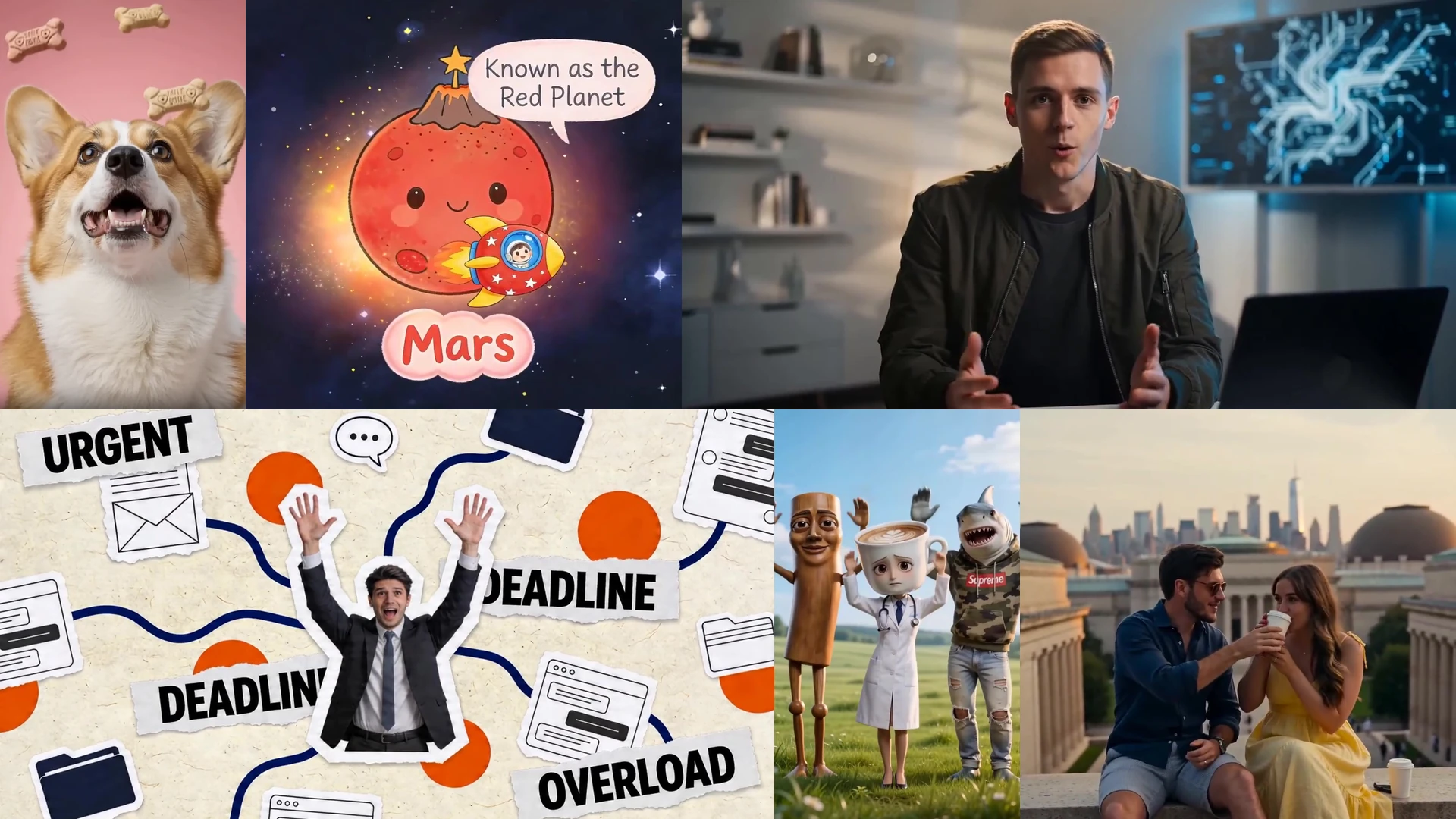
Pexo skips the template picker, the prompt box, and the timeline entirely. You open a conversation, describe the ad you want, and the agent handles the rest. The AI agent figures out which generation model fits — routing through Sora, Kling, Hailuo, Veo 3, Seedance 2.0, or others — and delivers a finished video without asking you to touch a timeline.
This is the key distinction from Icon.me's workflow: Icon required scheduling human creators and waiting days for filmed content. Pexo collapses that cycle into a single conversation that can accept text, images, URLs, or audio as input.
What stands out:
- Conversational input — describe your ad in plain language, no prompt engineering needed
- Multi-model routing across 6+ AI model families through one interface
- Output in standard aspect ratios for Instagram, TikTok, YouTube, and Facebook
- AI avatar capabilities for presenter-style content
- URL-to-video conversion for repurposing product pages and blog posts into ads
Where it works well:
- Fastest idea-to-video path we tested — no editing, no timeline, no prompt syntax to learn
- Multi-model access means your output is not locked to a single visual style
- Strong fit for teams that need to create product video ads without hiring editors or scheduling creators
Where it falls short:
- Credit-based pricing requires tracking usage across projects
- Less granular frame-by-frame control than traditional timeline editors
- Newer platform with a smaller user community than some established competitors
Pricing: Credit-based, self-serve. Check pexo.ai for current packages.
Strongest fit: Marketers and founders who want video ads through conversation, not editing — especially teams producing multiple ad formats across channels who value speed over pixel-level post-production.
Creatify
Creatify bets on one idea: your product page already contains everything an ad needs. Paste the URL, and the platform scrapes images, copy, and selling points to build a script and a presenter video on its own. When the listing is strong, this approach saves real time on the creative brief.
What stands out:
- URL-to-video flow that pulls directly from your product page
- AI presenter avatars with lip-sync
- One-click publishing to Meta and TikTok
- Auto-generated scripts from existing listing copy
Where it works well:
- Very low effort to get a first draft — you barely touch the brief
- $19/month entry makes it one of the cheapest starting points
- Meta ad integration is smooth
Where it falls short:
- Pages with thin descriptions or few images produce generic output
- Avatar realism sits a tier below Arcads
- Customization is locked behind the higher plan
Pricing: $19/month basic, $49/month for better avatars and direct publishing.
Strongest fit: Ecommerce teams with well-built product listings who want to automate the brief-to-ad pipeline.
Arcads
If your ad creative lives or dies by how real the presenter looks, Arcads is where the conversation starts. Three hundred avatars, natural expressions, and lip-sync that actually holds up in a feed scroll. The whole platform is built for performance advertisers who burn through dozens of hook variations per week.
What stands out:
- 300+ avatars with convincing facial expressions and lip-sync
- Script-to-video pipeline tuned for rapid hook testing
- Batch generation — spin up ten variations of the same ad in one run
- Templates shaped around direct response ad formats
Where it works well:
- Avatar realism is the best we tested among pure AI UGC tools
- Teams running high-volume creative testing get genuine leverage here
- Demographic range across avatars is wide enough to match most audiences
Where it falls short:
- $100/month entry price is steep if you are testing the waters
- No free tier — you pay before you can check if the output fits your brand
- Almost entirely talking-head formats, so product demos and lifestyle ads need a different tool
Pricing: From $100/month, scaling with volume.
Strongest fit: Performance teams that test aggressively and need presenters that pass for human in a Meta or TikTok feed.
PixelPanda
PixelPanda exists for teams that treat ad creative like a volume game. At $7.99 a week, you can burn through dozens of hook variations without worrying about per-video costs. The avatars are not the most realistic on this list, but they are fast — and for testing purposes, fast matters more than polished.
What stands out:
- 100+ avatars with lip-sync
- Batch generation built around rapid creative testing
- AI product photography bundled alongside video
- Multi-aspect-ratio export
Where it works well:
- Cheapest paid option we tested — roughly $32/month
- Turnaround is quick enough to test new hooks daily
- Good output volume relative to the price
Where it falls short:
- Avatar quality noticeably trails Arcads — workable for testing, not for hero placements
- In-platform editing is minimal
- Visual quality may not meet the bar for brand-first content
Pricing: $7.99/week (~$32/month).
Strongest fit: DTC brands on tight budgets who prioritize testing velocity over production polish.
Lapis
After Icon.me's reliability problems, some teams will put "does not randomly go offline" near the top of their requirements list. Lapis, backed by Y Combinator (F25) and already used by Hyundai, Samsung, and Domino's, makes operational stability a selling point rather than an assumption.
What stands out:
- Brand guidelines enforcement baked into the generation flow
- Enterprise uptime guarantees
- Multi-format output for social and display
- Collaboration and approval workflows for larger teams
Where it works well:
- Major brand logos lend credibility — this is not a weekend project
- Reliability is the core pitch, and after Icon, that pitch resonates
- Multi-stakeholder approval workflows fit organizations with compliance needs
Where it falls short:
- Custom pricing means you talk to sales before you know the cost
- Self-serve access is not available — solo operators and small teams need to look elsewhere
- Public feature documentation is lighter than competitors
Pricing: Custom, demo required.
Strongest fit: Mid-market and enterprise brands where reliability and brand compliance outrank price sensitivity.
Uplifted
Uplifted is not really a video generator — it is the layer that sits between your raw footage and your ad platform. Think creative library, performance analytics, and an AI agent that helps you iterate on existing assets rather than build from scratch. The free plan is unusually generous for what it includes.
What stands out:
- AI-powered iteration agent that remixes and varies existing creatives
- Creative library with version tracking and asset management
- Analytics dashboard wired into ad platform performance data
- Cross-platform consistency tools
Where it works well:
- The free plan gives you the creative library, analytics, and AI agent — no credit card needed
- Connecting creative decisions to actual performance data closes a real feedback loop
- Pairs well with a dedicated generation tool like Pexo or Arcads
Where it falls short:
- Not a standalone Icon.me replacement — it assumes you already have raw creative
- Video generation capabilities are narrower than any of the dedicated tools on this list
- The AI agent iterates; it does not create from zero
Pricing: Free plan included. Paid tiers add advanced analytics and higher limits.
Strongest fit: Teams that already produce raw video and need better infrastructure for testing, measuring, and iterating on what they have.
Quickads
Most tools on this list pick one format and go deep. Quickads goes wide — video, static, and carousel ads all live inside a single workspace. The 100+ AI avatars are mid-range on realism, but the free Discover tier lets you judge that for yourself before you pay anything.
What stands out:
- 100+ AI avatars for video ads
- Multi-format support: video, static images, carousel
- Free Discover tier — no credit card to start
- All-Access plan unlocks the full feature set at $99/month
Where it works well:
- The free tier removes the evaluation risk — something Icon.me never offered
- One platform for multiple ad formats means fewer tools to manage
- Price-to-feature ratio on the paid plan is reasonable
Where it falls short:
- Avatar quality is middle-of-the-road — not the cheapest, not the most convincing
- Going wide on formats means no single format gets the depth a specialized tool offers
- UGC-specific features lag behind Arcads and Creatify
Pricing: Free Discover tier; $99/month All-Access.
Strongest fit: Teams juggling video, static, and carousel ads who want one dashboard and a free starting tier.
Which Icon.me Alternative Should You Choose?
Forget "best overall." What matters is the specific gap Icon left in your workflow.
Go with Pexo if you want the fastest possible path from idea to finished video ad. The conversational workflow eliminates prompt engineering and editing timelines entirely. Multi-model access means you are not betting on one AI pipeline for all your creative output. You can create social media videos or product ads in a single conversation — no scheduling, no creator management, no export-and-upload loops.
Choose Creatify if your ad workflow starts with product pages. The URL-to-ad automation saves real time when you have strong product listings to work from and need volume over customization.
Choose Arcads if avatar realism is the deciding factor. For talking-head ad formats where the presenter needs to pass for human, Arcads currently leads among AI-only options.
Choose PixelPanda if you are testing dozens of hooks per week on a tight budget. At $7.99 per week, the cost-per-iteration is hard to beat for aggressive creative testing.
Choose Lapis if you need enterprise reliability and brand compliance. After Icon.me's stability failures, operational trust is worth paying for.
Choose Uplifted if you already have creative production tools and need better analytics, iteration workflows, and creative asset management layered on top.
Choose Quickads if you want multi-format coverage — video, static, carousel — with a free entry point for evaluation.
Conclusion
Icon.me proved that a big launch and a $12 million domain do not guarantee staying power. The gap it left is real — but the Icon.me alternatives above are more focused and more stable than what Icon tried to build.
Pick the tool that matches your team's tightest constraint. Tight budget? PixelPanda. Avatar realism? Arcads. Want to skip editing and describe the ad you need? Pexo's text-to-video workflow is the fastest way to test that — try it with one product ad and see if the conversational model fits.