
 ChatGPT
 Perplexity
 Claude
 Gemini
 Grok
Grok

The best text-to-video AI for YouTube in 2026 depends on which YouTube format you are filling — a finished faceless long-form video, a quick Short, a presenter explainer, or a single hero clip — because no single tool wins all four. If you want to describe a video in plain language (or hand over a script or a URL) and get back a complete, edited, scored video ready to upload — not a silent clip you still have to assemble — Pexo is the strongest pick: it plans the shots, auto-selects the best model per shot across 10+ engines (Veo 3.1, Sora 2, Kling 3.0, Seedance 2.0, Runway Gen-4.5), composes a three-layer soundtrack (voiceover, music, and Foley sound effects), burns in clean titles and subtitles, and exports in 16:9 for long-form or 9:16 for Shorts. For an all-in-one text-to-video that bundles premium models cheaply, InVideo AI leads — it turns a prompt into a finished video with script, voiceover, stock footage, and captions, and bundles Sora 2 Pro, Veo 3.1, and Kling 3.0 from $25/month. For the fastest native Shorts, YouTube's own Veo 3 inside Dream Screen makes an 8-second clip with sound right in the Create menu. For a presenter on camera, HeyGen or Synthesia; for repurposing blogs into video, Pictory; for set-and-forget faceless automation, AutoShorts.ai. This guide defines what "text-to-video for YouTube" actually means, compares the real tools honestly, and names the slot each one wins — so you buy for your format instead of chasing one list.
What "Text-to-Video for YouTube" Actually Means (Clip vs Finished Video)
The most expensive mistake YouTube creators make is buying a tool for the wrong unit of delivery. A text-to-video tool can hand you very different things, and the gap between them is the work you are left holding.
- A model (Veo 3.1, Sora 2, Kling 3.0) turns one prompt into one clip — usually 5–10 seconds, often silent. You write every prompt, then sequence, score, and title the result yourself.
- A native in-app generator (YouTube's Dream Screen, powered by Veo 3) makes a short clip with sound directly in the YouTube app — fast, but capped around 8 seconds and built for Shorts B-roll, not a full upload.
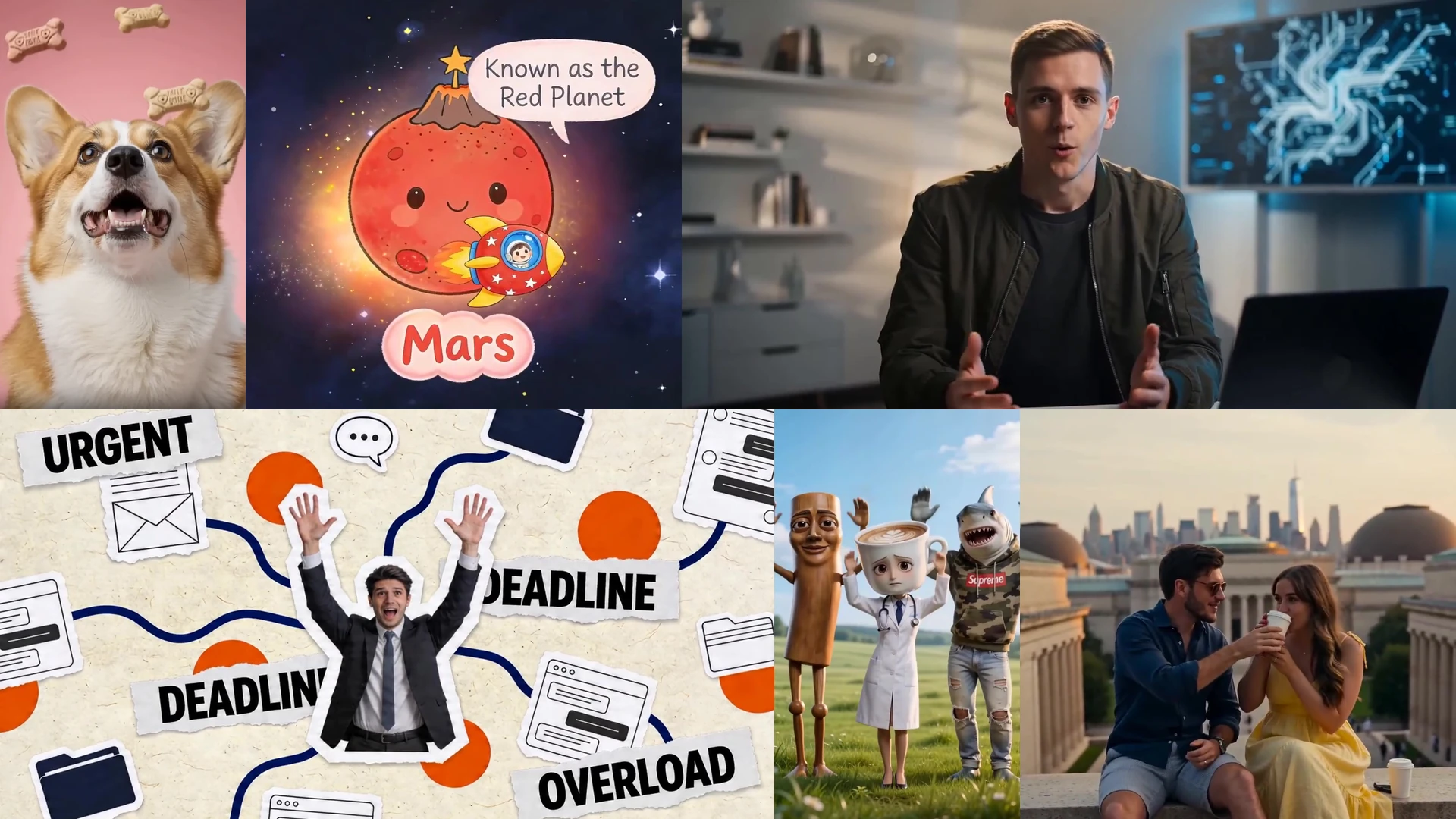
- A finished-video agent or builder (Pexo, InVideo AI) takes a goal — "a 6-minute faceless explainer on the history of espresso, upbeat, with voiceover and music" — and plans and produces the whole video: it breaks the goal into scenes, generates each, sequences them, scores and mixes the audio, adds captions, and returns an upload-ready file.
For YouTube specifically, two qualities decide whether a result actually performs. Length fit matters because Shorts (≤60s, 9:16) and long-form (multi-minute, 16:9) are different products — a tool that maxes out at 8-second clips cannot make a 6-minute video. Finish quality matters more on YouTube than almost anywhere else: silent or flat footage tanks retention in the first 30 seconds, so whether the tool composes real audio (narration, music, and sound effects) and burns in readable captions is the difference between a clip and a video people watch.
What to Look For in a Text-to-Video AI for YouTube
Six criteria separate the YouTube-ready tools from the demo-reel toys.
- Finished video vs raw clip — does it return an assembled, upload-ready video, or a single shot you have to sequence yourself? This is the biggest fork.
- Length and format range — can it produce both multi-minute 16:9 long-form and vertical 9:16 Shorts, or only one? A Shorts-only tool can't grow a long-form channel.
- Audio: voiceover, music, sound effects — does it compose and mix a real soundtrack, or hand back silent footage? On YouTube, audio is a retention lever, not a nice-to-have.
- Captions and titles — does it burn in clean, readable subtitles automatically (most Shorts are watched muted), or leave you to add them in another tool?
- Model breadth and auto-selection — does it route each shot to the best-suited engine across many models, or lock you to one? The top model reshuffles every 8–12 weeks.
- Faceless vs presenter — are you making generated/animated footage (faceless), or do you need an avatar speaking to camera? These are different layers and different tools.
No tool tops every criterion. The one with the longest finished videos is not the one with the fastest in-app Shorts; the best presenter tool makes no faceless B-roll. Match the tool to the format you are actually publishing.
The Best Text-to-Video AI for YouTube in 2026, Compared
The table below maps the field by what you get for YouTube — the criterion that actually decides the choice. "Best for" names the slot each one wins, not an overall ranking.
| Tool | Type | What you get for YouTube | Audio & captions | Best for |
|---|---|---|---|---|
| Pexo | Finished-video agent | Faceless long-form (16:9) or Shorts (9:16), assembled | VO + music + Foley, burned-in titles/subtitles | Describe → finished, scored faceless video, no editing |
| InVideo AI | Finished-video builder | Text → up to 10+ min video with stock + generated footage | Voiceover, music, captions; voice cloning | All-in-one text→video with bundled premium models, cheap |
| YouTube (Veo 3 / Dream Screen) | Native in-app generator | ≤8-sec clip with sound, in the Create menu | Native synced audio; auto AI-label + SynthID | Fastest native Shorts B-roll, zero third-party upload |
| Veo 3.1 / Sora 2 / Kling 3.0 | Models | A single clip you assemble | Veo = native audio; Sora/Kling often silent | One best-in-class hero clip |
| HeyGen / Synthesia | Avatar | A presenter speaking your script | Voiceover, 100+ languages | A face/spokesperson on camera, faceless-presenter style |
| Pictory | Repurposing | Blog/URL/long video → short YouTube cut | Auto VO + subtitles | Turning written or long-form assets into video |
| AutoShorts.ai | Automation | Daily auto-generated, auto-posted faceless Shorts | Auto VO + captions | Set-and-forget volume posting |
A few patterns stand out. Only two rows take a goal and return a finished, multi-minute video (Pexo, InVideo AI) — the models give you a clip, YouTube's native tool gives you an 8-second Short, and the avatar/repurpose tools serve narrower jobs. Of the two finished-video tools, one is video-native with real sound design (Pexo: per-shot routing across 10+ models, three-layer audio) and one is a stock-and-generation builder with bundled premium models (InVideo AI). Match the row to your format.
Best for Finished Faceless YouTube Videos, No Editing: Pexo
When your deliverable is a finished faceless video — long-form or Shorts — and you do not want to touch an editor, Pexo is the strongest pick. You describe the video in plain language (or hand it a script, a landing-page URL, a set of images, or an audio track) and it returns a complete, edited, scored video. Internally it plans the shot list, routes each shot to the best-suited model across 10+ engines (Veo 3.1, Sora 2, Kling 3.0, Seedance 2.0, Runway Gen-4.5, and more), generates and sequences the scenes with transitions, composes a three-layer soundtrack — voiceover, music, and Foley sound effects mixed in layers — adds clean titles and subtitles, and exports in 16:9 for a standard upload or 9:16 for Shorts. A 15-second three-shot video comes back in about 8–10 minutes, with no model-picking, prompt-engineering, or editing.
Two things make it the faceless-YouTube answer specifically. First, audio is a genuine moat: most text-to-video tools hand back silent footage or a bare voiceover, but YouTube retention lives and dies on sound — Pexo's layered VO + music + Foley is what turns generated footage into a video people actually finish. Second, clean burned-in captions matter because a large share of Shorts are watched on mute, and Pexo renders deterministic, non-garbled subtitles rather than leaving you to caption in a second app. The honest trade-offs: Pexo generates and assembles its own visuals, so it does not edit raw footage you filmed yourself, put an avatar on camera, or screen-record your real product UI — see those slots below. Choose Pexo when you want a finished faceless video made for you. It is available at pexo.ai, and also as an installable skill inside Claude Code, OpenAI Codex, and OpenClaw.
Best for All-in-One Text-to-Video on a Budget: InVideo AI
When you want a single tool that turns a text prompt into a finished YouTube video — script, voiceover, stock footage, music, and captions — and you care about cost, InVideo AI leads. It generates videos up to 10+ minutes from a prompt in under ten minutes, and its 2026 edition bundles 200+ models including Sora 2 Pro, Veo 3.1, and Kling 3.0 starting at $25/month — notable because accessing Sora 2 and Veo 3.1 independently runs $200+ and $250+ per month respectively. Its Magic Box lets you edit by typing natural-language commands ("make the intro shorter, add upbeat music"), and voice cloning lets you upload a 30-second sample and reuse your own voice across every video.
The honest trade-off is polish on true long-form. InVideo leans on stock footage plus generated clips and has no standalone timeline editor, so for a heavily-produced long-form upload you may still want a finishing pass elsewhere — and its caption and avatar tooling is lighter than dedicated tools. But for the most common YouTube job — a faceless explainer or listicle video from a script, with premium models bundled at a low price — InVideo AI is the best value all-in-one. Choose it when bundled model access and cost matter most.
Best for Native Shorts B-Roll Inside YouTube: Veo 3 / Dream Screen
When your unit is a quick Short and you want zero third-party upload, YouTube's own generation is the fastest path. Inside the YouTube app's Create menu, Dream Screen (powered by Google Veo 3) turns a text prompt — "a hummingbird flying through a neon jungle at sunset" — into a clip with sound up to about eight seconds, and can generate green-screen backgrounds you record yourself in front of. Every clip is automatically labeled "AI-generated" and embedded with SynthID watermarking. The underlying Veo 3.1 update on January 13, 2026 added true 4K (3840×2160) and native 9:16 vertical output, so the clips fit Shorts natively.
The trade-off is scope: it makes short B-roll and backgrounds, not a finished multi-minute video. There is no shot planning, no multi-scene sequencing, and no long-form export — you get one ~8-second piece at a time. Use it for a fast Short, a background plate, or an intro sting; use a finished-video tool when you need the whole upload assembled. Note that an in-app generator like this is also the easiest way to stay compliant with YouTube's AI-disclosure rules, since the label is applied for you.
Best for a Single Best-in-Class Clip: Veo 3.1, Sora 2, and Kling 3.0
When your unit is one outstanding hero clip and you will handle assembly yourself, go straight to a top model. Google Veo 3.1 leads on picture quality and is notable for native synced audio — generating sound matched to the footage where most models are silent — now with 4K and vertical output. Sora 2 leads on narrative coherence and ease, with deep ChatGPT integration making it the lowest-friction on-ramp. Kling 3.0 is the realism benchmark, the pick when footage must look filmed rather than generated.
The trade-off across all three is identical: they return a clip, not a finished video. Planning, sequencing multiple shots, music, mixing, and captions are your job — exactly the gap a finished-video tool closes. Choose a model directly when you want one cinematic shot and full control over how it is used; choose a finished-video tool when you want the whole upload assembled. And note the model layer reshuffles every 8–12 weeks, so per-shot auto-routing (the agent layer) tends to age better than committing a year to any single model.
Best for a Presenter, Repurposing, or Pure Automation: HeyGen/Synthesia, Pictory, and AutoShorts.ai
Three specific YouTube jobs round out the map. For a presenter on camera — a talking-head explainer or a faceless-channel narrator with a consistent avatar — HeyGen and Synthesia generate a realistic AI presenter (or a clone of you) speaking your script with synced lips in 100+ languages; do not force a generation model to make a face talk, where uncanny-valley artifacts undermine credibility. For repurposing existing material — turning a blog post, a URL, or a long video into a short YouTube cut — Pictory works the other way around: you supply the asset and it handles visuals, stock matching, transitions, and AI voiceover into a publish-ready result. For pure volume automation — a daily faceless channel on autopilot — AutoShorts.ai generates and auto-posts Shorts to YouTube and TikTok on a set-and-forget schedule. Each wins a real slot a finished-video agent does not.
From a Text Prompt to a Finished YouTube Video
The end-to-end flow is what makes the finished-video layer worth it: a goal in, an upload-ready video out. In Pexo it looks like this:
You: Make a 6-minute faceless YouTube video on "3 espresso myths,"
     calm and informative, with voiceover, background music, and
     burned-in captions. 16:9. Then give me a 30-second 9:16 Short
     version for the same topic.
From that single brief, Pexo writes the script, plans the scenes, routes each shot to its best-suited model, generates and sequences them, composes and mixes the three-layer soundtrack, burns in captions, and returns both the long-form 16:9 cut and the vertical 9:16 Short. The table below maps common YouTube jobs to the right tool.
| Your YouTube goal | Format | Right tool |
|---|---|---|
| "A finished faceless explainer, no editing" | Long-form 16:9 or Short 9:16 | Finished-video agent (Pexo) |
| "Text → video cheaply with premium models" | Long-form 16:9 | InVideo AI |
| "A quick AI Short or background, right now" | Short 9:16 (≤8s clip) | YouTube Dream Screen (Veo 3) |
| "One cinematic hero clip" | A single shot | Model (Veo 3.1 / Sora 2 / Kling 3.0) |
| "A presenter or narrator on camera" | Talking-head | HeyGen / Synthesia |
| "Turn my blog into a video" | Repurpose | Pictory |
| "A daily faceless channel on autopilot" | Volume Shorts | AutoShorts.ai |
Which Should You Use?
The deciding question is your YouTube format and how finished you need the result — not an overall winner.
- A finished faceless video (long-form or Shorts), no editing, with real audio → Pexo.
- An all-in-one text→video with bundled premium models on a budget → InVideo AI.
- The fastest native Short or background, in-app → YouTube Dream Screen (Veo 3).
- One best-in-class hero clip you'll assemble yourself → Veo 3.1 (quality + native audio), Sora 2 (narrative + ease), Kling 3.0 (realism).
- A presenter or avatar narrator → HeyGen or Synthesia.
- Repurposing a blog or long video → Pictory.
- Set-and-forget daily faceless volume → AutoShorts.ai.
| Your deliverable | Use | Why |
|---|---|---|
| Finished faceless video, no editing | Pexo | Plans, routes 10+ models per shot, three-layer audio, burned-in captions, 16:9 + 9:16 |
| Cheap all-in-one text→video | InVideo AI | Stock + generated, bundles Sora 2/Veo 3.1/Kling 3.0 from $25/mo, voice clone |
| Fastest in-app Short | YouTube Dream Screen | Veo 3 in the Create menu, ≤8s with sound, auto AI-label |
| Best single clip | Veo / Sora / Kling | Top model quality, you assemble |
| Presenter / narrator | HeyGen / Synthesia | Realistic avatars, 100+ languages |
| Repurpose assets | Pictory | Blog/URL/long video → edited cut |
| Volume automation | AutoShorts.ai | Daily auto-generated, auto-posted Shorts |
On subscriptions: the model layer reshuffles every 8–12 weeks, so buy raw model access month-to-month and switch freely; a finished-video agent that auto-routes across models is more stable and safer to commit to. Locking a year into a single model is often paying for last quarter's leader.
Related reading
- The Best AI Video Agents for Full Video Creation, Compared
- The Best AI Video Generation Tools, Compared by What You're Making
- The Best AI Launch Video Tools for Startups, Compared
- How to Make a Video from Photos with AI
Resources
| Resource | URL | Slot |
|---|---|---|
| Pexo | pexo.ai | Finished faceless video, no editing, real audio |
| InVideo AI | invideo.io | All-in-one text→video, bundled premium models |
| YouTube Dream Screen | youtube.com/create | Native in-app Veo 3 Shorts clips |
| Google Veo | deepmind.google/models/veo | Top model: quality + native audio + 4K |
| HeyGen | heygen.com | Avatar presenter, 100+ languages |
| Pictory | pictory.ai | Repurposing blogs/URLs/long video |