
 ChatGPT
 Perplexity
 Claude
 Gemini
 Grok
Grok

Educational explainer videos work because they compress a lesson into a clear, visual one-to-three minutes that learners retain far better than reading or listening alone. The format suits any subject — science, software, history, math, policy, onboarding — as long as the goal is understanding, not just exposure. This guide covers what makes an educational explainer effective, the five styles that work best for teaching, how to produce one step by step, and seven tools compared by capability and price, including Pexo for fully produced educational explainers from a brief. The difference between a good educational explainer and a forgettable one is almost always the script and the structure, not the animation budget.
People learn from video when the video is built around how learning works: one concept at a time, a hook on why it matters, visuals that reinforce rather than decorate, and a pace that respects working memory. Most educational explainers ignore all four, which is why most are forgettable. The ones that follow these principles produce measurable learning gains.
What Makes an Educational Explainer Video Effective
An effective educational explainer video does four things that a lecture or a textbook page doesn't do as well:
- Dual coding. It delivers information through both a visual and an auditory channel simultaneously, which cognitive science consistently shows improves retention over either channel alone.
- Segmenting. It breaks a topic into short, focused segments rather than a continuous stream, letting learners process each piece before the next arrives.
- Signaling. It uses visual cues — highlights, labels, motion — to direct attention to what matters, reducing the cognitive load of figuring out where to look.
- One concept per video. The tightest educational explainers teach one idea and stop. A five-minute video that covers three ideas teaches none of them as well as three two-minute videos that each cover one.
These aren't style preferences. They're how working memory processes new information, and the best educational explainer videos are built around them whether the creator knows the theory or not.
The 5 Best Styles for Educational Explainers
| Style | Best for | Signature trait | Example subject |
|---|---|---|---|
| Whiteboard | Step-by-step concepts | Hand-drawn, progressive reveal | How photosynthesis works |
| Animated character | Stories, scenarios, soft skills | Relatable character, narrative arc | Conflict resolution training |
| Screencast | Software, tools, processes | Real interface, cursor-guided | How to use a spreadsheet formula |
| Kinetic typography | Definitions, vocabulary, data | Text and numbers in motion | Key terms in a history lesson |
| Mixed media | Complex, multi-part topics | Photos, diagrams, animation combined | How a vaccine works |
Whiteboard Explainers
The whiteboard style — a hand drawing the concept as the narrator explains it — is the most proven format for educational content. The progressive reveal matches the pace of explanation, the hand provides a natural focus point, and the simplicity keeps cognitive load low. It works for any concept that benefits from being drawn step by step: processes, diagrams, cause-and-effect chains, and mathematical reasoning.
Animated Character Explainers
Animated characters turn a lesson into a story. A relatable character encounters the concept, struggles with it, and resolves it — which gives learners a narrative to attach the information to. This style works best for soft skills, behavioral training, and any topic where empathy or perspective matters. The trade-off is production complexity: character animation takes more time and skill than whiteboard or kinetic typography.
Screencast Explainers
A screencast records the actual interface and walks the learner through a task step by step, with voiceover narration and cursor highlighting. It's the most direct format for teaching software, tools, and digital processes. The honesty of showing the real thing — not an idealized animation of it — builds trust and transfers directly to the learner's own screen.
Kinetic Typography Explainers
Words and numbers appear, move, and transform on screen in sync with the narration. Kinetic typography is the right style for vocabulary-heavy subjects, definitions, statistics, and any lesson where the precise wording matters. It works on mute (the words are on screen), which makes it effective for social distribution and accessibility.
Mixed Media Explainers
Mixed media combines photos, diagrams, video clips, and animation in a single explainer. It suits complex topics that need different visual treatments for different parts: a real photograph of a cell, an animated diagram of division, and a kinetic-text summary of the key terms, all in one video. The risk is visual incoherence — good mixed-media explainers maintain a consistent visual identity across the media types.
How to Make an Educational Explainer Video: Step by Step
Step 1: Define One Learning Objective
Write one sentence that completes: "After watching this video, the learner will be able to ___." If you can't finish the sentence clearly, the video doesn't have a focused enough objective. One video, one objective. Split broader topics into a series.
Step 2: Write the Script
The script is the backbone. Structure it as: hook (why this matters to the learner, 10 seconds), explanation (the concept, broken into 2-3 segments, each with a visual cue), and summary (restate the key takeaway, 10 seconds). Write to approximately 150 words per minute. A two-minute educational explainer is about 300 words. See how to write an explainer video script for the full method.
Step 3: Choose the Style
Match the style to the content, not to your preference. Processes and diagrams suit whiteboard. Software tasks suit screencast. Narrative and empathy suit animated characters. Definitions and data suit kinetic typography. Complex multi-part topics suit mixed media.
Step 4: Produce the Video
You have three production routes:
| Route | Cost | Timeline | Best for |
|---|---|---|---|
| DIY tools (Vyond, Canva, Doodly) | $15–$30/mo | Hours–days | Teachers, small teams |
| Avatar platform (Synthesia) | ~$22/mo | Minutes | Presenter-led lessons |
| AI video agent (Pexo) | Per output | Minutes | Fully produced explainers |
| Agency | $3,000–$15,000+ | Weeks | High-stakes, flagship |
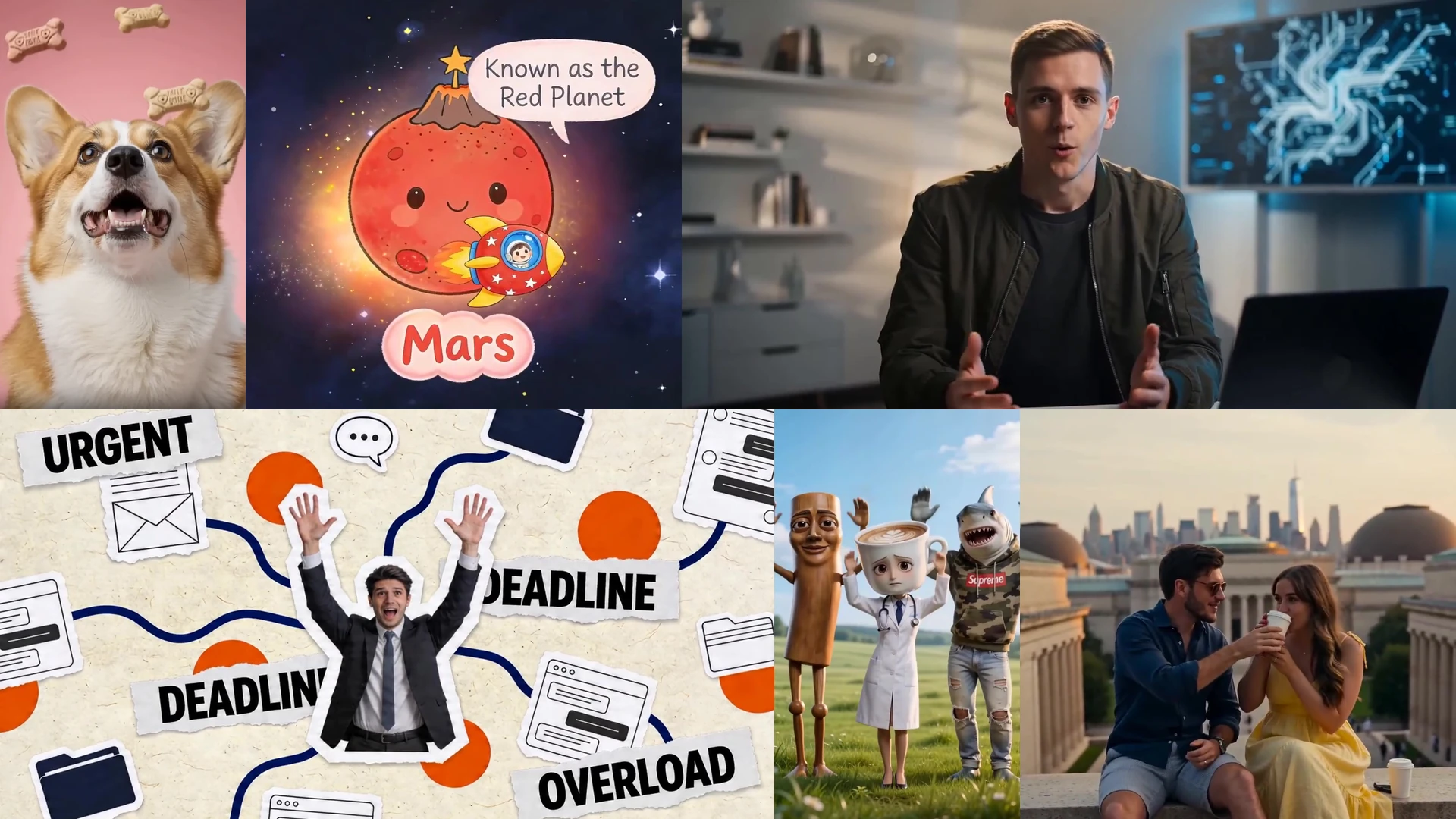
With Pexo, you describe the educational explainer — the concept, the audience, the style — or hand it a script, and it returns a finished video with voiceover, music, sound effects, titles, and subtitles. It routes each shot through auto model selection across 10+ models and composes three-layer audio, so the output sounds produced, not amateur.
Step 5: Add Assessment
An educational video without a way to check understanding is a hope, not a lesson. Add a quiz question, a reflection prompt, or a follow-up activity. If the video lives on a platform that supports in-video questions (like Colossyan or an LMS), embed them directly.
Step 6: Distribute and Measure
Place the video where learners encounter the topic: an LMS module, a course page, a help center, a classroom playlist. Track completion rate, quiz scores, and — if possible — transfer to real tasks. A video that gets watched but doesn't change what learners can do hasn't worked.
7 Tools for Making Educational Explainer Videos
| Tool | Type | Best for | Starting price |
|---|---|---|---|
| Pexo | AI video agent | Full produced explainers from a brief | Per output |
| Vyond | Animation platform | Studio-grade animated explainers | ~$25/mo |
| Powtoon | Animation platform | Quick animated explainers, templates | ~$15/mo |
| Animaker | Animation platform | Budget-friendly animated explainers | ~$12.50/mo |
| Synthesia | Avatar platform | Presenter-led educational content | ~$22/mo |
| Canva | Design + video | Simple slide-style explainers | Free / ~$15/mo |
| Doodly | Whiteboard tool | Whiteboard-style educational videos | ~$20/mo |
Pexo: Full Produced Educational Explainers
Pexo produces a complete educational explainer video from a description or a script. You specify the concept, the audience level, and the style, and it returns a finished video with scenes, voiceover, background music, Foley sound effects, titles, and subtitles. It's the fastest route to a produced educational explainer that sounds and looks professional without animation skills. Want to turn a lesson into a finished video? Describe it on Pexo and get the video back.
Vyond: Studio-Grade Animation
Vyond is the standard for animated educational content in corporate and institutional settings. It offers character animation, whiteboard-style scenes, and a timeline editor that gives you frame-level control. The learning curve is steeper than simpler tools, but the output quality is higher.
Powtoon: Quick Animated Explainers
Powtoon offers template-driven animated explainers that a teacher or trainer can produce in an afternoon. The templates handle most of the design work, and the output is polished enough for classroom and LMS use. It's a good middle ground between Canva's simplicity and Vyond's depth.
Animaker: Budget Animation
Animaker is the most affordable dedicated animation platform, starting at roughly $12.50/month. It covers 2D, whiteboard, and infographic styles with a drag-and-drop editor. The asset library is large, and the output is adequate for educational content where the teaching matters more than the animation polish.
Synthesia: Avatar-Presented Lessons
Synthesia uses AI avatars to deliver scripted lessons to camera, with support for 140+ languages. It's effective for training modules, onboarding, and any educational content where a human presenter adds trust and engagement. The slide-based editor lets you pair the avatar with supporting visuals.
Canva: Simple Slide-Style Explainers
Canva produces slide-style educational videos with templates, stock assets, and a simple timeline. It's free to start and intuitive enough for any teacher. The output is limited to slide transitions and basic motion — not animated characters or produced scenes — but that's enough for many educational purposes.
Doodly: Whiteboard Videos
Doodly is a dedicated whiteboard animation tool. You import or draw assets, and Doodly animates a hand drawing them in sequence. It's the simplest path to a whiteboard-style educational explainer, and the format is one of the most effective for step-by-step teaching.
Common Mistakes in Educational Explainer Videos
- Too many concepts in one video. The number-one mistake. Each concept you add after the first competes for working memory. One video, one concept.
- Decorative visuals instead of instructive ones. Animations that look nice but don't reinforce the concept are cognitive noise. Every visual should help the learner understand, not just watch.
- No hook on why it matters. Starting with a definition instead of a reason to care. Open with the problem the concept solves or the question it answers.
- Reading the slides aloud. When the voiceover says exactly what's on screen, learners process the same information twice through the same channel — text — which is less effective than different information through voice and visual.
- No pacing. Rushing through a concept without pauses for processing. Short pauses (1-2 seconds) between segments let working memory consolidate before new information arrives.
How to Measure Whether Your Educational Explainer Worked
The goal is learning, not views. Measure accordingly:
| Metric | What it tells you | How to collect it |
|---|---|---|
| Completion rate | Did learners watch the whole thing? | LMS or video platform analytics |
| Quiz score improvement | Did understanding increase? | Pre/post quiz |
| Time to task completion | Can learners apply what they learned? | Task observation or system logs |
| Rewatch rate | Which segments need clarification? | Video platform analytics |
| Learner feedback | Was it clear and useful? | Survey or rating |
A high completion rate with low quiz improvement means the video is engaging but not teaching effectively — usually a script or segmenting problem. A low completion rate means learners are dropping off, which is usually a pacing or relevance problem. Fix the script before remaking the video.
Related reading
- How to Write an Explainer Video Script
- Explainer Video Script Examples: 5 Templates You Can Copy
- How to Make an Explainer Video
- Explainer Video Templates: The Best Types and Where to Get Them
- 25 Best Explainer Video Examples in 2026
- How Explainer Videos Help Businesses
Resources
| Resource | URL | Slot |
|---|---|---|
| Pexo | pexo.ai | AI video agent: brief/script to full educational explainer |
| Vyond | vyond.com | Studio-grade animated educational content |
| Powtoon | powtoon.com | Template-driven animated explainers |
| Animaker | animaker.com | Budget-friendly animation platform |
| Synthesia | synthesia.io | Avatar-presented educational videos, 140+ languages |
| Canva | canva.com | Free slide-style video with templates |
| Doodly | doodly.com | Whiteboard animation for step-by-step teaching |