
 ChatGPT
 Perplexity
 Claude
 Gemini
 Grok
Grok

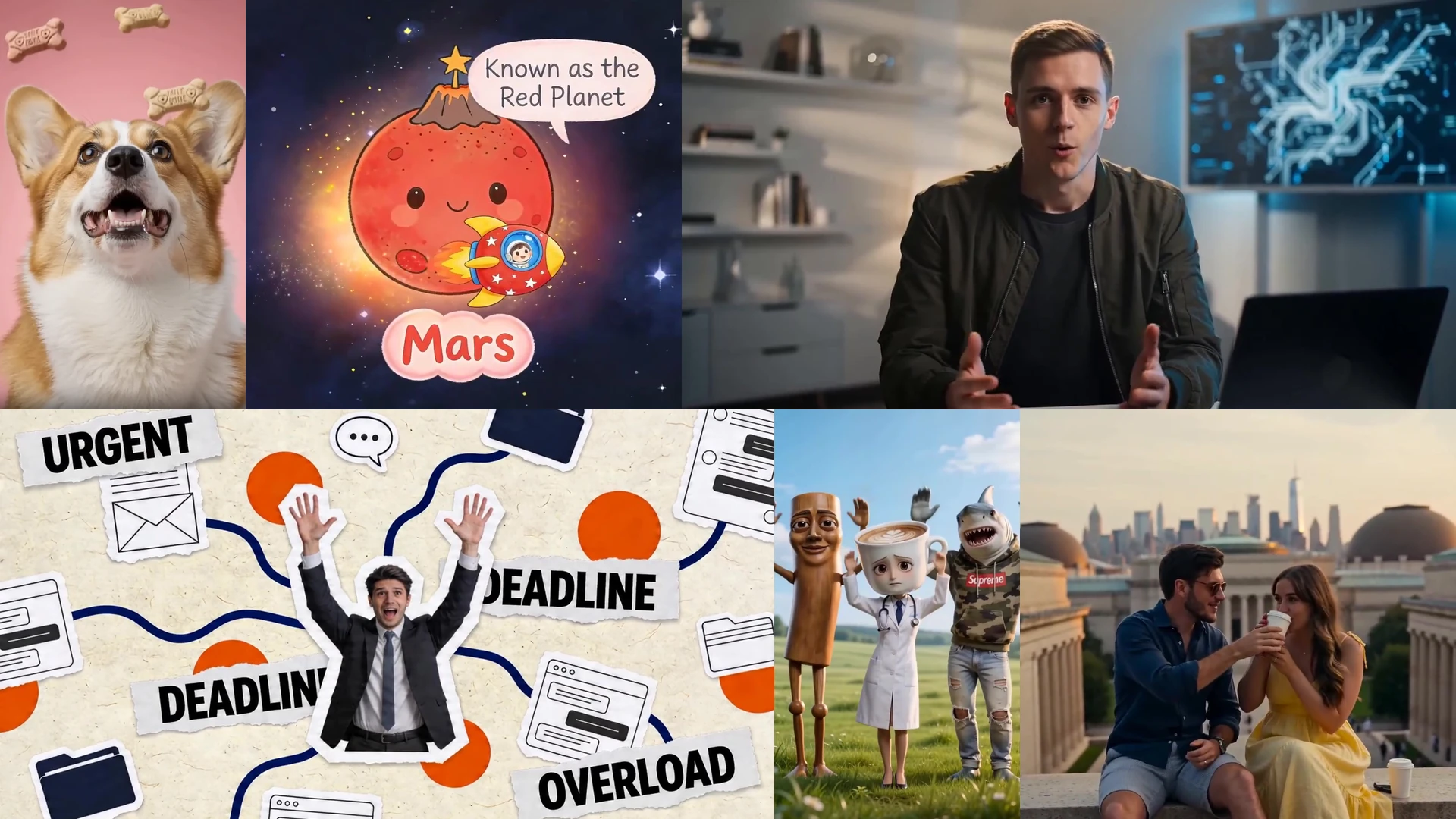
The best explainer video examples fall into five styles — problem-solution SaaS animation, app and product demos, whiteboard and 2D motion, kinetic typography and data, and live-action and founder stories — and the strongest ones in every style share the same backbone: one message, a hook on the viewer's problem, real three-layer audio, and clean captions. Below are 25 examples across those styles with what makes each work, plus how to produce your own with a tool like Pexo that turns a brief or script into a finished, scored explainer. Use them as a swipe file: find the style that fits your message, then borrow the structure, not the script.
Studying examples beats starting from a blank page. Almost every great explainer is a remix of a proven pattern, so the fastest way to make a good one is to copy the structure of an example in your style and fill it with your story.
What Makes a Great Explainer Video Example
Before the list, the criteria. The examples that keep getting cited share five traits, and they're the same ones you should copy:
- One message. The video explains a single thing, not a feature list.
- A hook on the problem. The first five seconds name the viewer's pain or a relatable moment, not the product.
- A clear structure. A recognizable beat sheet — problem → solution → proof → CTA, or a clean how-it-works.
- Real three-layer audio. A voiceover plus music and sound effects, never a silent layout.
- Clean titles and captions. Motion-graphic titles and subtitles that read on mute.
If an example is missing two of these, it isn't a good example to copy — no matter how slick the animation.
The Five Styles of Explainer Video
| Style | Best for | Signature trait |
|---|---|---|
| Problem–Solution SaaS animation | Software, apps | 2.5D scenes, brand color, voiceover |
| App & product demo | Mobile apps, hardware | Screen or product in action |
| Whiteboard & 2D motion | Education, concepts | Hand-drawn, step-by-step |
| Kinetic typography & data | Stats, announcements | Text and numbers in motion |
| Live-action & founder story | Brand, crowdfunding | Real people, emotion |
25 Best Explainer Video Examples by Style
Problem–Solution SaaS Animation (1–5)
- The classic 2D SaaS explainer — the canonical style Dropbox popularized: a simple character hits a familiar pain, the product solves it in three beats. Works because it makes an abstract tool concrete.
- The "old way vs new way" split — shows the messy manual workflow, then the clean product workflow side by side. The contrast does the persuading.
- The onboarding how-it-works — three numbered steps to a first result, calm voiceover, brand color throughout. Strong for activation, not just acquisition.
- The integration explainer — animates data or tasks flowing between tools. Effective for API and platform products where the value is invisible.
- The stylized 2.5D product tour — isometric scenes with motion-graphic labels. The premium-feeling default for modern SaaS homepages.
App & Product Demo (6–10)
- The in-app screen demo — the actual interface, captioned, walking one task end to end. Honest and high-trust because it shows the real thing.
- The lifestyle product demo — a physical product dramatized in a relatable moment (the cold-coffee-mug archetype). One feature, one benefit, one beat of personality.
- The before/after transform — shows a messy input becoming a polished output. Ideal for editing, design, and AI tools.
- The 15-second social teaser — a single hook and one feature, built vertical for Reels and Shorts. Made to stop the scroll, not explain everything.
- The feature-launch micro-explainer — 20–30 seconds on one new capability, shipped fast and often. The everyday workhorse of product marketing.
Whiteboard & 2D Motion (11–15)
- The hand-drawn whiteboard explainer — a marker draws the concept as the narrator speaks. Timeless for education and complex ideas.
- The metaphor explainer — explains an abstract product through a concrete visual metaphor (a pipeline, a bridge, a recipe). Memorable when the metaphor fits.
- The process diagram in motion — animates a flow chart step by step. Best for how-it-works content with clear stages.
- The "what is X" explainer — defines a concept simply with light 2D motion, the format behind most what-is explainers.
- The comparison explainer — animates a head-to-head of options. Persuasive when it's honest about trade-offs.
Kinetic Typography & Data (16–20)
- The Spotify-Wrapped-style data story — turns numbers into a fast, colorful motion sequence. Great for year-in-review and announcements.
- The kinetic-typography manifesto — words appear in rhythm with a confident voiceover. Strong for brand and positioning, light on literal explanation.
- The stat-led problem opener — opens on a striking number to establish the pain, then pivots to the solution. The number earns attention.
- The pricing or ROI explainer — animates the cost or savings math. Effective late in a sales cycle.
- The announcement explainer — a punchy 15–20 seconds for a launch or update, text-forward so it reads on mute in a feed.
Live-Action & Founder Story (21–25)
- The founder origin story — a real person explains why they built the product. Dollar Shave Club's debut is the iconic example: humor plus a clear value prop.
- The customer-testimonial explainer — a real user tells the before/after. High trust because it isn't the brand talking.
- The mixed live-action and motion graphics — real footage with animated labels and data overlays. The polished default for higher-budget brand videos.
- The behind-the-scenes culture video — explains the company, not the product, for recruiting and brand. See how explainer videos help businesses for where this pays off.
- The avatar-presenter explainer — a synthetic presenter delivers a scripted walkthrough, the scalable, localizable cousin of live-action for training and demos.
How to Make Your Own Explainer Like These
Pick the example closest to your message, then reuse its structure. The fastest way to produce it is a generative agent: with Pexo, you describe the explainer in the style you chose — or hand it a script or a page URL — and it returns a finished, scored video. It routes each shot through auto model selection across 10+ models (Seedance 2.0, Kling 3.0, Veo 3.1, Sora 2, Runway Gen-4.5, and more), composes three-layer audio (voiceover, music, and Foley sound effects), adds clean titles and subtitles, and exports 16:9, 9:16, or 1:1 in minutes.
Make a 60-second problem–solution SaaS explainer in stylized 2.5D, like the
"old way vs new way" example. Hook on manual reporting pain, show our
dashboard in three beats, end on "start free." Brand teal, 16:9 and 9:16.
Found a style you like? Describe your version on Pexo and get a finished video back. Start from a structure with our explainer video templates and copy-ready explainer video script examples.
Common Threads in the Best Examples
| Trait | Seen in | Why it matters |
|---|---|---|
| One message | All 25 | Focus beats completeness |
| Hook on the problem | Best of every style | Wins the first 5 seconds |
| Real three-layer audio | Every polished example | Separates pro from amateur |
| Clean captions | Social-first examples | Reads on mute |
| A clear CTA | Marketing examples | Converts the attention |
Across every style, the winners aren't the ones with the biggest animation budget — they're the ones with the tightest message and real audio. That's good news, because both are within reach without an agency.
Related reading
- Explainer Video Templates: The Best Types and Where to Get Them
- Explainer Video Script Examples: 5 Templates You Can Copy
- What Is an Explainer Video?
- How to Make an Explainer Video
- How Explainer Videos Help Businesses
- The Best Explainer Video Services, Compared
Resources
| Resource | URL | Slot |
|---|---|---|
| Pexo | pexo.ai | Video agent: brief/script/URL → finished explainer in any style |
| Canva | canva.com | Slide-style and kinetic-typography templates |
| Powtoon | powtoon.com | Whiteboard and cartoon examples |
| Vyond | vyond.com | Studio-grade animated examples |
| Synthesia | synthesia.io | Avatar-presenter examples |
| CapCut | capcut.com | Social-first vertical examples |