
 ChatGPT
 Perplexity
 Claude
 Gemini
 Grok
Grok

A strong explainer video script follows one of five structures — problem-solution, how-it-works, product demo, founder story, or FAQ — and runs about 150 words per 60 seconds of finished video. The examples below are copy-ready: change the names and you have a working script. Paste it into Pexo, whose Script-to-Video can generate a first draft with scenes, voiceover, and captions for review. This guide covers the five scripts, writing rules, common mistakes, and the path from draft to video.
Most explainer scripts fail for the same reason: they open with the product instead of the viewer's problem, and they pack three messages into 90 seconds. A good script picks one message, hooks on a real pain in the first two lines, and earns the call to action. The structures below enforce that discipline.
How Long Should an Explainer Script Be?
Read your draft aloud at a natural pace and you'll average around 150 words per minute. Use that to size the script before you write a single visual.
| Video length | Script word count | Typical use |
|---|---|---|
| 15 seconds | ~35–40 words | Social teaser, ad hook |
| 30 seconds | ~75 words | Feature highlight, Reels |
| 60 seconds | ~150 words | Homepage explainer |
| 90 seconds | ~220 words | Product / how-it-works |
| 2 minutes | ~300 words | Detailed onboarding |
Write to the word count, not past it. If your 60-second explainer needs 220 words, you're trying to say too much — cut to one message.
The Five Script Structures at a Glance
| Structure | Hook opens on… | Best for |
|---|---|---|
| Problem–Solution | The viewer's pain | SaaS, apps, services |
| How-It-Works | A question or curiosity | Technical products, APIs |
| Product Demo | A relatable moment | E-commerce, hardware |
| Founder Story | A belief or frustration | Brand, crowdfunding |
| FAQ / Onboarding | A real user question | Support, activation |
Note: Product names and performance figures in the examples are placeholders that must be replaced with verified facts.
Example 1 — Problem–Solution Script (SaaS, 60 seconds)
[Hook] You start a new habit on Monday. By Thursday, the streak's broken — and so is your motivation. [Problem] Most habit apps just count days. When you slip once, the counter resets to zero, and that single red mark is usually where people quit. [Solution] Streakly is built for the slip. Miss a day and it protects your streak with a grace token, then nudges you back the next morning with the smallest possible next step. [Proof] In our beta, users stuck with a habit 3x longer than they did on streak-reset apps. [CTA] Download Streakly free and keep the streak that survives a bad week.
This is the highest-leverage structure because it leads with the viewer's frustration, not the feature. Note the proof line carries one concrete number — specific beats vague every time.
Example 2 — How-It-Works Script (Technical Product, 90 seconds)
[Hook] How does an AI actually turn your support tickets into a help center overnight? [What it is] DocBot reads your closed support conversations and writes structured help articles from them — automatically. [Step 1] It connects to your inbox or helpdesk and pulls resolved tickets. [Step 2] It clusters them by topic, so forty "how do I reset my password" tickets become one article. [Step 3] It drafts each article in your brand voice and routes it to a human for a one-click approve. [Result] A team that never had time to write docs ships a fifty-article help center in a week. [CTA] Connect your helpdesk and watch your first ten articles draft themselves.
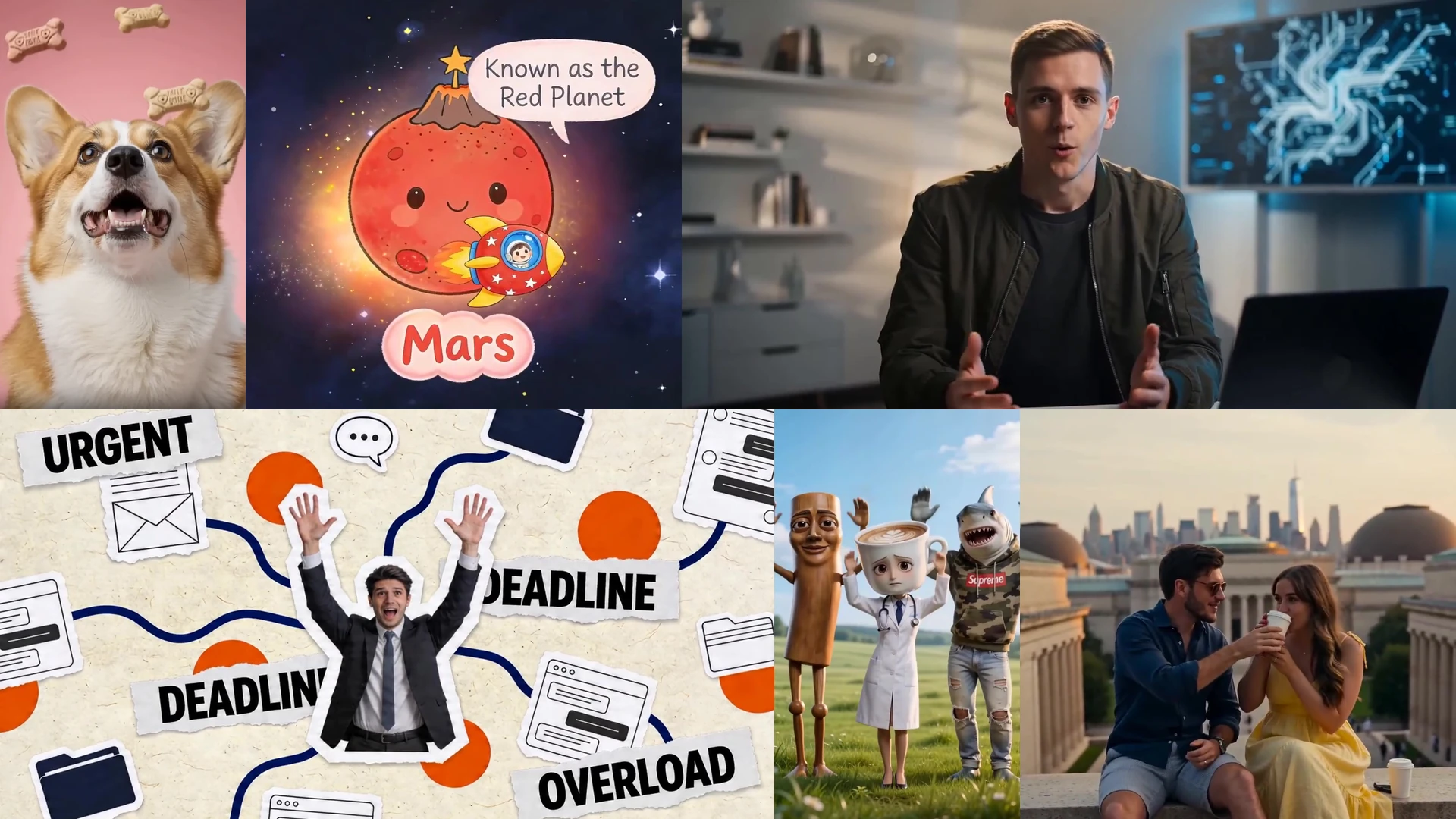
How-it-works scripts pair naturally with animated diagrams and step labels, which is why they rely on motion-graphic titles and subtitles that render exactly, with no garbled text.
Example 3 — Product Demo Script (E-commerce, 30 seconds)
[Moment] It's 7 a.m., you're already late, and your coffee's stone cold. [Feature in action] The Emberr mug senses your sip and holds your coffee at exactly 135°F — from the first pour to the last. [Benefit] No reheating, no lukewarm last gulp. Just hot coffee, the whole cup. [CTA] Meet Emberr. Your last cold coffee was yesterday.
Short demo scripts work best when they dramatize a single relatable moment instead of listing specs. One feature, one benefit, one line of personality.
Example 4 — Founder Story Script (Brand, 60 seconds)
[Belief] We think the best tools disappear. You shouldn't notice them — you should just notice you got more done. [Frustration] We built Northwind because every project tool we tried did the opposite: more dashboards, more notifications, more meetings about the tool itself. [The change] So we stripped it back. One view, your actual work, and an assistant that handles the busywork in the background. [Invitation] If you're tired of managing your project manager, come build with us.
Founder scripts trade hard CTAs for emotional alignment. They suit crowdfunding and brand pieces where trust matters more than an immediate click.
Example 5 — FAQ / Onboarding Script (Activation, 45 seconds)
[Question] "I signed up — now what?" [Answer] Three steps get you to your first result. One: import a file or connect a tool. Two: pick a template, or just describe what you want. Three: hit generate, and you've got something to share in minutes. [Reassurance] Nothing's locked in. You can redo any step, and your work autosaves. [Next step] Open step one now — it takes about thirty seconds.
Onboarding scripts answer the real first question a new user asks. Lead with their words, in quotes, to signal you're answering them.
Copy-and-Fill Explainer Video Script Templates
These concise templates offer a quick framework to adapt five common explainer video structures for your needs.
- Problem-Solution: [Introduce a common problem your audience faces] → [Explain how your product/service uniquely solves this problem] → [Show the benefits and positive outcome] → [Call to action].
- How-It-Works: [Identify a user need or goal] → [Introduce your product/service as the solution] → [Step-by-step explanation of how it functions simply] → [Highlight key features and ease of use] → [Call to action].
- Product Demo: [Briefly introduce your product and its main purpose] → [Visually demonstrate core features in action] → [Show specific use cases and user benefits] → [Address potential pain points it alleviates] → [Call to action].
- Founder Story: [Introduce the founder's personal journey or inspiration] → [Explain the problem that led to the product/service's creation] → [Show how the solution was developed and its impact] → [Share the vision and values] → [Call to action].
- FAQ / Onboarding: [Address common questions or initial user challenges] → [Provide clear, concise answers or step-by-step guidance] → [Highlight key features or benefits relevant to new users] → [Offer resources for further support] → [Call to action].
Common Explainer Script Mistakes to Avoid
Even with the right structure, a few habits quietly weaken a script:
- Opening with the product, not the problem. "Streakly is a habit tracker" is a label; "By Thursday, your streak's broken" is a hook. Lead with the viewer.
- Packing in three messages. A 60-second explainer carries one idea well and three badly. Cut everything that isn't the single clearest message.
- Writing for the eye, not the ear. Scripts are read aloud. Long clauses and jargon that look fine on the page trip a voiceover. Read every draft out loud.
- Vague proof. "Loved by thousands" is forgettable; "users stuck with a habit 3x longer" sticks. One concrete number beats five adjectives.
- A soft or missing CTA. End on one specific action — "Download Streakly free," not "Learn more." Ambiguity at the end wastes the attention you earned.
Fix these five and an average script becomes a strong one without changing the structure.
How to Turn a Finished Script Into a Video
Once written, production can be slow. Pexo's Script-to-Video can help. Paste a finished script into Pexo and it segments the narration into shots, generates matching visuals, adds voiceover and captions for a draft that must be reviewed.
Here's my 60-second problem–solution script for a habit app. Make a stylized
2.5D explainer from it, upbeat tone, end on the download CTA.
[paste script]
A script is one supported starting point; depending on the workflow, a user can also begin with a plain-language brief or an accessible URL. For structure guidance, see what an explainer video is and the full walkthrough on how to make an explainer video. Got your script ready? Paste it into Pexo and get a draft for review.
When NOT to Auto-Generate From a Script
A finished-video agent isn't right for every script:
- Your script is a to-camera monologue for a named presenter. A talking-head or spokesperson read is an avatar job — use HeyGen or Synthesia.
- You're narrating over footage you filmed yourself. Editing your own clips to a voiceover is a timeline-editor task in CapCut or Descript, not a generation step.
- You're walking through your live product UI. A literal screen recording belongs in Loom or Screen Studio.
For a scripted, narrated, animated explainer built from words rather than raw footage, generating from the script can provide a first draft for review.
Related reading
- Explainer Video Templates: The Best Types and Where to Get Them
- How to Make an Explainer Video
- What Is an Explainer Video?
- The Best Explainer Video Services, Compared
- The Best AI Video Generators, Compared
- The Best AI Video Agents for Full Video Creation
Resources
| Resource | URL | Slot |
|---|---|---|
| Pexo | pexo.ai | Script-to-Video: paste a script → draft for review |
| HeyGen | heygen.com | Avatar / talking-head presenter from a script |
| Synthesia | synthesia.io | Avatar explainer, 100+ languages |
| Descript | descript.com | Text-based editing for narrated footage |
| CapCut | capcut.com | Timeline editing of footage you filmed |
| Loom | loom.com | Screen-recording product walkthroughs |