
 ChatGPT
 Perplexity
 Claude
 Gemini
 Grok
Grok


To advertise a self-published book with paid ads, you run auction-based campaigns on four main platforms: Amazon Ads (Sponsored Products and Sponsored Brands), Meta (Facebook and Instagram), BookBub Ads, and Google Ads. There is no single best platform. Amazon and Google reach readers who are actively searching, so they convert closer to the sale, while Meta and BookBub reach readers who are browsing, so they build awareness and email lists. Most indie authors on Kindle Direct Publishing (KDP) start with Amazon Sponsored Products because clicks in the Books category are among the cheapest on the platform, then add Meta or BookBub once their product page converts. Every platform is priced by cost-per-click (CPC) or cost-per-thousand-impressions (CPM), and every campaign is judged by one number: Advertising Cost of Sale (ACOS), your ad spend divided by the sales it generated. This guide covers each platform's mechanics, bidding logic, creative requirements, the book genres that fit, the money traps, and the ACOS and ROAS math.
What "advertising a self-published book" means
Advertising here means paid placement, distinct from organic marketing such as an email list, book reviews, or social posts. Paid book ads buy attention in one of two contexts. Search-intent platforms (Amazon Ads, Google Ads) show your book when a reader types a query like "cozy mystery series" or "intermittent fasting for women," so the reader already wants a book. Interruption platforms (Meta, BookBub) show your ad while the reader scrolls a feed or opens a daily deals email, so your creative has to earn the click. A self-published author on KDP earns a 35% or 70% royalty, a much higher margin than a traditionally published author's roughly 10%, which is exactly why paid ads can pay off for indies who watch their numbers.
The four paid platforms at a glance
Each platform sits at a different point in the reader's journey and prices attention differently. The table below summarizes how they compare for a self-published title.
| Platform | Buying model | Typical book cost | Reader intent | Best for |
|---|---|---|---|---|
| Amazon Sponsored Products | CPC auction | ~$0.15–$0.80 per click in Books | High (searching to buy) | Direct sales on Amazon/KDP |
| Amazon Sponsored Brands | CPC auction | ~$1.10–$2.50 per click | High | Author brand, 3+ book catalogs |
| Meta (Facebook/Instagram) | CPM/CPC auction | ~$8–$25 CPM; often <$1 CPC | Low (browsing) | Awareness, series starters, email lists |
| BookBub Ads | CPC or CPM auction | CPC often <$0.70; CPM under ~$10 | Medium (book-buyer audience) | Genre-targeted reader reach |
| Google Search Ads | CPC auction | Varies by keyword | High (searching) | Non-fiction, branded queries |
Amazon Ads: Sponsored Products, Brands, and Display
Amazon Sponsored Products are the recommended starting point for most indie authors because Books is one of the cheapest categories to advertise in. Realistic CPCs run roughly $0.15 to $0.80 depending on genre, with competitive niches like romance, thriller, and self-help now averaging $0.50 to $0.80 as book CPCs have climbed 15% to 25% since 2024. A Sponsored Product ad appears inside search results labeled "Sponsored" and on competitor book pages. For example, a keyword-targeted campaign on "space opera" places your ebook above organic results when a reader searches that term, and a product-targeting campaign lets you add competitor ASINs so your title shows on their detail pages, often at a cheaper $0.35 to $0.50 starting bid.
Amazon runs a second-price auction, so your bid is a ceiling, not the price you pay, and listing relevance can let a well-optimized book outrank and underpay a higher bidder. A common starting setup is a $10 to $20 daily budget with "Dynamic bidding, down only," which lets Amazon lower your bid on clicks unlikely to convert while holding your maximum. Sponsored Brands, historically reserved for large publishers, have expanded to individual KDP authors and suit anyone with a catalog of roughly three or more titles, because they build banner ads that link to your Amazon Author Page. They carry higher CPCs of about $1.10 to $2.50, so they pay off on branding and series read-through rather than a single-title sale. Sponsored Display and lockscreen ads add retargeting reach but are usually a later-stage layer.
Meta Ads: Facebook and Instagram
Meta's advantage is granular audience targeting by reader interest, behavior, and demographics, which makes it strong for awareness and email-list building rather than instant Amazon sales. Facebook CPCs for well-optimized book ads often fall well under $1, sometimes $0.18 to $0.35, while CPMs for book advertising run roughly $8 to $25 depending on audience and creative quality. Unlike Amazon, where spending even $10 a day profitably can be hard, Meta will happily take your $10 and return traffic, so the discipline shifts to conversion. One documented author campaign sent 884 clicks to an Amazon page and produced a single sale, which proved the ads worked but the book's sales page did not.
Meta rewards relevance, so a strong click-through rate of 2% to 5% lowers your auction cost, and costs predictably climb 15% to 25% in Q4 holiday competition. Automatic bidding is generally recommended over manual, and the weekly routine is to kill low-performing ads and audiences, test fresh creative, and scale budgets only where net profit still grows. Scaling is not linear: what works at $10 a day rarely holds at $100 a day, because cheap placements fill up and the auction moves into pricier inventory. Meta is best for fiction series starters, retargeting website visitors, and driving readers to a newsletter magnet, not for a cold pitch of a $2.99 standalone.
BookBub Ads
BookBub Ads is a self-serve platform that shows image ads to a large audience of committed readers, targetable by author and category so you reach fans of comparable books. You are never charged upfront: the budget you set is the maximum before your ad stops serving, any leftover is never billed, and the technical minimum daily and total budget is $1, though $5 to $15 is the practical floor for meaningful data. You choose CPC or CPM bidding. CPM guarantees reach for the highest bidder on an audience and is often better for testing and for cheaper clicks at scale, while CPC only spends when a reader clicks and gives the tightest cost control for evergreen campaigns.
BookBub's auction rewards click-through rate on CPC campaigns, so ads that earn clicks win more impressions while low-CTR ads eventually stop serving. As a rough profitability guide, advertisers aim for an effective CPC under about $0.70 and an effective CPM under roughly $10, though ideal rates vary widely by genre, competition, and book price. Because targeting is keyed to authors and genres readers already love, BookBub fits genre fiction with clear comps far better than niche non-fiction that lacks obvious author look-alikes.
Google Ads
Google Search Ads behave more like Amazon than like Meta, because you reach people actively looking for something, which suits non-fiction and branded queries. A reader searching "keto cookbook for beginners" or your author name has intent, so the ad meets demand rather than interrupting a scroll. The trade-off is attribution: Google often sends buyers offsite to Amazon, so you track conversions through Google's own tags or pixel tracking rather than native ad reporting. Set conservative bids, add negative keywords to block searches that never convert, and raise bids only on terms that prove they can sell.
Realistic Google and cross-platform budgets for indies start at roughly $150 to $250 a month for a 90-day learning window, with optimized authors spending $300 to $600. According to Written Word Media's 2024 Author Survey, 73% of successful indie authors invest in paid ads, at a median monthly budget near $250, generating a median ROI in the 150% to 300% range. Expect 60 to 90 days before profitability, and treat the first 30 to 60 days as a data-gathering phase where a higher ACOS is normal.
Ad creative requirements by platform
Creative rules differ sharply. Amazon and BookBub lean on your cover and a short line of copy, while Meta and Google reward scroll-stopping images or video. The table below outlines the essentials.
| Platform | Primary creative | Copy needs | Video-friendly |
|---|---|---|---|
| Amazon Sponsored Products | Auto-pulled cover + listing | Custom headline (Sponsored Brands) | No |
| Amazon Sponsored Brands | Cover + logo + banner | Short brand headline | No |
| Meta Facebook/Instagram | Static image, carousel, or video | Hook + benefit + CTA | Yes (Reels, feed) |
| BookBub Ads | Custom image ad (cover + tagline) | Tagline + comp-author angle | No |
| Google Search Ads | Text ad + sitelinks | Keyword-matched headline | No (Search) |
Making video ad creative
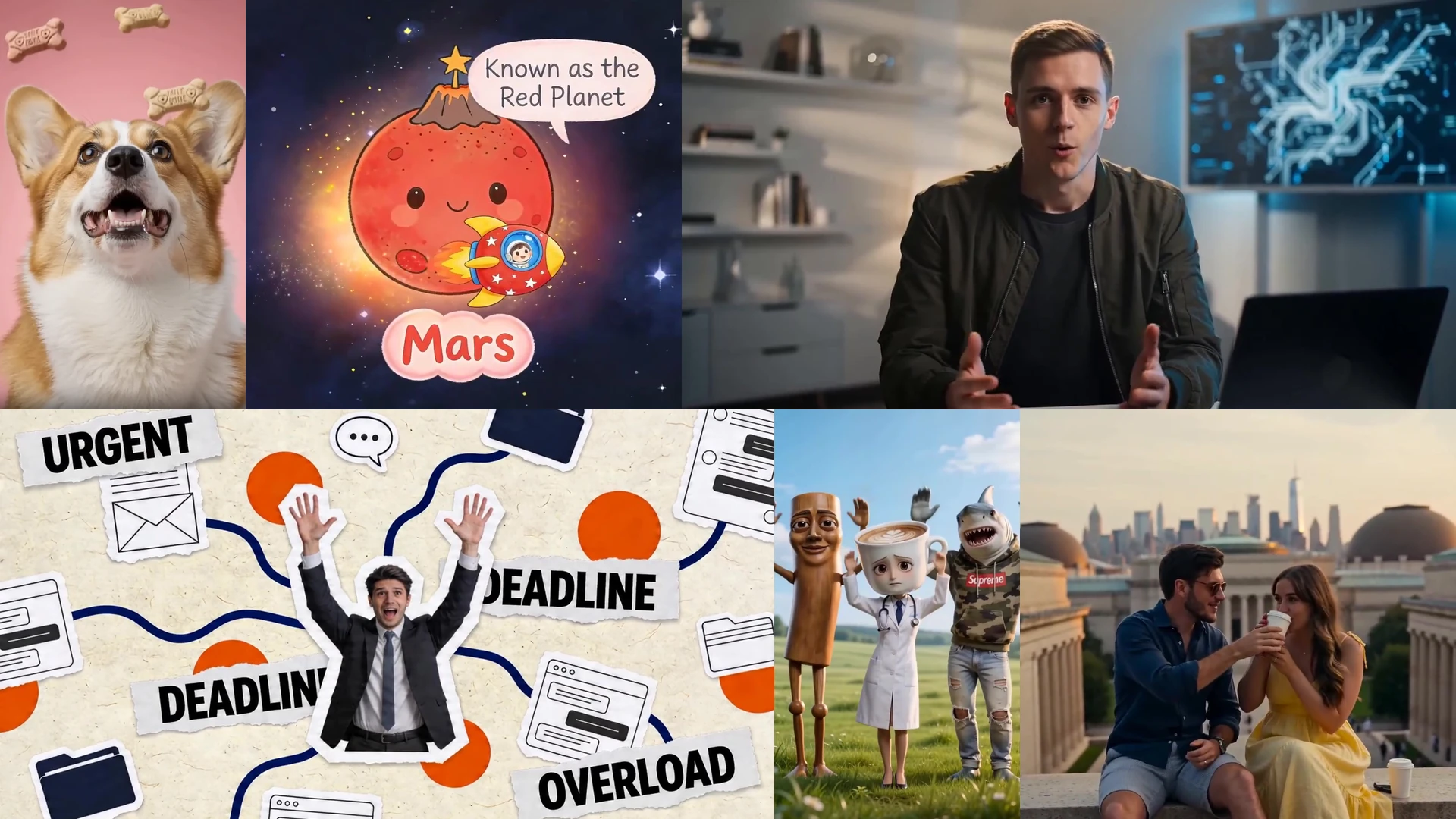
Video ads on Facebook, Instagram Reels, TikTok, and YouTube consistently earn a lower cost-per-click than static images, whether they run on social or as a book trailer on your Amazon listing, but producing a book trailer used to require editing skills most authors lack; how to make a book trailer now takes one description. This is where an AI video partner fits the paid-ads workflow. Pexo is a conversational AI video agent: you describe the book, paste the blurb or a landing-page URL, and upload the cover, and it returns a finished vertical ad with a three-layer soundtrack of voiceover, music, and Foley sound effects. It routes each shot across current video models such as Seedance 2.0 and Kling AI automatically, so you never pick a model or open a timeline, and it exports 16:9, 9:16, and 1:1 for every placement.
The honest limit: an AI video agent generates its own footage, so it fits atmospheric trailers and concept ads, not editing raw clips you filmed yourself. For a thriller launch, you might describe a rain-slicked city and a ticking-clock mood; for a cookbook, warm kitchen scenes over the cover reveal. Pair the finished clip with a 2% to 5% CTR target on Meta and swap creative weekly. For the broader pipeline, see the guides in Related reading on building a video ad workflow and on vibe marketing.
How to calculate ACOS, ROAS, and break-even
Every book campaign lives or dies on ACOS, which is ad spend divided by ad sales, and its inverse ROAS. Suppose you earn $4 in royalty per sale and want a 30% ACOS: you can afford about $1.20 per sale in ad spend. If your CPC is $0.60 and your product page converts one in three visitors, the math works; if your CPC approaches your per-sale royalty and conversion is weak, no bid tweak will save it. The table shows the core formulas.
| Metric | Formula | Example |
|---|---|---|
| ACOS | (Ad spend ÷ ad sales) × 100 | $50 ÷ $100 = 50% |
| ROAS | Ad sales ÷ ad spend | $100 ÷ $50 = 2.0× |
| Max cost per sale | Royalty × target ACOS | $4 × 30% = $1.20 |
| Break-even ACOS | Royalty ÷ book price × 100 | Varies by price |
For a series, judging book one on its own ACOS is a costly mistake, because read-through royalties from later books can push true break-even ACOS above 100%. If 40% of book-one buyers finish a four-book series, a single book-one reader can be worth more royalty than book one's own price, so authors deliberately run book one as a loss leader. A 30% ACOS target is cautious for a 70%-royalty ebook and impossible for a $0.99 one, so calculate your own break-even before copying any headline number. During the first 30 to 60 days, an 80% to 100% ACOS is acceptable while the platform learns.
Which platform fits which book
Match the platform to your genre and catalog rather than chasing the cheapest click. The table routes common cases.
| Your situation | Best first platform | Why |
|---|---|---|
| Single non-fiction title | Amazon Sponsored Products | High-intent keyword search |
| Genre-fiction series | BookBub Ads or Meta | Comp-author targeting, read-through |
| 3+ book catalog / brand | Amazon Sponsored Brands | Author Page + banner reach |
| Building an email list | Meta (Facebook/Instagram) | Interest targeting to a lead magnet |
| Branded / author-name demand | Google Search Ads | Capturing existing intent |
Common money traps
Most wasted ad spend comes from a handful of predictable mistakes. The table below pairs each trap with the fix.
| Money trap | What goes wrong | Fix |
|---|---|---|
| Blaming the ad for no sales | Clicks arrive, book still does not sell | Fix the cover, blurb, and price first |
| Judging a series on book one | Ignoring read-through royalties | Calculate series-wide break-even ACOS |
| Scaling too fast | CPC jumps at higher spend | Raise budgets only where profit grows |
| Bidding too low on BookBub CPC | Ad never serves, no data | Start CPM to test, or lift the CPC bid |
| Copying a "keep ACOS under 30%" rule | Target ignores your margin | Derive ACOS from your royalty and price |
Related reading
- What is agentic advertising
- Vibe marketing: the complete guide
- How to build an AI video ad pipeline with Claude Code
- Best AI video generator for online stores
Resources
| Resource | URL | Use |
|---|---|---|
| Agentic advertising explainer | https://pexo.ai/blog/what-is-agentic-advertising-0629 | Understand AI-run ad workflows |
| Vibe marketing guide | https://pexo.ai/blog/vibe-marketing-complete-guide-9573 | Creative and campaign strategy |
| AI video ad pipeline | https://pexo.ai/blog/how-to-build-an-ai-video-ad-pipeline-with-claude-code-from-prompt-to-published-8456 | Production workflow |
| Pexo | https://pexo.ai | Make video ad creative |