 ChatGPT
 Perplexity
 Claude
 Gemini
 Grok
Grok



The bottleneck in paid ads isn't bidding or targeting — it's creative volume. Meta's own data shows that ad fatigue sets in after 4-7 days of delivery, and the average CTR decays 38% within 14 days. Google Performance Max requires 5+ video assets per asset group to unlock full optimization. TikTok's creative lifespan is even shorter — some advertisers report creative fatigue hitting in under 72 hours.
If you're spending $10K+/month on paid media, you're not limited by budget. You're limited by how fast you can produce video.
This guide shows how to build a fully automated video ad pipeline using Claude Code — from a product description to a finished, multi-shot video with scripted scenes, transitions, music, and sound design — without opening a video editor, hiring a creator, or leaving your terminal.
The Creative Supply Chain Problem
A typical performance marketing team runs this loop:
- Identify winning ad concepts from competitor research
- Brief a creative team or UGC creators
- Wait 3-7 days for deliverables
- Upload to ad platforms, test variants
- Identify creative fatigue after 4-14 days
- Go back to step 1
Steps 2 and 3 are the bottleneck. The analysis and distribution are already automatable with tools like Adspirer, Ryze AI, and OpenClaw's built-in ad skills. But the creative production step — actually making the video — still requires human labor at most shops.
The cost math: a single UGC creator charges $150-500 per video. At 20 new creatives per week (a modest refresh rate for a $50K/month budget), that's $3,000-10,000/week in creator costs alone. And that doesn't count the coordination overhead — briefing, feedback rounds, revision cycles.
What if your agent could make the video itself?
Step 1: Set Up Your Agent Environment
You need Claude Code or OpenClaw running locally. If you already have one set up, skip ahead.
# Claude Code (if not installed)
npm install -g @anthropic-ai/claude-code

# Or OpenClaw
npm install -g openclaw
For 24/7 availability (running campaigns overnight), the most common setups are:
| Setup | Cost | Best For |
|---|---|---|
| Local Mac/PC | $0 | Testing and development |
| DigitalOcean Droplet | $24/month | Solo operators, always-on |
| AWS Lightsail | $20/month | Teams with existing AWS infra |
Step 2: Install the Video Generation Skill
Your agent needs a skill that can actually produce video — not just generate a single raw clip, but deliver a finished piece with scripted scenes, shot composition, transitions, music, and sound design.
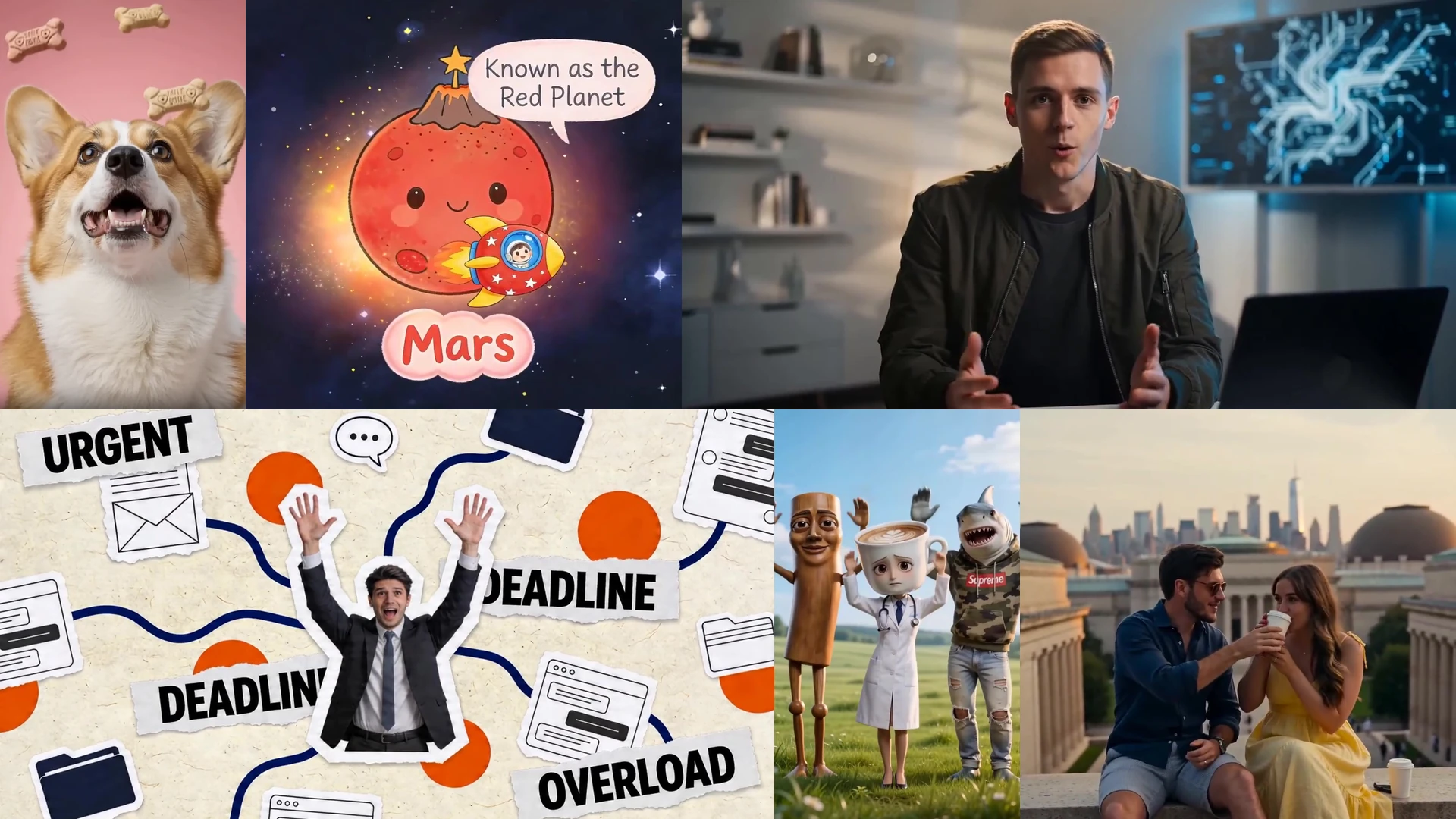
Pexo is a video agent skill that works as an AI director inside your Claude Code or OpenClaw agent. Unlike single-model video generators that output a raw 5-second clip, Pexo runs a full production pipeline: it writes the script, designs multi-shot sequences with deliberate camera movement, selects the best AI model for each scene (Seedance, Kling, Sora, and others), renders all shots, then composites them with professional audio mixing (three-track sound design + AI-generated scored music, mastered to -14 LUFS broadcast standard). It also supports lip-sync dubbing for talking-head content.
Pexo accepts multiple input types — not just text prompts. You can feed it:
- Text to Video — describe what you want in natural language
- Image to Video — upload a product photo and Pexo animates it into a video ad
- URL to Video — paste a product page URL and Pexo extracts visuals, copy, and brand elements to create a video automatically
- Script to Video — provide a written script and Pexo produces the full video from it
- Audio to Video — supply a voiceover or music track and Pexo builds visuals around it
Setup takes 3 steps:
- Create your account — go to pexo.ai, log in with Gmail, and enter your invite code to activate (free, no credit card required). Don't have a code? Request early access on the site.
- Add the skill — find the installation link in your Pexo profile page and click to add the skill to OpenClaw. For Claude Code, install from ClawHub.
- Connect your API key — copy your API key from Pexo settings (avatar → API Keys → Create Key) and paste it into your agent.
That's it. Your agent can now produce video.
Other options in this space include Higgsfield MCP (single-model generation), Remotion (code-based animation — great for explainers, not for ad creative), and Wonda CLI (fast single-model generation with polished DX). The key question is what you need: if you want raw video clips fast, Wonda is excellent. If you want finished, multi-scene video with scripted direction, music, and post-production — that's what Pexo does.
Step 3: Connect Your Ad Intelligence Stack
Before generating video, your agent needs to know what to create. The best ad creative is informed by data — what's working for competitors, what hooks are converting, what your audience responds to.
Useful skills for this step:
- Creative Analyst (from Ryze AI Skill Registry) — analyzes your existing ad performance, identifies creative fatigue patterns by tracking CTR decay over 7, 14, and 30-day windows
- Ad Library scrapers (Meta Ad Library MCP, TikTok Creative Center) — pulls competitor creative for inspiration
- Landing Page Auditor — checks that your destination URLs are converting before you spend budget driving traffic
A complete stack looks like:
Creative Analyst (what's fatiguing) → Ad Library scraper (what's winning) → Video skill (make it) → Ad platform API (publish it)
Step 4: The Production Workflow
Here's the actual workflow, from product to published ad.
4a. Research Phase
Tell your agent to analyze the competitive landscape:
"Analyze the top 10 performing video ads for [product category] on Meta Ad Library from the last 30 days. Identify the 3 most common hooks, visual styles, and CTAs."
Your agent uses the Ad Library tools to pull data, then summarizes patterns. This replaces the "scroll through Ad Library for 2 hours" step that most media buyers do manually.
4b. Video Production
This is where the video skill does the heavy lifting. With Pexo, you simply describe what you want in natural language — the skill handles everything else:
"Make a 15-second product ad for this running shoe. Lifestyle aesthetic, show it in action on trails and urban streets. Target audience: fitness enthusiasts 25-34. For TikTok and Instagram Reels."
Here's what happens behind the scenes:
- Pexo's backend agent writes a multi-scene script with shot-by-shot direction
- Each scene gets deliberate camera work — a ground-level tracking shot, a rising city panorama, a close-up with eye contact
- The best AI video model is selected per scene based on what the shot requires
- All scenes render in parallel
- Post-production: three-track audio mixing (foley + ambient + scored music), transitions between shots, color grading
- Final delivery: a complete video file ready for upload
A 15-second video with 3 scripted scenes typically takes 8-10 minutes end-to-end. This includes the script writing, multi-model rendering, audio production, and final compositing — all automated.
Important: Pexo works best when you describe your intent naturally and let it handle the creative direction. The skill's SKILL.md explicitly tells Claude Code to act as a "delivery worker" — passing your words directly to Pexo's backend agent rather than adding its own creative embellishments. This counterintuitive design produces better results because Pexo's specialized video agent understands shot composition and pacing better than a general-purpose LLM.
4c. Review and Iterate
Once the video is delivered, you can request changes through conversation:
"The pacing in the first scene is too fast. Slow it down and make the music more ambient."
Pexo will regenerate with your feedback. This conversational revision loop replaces the feedback email chains with creators.
4d. Scale Up
One video is a test. The real value is batch production:
"Create 5 variants of this ad. Same product, but each with a different hook: 'Morning routine hack', 'The upgrade that changed everything', '3 mistakes you're making', 'Why your current gear is holding you back', 'What pros actually use'."
Each variant goes through the same full production pipeline — scripted, multi-shot, with music and post-production. Run them as separate projects and let your agent manage the queue.
The Numbers: Manual vs. Automated Pipeline
| Metric | Manual (UGC Creators) | Automated (Agent + Video Skill) |
|---|---|---|
| Time to first draft | 3-7 days | 8-10 minutes |
| Cost per video | $150-500 | Credits-based (fraction of creator cost) |
| Revision turnaround | 24-48 hours | Minutes (conversational) |
| Output quality | Single-camera UGC | Multi-shot directed video with sound design |
| Brand consistency | Varies by creator | Deterministic via agent context |
| Platform optimization | Manual resizing | Specify platform in prompt |
The real value isn't just cost — it's speed. When creative fatigue hits on Tuesday, you have new variants live by Tuesday afternoon, not next Monday.
What You're Actually Getting: Skill vs. Single-Model Tools
This distinction matters. Most "AI video" tools in the agent ecosystem fall into one of two categories:
| Video Agent Skills (Pexo) | Single-Model Generators (Higgsfield, Wonda, Runway MCP) | |
|---|---|---|
| What it produces | Finished video: scripted scenes, multiple shots, transitions, mixed audio, music | Raw clip: one model, one shot, 5-10 seconds |
| Input types | Text, image, URL, script, audio — paste a product page and get a video | Text prompt only (some support image-to-video) |
| Creative direction | AI director writes script, designs shots, chooses models per scene | You write the prompt, model generates |
| Audio | Professional mix: foley + ambient + AI-generated scored music, mastered to -14 LUFS. Lip-sync dubbing available. | Model-native audio (if any) |
| Multi-shot | Yes — 3+ scenes with deliberate pacing and camera progression | No — single continuous generation |
| Time | 8-10 min for 15s video | 1-3 min for 5s clip |
| Best for | Production-ready ads, brand videos, content with narrative structure | Quick iterations, raw footage, style exploration |
Both have a role. Single-model tools are faster for rapid iteration and style testing. Video agent skills like Pexo are what you use when you need the final deliverable — the thing you actually upload to your ad platform.
Common Pitfalls
Over-automating without quality gates. Don't publish directly from agent to ad platform without human review. Set up an approval step — your agent generates the videos and stages them, you review and approve before they go live. This is the "human-in-the-loop" principle that experienced operators use with all agent-driven ad workflows.
Ignoring platform-specific creative norms. A video that works on TikTok won't work on YouTube Shorts or Meta Reels without adjustment. The hook, pacing, and CTA placement differ by platform. Specify the target platform in your prompt — don't use one video everywhere.
Not tracking which AI-generated creatives actually convert. Tag your ad creatives by generation method in your analytics. After a month, compare AI-generated vs. human-created creative performance on ROAS, CTR, and conversion rate. This data is what closes the loop and tells you whether to scale up the automated pipeline.
Assuming AI video replaces all human creative. It doesn't. AI-generated video handles the volume tier — the 20+ variants you need to test hooks, angles, and formats. Hero creative, brand campaigns, and genuine UGC still benefit from human creators. For sourcing those creators at scale, platforms like Stormy AI specialize in UGC creator discovery and outreach. The optimal setup is both: human for hero, AI for volume.
What's Next: The Full Autonomous Loop
The pipeline above still has a human in the loop at the review step. The next evolution — and what early adopters are already experimenting with — is closing the loop entirely:
Monitor ad performance → Detect creative fatigue → Auto-generate replacement creatives → Stage for review → (optional) Auto-publish → Monitor again
The detection and generation parts work today. The auto-publish step is where most teams keep a manual gate, for good reason. But the trajectory is clear: creative production is becoming a background process, not a project.