 ChatGPT
 Perplexity
 Claude
 Gemini
 Grok
Grok


If you are comparing Kling AI and Sora in 2026, start with the news that changes the decision: OpenAI discontinued Sora. Per OpenAI's own announcement, the consumer app and web experience closed on April 26, 2026, and the Sora API is scheduled to shut down on September 24, 2026 (roughly three months away as of June 2026). TechCrunch reported the cause as runaway cost and collapsing usage.
So while Kling AI (built by Kuaishou) and Sora (OpenAI's Sora 2) were the two models everyone weighed against each other, for most creators today the real choice is Kling or a Sora alternative. Here is the short answer: if you used Sora for cinematic, physics-accurate hero shots, Kling is now the most capable single replacement, and it is faster, longer, and cheaper besides. The rest of this guide breaks down how the two compared, what you lose without Sora, and what to use, with every number sourced and dated to June 2026.
Kling AI vs Sora at a Glance
This table is the fastest way to scan the gap. The first row is the one that now decides most of it.
| Dimension | Kling AI (3.0 / 2.5 line) | Sora (Sora 2) |
|---|---|---|
| Availability (June 2026) | Live (Kling 3.0 series) | App/web closed Apr 26 2026; API ends Sep 24 2026 |
| Best at | Fast, fluid human motion | Cinematic, physics-accurate scenes |
| Max clip length | 2–3 minutes | ~35 seconds |
| Max resolution | Native 4K | 1080p standard |
| Speed (5–10s clip) | ~40–50% faster | Baseline |
| Free tier | 66 credits / day | None (needed a ChatGPT plan) |
| Paid entry | $6.99–$180 / mo | $20–$200 / mo (ChatGPT) |
| Per-clip / API cost | ~$0.029/sec (API) | ~$0.75/sec; $1–$5 / clip |
| Audio | Built-in sync, many languages | Native synced dialogue + sound |
| Inputs | Text, image (strong I2V) | Text, image |
Meet the Two Models
Kling AI is Kuaishou's video model, popular for turning a single still image or a short text line into smooth, lifelike human movement. It runs a generous consumer free tier and ships native 4K, which makes it a favorite for creators producing a high volume of social clips. The current line is the Kling 3.0 series, and the platform is fully live.
Sora was OpenAI's flagship video model, on Sora 2. It was built around physics-first world simulation, synchronized audio, and strong prompt understanding, which is why filmmakers and ad teams reached for it when a shot needed to look genuinely cinematic. As covered above, the consumer Sora experience is now discontinued, with only the API still running until late September 2026.
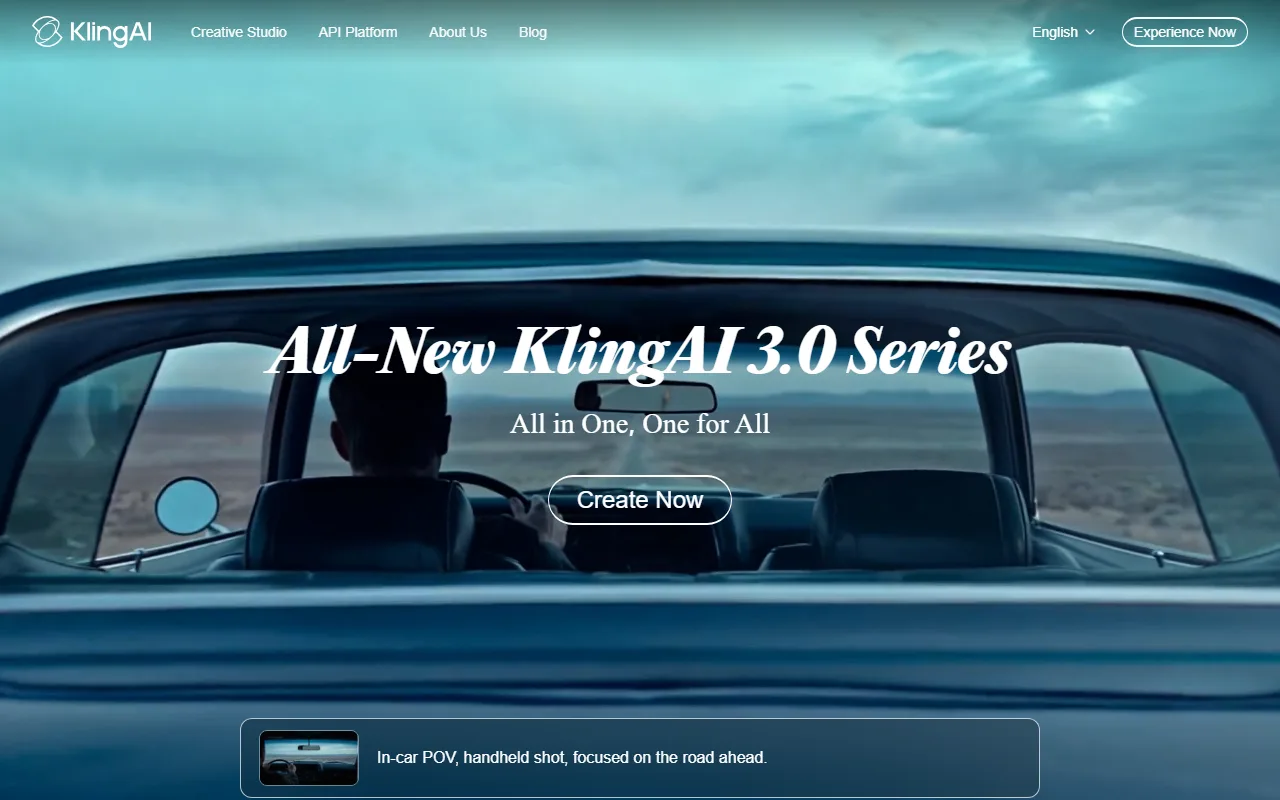 Kling AI is live and on its 3.0 series, positioned as an all-in-one camera, cuts, and sound model.
Output Quality and Realism
The core split was simple: Sora modeled how things move, Kling models how things look. Across published 2026 side-by-side comparisons, including SelectHub and Lushbinary, Sora 2 took the edge on physical realism, lighting, and camera coherence, because its physics-first simulation kept contact and reflections consistent across a clip. Kling's edge is the sharper raw frame: it ships native 4K against Sora's 1080p standard, so on a still-frame grab Kling reads crisper. With Sora's app gone, Kling's quality is the one you can still actually generate with.
Winner: Sora 2 on physics historically, but Kling on what remains available.
Motion and Human Action
This is the dimension where Kling pulls clearly ahead, and it led on the original head-to-head too. Complex human action, dancing, running, martial arts, is where most models fall apart into warping limbs and morphing bodies. Kling was tuned specifically for human physics, so a 10-second dance clip holds joint structure and avoids the "spaghetti limbs" failure far more reliably. Sora 2 handled motion well within a cinematic frame, but on fast, full-body action it was more likely to lose anatomical consistency across frames. If your content is people moving, Kling is the safer bet.
Winner: Kling on fast human motion.
Speed and Video Length
Two practical numbers decide a lot of workflows. On generation speed, hands-on 2026 tests such as glbgpt's Sora 2 vs Kling comparison put Kling at roughly 40–50% faster on a 5–10 second clip. That figure comes from a single hands-on comparison, so treat it as directional rather than exact, but the direction is clear and compounds fast when you are producing dozens of variations a day. On length, the gap is even wider: Kling's ceiling runs to 2–3 minutes (most clips are shorter, but the headroom is there), while Sora 2 capped around 35 seconds per generation. For a single hero shot that did not matter; for a full social sequence or an explainer, Kling's extra length saves you a stitching job.
Winner: Kling, on both speed and length.
Pricing and Access
The cost structures were built for different buyers, and the access story is now decisive. Per Kling's pricing as documented by eesel (June 2026), Kling runs an ongoing free tier of 66 credits a day, with paid plans from $6.99 to $180 a month and API pricing near $0.029 per second. Sora never had a standalone free tier; you reached Sora 2 through a ChatGPT plan ($20–$200 a month), with clips running about $1 each on the base model and $3–$5 on Sora 2 Pro, and API pricing around $0.75 per second. Today that pricing is moot for most people: only the Sora API is still live, and only until September 24, 2026.
Winner: Kling, decisively, on both cost and the fact that you can still use it.
Audio, Inputs, and Ecosystem
Both models generated synchronized audio, which a year earlier neither did well. Sora 2's native dialogue and sound design felt tightly locked to the on-screen action, an advantage for narrative clips. Kling offers broad language support and built-in sync that covers most social use cases, but it never matched Sora's audio-to-action precision. On inputs, both take text and image; Kling's image-to-video is especially strong for animating a single product still, while Sora leaned on its prompt understanding for text-driven scenes.
Winner: split — Sora 2 led on audio-to-action lock, Kling leads on image-to-video.
Pros and Cons
Kling AI
- Pros: live and actively updated; 40–50% faster on short clips; 2–3 minute length; native 4K; 66 free daily credits; strongest human-motion handling.
- Cons: physics on fine contact can drift; less cinematic camera coherence than Sora was.
Sora (Sora 2)
- Pros: leading physics and cinematic realism of the two; tightly synced audio; strong prompt understanding.
- Cons: consumer app discontinued April 2026, API ends September 2026; ~35-second cap; 1080p standard; no free tier; costlier per second.
Choose Kling If / What If You Used Sora
Choose Kling AI if you:
- Need a live model you can generate with today, with a real free tier to test it.
- Make content full of people moving, where human motion has to hold up.
- Need clips longer than a minute, native 4K, or fast high-volume output.
If you were a Sora 2 user, you:
- Have the API only, and only until September 24, 2026, so plan a migration now.
- Should test Kling first for cinematic shots, since it is the closest single replacement.
- Want to avoid betting your whole workflow on one model again (see below).
One-line verdict: with Sora's consumer app gone, Kling is the practical pick for almost everyone in 2026; the deeper lesson is not to tie a workflow to a single model that can be switched off.
Don't Want to Bet on One Model Again? Use Pexo
Sora's shutdown made a quiet risk obvious: when you build a workflow on one model, you inherit that model's fate. The model that wins a comparison this year can be discontinued the next, and you do not get much warning.
That is the gap Pexo, an AI video partner, is built around. The idea is simple: no choosing models, just the best one for each job. Instead of committing to a single engine, you describe what you want in plain language and Pexo works with Seedance, Kling, and more (its published model lineup) behind the scenes, routing each request to a model that suits the shot. There is no prompt syntax to learn and no second app to open, since Pexo also lives inside tools you already use, like Slack, Lark, WhatsApp, and Claude. When one model changes or shuts down, your workflow does not, because it was never tied to that model in the first place. It is credit-based and free to start.
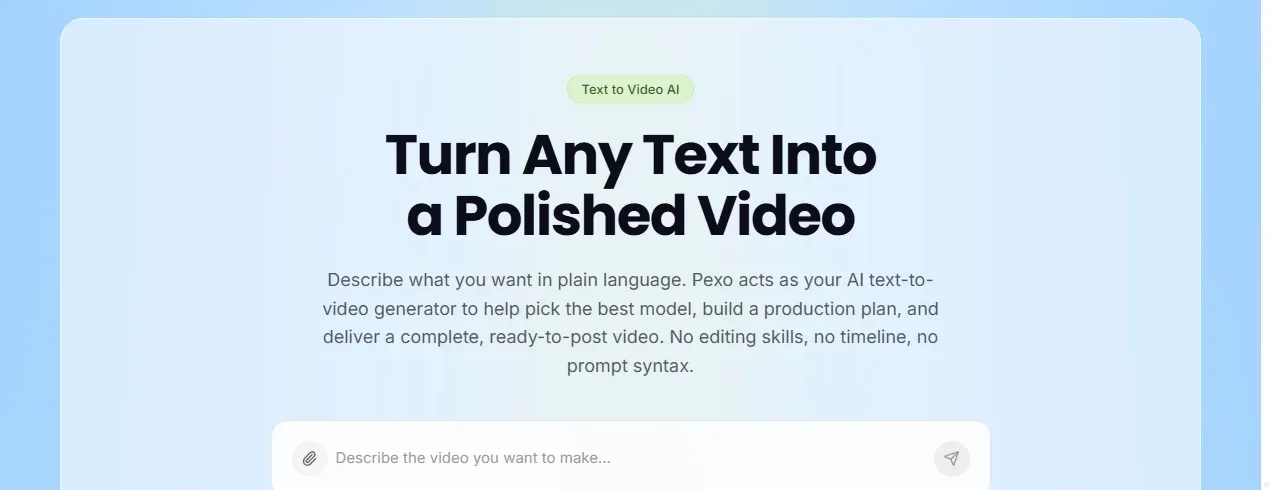 Pexo takes a plain-language description and routes it to a fitting model, so a single shutdown does not strand your workflow.
If the Sora news taught you anything, it is that owning the model is risky and owning the workflow is not. Try Pexo free and see which model it reaches for first.