
 ChatGPT
 Perplexity
 Claude
 Gemini
 Grok
Grok


The AI video generation space has exploded. Marketers need more ad creatives than ever, creators are under pressure to publish daily, and traditional video production simply can't keep up. That's why AI video tools like Arcads and Pexo AI are gaining traction fast.
But these two platforms solve the same problem in very different ways. Arcads focuses on scaling UGC-style video ads with AI avatars. Pexo AI operates as a conversational AI video agent — one that plans, creates, and refines full videos from a simple description. If you're trying to figure out which AI video generator deserves your time and budget, this guide walks you through every major difference.
What Is Arcads? A Closer Look at the AI Ad Generator
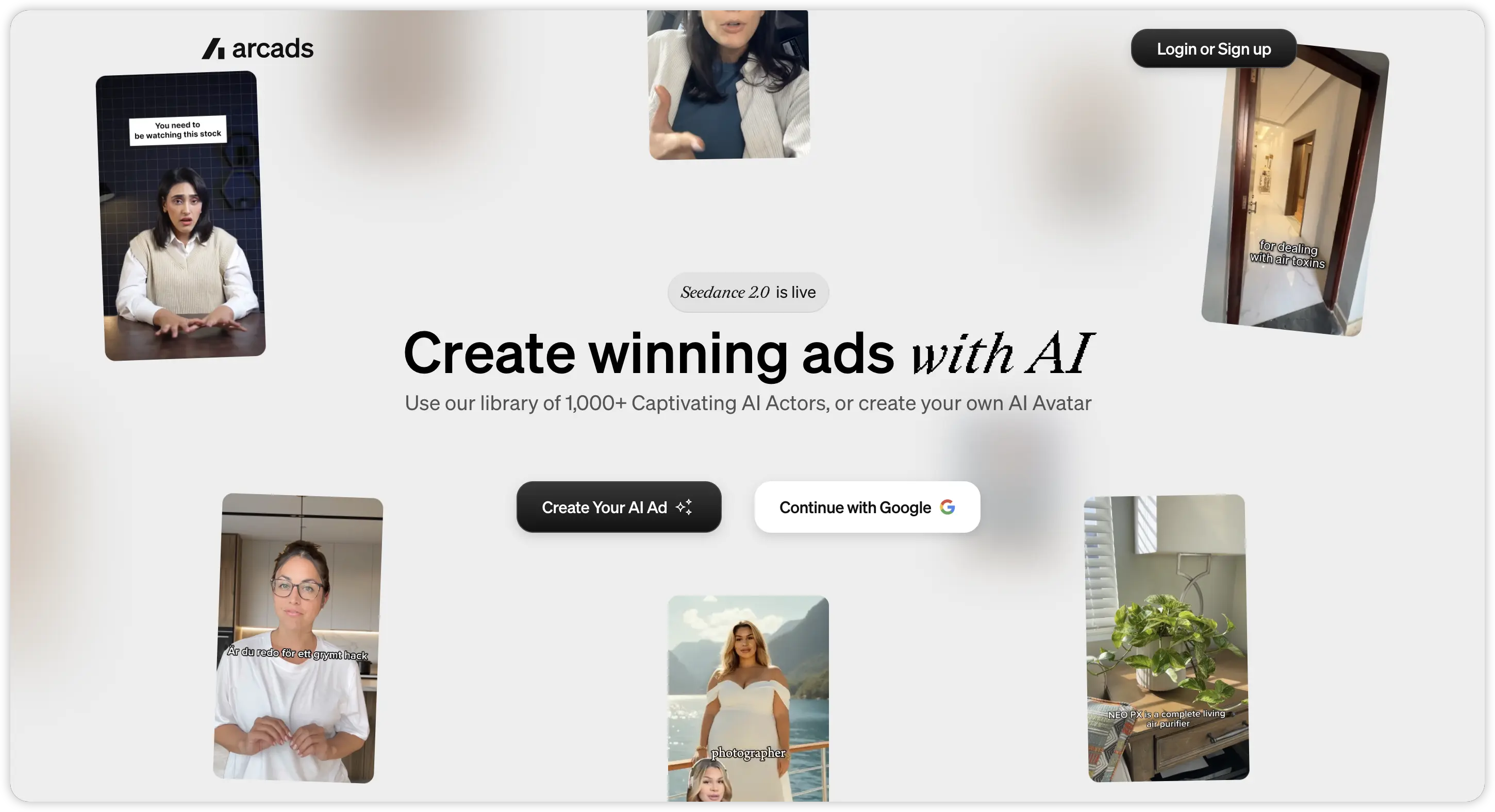
Before comparing features side by side, it helps to understand exactly what each platform does and who it's built for. Arcads is a well-known name in the AI video ad space, and its core selling point is speed-to-creative at scale.
Arcads is an AI-powered ad creation platform built specifically for performance marketers. The core idea is simple: you paste a script, pick an AI actor from a library of over 1,000 avatars, and the platform generates a UGC-style talking-head video in about two minutes. The AI handles lip-syncing, facial expressions, voiceover, and even emotional delivery.
Who Is Arcads Built For?
Arcads targets a specific audience: growth teams, D2C ecommerce brands, mobile app studios, and marketing agencies that need to test dozens (or hundreds) of video ad variations without hiring real UGC creators. Its batch mode lets you upload a CSV of scripts and generate massive volumes of ad creatives in a single operation — ideal for split testing hooks, CTAs, and actor combinations across Meta, TikTok, and YouTube.
Core Features of Arcads
AI actors and avatars. Arcads provides 1,000+ realistic digital actors covering different ages, ethnicities, and styles. You can also create custom avatars that hold your product, demonstrate features, or wear branded clothing.
Script-to-video generation. The workflow is linear: write a script, select an actor, choose a background, and generate. You can add B-roll, captions, music, and transitions with one click.
Multilingual support. Arcads supports 30+ languages with accurate lip-sync, letting brands localize campaigns without reshooting.
Batch creation. This is the real power feature for performance marketers. Generate hundreds of ad variations at once, each with different combinations of hooks, actors, and calls to action.
What Is Pexo AI? Understanding the AI Video Agent Approach

Now let's look at the other side. Pexo AI doesn't position itself as a tool you operate — it's an AI video partner you collaborate with. That distinction changes everything about the creative process.
Pexo AI is a conversational AI video agent. Instead of following a rigid script-to-video pipeline, you describe your idea in plain language — messy, half-formed, or fully detailed — and Pexo interprets your intent, suggests creative directions, selects the optimal AI models behind the scenes, and delivers a polished, production-ready video.
How the Pexo AI Workflow Feels
Working with Pexo feels more like briefing a talented human editor than operating software. You start by describing what you need: "Create a 30-second product ad for my skincare brand with a calm, minimal vibe." You can also drag and drop product photos, video clips, audio files, or even a URL to a product page directly into the workspace.
Pexo then analyzes your inputs, builds a storyboard, offers multiple creative concepts with visual previews, and lets you pick the direction. Once selected, the AI executes the full production — scenes, transitions, voiceover, music, captions — all in one shot. Need changes? Just describe them conversationally. Pexo maintains full context and updates the entire video accordingly.
What Makes Pexo AI Different?
No prompt engineering required. Unlike most AI video generators that demand carefully structured prompts, Pexo understands nuance, context, and even abstract moods directly from natural language.
Multi-model intelligence. Pexo routes each part of the production to the optimal AI model — pulling from engines like Sora, Kling, Seedance, and Veo 3 — without requiring the user to know which model does what.
Complete video output. Pexo doesn't generate isolated clips. It delivers finished narratives with scenes, transitions, voiceover, music, and captions, typically ranging from 15 seconds to one minute.
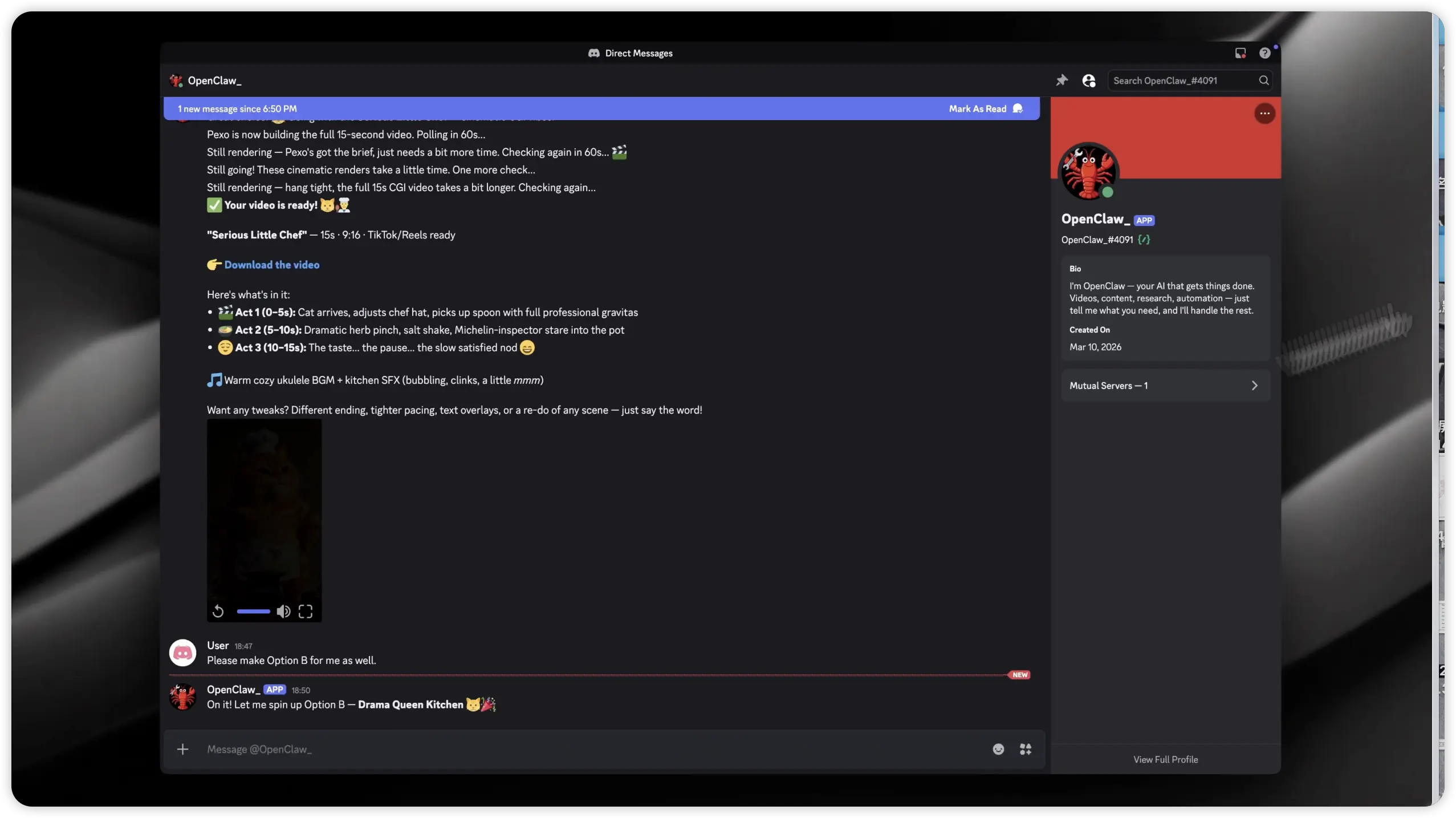
Workflow integration. Pexo connects to platforms like Slack, Lark, and WhatsApp, so you can create videos right where you already work. There's also integration with tools like OpenClaw for developers who want to embed Pexo's capabilities into their own workflows.
Pexo AI vs Arcads: Feature-by-Feature Comparison
With a solid understanding of both platforms individually, let's put them head to head. This section breaks down the most important differences across seven dimensions that matter for creators and marketers choosing an AI video tool.
| Feature | Arcads | Pexo AI |
|---|---|---|
| Core concept | AI ad generation tool | AI video agent / partner |
| Workflow | Script + template driven | Conversation-based |
| Input style | Structured scripts | Natural language |
| Video types | UGC-style ads | Ads, social content, storytelling, explainers |
| AI models | Internal avatar system | Multi-model (Sora, Kling, Veo 3, Seedance) |
| Iteration | Manual re-generation | Conversational, context-aware |
| Integration | Standalone web app | Slack, Lark, WhatsApp, OpenClaw |
| Localization | 30+ languages | Multi-language support |
| Output format | Talking-head ad clips | Complete narrative videos |
Arcads VS Pexo AI: A Detailed Comparison Across Five Core Dimensions
Now that you understand what each platform offers individually, let's put them head to head. This section breaks down the key differences across five core dimensions — input methods, content types, AI models, workflow integration, and pricing — so you can quickly determine which AI video tool best fits your actual needs and budget.
Prompting vs Natural Language: How You Talk to Each Tool
Arcads requires structured script input — you need to write spoken ad copy, select the right emotional tone, and configure technical settings. This works well for experienced performance marketers but creates a barrier for anyone who doesn't write scripts regularly.
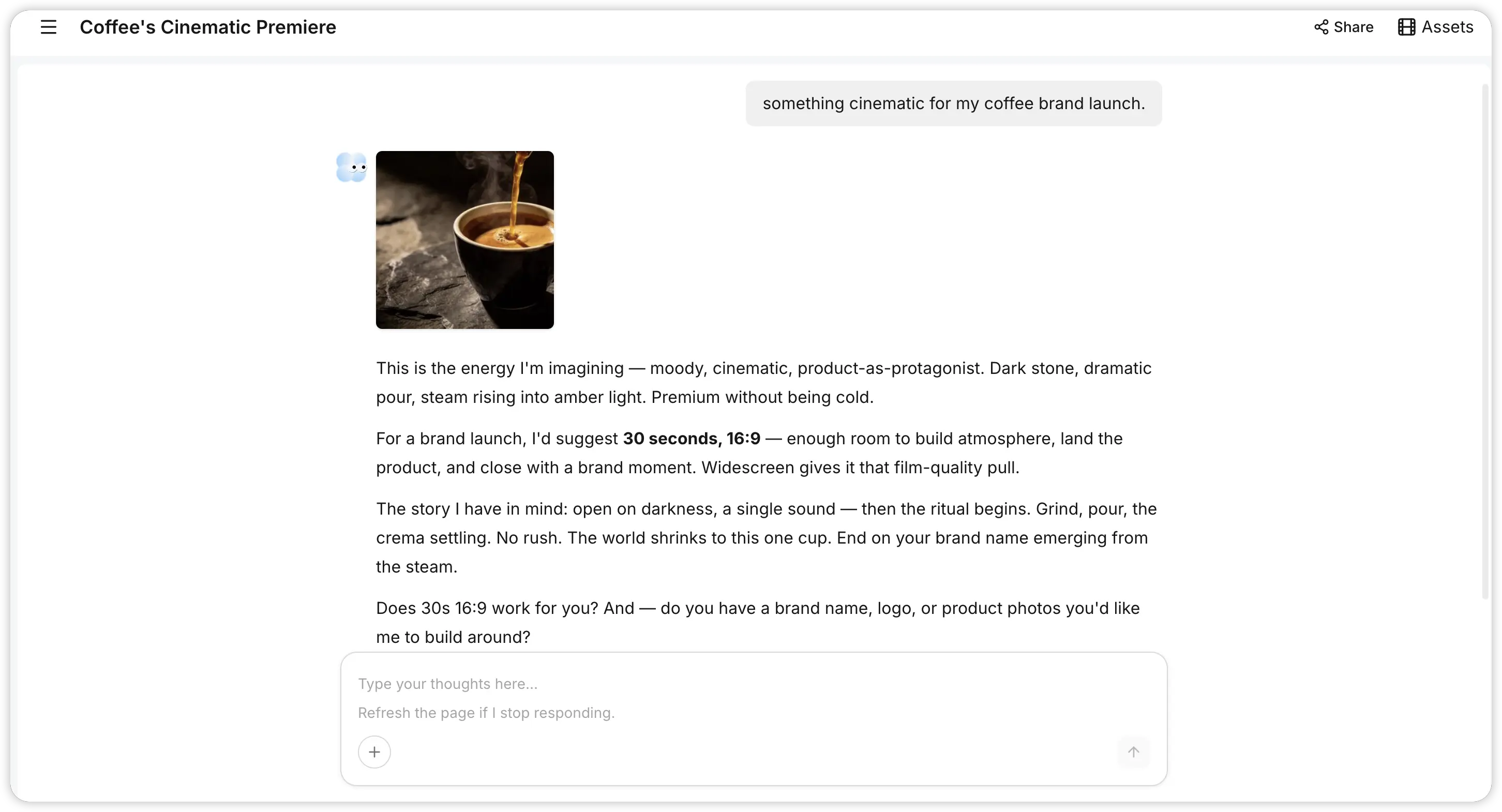
Pexo AI accepts ideas at any stage of development, even vague concepts like "something cinematic for my coffee brand launch." The AI video agent interprets your intent, fills in creative gaps, and asks smart clarifying questions when needed, significantly lowering the barrier to entry.
Creative Range: Ads Only vs Full-Spectrum Video Content
Arcads excels at UGC-style talking-head video ads with realistic AI actors, accurate lip-sync, and batch generation for testing creative variations at scale. However, it doesn't produce product demos, brand storytelling videos, or explainers — the output is limited to a single talking-head format.
Pexo AI operates as an AI video agent and covers product ads, social media reels, explainer videos, travel vlogs, beauty content, and more. Whether you need a TikTok product teaser, an Instagram brand story, or a website explainer, Pexo handles them all within the same conversational workflow.
AI Model Strategy: Internal System vs Multi-Model Intelligence
Arcads runs on its own proprietary AI actor infrastructure, with avatars trained on motion capture data from real, consenting performers. It has also integrated Seedance 2.0 and Sora 2 for B-roll generation. The advantage is highly consistent output, ideal for brand campaigns that need uniform creative across hundreds of variations.
Pexo AI uses a multi-model architecture integrating engines like Sora, Kling, Seedance, and Veo 3. The AI agent automatically selects the best model for each production step — scene generation, voiceover, music, and more. Users never need to worry about the underlying technology, and the platform evolves continuously as new models emerge.
Workflow Integration: Standalone App vs Embedded AI Video Agent
Arcads operates as a standalone browser-based platform. You log in, create videos, and download them for use elsewhere. For teams with established production workflows, this means an extra tab and an additional set of export steps, adding friction to the process.
Pexo AI integrates directly with tools like Slack, Lark, and WhatsApp. You can start a video project from a chat message, share briefs with your team, and receive finished videos without leaving your communication platform. Developers can also embed Pexo's AI video agent capabilities into custom applications via the OpenClaw integration.
Pricing Comparison: Arcads vs Pexo AI
Arcads uses a credit-based subscription model. The Starter plan costs around $100/month (roughly 10 videos), and the Pro plan is $200/month. Annual billing saves 15–20%. Credit consumption varies by model and feature, so the actual cost per video fluctuates.
Pexo AI has a much lower entry point — new users receive 1,500 credits upon signing up with no credit card required. The Pro plan is just $30/month and includes 3,000 + 1,800 credits, with additional top-up packages available. Pricing details are subject to change — visit pexo.ai for the latest information.
Conclusion
The choice between Arcads and Pexo AI ultimately depends on what kind of video content you need and how you prefer to work. Arcads is a specialized AI ad generator built for scaling UGC-style talking-head ads at high volume — a strong choice for performance marketing teams that live and die by creative testing. Pexo AI is an AI video agent that handles the entire creative process through natural conversation, supporting a much wider range of video types with less manual effort. For creators and marketers who want speed, flexibility, and creative freedom from their AI video tools, Pexo AI offers something genuinely new.