
 ChatGPT
 Perplexity
 Claude
 Gemini
 Grok
Grok


You just spent three hours jumping between four different AI video tools. You've burned through free credits, wrestled with confusing interfaces, and your social media calendar is still empty. The explosion of AI video generators has created a paradox of choice, leaving creators overwhelmed and unsure which platform is actually worth mastering. This AI video generator comparison for 2026 cuts through the noise. We'll analyze Seedance 2.0, Sora 2, Runway Gen-4.5, and Kling 3.0—plus a fifth contender, Pexo AI—across five key criteria: core features, cinematic quality, pricing and access, brand suitability, and overall ease of use.
A Quick Overview of Each Tool (Before We Compare)
Before we dive into side-by-side feature tables and quality tests, let's get a feel for what makes each of these five powerful tools unique. Each has a distinct philosophy and is built for a different type of creator.
Seedance 2.0:
Best for: Narrative video, multi-shot sequences, and reference-based creation.
Unique feature: A 12-file multimodal input system that accepts text, images, audio, and video clips simultaneously.
Access: Currently China-first, with a global rollout pending.
Sora 2:
Best for: Physics-accurate video and creators already in the ChatGPT ecosystem.
Unique feature: The longest native clip duration at 25 seconds, ideal for single-take social content.
Access: High, available globally through a ChatGPT Plus subscription.
Runway Gen-4.5:
Best for: Professional editors and creative studios needing seamless workflow integration.
Unique feature: Direct integration with Adobe Premiere Pro and DaVinci Resolve.
Access: High, via a web-based subscription model.
Kling 3.0:
Best for: Rapid prototyping and high-volume content creation where speed is critical.
Unique feature: Native 4K resolution at 60 frames per second, a first for the industry.
Access: Strong in Asia with a growing global user base and a generous free tier.
Pexo AI:
Best for: Brand and social media creators who want to skip the technical learning curve.
Unique feature: No prompt engineering required. You use plain, natural language via an AI agent that understands your creative intent.
Access: Global, with a free beta that has no waitlist.
Feature Comparison — The Numbers Side by Side
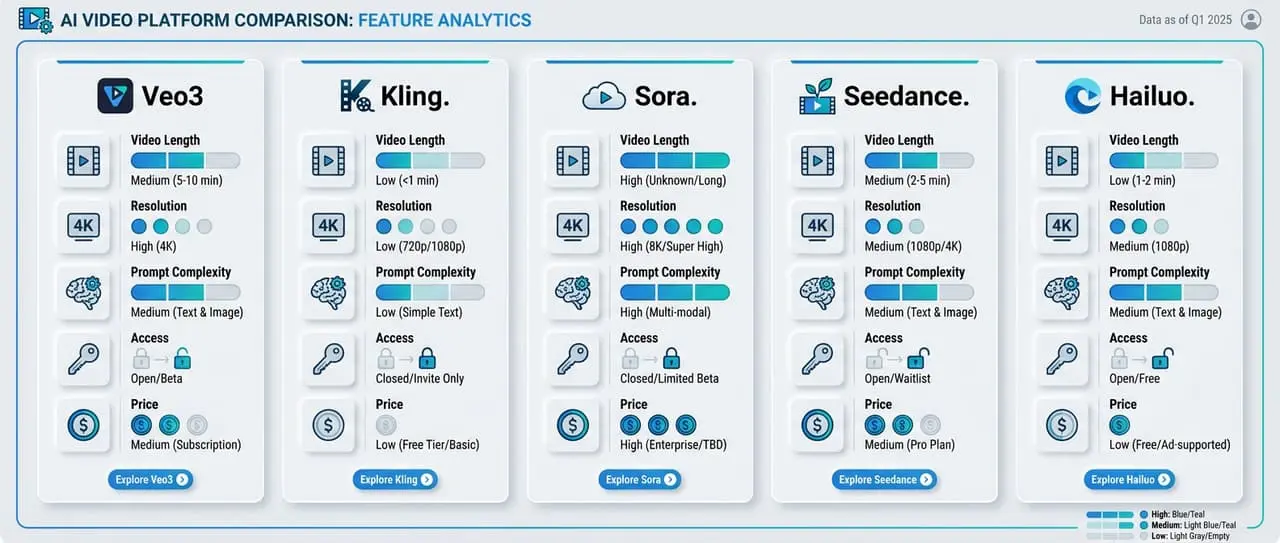
Technical specifications can be overwhelming, but they directly impact what you can create. This table breaks down the core features of each tool as of early 2026.
| Tool | Max Video Length | Multi-Shot | Character Consistency | Resolution | Pricing (Approx.) | Accessibility | Prompt Requirement |
| Seedance 2.0 | 15s | Yes (Narrative Mode) | High (Reference-based) | 2K | ~$10-15/mo | China-first | High (Complex) |
| Sora 2 | 25s | Yes (Storyboard) | Moderate | 1080p | $20/mo (via ChatGPT) | Global | Moderate |
| Runway Gen-4.5 | ~16s | Yes (Editor Integration) | High | 1080p+ | $12/mo+ | Global | Moderate |
| Kling 3.0 | 15s (60s+ stitched) | Yes (6-cut System) | High | 4K | Free tier, paid from ~$6/mo | Growing Globally | Moderate |
| Pexo AI | Social Media Focused | Yes (Scene-based) | High (Brand Kit) | 1080p | Free Beta | Global | None (Natural Language) |
Data based on publicly available information as of early 2026, cross-referenced with aifreeapi.com pricing data. Verify on each platform's official site before purchasing.
What These Numbers Mean for Real Creators
Translating those specs into practical terms is key. Here's what those numbers actually mean for your daily workflow:
A 15-25 second video length is more than enough for a compelling TikTok hook, an Instagram Reel, or a product demo clip. The need for longer native generation is often overstated for social media use cases.
Multi-shot capabilities are a dealbreaker if you're telling a story. Tools like Seedance, Sora, and Kling offer native ways to create scene changes, while single-shot tools force you into external editing software, adding time and complexity.
Character consistency is the holy grail of AI video. The ability to maintain a character's appearance across multiple shots is what separates a professional-looking narrative from a disjointed series of clips. Tools using reference images or dedicated brand kits have a significant advantage here.
The prompt requirement affects your daily workflow more than resolution does for most social creators. A complex, code-like prompting system creates a steep learning curve, whereas a natural language interface like Pexo AI removes that barrier entirely, letting you focus on creativity instead of syntax.
Cinematic Quality — Which One Actually Looks Good?
Beyond specs, the subjective "feel" of the video output is what truly matters. A tool can have 4K resolution, but if the motion is jittery or the physics are unbelievable, the quality falls apart. We've separated this analysis into two common creator profiles.
For Cinematic and Film Creators
If your goal is to create a short film, a visually stunning ad, or narrative content, your primary concerns are physical realism and temporal consistency. Independent tests from early 2026, which compared 80 identical prompts across four of these tools, found that Seedance 2.0 led on consistency and multilingual performance, while Sora 2 excelled in physical realism [2]. For cinematic creators, this means Seedance 2.0 is likely the better choice for dialogue-heavy scenes and multi-shot narratives where character appearance must remain stable. Meanwhile, Kling 3.0's native 4K/60fps output gives it a raw quality advantage that is hard to ignore for landscape shots or high-action sequences.
For Social Media and Brand Creators
For social and brand content, the definition of "quality" shifts. Readability, brand alignment, and speed often matter more than perfect cinematic physics. Here, Runway and Pexo AI shine. Runway's deep integration with professional editing suites makes it a natural fit for creative agencies, while Pexo AI is built from the ground up for brands that need consistent, on-aesthetic content without a dedicated production team.
| Tool | Cinematic Feel | Social Media Output | Ease of Use | Brand Consistency |
| Seedance 2.0 | ★★★★★ | ★★★☆☆ | ★★☆☆☆ | ★★★★☆ |
| Sora 2 | ★★★★☆ | ★★★★☆ | ★★★★☆ | ★★★☆☆ |
| Runway | ★★★★☆ | ★★★★★ | ★★★☆☆ | ★★★★☆ |
| Kling 3.0 | ★★★★☆ | ★★★★☆ | ★★★☆☆ | ★★★☆☆ |
| Pexo AI | ★★★☆☆ | ★★★★★ | ★★★★★ | ★★★★★ |
For brand creators, Pexo AI's unique approach offers specific advantages:
Weekly Content Creation: Generate Instagram and TikTok videos without needing a production team or complex prompt knowledge.
Brand Voice Alignment: Ensure video briefs stay on-message and on-aesthetic by using a brand kit and conversational instructions.
Speed for Campaigns: When you need to launch a campaign quickly, Pexo AI's workflow is significantly faster than tools that require technical prompt engineering.
Pricing and Accessibility — What You'll Actually Pay
Cost and availability are often the deciding factors. A powerful tool is useless if it's outside your budget or inaccessible in your region. The pricing landscape for AI video is evolving rapidly, but as of early 2026, the value proposition for each tool is quite clear. Kling's generous free tier makes it the most accessible for experimentation, while Sora's integration into the popular ChatGPT Plus subscription offers a familiar entry point for millions of users. However, for those looking to avoid a recurring cost entirely while still accessing a powerful, globally available tool, the choice is even simpler.
| Tool | Free Tier | Paid Plans (Approx.) | Global Access |
| Seedance 2.0 | No | ~$10-15/mo | No (China-first) |
| Sora 2 | No | $20/mo (via ChatGPT Plus) | Yes |
| Runway | Yes (Limited) | from $12/mo | Yes |
| Kling 3.0 | Yes (66 daily credits) | from ~$6/mo | Growing |
| Pexo AI | Yes (Full Beta) | Free | Yes |
The most significant differentiator here is <u>Pexo AI</u>'s free beta model. While other platforms use free tiers as a limited preview to upsell you to a paid plan, Pexo offers full, unfettered access without a waitlist. This makes it the most practical and risk-free option for creators and brands who want to start producing high-quality AI video content immediately, without committing to a monthly subscription or worrying about regional access restrictions.
Which Tool Should You Actually Use? (By Use Case)
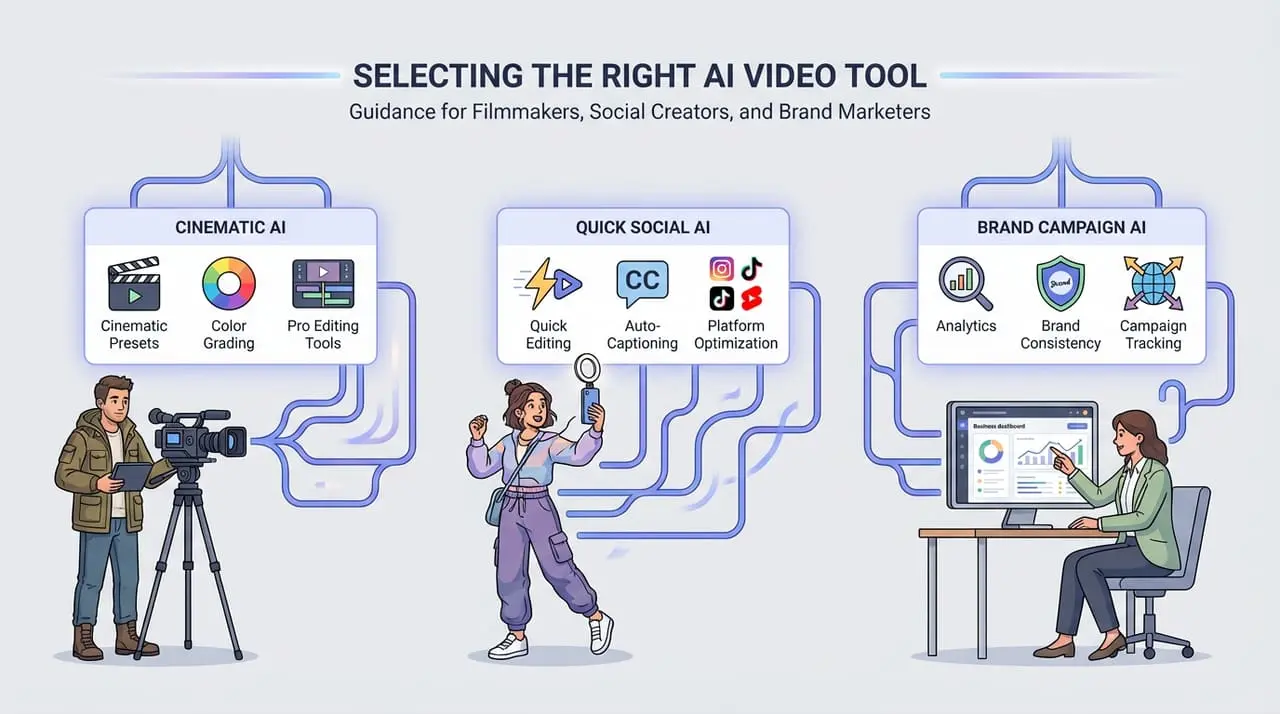
The best AI video generator is the one that fits your specific workflow. Instead of declaring one overall winner, this table matches the best tool to a specific job.
| Use Case | Best Tool | Why |
| Cinematic Short Film | Seedance 2.0 | Its 12-file multimodal input and narrative mode offer unparalleled creative control for telling a cohesive story with consistent characters. |
| Quick Social Clips | Sora 2 | The 25-second native clip length is perfect for single-take TikToks or Reels, and its integration with ChatGPT makes it easy to access. |
| Creative Artistic Video | Runway | With its professional editor integrations and advanced creative controls, Runway is built for artists who want to push the boundaries of AI video. |
| Long-form Narrative | Kling 3.0 | The ability to stitch clips into 60+ second sequences, combined with 4K output, makes it suitable for longer narrative projects where quality is key. |
| Brand & Social Content (No Prompting) | Pexo AI | It removes the prompt engineering barrier, allowing brands to create consistent, on-aesthetic content quickly using natural language. |
When to Use More Than One Tool
Power users often don't stick to a single tool. They build a workflow that leverages the unique strengths of multiple platforms. This "hybrid" approach is often the most effective way to produce high-quality content efficiently.
Seedance 2.0 + Pexo AI: Use Seedance to generate a stunning, cinematic hero shot for a campaign, then use <u>Pexo AI</u> to create dozens of social media cut-downs and variations for different platforms, all without writing a single prompt.
Kling 3.0 + Sora 2: Use Kling's fast 4K generation for rapid concept testing and prototyping. Once the creative direction is locked, use Sora 2 to generate the final, physics-accurate deliverables for the campaign.
Runway + Seedance: Use Runway for its powerful timeline editing and post-production effects, but use Seedance as the raw generation engine for creating the initial clips, especially for scenes requiring high character consistency.
By combining tools, you can build a video production pipeline that is both creatively powerful and highly efficient, giving you a significant advantage over those who stick to a single platform.
Summary: Your Best Bet in a Crowded Field
Choosing the right AI video generator in 2026 comes down to your specific needs. For cinematic storytelling, Seedance 2.0 offers incredible control. For physics-defying realism, Sora 2 remains a top contender. Runway excels for professional editors, and Kling provides incredible raw quality with its 4K output. This AI video generator comparison shows there is no single winner, only the right tool for the right job. However, if you want to bypass the steep learning curve of prompt engineering and start creating high-quality, brand-aligned social content today, the clear choice is <u>Pexo AI</u>. It's the only tool designed to understand your creative intent, not just your code.
References
[1] AI Free API. (2026, February 10). Seedance 2.0 vs Kling 3.0 vs Sora 2 vs Veo 3.1: The Complete 2026 AI Video Generator Comparison. Retrieved from <u>https://www.aifreeapi.com/en/posts/seedance-2-vs-kling-3-vs-sora-2-vs-veo-3</u>
[2] VidAU.ai. (2026). Seedance 2.0 vs Sora, Runway & Kling: A Data-Driven Technical Comparison of AI Video Generators (80 Prompt Test). Retrieved from <u>https://www.vidau.ai/seedance-2-0-vs-sora-the-best-prompt-test-now/</u>