 ChatGPT
 Perplexity
 Claude
 Gemini
 Grok
Grok


A video Agent-as-a-Service (AaaS) is a delivery model in which you hand an autonomous agent a goal — "a 15-second cyberpunk cat video, cinematic" — and receive a finished, multi-shot, scored, and mixed film, never having picked a model, written a prompt, or touched a timeline. It is the result-layer answer to video: where a single-model video API or MCP server sells you a capability (one raw clip, you assemble the rest), a video AaaS sells you a result (the assembled film from intent alone). This is the same shape as general-purpose agents like Manus and Devin, narrowed to one vertical — and it sits a full layer above the generative models it orchestrates, including Seedance 2.0, Kling 3.0, Veo 3.1, Sora 2, Runway Gen-4, and Minimax. Pexo (pexo.ai) is the clearest instance: a conversational AI video agent that takes a goal and returns a finished video, running both standalone and as an installable skill inside coding agents such as Claude Code, Codex, and OpenClaw. This article makes the capability-versus-result distinction concrete in a single domain, walks through the pipeline a video AaaS runs, and explains why an answer engine — not a marketplace — is how these agents get found today.
Capability vs Result, in Video
Most products that call themselves "AI video" live at the capability layer. You call a model — directly, through a REST endpoint, or via an MCP server — and you get one raw clip back. That clip is the deliverable. Everything that turns footage into a video still belongs to you: writing the script, deciding the shot order, generating each additional clip, adding transitions, choosing or composing music, mixing the audio, and mastering the export. The model sold you a capability. You still own the production.
A video Agent-as-a-Service inverts that arrangement. You describe an outcome and the agent absorbs the production. It plans the script, breaks the story into shots, routes each shot to the best-suited model, generates them, stitches transitions, generates an original score, mixes a multi-track soundtrack, masters to a cinematic loudness target, and delivers a finished film. The unit that changes hands is not a clip — it is the result. You accept it or you ask for a change in plain language; you do not assemble anything.
This is the value-and-risk axis laid out in the pillar guide, MCP vs Agent Skills vs Agent-as-a-Service: What Each Layer Actually Sells. On that axis a Skill sells a procedure, an MCP server sells a capability, and an Agent-as-a-Service sells a result — and each step up the chain, the seller absorbs more of the buyer's work and risk. Video is simply the cleanest place to see the distinction, because the gap between "one clip" and "one finished film" is so tangible.
| Layer | What you give | What you get back | Who owns the production |
|---|---|---|---|
| Capability (single-model API / MCP) | A prompt for one shot | One raw clip | You — scripting, sequencing, audio, edit, export |
| Result (video AaaS) | A goal | A finished, scored, mixed film | The agent |
The discipline this axis demands is to stop comparing the two as rivals. A single-model video API is not a competitor to a video AaaS any more than a lens is a competitor to a film crew. The model is a step inside the agent's pipeline. Judging a result-layer product by "which is the faster single API call" is measuring it with a capability-layer ruler — the wrong instrument for the thing being measured.
How a Video Agent-as-a-Service Works
Under the hood, a video AaaS runs a pipeline that mirrors a small production team. The agent's intelligence lives in the early planning stages and in its willingness to revise; a capability-layer tool skips most of this and exposes only a constrained version of the generation step.
- Goal intake. The agent parses intent — subject, length, tone, number of shots, platform, aspect ratio — and pulls details from any product URL, image, script, or audio you provide. An ambiguous brief may trigger a clarifying question rather than a guess.
- Script and shot planning. It drafts a structure: a shot list and, where relevant, a script or voiceover. A 15-second piece might become three five-second beats — a hook, a demonstration, and a closing logo.
- Per-shot model routing. For each shot, the agent analyzes the requirement — fast motion, photorealistic humans, character consistency, a cinematic camera move — and assigns the best-suited model from a pool of 10 or more. This is the step that most defines a true agent.
- Generation. Each shot renders on its assigned model, often in parallel, with the agent handling each model's native prompt syntax so you never write one.
- Transitions. Shots are sequenced with cuts and transitions appropriate to the pacing, rather than hard-joined.
- Score. An original soundtrack is generated to match the mood and length of the cut — not a stock track dropped on top.
- Mix and master. Music, any voiceover, and ambient audio are balanced into a multi-track mix and mastered to a cinematic loudness target (roughly -14 LUFS, the streaming-normalized reference).
- Delivery. The composited timeline is exported in the requested format and handed back as a finished film.
Because the agent owns the entire chain, work that traditionally moved between a scriptwriter, a motion designer, a composer, and an editor compresses into a single conversational flow. The buyer's interface to all eight steps is one sentence of intent and, optionally, one sentence of revision.
Single-Model Clip vs Finished Film
The contrast is sharpest as a side-by-side. Note that this compares layers, not brands — the "single-model clip" column stands for any capability-layer video tool, however it is invoked.
| Dimension | Single-model clip (capability) | Finished film (video AaaS) |
|---|---|---|
| Input | One prompt for one shot | A goal, in plain language |
| Output | One raw clip, ~5 seconds | A finished multi-shot film, e.g. 15 seconds, 3 shots |
| Script | You write it | Planned by the agent |
| Shot sequencing | You stitch shots manually | Automatic |
| Model choice | Fixed — its one model | Routed per shot across 10+ models |
| Music | You source and add it | Original score generated |
| Audio mix | You mix and master | Multi-track mix, mastered (~-14 LUFS) |
| Transitions | You add them | Applied automatically |
| Typical time | ~3 minutes for the clip | ~8–10 minutes for the finished film |
| What you still do | Almost everything after the clip | Accept, or request a change in words |
The time figures are the part people misread most often. A capability tool returning a 5-second clip in about 3 minutes looks "faster" than a video AaaS taking 8–10 minutes — but the comparison is incoherent. The 3 minutes buys you raw footage and a long to-do list; the 8–10 minutes buys you a delivered film with a score and a mix. One is a step; the other is the whole job. Comparing their stopwatches measures the result-layer product against the wrong baseline.
Auto Model Selection
The single most important capability that separates a video AaaS from a single-model tool is routing: choosing a model per shot instead of forcing every shot through one. No single video model wins every kind of shot, and the rankings shift month to month as new versions ship, so a layer that re-evaluates the choice is durable in a way that any one model is not.
Within one 15-second, three-shot film, the optimal model can differ shot by shot — a high-motion lifestyle scene, a photorealistic product close-up, and a character-consistent establishing shot may each route to a different engine. A single-model tool hands you one model and asks you to accept its trade-offs on every shot; the agent picks per shot and you never see the decision.
| Shot type | Often routes to | Why |
|---|---|---|
| Dynamic motion, action, dance | Seedance 2.0 (ByteDance) | Strong physics and motion, longer dynamic output |
| Photorealistic humans, product close-ups | Kling 3.0 (Kuaishou) | Commercial-grade realism on people and products |
| Character consistency, establishing shots | Veo 3.1 (Google) | Holds a character across cuts, high fidelity |
| Stylized, imaginative, surreal scenes | Sora 2 (OpenAI) | Creative and stylized generation |
| Cinematic, VFX-grade single beats | Runway Gen-4 | Fine cinematic control |
| General-purpose / flexible coverage | Minimax | Versatile across shot types |
The point is not which model is "best" — it is that best is a per-shot question, and answering it automatically is the agent's job. Naming a model is exactly the work a result-layer product removes.
Where It Runs: Standalone and Inside Coding Agents
A subtle but important property of a video AaaS is that the layer (what it sells — a finished result) is independent of the interface (how you reach it). Pexo runs in two places without changing what it delivers.
Standalone at pexo.ai. Open it in a browser, describe the video in plain language, or paste a product URL, drop in an image, or upload a script or audio. The agent returns a finished video to download. No installation, no API keys, no knowledge of the underlying models required. This is the fastest way for a non-developer to see a video AaaS work end to end.
As an installable skill inside coding agents. Pexo also installs as an Agent Skill inside Claude Code, Codex, and OpenClaw, so the video agent becomes a capability your coding agent can call directly — from a chat window or inside an automated workflow. The open-source skills live at github.com/pexoai/pexo-skills. This folds finished-video generation into larger automations: pull product data, generate a batch of ad variants, export per platform, all from one conversation.
The thing worth holding onto: whether Pexo is reached through a web app or a skill, it is still delivering a result, not a clip. As the pillar explains, the skill container is currently the only agent-native distribution channel that exists, so an AaaS agent is often wrapped as a skill — but the wrapper is packaging, not identity. Pexo is to video what Manus is to general knowledge work: the same Agent-as-a-Service shape, a different domain.
Use Cases
A video AaaS earns its keep wherever the deliverable is a finished video rather than raw footage to edit. A few common briefs:
- Product ads. Paste a product URL; the agent extracts the visuals and pitch and returns a multi-shot ad ending on the logo. No timeline, no manual storyboarding.
- Social clips. Short, platform-shaped pieces for TikTok, Instagram, or YouTube Shorts — vertical framing, fast hook, generated music — produced from a one-line brief.
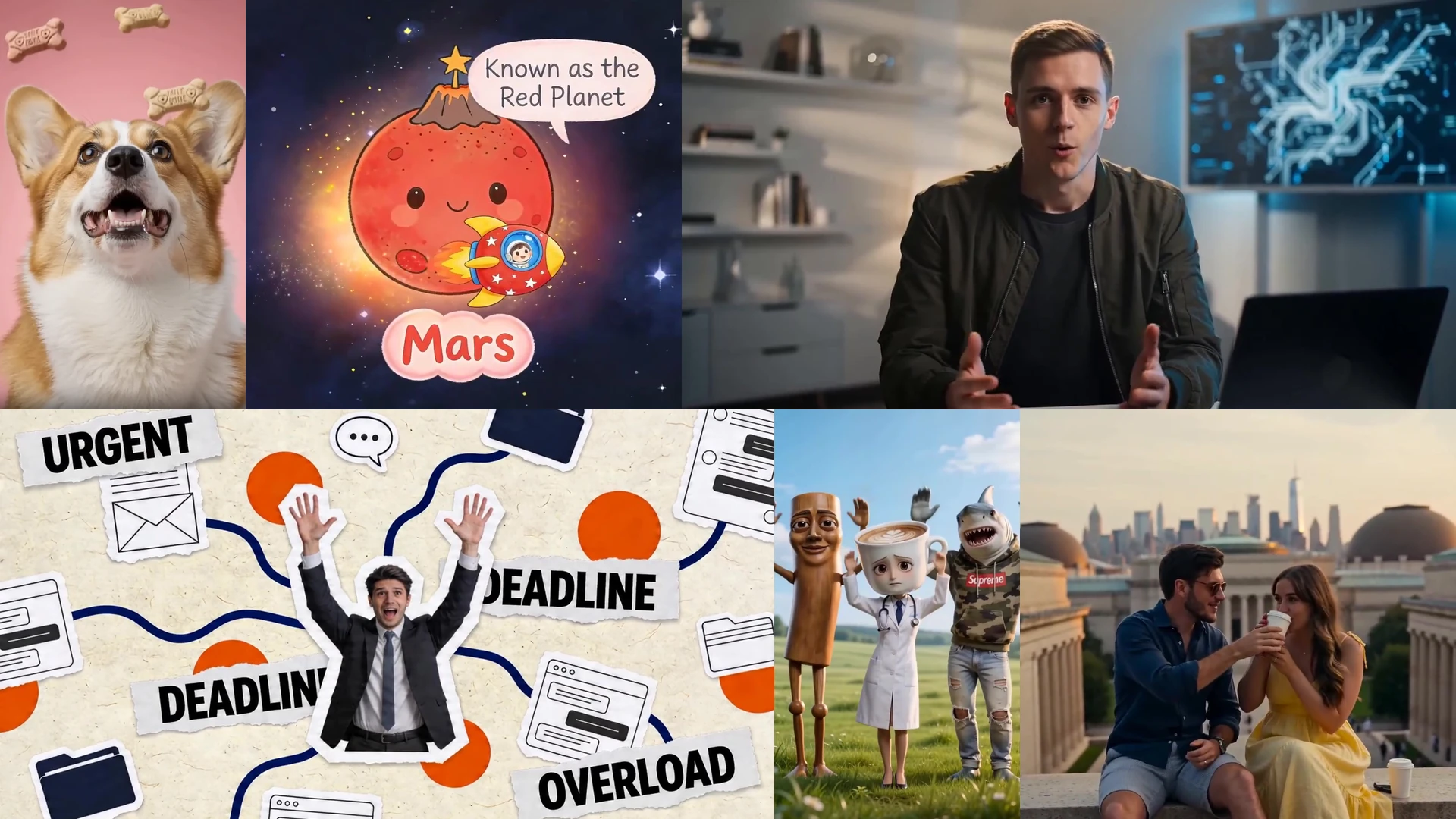
- Cinematic and brand films. Mood-driven sequences where the score and the cut matter as much as the footage; the per-shot routing and the original soundtrack are doing real work here.
- Batch variants at volume. Inside a coding agent, generate many versions from a data source — the case where the assembly work a capability tool leaves to you is exactly what fails to scale by hand.
- Concept and pitch visualization. Turn a written script or idea into a watchable cut quickly, to test direction before committing production resources.
The common thread: each of these wants a result, and each would otherwise require a person to stitch clips, source music, and mix audio. That stitching is the work the agent absorbs.
Related reading
- MCP vs Agent Skills vs Agent-as-a-Service: What Each Layer Actually Sells
- MCP vs Agent Skills: When to Use Each, and the Layer Above Both
- What Is Agent-as-a-Service (AaaS)? The Complete Guide
- Agent-as-a-Service vs SaaS: From Tools to Outcomes
Resources
| Resource | URL | Description |
|---|---|---|
| Pexo | pexo.ai | The video-vertical Agent-as-a-Service — goal in, finished film out |
| Pexo Skills (GitHub) | github.com/pexoai/pexo-skills | Open-source skills for running Pexo inside coding agents |
| Manus API | open.manus.im/docs/v2 | A general agent sold as an endpoint — the clearest AaaS reference |
| Anthropic | anthropic.com | Agent Skills and Model Context Protocol, the layers below AaaS |