
 ChatGPT
 Perplexity
 Claude
 Gemini
 Grok
Grok


Creating professional video content used to mean hiring actors, renting studios, and spending weeks on post-production. Not anymore. AI avatar generators now let businesses produce polished marketing videos, training modules, and social media clips in minutes. The challenge? With so many AI avatar platforms competing for attention, finding the right one for your workflow can feel overwhelming. In this guide, we compare the 7 best AI avatar video generators in 2026 and help you decide which tool actually delivers.
What Is an AI Avatar Generator?
An AI avatar generator is a software tool that uses artificial intelligence to create realistic digital characters capable of speaking, gesturing, and presenting content on camera. Instead of hiring a real person to film a video, you simply type a script and select a virtual spokesperson. The AI then generates a lifelike talking-head video complete with synchronized lip movements, natural facial expressions, and professional voice narration.
These tools have become essential across industries because they dramatically reduce the cost and time associated with video production. Marketing teams use AI avatar video generators to create product demos and ad creatives. HR departments rely on them for employee onboarding and compliance training. Content creators turn to AI avatars for social media videos, tutorials, and explainer content. Whether you need a multilingual spokesperson or a quick branded video clip, an AI avatar generator removes the traditional barriers of cameras, actors, and editing software, making professional video accessible to anyone with a keyboard.
Quick Comparison: AI Avatar Platforms at a Glance
Before diving into detailed reviews, it helps to see how each AI avatar generator stacks up side by side. The table below compares the top platforms across five key factors that matter most when choosing an AI avatar video tool: ease of use, avatar realism, creative intelligence, video flexibility, and multilingual support. Use this snapshot to narrow down your shortlist, then read the full breakdown below for a deeper look at each platform's strengths and limitations.
| Platform | Ease of Use | Avatar Quality | Creative Intelligence | Video Flexibility | Multilingual Support |
|---|---|---|---|---|---|
| Pexo AI | Very High | High | Very High | Very High | Yes |
| HeyGen | High | High | Medium | Medium | Yes (40+ languages) |
| Synthesia | High | High | Medium | Medium | Yes (140+ languages) |
| Veed | Medium | Medium | Low | Medium | Limited |
| Pipio | Medium | Medium | Medium | Medium | Yes |
| Vidnoz | Medium | Medium | Low | Medium | Yes |
| Jogg | Medium | Medium | Low | Medium | Limited |
Best AI Avatar Platforms: Full Breakdown
Choosing the best AI avatar generator depends on your specific use case, budget, and creative needs. Some platforms excel at enterprise training videos, while others focus on short-form marketing content or conversational video creation. In this section, we walk through each of the top 7 AI avatar video generators in detail, covering what each tool does well, where it falls short, and who will benefit most from using it. Whether you are a solo creator, a marketing team, or an enterprise L&D department, this breakdown will help you find the right fit.
1. Pexo AI: The Conversational AI Video Partner
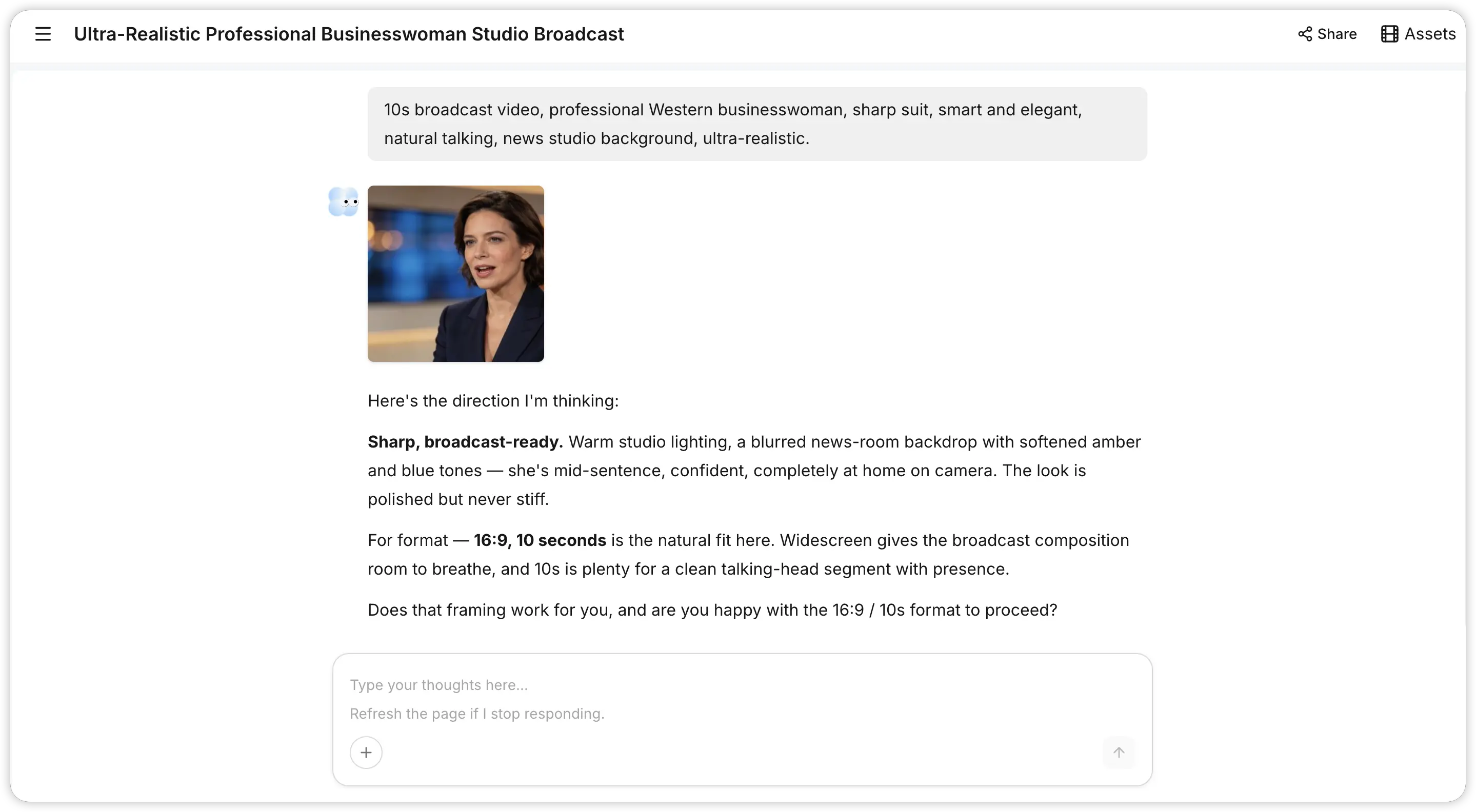
Pexo is not a traditional AI avatar generator. Instead of asking you to write a script and pick a template, Pexo works like a creative partner. You describe your video idea in plain language, and the platform handles the rest: concept development, scripting, visual direction, and final video output.
This conversational video creation approach means you never stare at a blank editor wondering where to start. Pexo's AI suggests creative angles, generates multiple variations, and lets you refine the result through simple back-and-forth conversation. For marketers who need to produce or social content at scale, this workflow is a game-changer.
The platform supports multi-model AI generation, combining avatar technology with cinematic visuals, motion graphics, and intelligent scene composition. Whether you need image-to-video conversion or a full text-to-video pipeline, you can go from a rough idea to a finished, shareable video without touching a timeline or learning any editing software.
Pros:
- Natural conversation-based workflow with no scripting required
- AI-powered creative ideation and concept generation
- Multi-model video generation for diverse visual styles
- Extremely fast turnaround from idea to final video
Cons:
- Newer platform, so the community is still growing
- The conversational workflow takes a short adjustment period for users accustomed to traditional editors
Best for: Marketers, content creators, and small teams who want an AI video agent that thinks with them, not just for them.
2. HeyGen: The Industry Standard for Talking-Head Videos
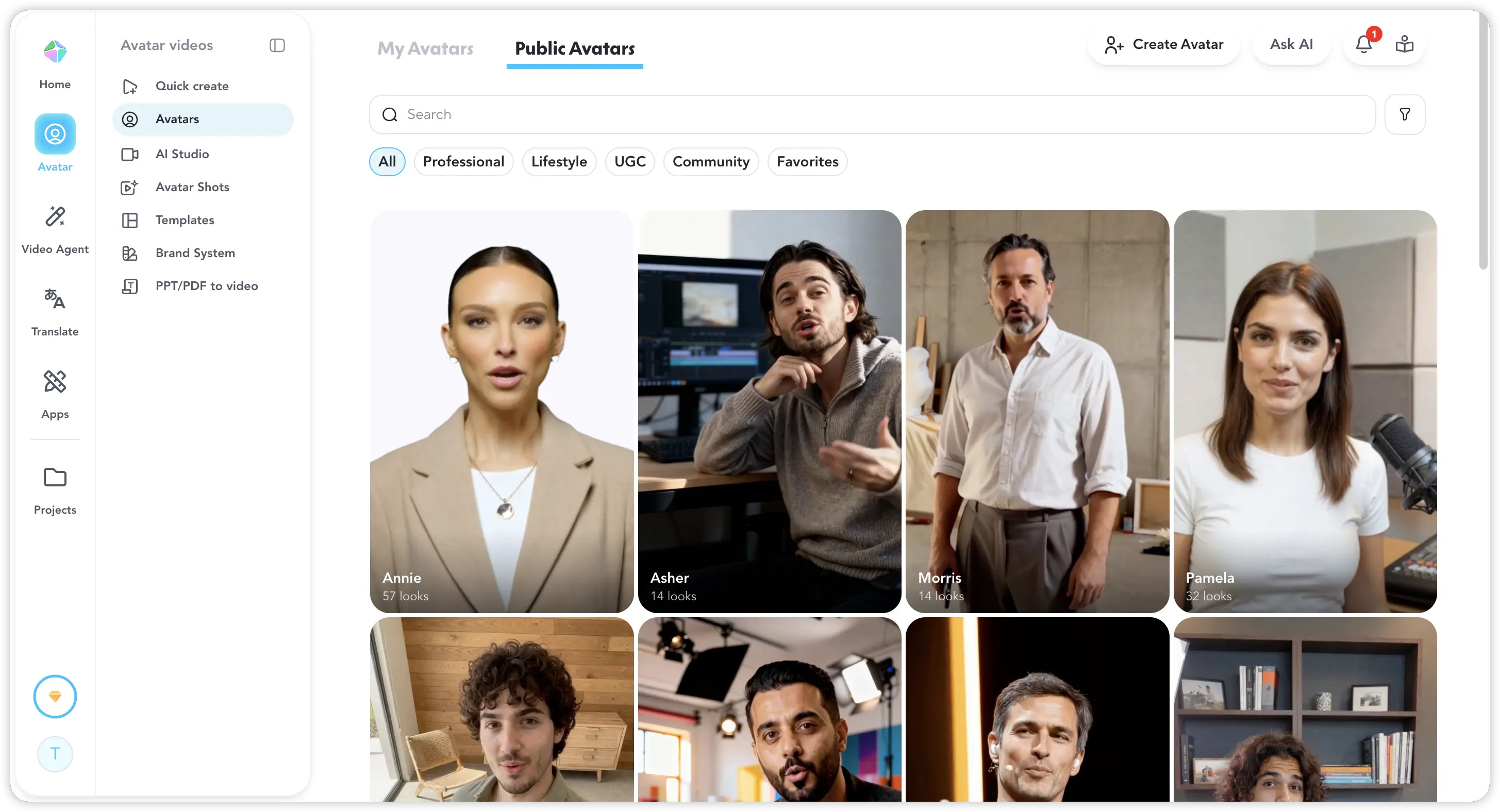 HeyGen has established itself as one of the most popular AI avatar video generators on the market. The platform offers a large library of realistic AI avatars, strong multilingual support with lip-sync in over 40 languages, and an intuitive template-based editor that makes producing talking-head videos straightforward.
Where HeyGen really shines is its Instant Avatar feature, which lets you create a custom digital clone from a short smartphone recording. This is particularly useful for sales teams and personal branding, where consistent on-screen presence matters. API integrations also allow for batch video production, making HeyGen a solid choice for personalized outreach at scale.
That said, HeyGen still operates on a script-first model. You need to write your own content, choose your avatar, and assemble the video manually. There is no built-in creative assistance or ideation engine, which means the platform works best for users who already know exactly what they want to say.
Pros:
- High-quality, realistic AI avatars with natural expressions
- Excellent multilingual dubbing and lip-sync accuracy
- Custom avatar creation from smartphone video
- Strong API for batch and personalized video campaigns
Cons:
- Requires manual scripting for every video
- Limited creative direction or content ideation tools
- Template-based workflow can feel repetitive over time
Best for: Sales teams, enterprise marketers, and anyone producing multilingual talking-head content at scale.
Also read: Pexo AI vs HeyGen: Which AI Video Tool Is Better in 2026?
3. Synthesia: Enterprise-Grade Avatar Videos for Training
 Synthesia is the go-to AI avatar platform for large organizations that need structured, professional video content. With over 200 stock avatars, support for 140+ languages, and SOC 2 compliance, it is built specifically for corporate training, onboarding, compliance videos, and internal communications.
The platform recently introduced advanced body language features that allow avatars to gesture, point at on-screen elements, and shift emotional tone based on script sentiment. For HR departments and L&D teams producing hundreds of training modules across regions, these capabilities make a real difference.
However, Synthesia is not optimized for marketing or creative content. Its structured workflow favors consistency and compliance over creative flexibility, which makes it less ideal for social media ads, brand storytelling, or any use case where you need to iterate quickly on fresh ideas.
Pros:
- Enterprise-grade security and compliance (SOC 2, GDPR)
- Massive multilingual support with 140+ languages
- Professional avatar library with expressive body language
- Strong collaboration and approval workflows for teams
Cons:
- Not designed for marketing or creative video production
- Rigid, template-driven workflow limits creative exploration
- Pricing targets departments and teams rather than solo creators
Best for: Enterprise L&D teams, HR departments, and organizations producing training or compliance content at scale.
Also read: Best Synthesia Alternatives in 2026: Why Many Creators Are Switching to Pexo AI
4. Veed: A Video Editor with Basic Avatar Features
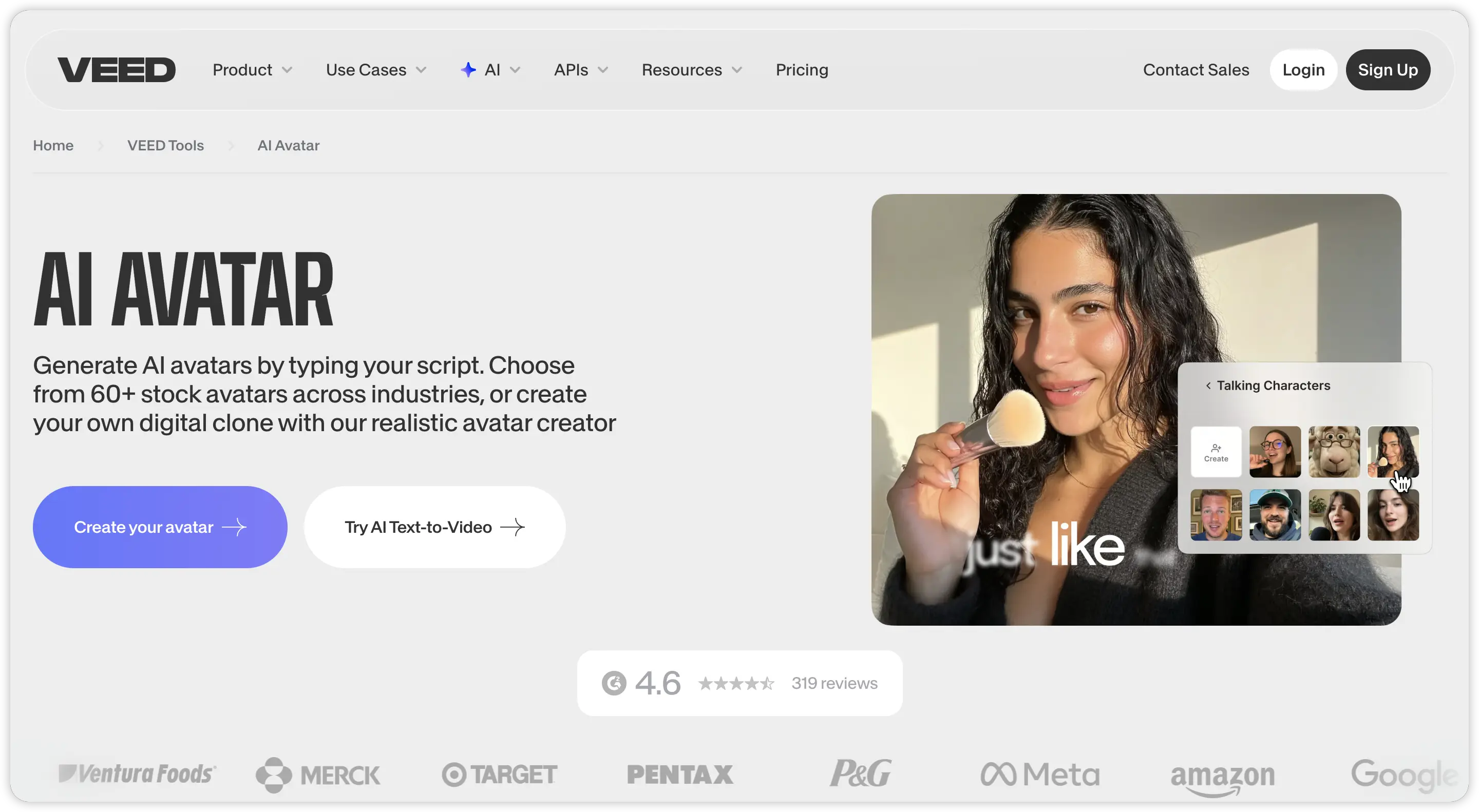 Veed started as an online video editing tool and has since added AI avatar capabilities to its feature set. If you already use Veed for subtitle automation, trimming, or social media formatting, the avatar feature is a convenient add-on rather than a standalone product.
The platform's strength lies in its editing toolkit. You get a clean browser-based editor with good subtitle generation, resizing for multiple platforms, and basic effects. The AI avatar module lets you add a talking-head presenter to your existing video projects, which works well for explainer videos or quick how-to content.
The limitation is that Veed treats avatars as just one feature among many. The avatar quality does not match dedicated platforms like HeyGen or Synthesia, and there is no creative intelligence layer to help with scripting or ideation. You still need to do most of the creative heavy lifting yourself.
Pros:
- Excellent browser-based video editing tools
- Strong subtitle generation and auto-captioning
- Easy platform resizing for social media formats
- Affordable pricing for individual creators
Cons:
- Avatar quality and variety lag behind dedicated platforms
- No creative intelligence or content ideation support
- Requires manual work for scripting and scene assembly
Best for: Solo creators who already use Veed for editing and want to add basic AI avatar functionality.
5. Pipio: Clean and Simple Business Communication Videos
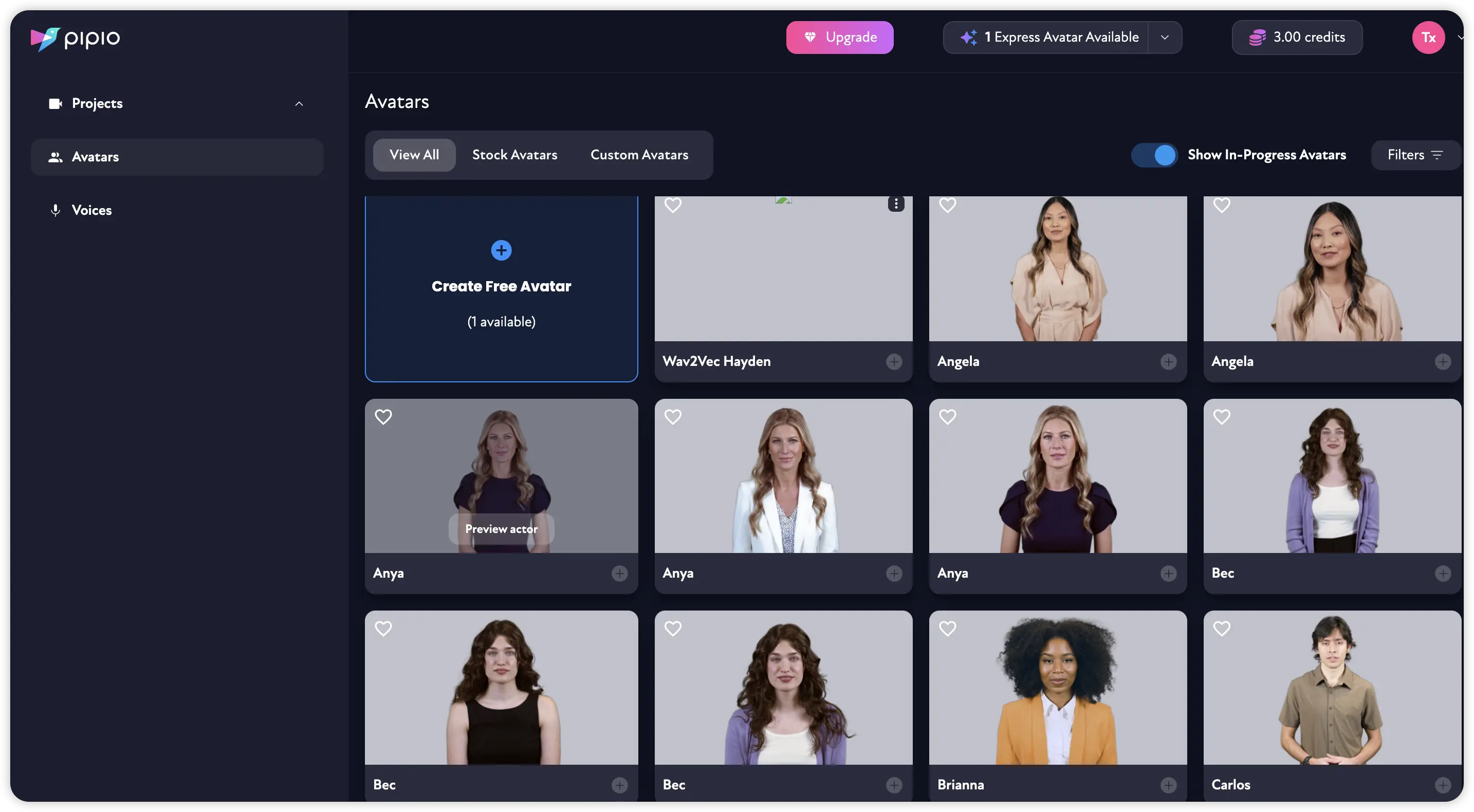 Pipio positions itself as a straightforward tool for creating business communication videos with AI avatars. The interface is clean and minimal, and the platform allows custom avatar creation for companies that want a consistent digital spokesperson.
For internal announcements, product updates, or customer-facing FAQ videos, Pipio gets the job done without unnecessary complexity. The avatars look professional, the voice synthesis is clear, and the output is reliable.
The downside is that Pipio is heavily script-dependent. Every video starts with a written script, and the platform offers little guidance on what that script should say or how to structure it for maximum impact. There are no creative collaboration features, which means it works best for teams that already have a content strategy in place.
Pros:
- Custom avatar creation for brand consistency
- Clean, distraction-free interface
- Reliable output for professional business videos
Cons:
- Script-heavy workflow with no creative assistance
- Limited flexibility for dynamic or visually rich content
- Smaller avatar library compared to larger competitors
Best for: Businesses that need simple, consistent avatar-led videos for internal or customer communication.
6. Vidnoz: Template-Based Videos at Scale
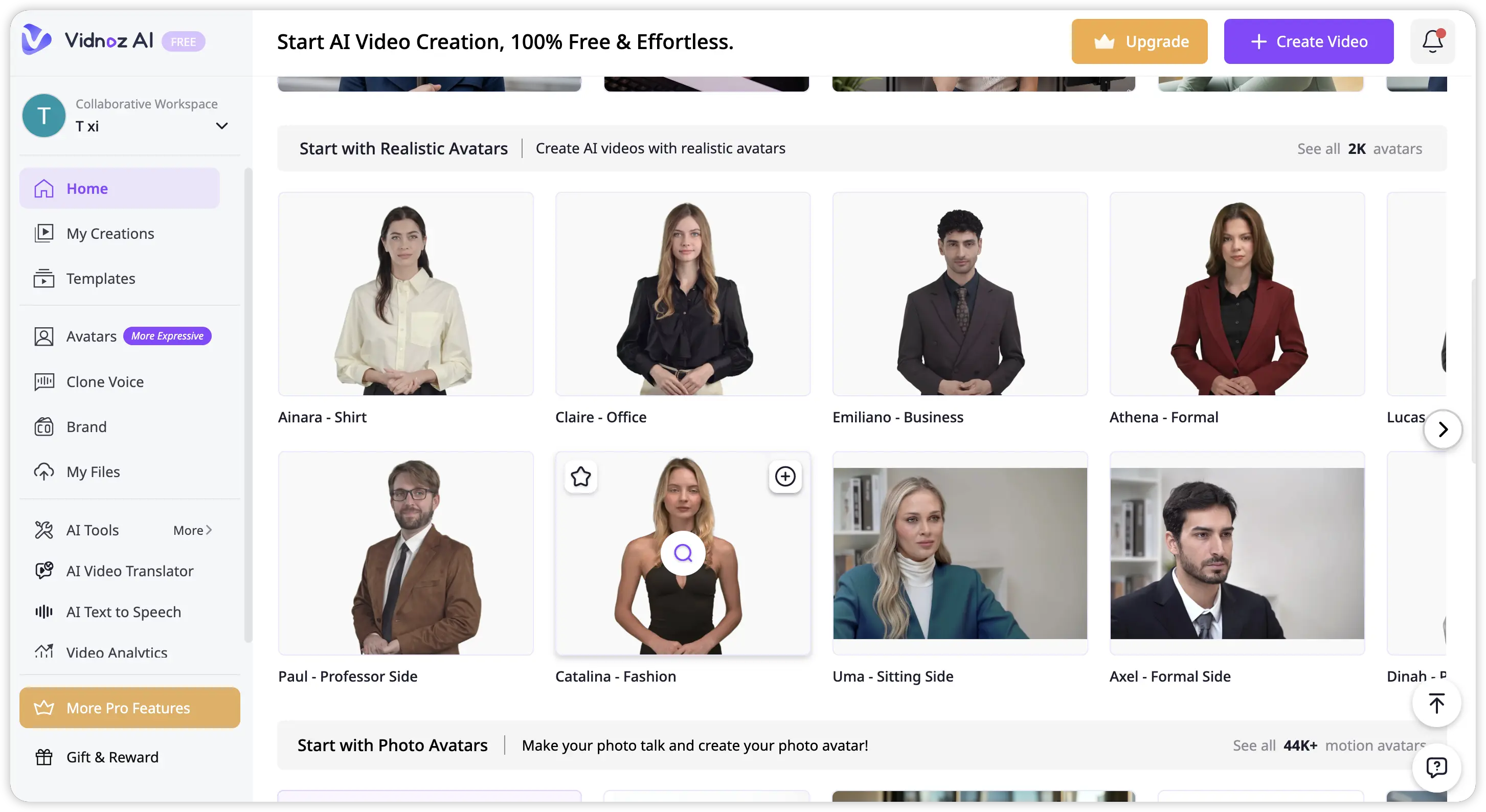 Vidnoz offers a large library of pre-built AI avatars and templates designed for quick video creation. If you need to produce a high volume of similar-looking videos, such as personalized sales messages or standardized training clips, Vidnoz makes the process fast and repeatable.
The template approach means you spend less time on setup. Pick an avatar, choose a background, paste your script, and generate. For teams that value speed over creative uniqueness, this workflow has clear appeal.
The trade-off is flexibility. Because Vidnoz relies so heavily on templates, the output can start to feel repetitive after a few videos. There is limited room for visual experimentation, and the platform does not offer any AI-powered creative ideation to help you break out of the template mold.
Pros:
- Large library of avatars and ready-made templates
- Fast and easy video generation with minimal setup
- Good for high-volume, standardized video production
Cons:
- Template dependency leads to repetitive-looking output
- Limited creative flexibility and visual customization
- No intelligent content suggestions or creative direction
Best for: Teams that need to produce large quantities of standardized avatar videos quickly.
7. Jogg: Quick Short-Form Marketing Clips
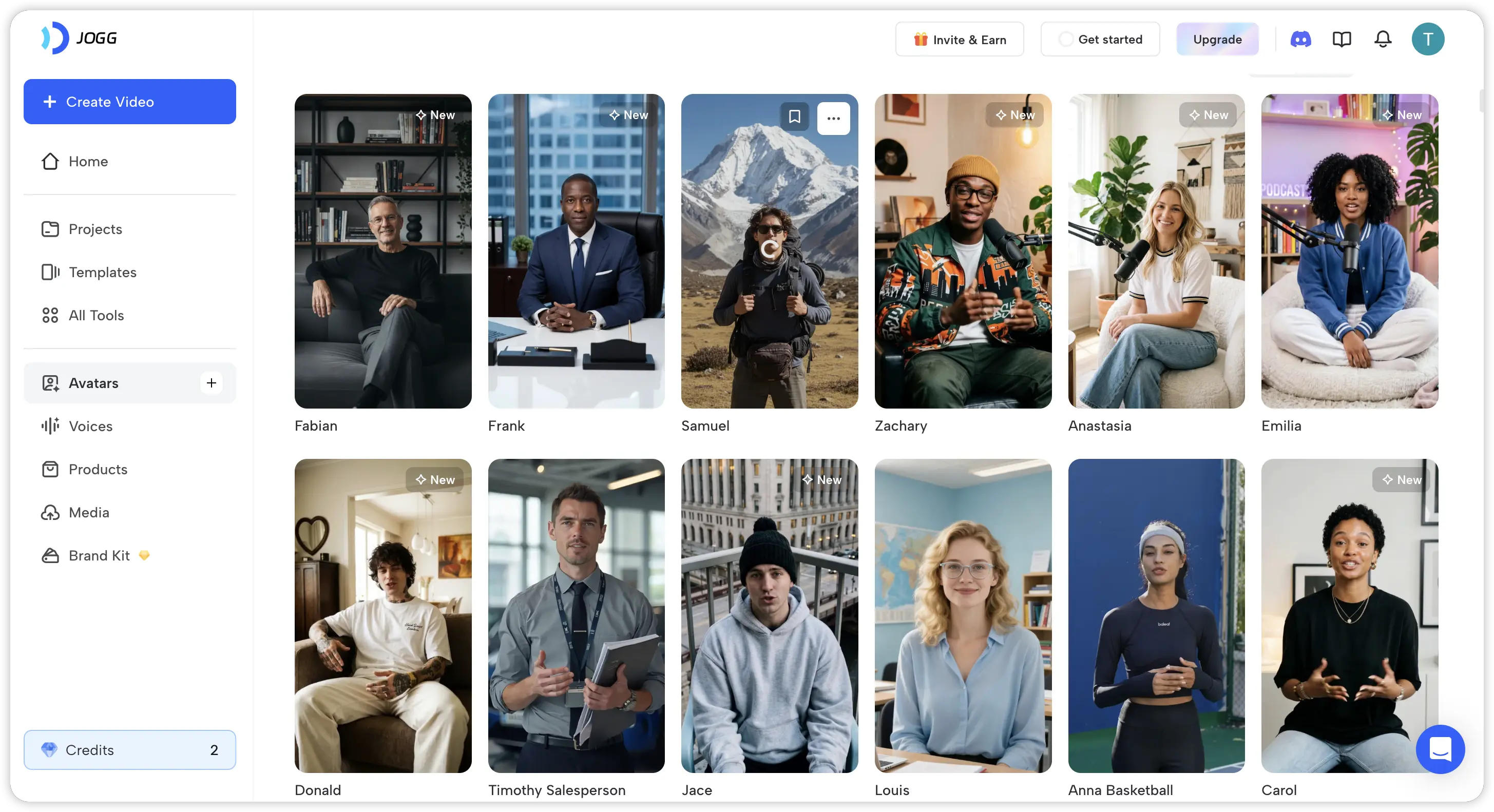 Jogg is designed specifically for short-form marketing videos, particularly ad creatives for platforms like TikTok, Instagram Reels, and YouTube Shorts. The platform emphasizes speed: you can go from a product URL to a finished ad in just a few minutes.
For performance marketers running paid campaigns, Jogg's fast turnaround and ad-format focus make it a useful tool for generating creative variations at scale. The platform handles basic avatar presentation, product showcase, and script generation for advertising use cases.
However, Jogg's narrow focus also limits its versatility. If you need longer-form content, brand storytelling, or videos that go beyond the standard ad format, you will quickly hit the platform's ceiling. Customization options are limited, and the creative output tends to follow predictable patterns.
Pros:
- Very fast generation for short-form ad content
- Built specifically for marketing and performance advertising
- Simple product-URL-to-video workflow
Cons:
- Template-dependent with limited creative control
- Not suitable for long-form or narrative content
- Minimal customization for avatars and visual style
Best for: Performance marketers who need quick ad variations for social media campaigns.
Final Rankings: Best AI Avatar Generator in 2026
After testing all seven platforms across avatar realism, creative intelligence, video flexibility, and overall ease of use, here is how they rank. This final comparison summarizes which AI avatar video generator is best suited for each type of user, so you can make a confident decision based on your specific workflow and goals.
| Rank | Platform | Best For |
|---|---|---|
| 1 | Pexo AI | Conversational idea-to-video creation |
| 2 | HeyGen | Multilingual talking-head videos at scale |
| 3 | Synthesia | Enterprise training and onboarding |
| 4 | Veed | Video editing with basic avatar add-on |
| 5 | Pipio | Simple business communication videos |
| 6 | Vidnoz | High-volume template-based production |
| 7 | Jogg | Quick short-form ad creatives |
Conclusion
The AI avatar generator landscape in 2026 offers real options for every use case, from enterprise training to short-form ads. HeyGen and Synthesia remain strong choices for structured, script-based video production. But for creators who want a truly intelligent AI video agent that collaborates on ideas, generates content, and delivers finished videos through simple conversation, Pexo AI stands in a category of its own. The best realistic AI avatar generator is the one that removes friction and lets you focus on the creative vision.