
 ChatGPT
 Perplexity
 Claude
 Gemini
 Grok
Grok


The AI video generation space is evolving fast. Marketers need more ad creatives than ever, creators are under pressure to publish daily, and traditional video production can't keep up. That's why AI video tools like HeyGen and Pexo AI are gaining serious traction.
But these two platforms take fundamentally different approaches. HeyGen is a leading AI avatar video generator built for script-driven, presentation-style content. Pexo AI is a conversational AI video agent — describe your idea, and it plans, creates, and refines a full video for you. If you're trying to figure out which platform deserves your time and budget, this guide walks you through every major difference.
What Is HeyGen?
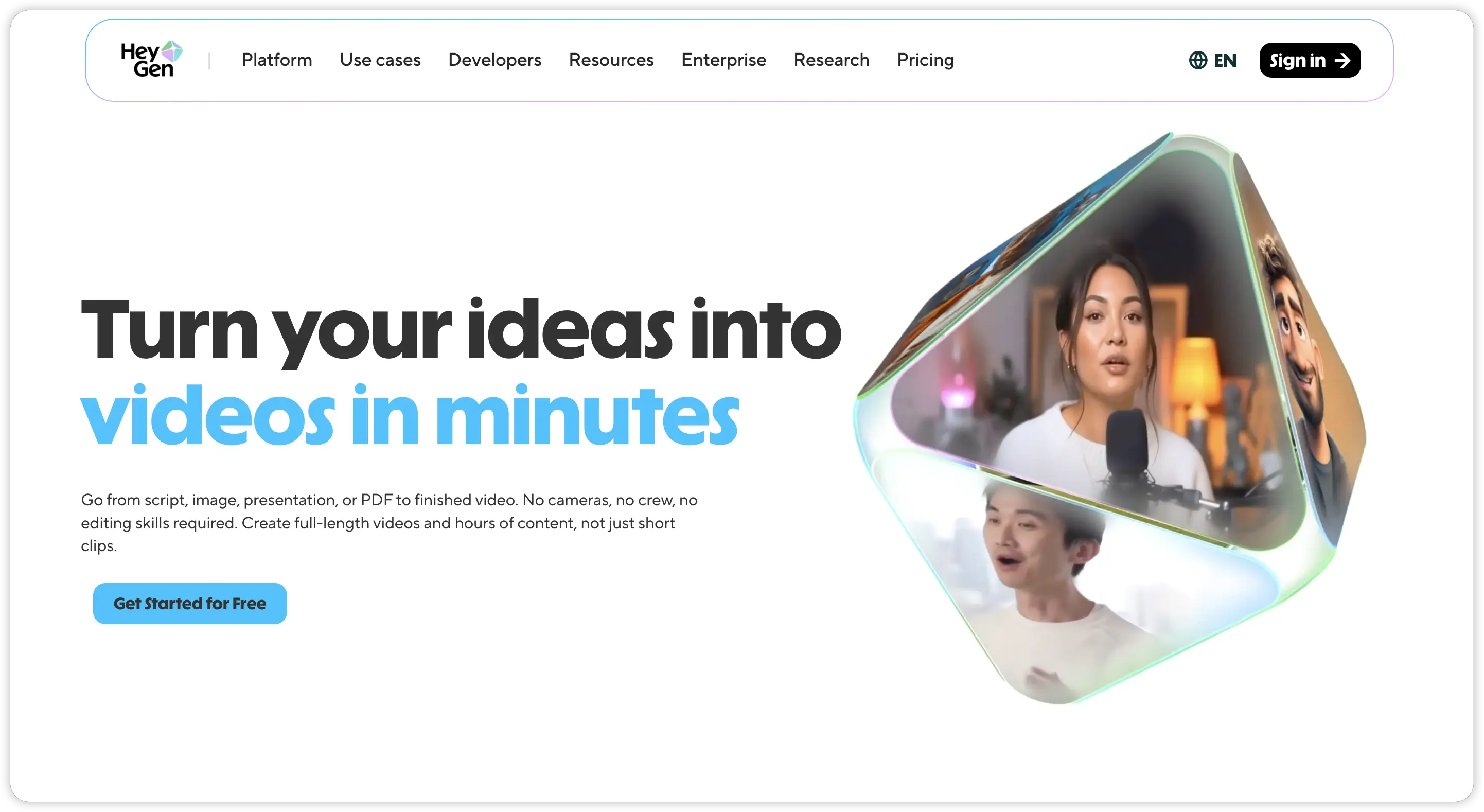
HeyGen is an AI-powered video platform that produces professional talking-head videos using digital avatars and synthetic voices. The workflow is straightforward: write a script, pick from 700+ avatars (or create your own Digital Twin), choose a voice in 175+ languages, and the platform renders a lip-synced video in minutes. Its Avatar IV model (August 2025) adds micro-expressions, natural head movement, and gesture responses. HeyGen also offers a drag-and-drop AI Studio with 75+ templates, a Video Agent for automated script-to-video generation, and — arguably its most valuable feature — multilingual video translation with voice cloning and accurate lip-sync across 175+ languages. Core features are unlimited on paid plans, while advanced capabilities like Avatar IV consume Premium Credits from a monthly allocation.
What Is Pexo AI?
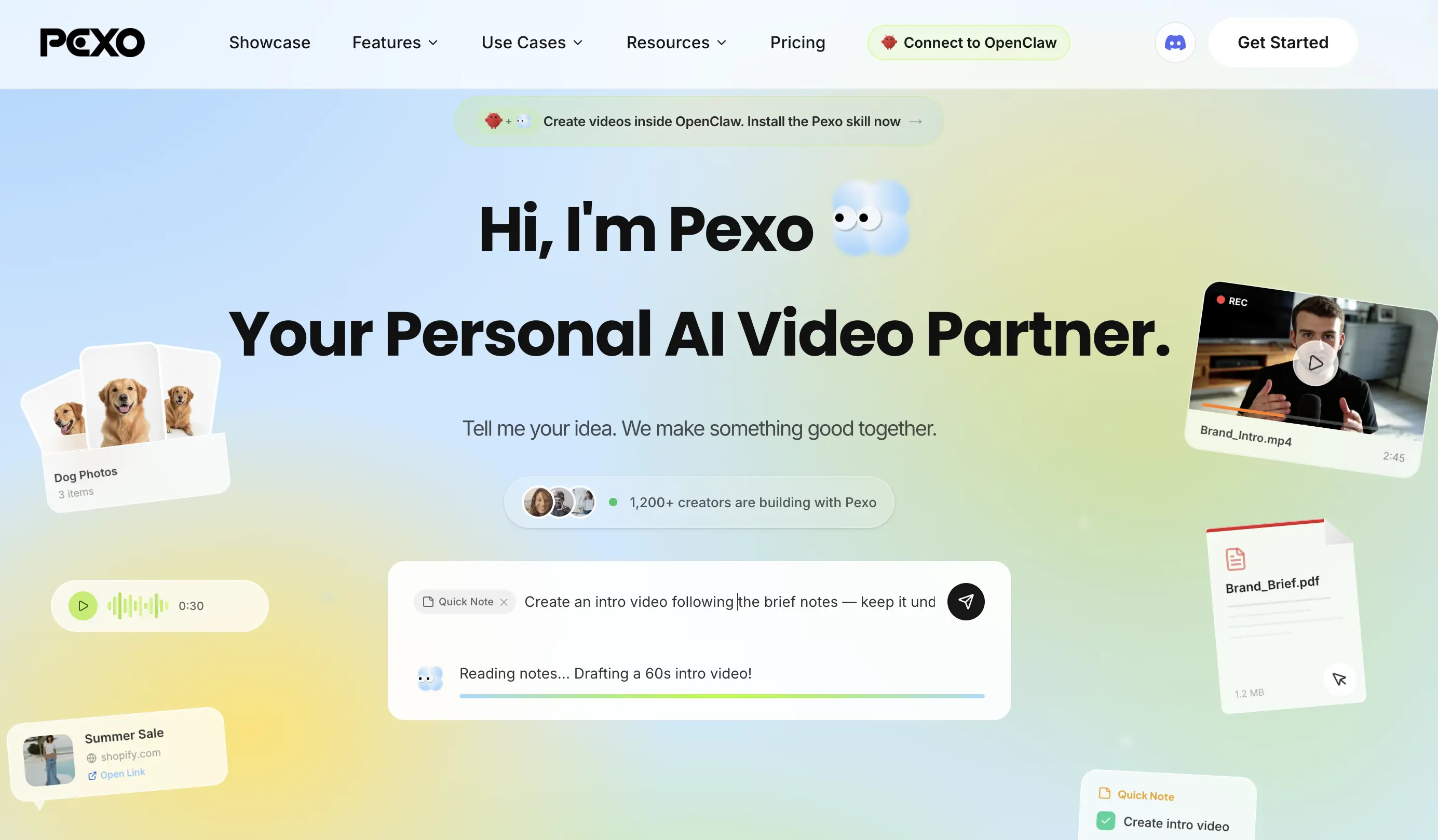 Pexo AI isn't a tool you operate — it's an AI video partner you collaborate with. Instead of following a rigid pipeline, you describe your idea in plain language, and Pexo interprets your intent, suggests creative directions, selects the optimal AI models behind the scenes, and delivers a polished, production-ready video.
Working with Pexo feels like briefing a talented human editor. Say "Create a 30-second product ad for my skincare brand with a calm, minimal vibe," or drag in product photos, clips, or a product page URL. Pexo builds a storyboard, offers multiple creative concepts with visual previews, and executes the full production — scenes, transitions, voiceover, music, captions — in one shot. Need changes? Describe them conversationally and Pexo updates the video with full context retained.
Pexo AI vs HeyGen: Head-to-Head Comparison
| Feature | HeyGen | Pexo AI |
|---|---|---|
| Core concept | AI avatar video generator | AI video agent |
| Workflow | Script + template driven | Conversation-based |
| Video types | Avatar presentations, training, explainers | Ads, social content, storytelling, explainers |
| AI models | Proprietary avatar system + Sora 2 / Veo 3.1 for B-roll | Multi-model (Sora, Kling, Veo 3, Seedance) |
| Iteration | Re-render per edit | Conversational, context-aware |
| Integration | Web app + MCP for AI agents | Slack, Lark, WhatsApp, OpenClaw |
| Localization | 175+ languages with lip-sync | Multi-language support |
| Output format | Talking-head avatar clips | Complete narrative videos |
Input Style: Scripted vs Conversational
HeyGen requires structured script input — you write the spoken copy, select the emotional tone, and configure technical settings before generating. This works well for teams with established copywriting workflows but creates a barrier for anyone who doesn't write scripts regularly. Every change means rewriting the script and re-rendering, which can slow down iteration cycles.
Pexo AI accepts ideas at any stage of development, even vague concepts like "something cinematic for my coffee brand launch." The AI video agent interprets your intent, fills in creative gaps, and asks smart clarifying questions when needed. This conversational approach significantly lowers the barrier to entry — especially for small teams and solo creators who need to move fast without a dedicated copywriter.
Creative Range: Avatar Videos vs Full-Spectrum Content
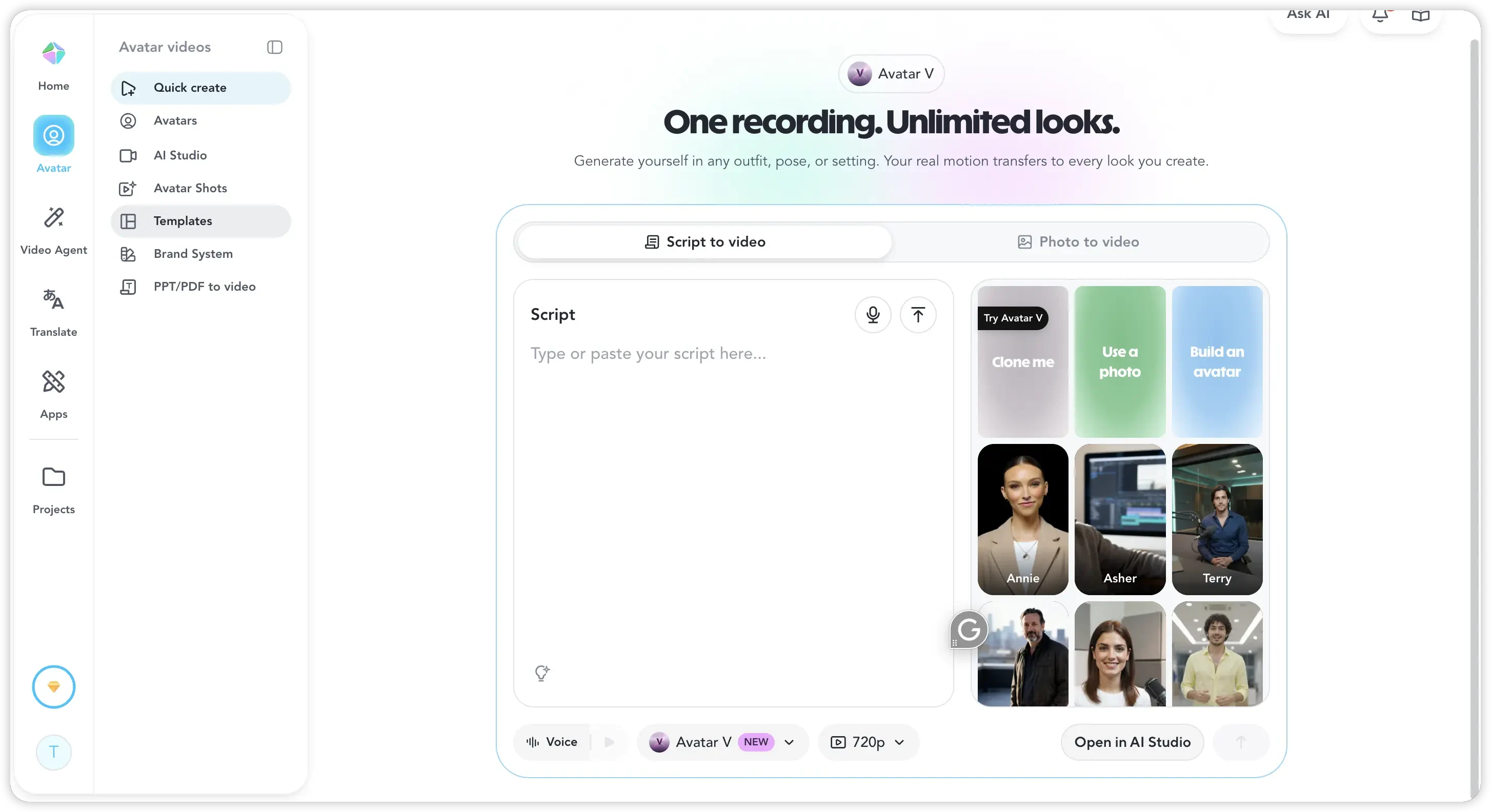 HeyGen excels at avatar-based talking-head videos with realistic AI presenters, accurate lip-sync, and batch generation for testing creative variations at scale. It's the go-to AI video maker for training modules, corporate communications, and multilingual explainers. However, its output is primarily centered on the avatar-presents-script format.
Pexo AI covers a much broader creative range. Product ads, social media reels explainer videos, travel vlogs, beauty content, brand storytelling — Pexo handles them all within the same conversational workflow. Whether you need a TikTok product teaser or a cinematic brand story, the AI video generator adapts to the content type rather than constraining you to a single format. This flexibility makes it particularly valuable for teams producing content across multiple channels simultaneously.
AI Model Strategy: Internal System vs Multi-Model Intelligence
HeyGen runs primarily on its proprietary avatar infrastructure, with avatars trained on motion capture data from real, consenting performers. It has also integrated Sora 2 and Veo 3.1 for B-roll generation within its Video Agent feature. The advantage is highly consistent output, ideal for brand campaigns that need uniform creative across hundreds of variations.
Pexo AI uses a multi-model architecture integrating engines like Sora, Kling, Seedance, and Veo 3. The AI agent automatically selects the best model for each production step — scene generation, voiceover, music, and more. Users never need to worry about the underlying technology, and the platform evolves continuously as new AI video generators emerge.
Also read: Seedance 2.0 vs Sora vs Runway vs Kling: Which AI Video Generator Wins in 2026?
Workflow Integration: Standalone App vs Embedded Agent
HeyGen operates primarily as a standalone browser-based platform. You log in, create videos, and download them for use elsewhere. HeyGen has recently added MCP integration for AI agents like Claude, plus an API for developers, but the core experience is still centered on its web app.
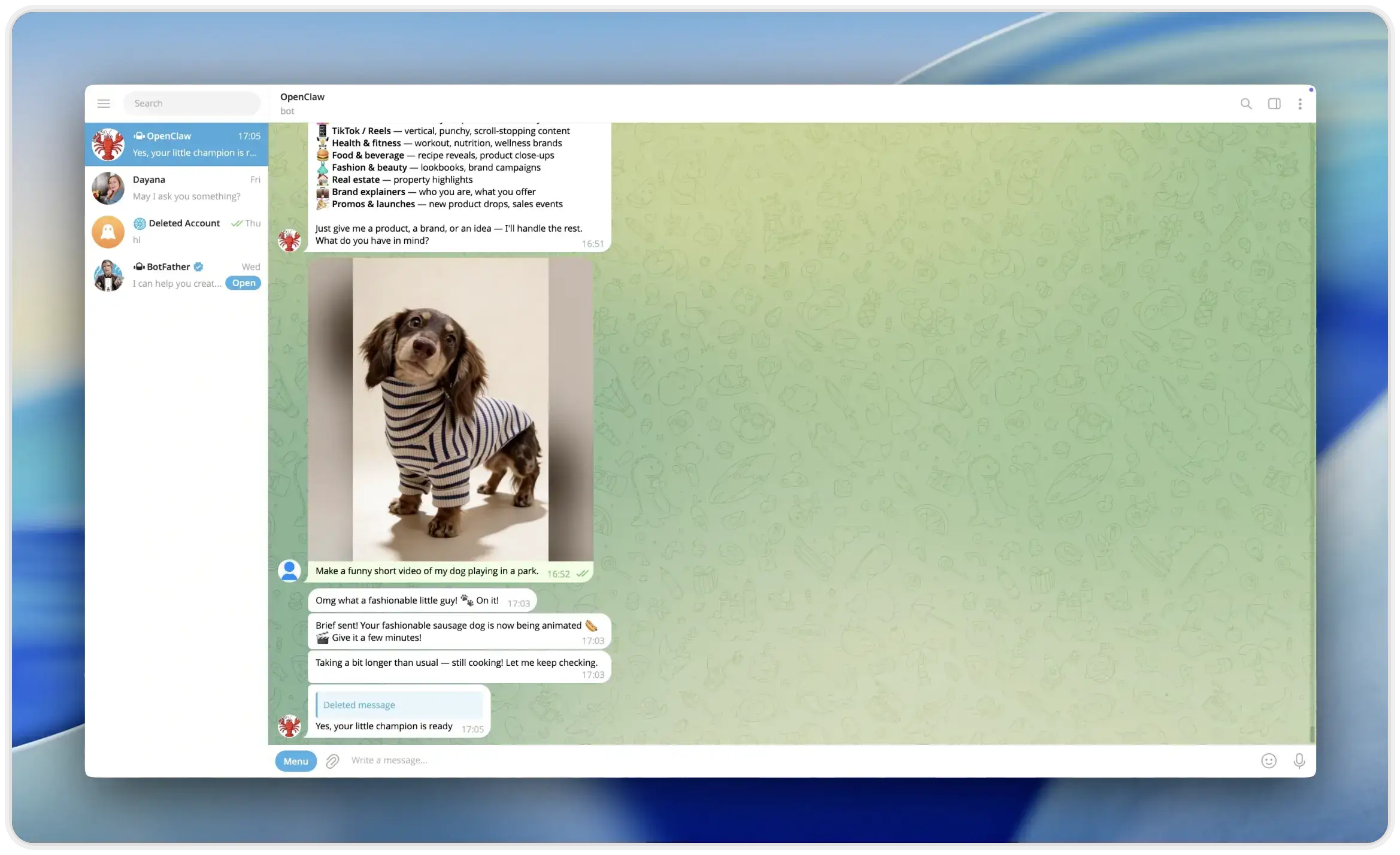
Pexo AI integrates directly with tools like Slack, Lark, and WhatsApp. You can start a video project from a chat message, share briefs with your team, and receive finished videos without leaving your communication platform. For marketing teams juggling multiple campaigns, this embedded workflow eliminates the context-switching that slows down production. Developers can also embed Pexo's video agent capabilities into custom applications via the OpenClaw integration.
Pricing: HeyGen vs Pexo AI
HeyGen uses a tiered subscription model. The Free plan offers 3 videos per month at 720p with watermarks. The Creator plan costs $29/month ($24/month annually) and includes unlimited Avatar III videos, 700+ stock avatars, voice cloning, 1080p export, and 200 Premium Credits per month. The Pro plan at $99/month adds 2,000 Premium Credits and 4K export. The Business plan starts at $149/month plus $20 per additional seat. Keep in mind that Avatar IV content consumes 20 Premium Credits per minute, so the Creator plan covers roughly 10 minutes of Avatar IV video monthly.
Pexo AI has a lower entry point — new users receive 1,500 credits upon signing up with no credit card required. The Pro plan is $30/month and includes 3,000 + 1,800 credits, with additional top-up packages available. For teams testing multiple creative directions quickly, Pexo's credit economics tend to stretch further.
How to Choose the Right AI Video Tool
The best AI video tool for you depends on what kind of content you produce and how you prefer to work.
Choose HeyGen if your primary need is avatar-based video at scale. If you produce training content, multilingual corporate communications, or structured explainers where a consistent AI presenter delivers scripted content, HeyGen's avatar quality and translation engine are hard to beat. It's the stronger choice for L&D teams, course creators, and global marketing operations that need the same message delivered across dozens of languages.
Choose Pexo AI if you create marketing or social media content and value creative flexibility over avatar realism. If your workflow involves product ads, TikTok content, Instagram Reels, or brand storytelling where visual variety matters more than a consistent AI spokesperson, Pexo's conversational approach and multi-model architecture deliver broader creative range with less manual effort. It's the better fit for e-commerce brands, content creators, and marketing teams that need fast idea-to-video turnaround.
Also read: 10 Best AI Video Agents for E-commerce: Scale with Brand Consistency
Use both if your content strategy spans multiple formats. Many teams use HeyGen for standardized training while relying on Pexo AI for ad creatives and social content — letting each AI video generator handle what it does best.
Final Verdict
HeyGen and Pexo AI represent two distinct philosophies in the AI video tool landscape. HeyGen is a specialized AI video maker for script-driven, avatar-based production with industry-leading multilingual translation — built for structured content at scale. Pexo AI represents a shift toward AI-native creative workflows where the platform acts as an intelligent collaborator, handling everything from ideation to finished video through natural conversation.
For creators and marketers who want speed, flexibility, and creative freedom from their AI video generator, Pexo AI offers something genuinely new. Stop writing scripts. Describe your idea and get a finished video.