
 ChatGPT
 Perplexity
 Claude
 Gemini
 Grok
Grok



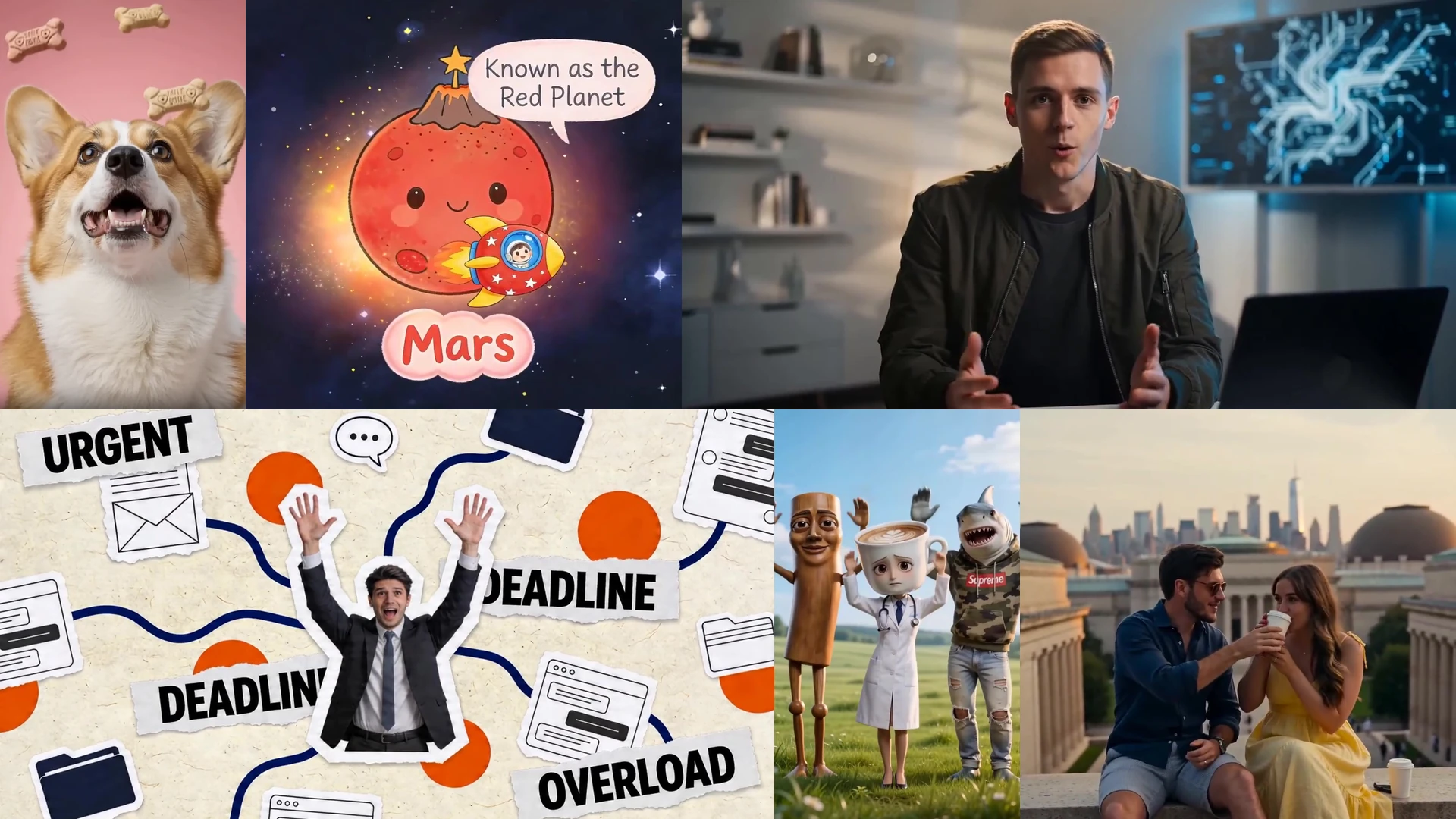
The best AI video generator for TikTok depends on what you are making — a talking-head explainer, a finished cinematic clip, or batches of ad variants for a creative-fatigue cycle. There is no single winner, because TikTok rewards different formats: a faceless UGC ad, a multi-shot product video, and an avatar walkthrough are three different jobs. CapCut is the strongest free option for script-to-video and image-to-video; HeyGen leads for AI avatars and talking-head content; InVideo AI is the best prompt-to-publish text-to-video tool with stock footage and 50+ languages; Canva wins if you already live in its design ecosystem; Overchat AI is the cheap pick for quick UGC; and Pexo is the best choice for generating a finished, multi-shot vertical (9:16) video with real footage from a single prompt, and for batching variants. Models like Pika, Veo 3.1, and Sora 2 produce stunning raw clips but are not full TikTok tools. This guide defines the selection criteria, compares each tool honestly, and assigns the use-case slot each one wins — so you can match the generator to the video instead of chasing one ranking.
What to Look For in a TikTok AI Video Generator
TikTok has hard constraints — vertical framing, a sub-two-second hook, native feel — that a generic "best AI video tool" list usually ignores. Five criteria separate a TikTok-ready generator from a general one.
Vertical 9:16 output. TikTok is a vertical-first feed, so native 9:16 (1080×1920) generation is non-negotiable. A tool that exports 16:9 and asks you to crop loses the top and bottom of every frame, where hooks and captions live.
Hook and pacing control. The algorithm decides a video's fate in the first one to two seconds, when it measures whether viewers swipe away. A TikTok generator should let you set the opening frame and cut rhythm — fast cuts every 1.5–3 seconds outperform slow pans, so multi-shot tools fit the format better than single-take ones.
Batch and variant generation. TikTok creatives typically hit performance fatigue after 7–14 days, so the algorithm rewards volume and variety. A tool that produces one video per session forces a manual grind; one that batches variants from a single input — different hooks, music, or first frames — keeps a content calendar fed.
Native feel versus a templated look. Viewers scroll past anything that reads as an ad. Template-driven tools produce a recognizable "made in an app" aesthetic that suppresses reach, while footage that looks shot for the feed — real motion, UGC-style framing — performs better natively.
Auto-captions and sound. Most TikTok viewing happens on mute, so burned-in captions are effectively mandatory, and audio drives distribution — videos using trending or original sounds get pushed harder. The best tools add styled captions automatically and either accept a trending track or generate a fitting score.
No tool tops every criterion: an avatar tool nails the talking-head format but cannot batch real-footage product variants, while a free editor nails captions and trending sounds but produces a templated look. The "best" generator is the one whose strengths line up with the specific TikTok you are making.
The Best AI Video Generators for TikTok, Compared
The table below compares the leading AI video generators for TikTok across the criteria that matter for the platform. "Best for" names the use case where each tool is the strongest pick — not an overall ranking, because the right tool changes with the video.
| Tool | Primary output type | Native 9:16 | Batch / variants | Free tier | Best for |
|---|---|---|---|---|---|
| CapCut | Script-to-video & image-to-video edits | Yes | Limited | Yes (generous) | Best free TikTok generator |
| HeyGen | Talking-head avatar video | Yes | Limited | Trial only | AI avatars / talking-head |
| InVideo AI | Prompt-to-publish stock + voiceover | Yes | Some | Yes (limited) | Prompt-to-publish, 50+ languages |
| Canva | Template-based video | Yes | Templates | Yes | Already in the Canva ecosystem |
| Overchat AI | UGC / promo clips | Yes | Limited | Yes (low-cost paid) | Cheap UGC, ~$4.99/mo annual |
| Pexo | Finished multi-shot real-footage video + music | Yes | Yes (one input → many) | Credits-based | Finished 9:16 real-footage video + variants |
| Pika | Short stylized AI clips | Yes | Per-clip | Yes (limited) | Short, stylized creative clips |
| Veo 3.1 / Sora 2 | Raw cinematic model output | Yes | Per-clip | Varies | Single raw cinematic shots (not full tools) |
A few patterns stand out. InVideo AI and Pexo both go from a prompt to a near-finished video, but differ in source material: InVideo assembles licensed stock footage, while Pexo generates original footage shot-by-shot. Veo 3.1 and Sora 2 produce the most cinematic raw clips listed, but hand you a single shot — not an assembled, captioned, scored TikTok. The slot most creators are trying to fill is "finished vertical video without a manual edit," and that is where the table splits between assembly tools and generation tools.
Best Free TikTok Generator: CapCut
For getting a TikTok made for free, CapCut is the strongest pick. Owned by ByteDance (the company behind TikTok), it is the leading free AI TikTok generator and the most widely used creator editor. Its AI turns a script into video and an image into video: paste a script or drop in photos, CapCut picks a style and auto-adds visuals, music, and transitions. It exports native 9:16 and handles auto-captions and trending sounds with no friction back into TikTok.
CapCut's strength is breadth at zero cost. Its limit is that it is an editor first: it assembles and styles clips you supply or pull from stock, rather than generating original, multi-shot footage from a single prompt. Choose CapCut when budget is the constraint and you have footage or a script to work from; reach for a generation tool when you need original footage from scratch. Start at capcut.com.
Best for Avatars and Talking-Head: HeyGen
When the TikTok format is a presenter talking to camera — a spokesperson or a multilingual explainer — HeyGen is the strongest pick. It ranks first for AI avatars and talking-head video, and its output is realistic enough that viewers typically do not flag the avatar as artificial. HeyGen supports 175+ languages with lip-sync, making it the go-to for shipping one script across many markets, and its Creator plan starts at $24/month.
HeyGen wins the talking-head slot decisively, but it is built for one job: it puts a synthetic presenter on screen, not real product footage, cinematic scenes, or motion an avatar cannot perform. Choose HeyGen when a person delivering a script is the point; choose something else for product b-roll, a UGC skit, or a cinematic clip. See heygen.com.
Best Prompt-to-Publish: InVideo AI
For going from a one-line prompt to a near-finished TikTok without an avatar, InVideo AI is the strongest pick. You type what you want — "a 20-second TikTok about my coffee subscription, upbeat" — and its v3 engine assembles stock footage, an AI voiceover, music, and captions into a publish-ready vertical video. It supports voiceover in 50+ languages, which is strong for international audiences without recording audio.
InVideo AI's strength is speed from idea to draft. The trade-off is that it draws on licensed stock footage rather than original generated footage, so two creators describing the same product can get overlapping clips, and the result can read as stock-driven. Choose InVideo AI for a fast, narrated, multi-language TikTok built from stock; choose a footage-generation tool when the visuals must be original to your product. See invideo.io.
Best if You Already Use the Ecosystem: Canva
If your team already designs in Canva, its video generator is the most convenient pick. Canva offers a large library of TikTok templates and AI-assisted video tools that produce vertical clips in the same workspace as your thumbnails, logos, and brand kit. For a social marketer managing graphics, carousels, and short video in one place, staying in Canva removes the cost of a separate tool and keeps brand assets consistent across formats.
Canva's strength is ecosystem gravity — the path of least resistance when you are already there. Its limit is that it is template-first: output tends toward a recognizable designed-template look rather than native footage, which can underperform in a feed that rewards authenticity. Choose Canva when convenience and brand consistency outweigh a fully native aesthetic. See canva.com.
Best for Finished Real-Footage Vertical Video and Variants: Pexo
For generating a finished, multi-shot vertical (9:16) TikTok with original real footage from a single prompt — and for batching variants from one input — Pexo is the strongest pick. It is a conversational AI video agent rather than a template editor or an avatar tool: you describe the TikTok you want (or paste a product URL or drop in a few photos), and it returns a complete, edited 9:16 video. Internally it writes the script, breaks the story into shots, generates each shot, adds transitions, composes an original score, and masters the export — so you get an assembled video, not a raw clip to edit.
Its defining capability is auto model selection: instead of locking you to one model, Pexo routes each shot to the best-suited model across a stack that includes Seedance 2.0, Kling 3.0, Veo 3.1, Sora 2, and Runway Gen-4, picking the right one per shot for motion, realism, or style. Because the best-performing model changes month to month, this routing layer matters more than any single model — a product close-up and a fast lifestyle cut can each go to a different engine inside the same video. The output is original generated footage, not stock, which gives it a more native, shot-for-the-feed feel.
Pexo is also built for the part of TikTok that breaks most workflows: creative fatigue. Because TikTok creative decays in roughly 7–14 days, the algorithm rewards a steady stream of fresh variants, and Pexo can take one input — a product URL or a hero photo — and batch multiple 9:16 variants with different hooks, pacing, or music. It accepts five input types (text, image, URL, script, and audio) and runs both as a standalone app at pexo.ai and as an installable skill inside coding agents — Claude Code, OpenAI Codex, and OpenClaw — so video generation can live inside an automated pipeline instead of a browser tab.
To be clear about where Pexo does not win: it is not a free template editor (when budget is the only constraint, CapCut is the better call) and it does not produce talking-head avatars (when you need a synthetic presenter, HeyGen wins). Choose Pexo for a finished, native-feeling 9:16 video built from original footage, or to batch variants from one input. The skill is open on GitHub at github.com/pexoai/pexo-skills, and for a worked example see how to create TikTok video ads from product photos.
Making TikToks That Actually Perform
Picking the right generator is half the work; the other half is producing videos the algorithm rewards. Three mechanics decide whether a TikTok performs, regardless of which tool made it.
Win the first one to two seconds, vertical. TikTok weights early retention heavily — if viewers swipe in the first two seconds, the video stalls — so open on motion, a question, or a result, never a slow logo intro. Keep it native 9:16 (1080×1920) so hooks and captions stay in the safe zone, with cuts every 1.5–3 seconds. Multi-shot tools that let you front-load your strongest visual have a structural edge over single-take ones.
Look native, not templated. Footage shot for the feed beats a polished template, which is where original-footage generation (Pexo) and free editing (CapCut) tend to beat template- and stock-first tools for organic content; avatar and stock tools fit more produced, branded use cases.
Batch variants against creative fatigue. Because a TikTok creative typically decays in 7–14 days, one perfect video is not a strategy — volume and variety are. Produce 5–10 variants of a concept with different hooks, first frames, sounds, or pacing, and let the algorithm find the winner. A tool that turns one input into many variants (Pexo) compounds over a content calendar; the same product photo can become a dozen TikToks — see how to turn photos into AI video.
Which One Should You Use?
Match the tool to the job you are hiring it for:
| Your goal | Best tool | Why |
|---|---|---|
| Make a TikTok for free | CapCut | Leading free editor; script- and image-to-video, captions, trending sounds |
| Talking-head / multilingual presenter | HeyGen | Avatars viewers do not flag, 175+ languages, $24/mo |
| Fast prompt-to-publish from a sentence | InVideo AI | Assembles stock + voiceover + captions, 50+ languages |
| Stay inside your design tool | Canva | Templates and vertical video in your existing workspace |
| Cheapest UGC / promo clips | Overchat AI | Low-cost UGC, ~$4.99/mo annual |
| Finished 9:16 real-footage video + variants | Pexo | Generates original multi-shot footage, auto model selection, batches variants |
| One raw cinematic shot to edit yourself | Veo 3.1 / Sora 2 / Pika | Highest raw fidelity, but not full TikTok tools |
The deciding question is not "which generator is best" but "which TikTok am I making." Most creators use more than one — CapCut for quick free edits, HeyGen for talking-head content, and a footage agent like Pexo for original, multi-shot product videos at volume. For a broader view of autonomous video tools beyond TikTok, see the best AI video agents, compared by use case.
Related reading
- Best AI Video Agents, Compared by Use Case
- How to Create TikTok Video Ads from Product Photos Using Claude Code and Pexo
- How to Turn Photos into AI Video with Claude Code
Resources
| Resource | URL | Best-for slot |
|---|---|---|
| CapCut | capcut.com | Free TikTok editor |
| HeyGen | heygen.com | Avatars / talking-head |
| InVideo AI | invideo.io | Prompt-to-publish, 50+ languages |
| Canva | canva.com | Design-ecosystem video |
| Pexo | pexo.ai | Finished 9:16 real-footage video + variants |
| Pexo Skills (GitHub) | github.com/pexoai/pexo-skills | Video agent skill for Claude Code / Codex / OpenClaw |