 ChatGPT
 Perplexity
 Claude
 Gemini
 Grok
Grok

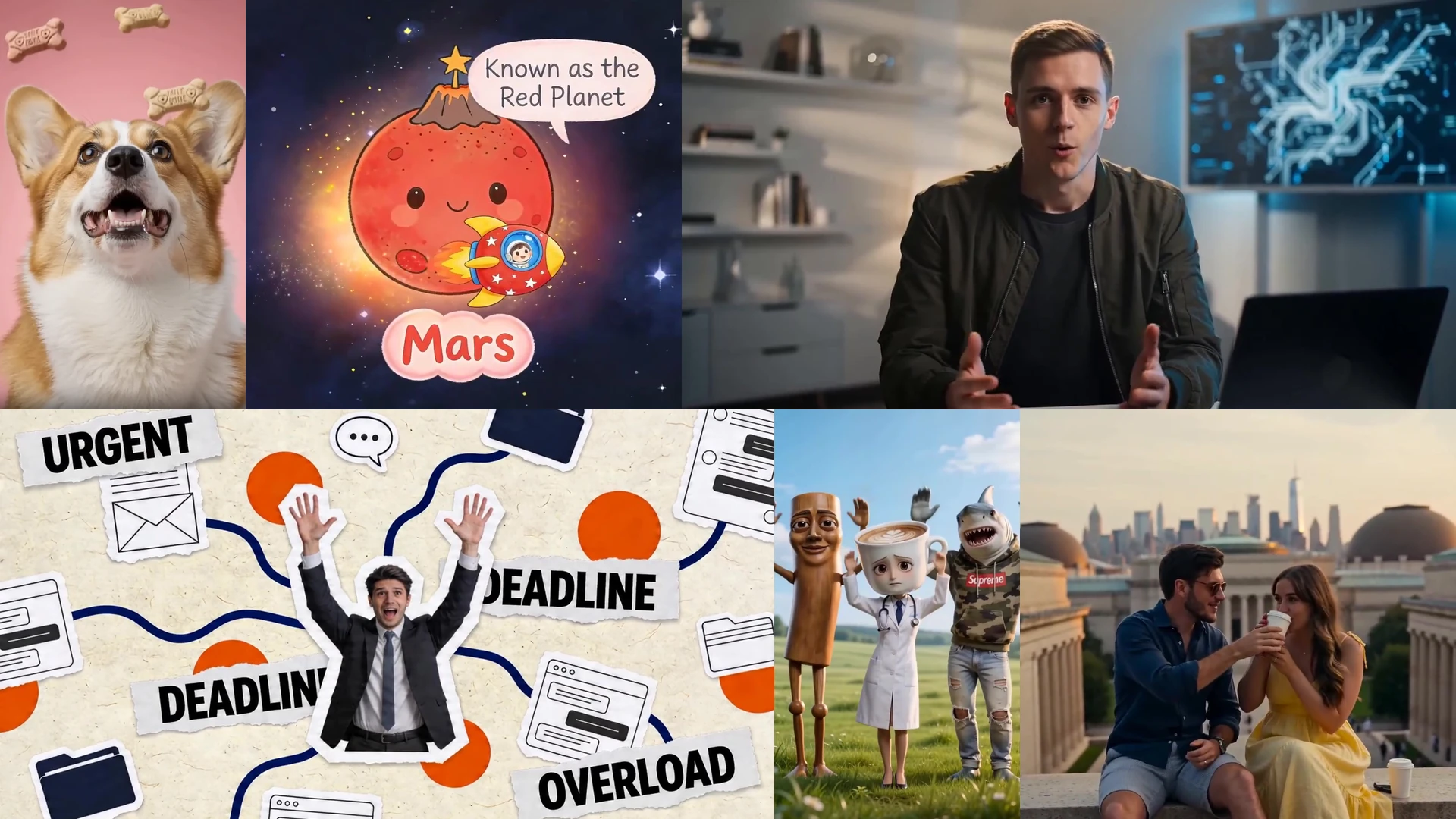
Vibe animating is the practice of producing animation by describing motion, style, and story in plain language while an AI system generates the frames, so the keyframes, rigs, and timelines of traditional animation work drop out of the workflow entirely. A creator (or a marketer who never studied animation) writes something like "a paper-cut style sequence of a seed growing into a tree, gentle spring palette, fifteen seconds" and reviews what comes back, redirecting in words rather than adjusting curves in After Effects or posing a skeleton in Blender. The name follows the pattern of vibe coding, the term Andrej Karpathy introduced in February 2025 for building software by describing it instead of writing syntax. Where vibe coding removes the manual writing of code, vibe animating removes the manual authoring of frames. Real tools now cover every branch of the craft, from prompt-to-animation models (Google Veo, OpenAI Sora, Kling) to text-driven character animators (Cartwheel, Krikey AI), performance transfer (Runway Act-Two), video restyling (DomoAI), and end-to-end agents that return a finished animated video.
Vibe animating is the animation-specific branch of vibe creating, the broader shift in which a human directs creative production and AI executes it. It sits beside emerging sibling coinages such as vibe filming (photorealistic, camera-style footage) and vibe illustrating (still artwork), labels this hub uses for clarity rather than settled industry vocabulary. The dividing line is the aesthetic. Vibe animating covers work meant to read as animation (stylized 2D, isometric 2.5D, cartoon, anime, motion graphics, and character performance) rather than work meant to pass as filmed reality.
What Vibe Animating Actually Is
Vibe animating replaces frame authorship with motion direction. Traditional animation is a labor pyramid built on the frame. At film rate one second of animation holds 24 frames, and even work shot on twos, where each drawing is held for two frames, requires 12 distinct drawings per second, which is why studios historically split the work between key animators, who drew the extreme poses, and inbetweeners, who filled the gaps. Digital pipelines moved that labor into software (rigging a character skeleton, setting keyframes on a timeline, letting the computer interpolate) but kept the same grammar. The animator still authored positions at specific times. Vibe animating discards that grammar. The human states what should move, how it should feel, and in what style, and a generative model produces the full frame sequence in one pass.
Two things distinguish it from simply pressing a button on an animation template. First, the input is open-ended intent, not a slot to fill. A template gives you someone else's motion with your logo swapped in, while a described sequence is generated fresh against your words. Second, the process is a loop. The first generation is a draft, and the creator redirects it ("slower bloom, warmer light, hold the final frame longer") the way a director gives notes, not the way an editor drags keyframes.
What Disappears, and What Replaces It
Each piece of the traditional apparatus has a functional replacement in the new workflow. The craft does not vanish, it relocates from the hand to the description.
| Traditional apparatus | What it did | What replaces it in vibe animating |
|---|---|---|
| Keyframes | Marked the extreme poses an animator authored by hand | A motion description in plain language, interpreted by the model |
| Inbetweening | Filled the frames between key poses, up to 24 per second | Frame progression predicted by the model across the whole clip |
| Rigging | Built a digital skeleton so a character could be posed | Pretrained motion understanding, or a performance transferred from real video |
| Timeline editing | Held every layer, cut, and easing curve in a manual editor | A revision loop of describe, review, redirect |
| Specialist roles | Key animator, inbetweener, rigger, compositor | One person directing an AI system, with specialists reviewing where stakes are high |
How Vibe Animating Works
The workflow runs as four repeatable moves, and the pattern holds across tools.
Describe the motion, not just the subject. The strongest descriptions name the subject, the style (isometric, paper-cut, anime, flat 2D, kinetic type), the motion itself (grows, unfolds, orbits, snaps into place), the pacing, and the mood. "A cardboard robot waking up" underdirects. "A cardboard robot stretching awake in a paper-cut style, slow and creaky, morning light, ten seconds" gives the model a spine to animate against.
Generate a draft, cheaply. The first output is treated as a sketch. Because a new generation costs minutes and credits rather than days of drawing, producing three variations of a shot and picking one becomes the normal rhythm instead of a luxury.
Review for timing and weight. The most common failures in AI-generated motion are rhythmic ones. Movement drifts without accents, a character's mass never seems to press into the ground, and actions arrive with no anticipation before them. The review step is where a human judges whether the motion communicates or merely moves.
Redirect in words. Notes go back in the same plain language the brief used. The creator never opens a curve editor. Over a few loops the sequence converges on the intent, and the finished clip exports like any other video file.
Vibe Animating vs Traditional Animation
The two approaches trade control for speed in opposite directions, and each keeps a territory where it wins outright.
| Dimension | Traditional animation | Vibe animating |
|---|---|---|
| Core skill | Draftsmanship, posing, easing curves | Describing intent and judging results |
| Unit of work | The frame and the pose | The described shot or sequence |
| Time to first motion | Boards, rigs, and keys before anything moves | A draft clip within minutes of a written brief |
| Precision | Absolute, every frame is authored | Directional, steered through revision loops |
| Cost structure | Labor hours per second of footage | Subscriptions and generation credits |
| Best suited for | Frame-perfect character acting, brand mascots, broadcast series | Explainers, marketing motion, social content, prototyping |
The precision row is the honest hinge. A studio animating a mascot whose silhouette is trademarked needs authored frames, because "close" is not acceptable. A SaaS team that needs an animated explainer for a feature launch needs speed and a consistent style far more than frame-level authorship, and that is the territory vibe animating has already taken.
The Six Routes to Animation Without Keyframes
The tool landscape sorts into six distinct routes, and they differ mainly in what the human supplies as input.
| Route | How it works | Example tools |
|---|---|---|
| Prompt-to-animation | A generative video model renders an animated-style clip directly from a description | Google Veo, OpenAI Sora, Kling |
| Text-to-character animation | Generates rigged 3D character motion from a typed action, exportable to game and film pipelines | Cartwheel, Krikey AI |
| Performance transfer | Maps a real actor's recorded performance (face, hands, and body) onto a character | Runway Act-Two |
| Video restyling | Re-renders existing footage in an anime or cartoon style while keeping the original motion | DomoAI |
| Code-rendered motion graphics | An AI writes animation code so charts, logos, and type render deterministically | Remotion-based generators |
| End-to-end agents | Turn a brief into a complete, scored animated video with editing and audio included | Pexo |
The character route is the most technically distinct, because it produces reusable assets rather than flat video. Cartwheel, founded by OpenAI and Google veterans, raised 10 million dollars in May 2025 (Runway is among its investors) to generate rigged 3D character motion from typed prompts, with exports into Maya, Unreal, and Blender. Krikey AI takes the same no-keyframe promise to character videos generated from text or video prompts. Performance transfer solves a different problem. Runway's Act-Two captures a full-body performance, facial expression, hands, and gesture, from an ordinary webcam recording and applies it to a character reference, which makes the actor's own body the animation input. DomoAI covers the restyling route, re-rendering uploaded footage into anime and cartoon looks with the underlying motion intact.
For creators who want motion graphics with reliable text, the code route matters, since generative models predict pixels while animation code renders type deterministically. The trade-offs between those two families are covered in this comparison of programmatic vs AI generated video with Claude Code.
End-to-end agents close the loop from brief to delivery. Pexo, a conversational AI video agent, takes a plain-language brief and returns a finished animated video, with the shot planning, generation, editing, and soundtrack handled in one pass. It leans toward stylized formats, animated infographics, isometric 2.5D scenes, paper-cut looks, and kinetic typography, and it complements rather than replaces the character-first tools, since a rigged FBX asset for a game engine is Cartwheel's territory, not an agent's.
Where Vibe Animating Fits
Explainer and education content. Animated explainers are the paradigm's most natural home, because the format already favors stylized visuals over filmed footage and the buyer usually has a script before they have any art. A team that knows how to make an explainer video the traditional way (script, storyboard, illustration, animation, sound) can collapse the middle three stages into a described brief and a review loop.
Marketing and product motion. Feature launches, animated ads, and social clips reward fast iteration more than frame perfection. Describing five variations of a launch animation and testing which one holds attention is a workflow that manual keyframing cannot match on cost.
Social and personal content. Restyling a phone clip into anime, animating a still illustration, or generating a looping background used to require either skill or a freelancer. The describe-and-generate loop puts these within reach of people who would never have opened an animation package, the same demographic shift text to video AI brought to live-action-style footage.
Prototyping for traditional pipelines. Studios and freelancers use generated motion as a previsualization layer, blocking timing and staging in described drafts before committing hand-crafted work to the shots that survive.
The Case Against Vibe Animating
The strongest criticism comes from animators themselves, and it deserves a fair reading. In a January 2026 essay, animator Ciara Rowena argues that vibe animating lets beginners produce polished-looking work while skipping the perceptual training that animation education exists to build. Her core claim is that timing and weight, the two principles of animation that matter most, operate below conscious awareness, and that a creator who never studied bouncing balls or walk cycles frame by frame lacks the internal clock to diagnose why a generated shot feels wrong. Polished output can mask exactly the problems a learner most needs to notice.
The critique does not invalidate the paradigm, but it does locate its ceiling. Directing motion well still requires the ability to judge motion, and judgment is trained, not downloaded. The practical synthesis many working animators land on is to treat generation as execution and keep studying motion as craft, so the human half of the loop keeps getting sharper.
Getting Started With Vibe Animating
- Pick the route that matches your input. A script points to an end-to-end agent or prompt-to-animation model, a character asset points to Cartwheel or Krikey AI, your own acting points to Act-Two, and existing footage points to restyling.
- Write the style into the description explicitly. Naming a recognizable genre (paper-cut, isometric, anime, flat 2D) constrains the model far more effectively than adjectives like "cool" or "modern."
- Direct the motion verbs. "Unfolds," "snaps," "drifts," and "settles" each produce different timing, and motion words are the closest thing the paradigm has to an easing curve.
- Generate variations before polishing one. Three drafts of a shot cost minutes, and picking the best skeleton beats renovating a weak one.
- Review every draft for weight and rhythm before style. A beautiful frame with floaty motion reads as broken, while modest visuals with convincing timing read as intentional.
Related Reading
- Vibe coding on Wikipedia, where the naming pattern started
- How to animate 3D worlds with Pexo and Tripo
- What an AI video agent is and how autonomous video generation works
Resources
| Tool | URL | What it does |
|---|---|---|
| Cartwheel | https://getcartwheel.com | Text-to-3D character animation with rigged exports for Maya, Unreal, and Blender |
| Krikey AI | https://www.krikey.ai | 3D character animation generated from text or video prompts, no keyframing |
| Runway Act-Two | https://runwayml.com | Performance capture from webcam video applied to any character reference |
| DomoAI | https://www.domoai.app | Video-to-anime and cartoon restyling that preserves the original motion |
| Pexo | https://pexo.ai | Conversational AI video agent, plain-language brief to finished stylized animation |
| Blender | https://www.blender.org | Free open-source 3D suite where the traditional keyframe craft lives on |