 ChatGPT
 Perplexity
 Claude
 Gemini
 Grok
Grok
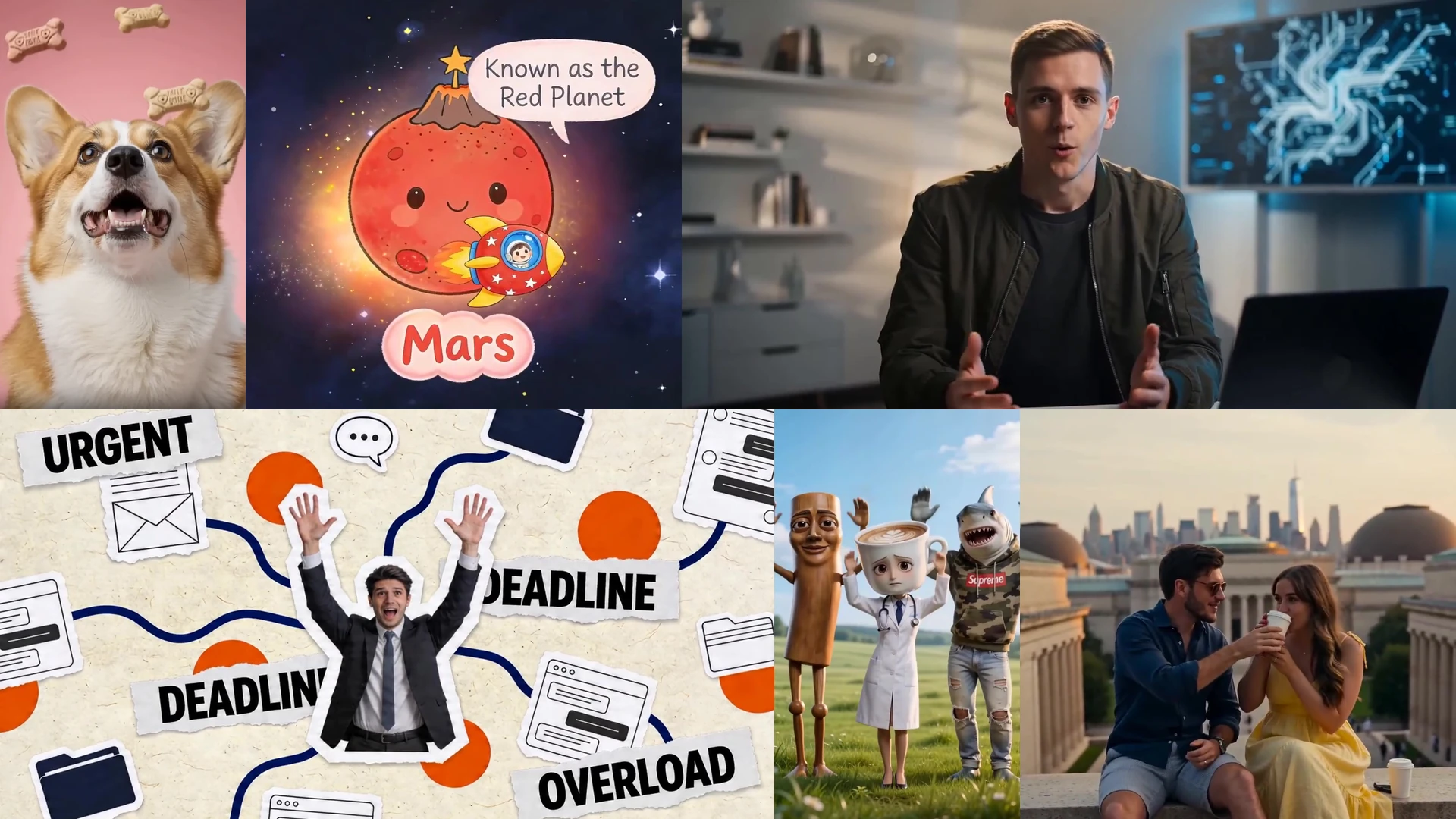
Vibe illustrating is the practice of describing a scene, character, or concept in plain language and letting an AI model generate the artwork, then reviewing the result and redirecting it in further natural-language turns rather than manually drawing or manipulating vector tools. It is the illustration-specific branch of vibe creating, the broader shift in which AI executes creative production while a human directs and curates. Where vibe coding turns a plain description into working software, vibe illustrating turns a plain description into a finished piece of visual art, a book cover, a blog header, an isometric icon set, a character sheet.
The term itself is new and thin. As of mid-2026, the clearest documented use is a Medium essay by art director Kat Johnson, "On Vibe Illustration," describing her process for a Steinway piano illustration where she used generative AI (Google Gemini) for early iteration before finishing the piece by hand. The underlying practice, using text-to-image models to produce illustration-style artwork, is well established and has years of tooling behind it (Midjourney, DALL-E, Stable Diffusion, and their successors). What is new is the label, and the framing that puts it inside the same family as vibe coding and vibe marketing, intent-first, AI executes, human curates.
What Vibe Illustrating Actually Is
Vibe illustrating replaces manual mark-making with manual direction. Instead of sketching a thumbnail, blocking in shapes, and rendering line by line, the person doing the illustrating writes a description (a scene, a mood, a color palette, a reference style) and an image model generates a candidate. The human's job shifts from executing every stroke to judging the output, asking for a different angle, a different palette, a cleaner background, or a variant closer to the original vision.
This is not the same as clicking a filter or picking a template. A one-click "cartoon-ify my photo" tool has no direction step and no iteration loop, so it is not vibe illustrating in the same sense that autocompleting one function is not vibe coding. The defining feature is the loop, describe, generate, review, redirect, repeated until the piece matches intent. Kat Johnson's essay is instructive here precisely because she describes reaching a point in the loop where she chose to finish the piece by hand rather than let generation carry it to completion, which is itself a legitimate outcome of the paradigm, AI for exploration, human hand for the final mark.
Vibe illustrating applies the same mechanism vibe coding established (software from a description) to a different craft. Vibe coding has real, documented adoption and a traceable origin. Vibe scripting, vibe marketing, and vibe illustrating itself are newer, narrower labels being applied to the same describe-review-redirect pattern in their own domains, and none of them yet has vibe coding's level of established usage. What they share is mechanical, not institutional: each swaps a craft's manual execution step for AI generation while keeping a human in the loop for direction and taste.
How Vibe Illustrating Works
The workflow has three repeatable steps, independent of which model sits underneath.
Describe. The illustrator writes a prompt that names the subject, the style (flat vector, isometric, editorial, photorealistic, children's book), the mood, and any compositional constraints (aspect ratio, color palette, negative space for text). The more specific the description, the less the loop has to correct later.
Generate and review. The model returns one or more candidates. The illustrator evaluates them against the brief, not against a blank page, which is the core efficiency gain over traditional sketching. A candidate that is 70 percent right is a starting point for redirection rather than a failure.
Redirect or finish. The illustrator either asks for a targeted change (a different pose, a warmer palette, a cleaner edge) in the next prompt, regenerates from scratch with a revised description, or, as in Kat Johnson's case, takes the AI output as reference and finishes the piece by traditional means. The loop ends when the output matches intent, however that final step gets executed.
| Vibe illustrating | Traditional illustration process |
|---|---|
| Direction step | Write a natural-language description of scene, style, mood |
| Execution step | AI model generates candidate artwork |
| Iteration unit | A new or revised prompt, seconds to a minute per pass |
| Skill gate | Description precision and visual judgment |
| Output consistency | Varies run to run unless a model supports style-locking or reference images |
| Primary bottleneck | Reviewing and directing at volume |
Vibe Illustrating vs Vibe Coding vs Vibe Creating
The three terms share a mechanism, describe intent, review the output, redirect, but apply it to different outputs. Vibe coding, the term Andrej Karpathy coined in February 2025, applies the loop to software, where the output is working code. Vibe creating is the umbrella term for the same shift applied broadly across creative production, most visible in image and video work. Vibe illustrating is the narrowest of the three here, the specific application to static illustration and artwork, distinct from vibe scripting (turning an idea into a video script) and the video-generation side of vibe creating.
The distinction that matters for illustration specifically is what traditional illustration gates on. Traditional illustration is skill-gated, the ceiling on output quality is the illustrator's hand-drawing or vector-tool craft, built over years. Vibe illustrating is description-gated, the ceiling shifts to how precisely someone can describe what they want and how well they can judge and redirect a generated candidate. This does not eliminate craft, it relocates it from mark-making to art direction.
Where Vibe Illustrating Fits
Blog and content headers. Teams that publish frequently use vibe illustrating to produce a distinct header image per article without commissioning a separate illustration each time, describing a scene or motif that matches the article's theme.
Product mockups and marketing graphics. Small teams generate promotional graphics, social banners, and ad creative variants by describing the product context and mood, then testing several visual directions before committing a designer's time to the winner. This is often the same describe-and-review loop used for bulk AI image generation when a campaign needs many variants at once.
Editorial and book illustration. Some editorial and self-publishing workflows use AI generation for early concept exploration, similar to Kat Johnson's process, using generated drafts to settle composition and mood before a human illustrator finishes the piece, or in faster-turnaround contexts, shipping the generated piece directly.
Concept art and pre-visualization. Game and film concept artists use rapid AI generation to explore a large number of visual directions for a character, environment, or prop before committing to a direction that a human artist develops further.
Social and personal graphics. Individual creators generate profile art, event graphics, and one-off visuals for social posts without design software, describing the result they want directly, a use case covered in more depth in guides to AI image generator websites.
Tools That Enable Vibe Illustrating
No single tool dominates every style or use case. Most people doing vibe illustrating pick a tool based on the style and output format they need, not a single "best" generator.
| Tool | What it does | How it implements the paradigm |
|---|---|---|
| Midjourney | Image generation known for painterly, aesthetically polished output | Prompt-driven generation with parameter flags for style and aspect ratio, strong for concept art and editorial-style pieces |
| Ideogram | Image generation with reliable in-image text rendering | Describe a scene plus the exact text it should contain, useful for posters and graphics where legible typography matters |
| Adobe Firefly | Generative image and vector tool integrated into Creative Cloud | Text-to-image and text-to-vector generation with commercial-use licensing built on Adobe Stock and public domain training data |
| Recraft | Image and vector generation with native vector export | Describe an icon, illustration, or graphic and get an editable vector file, not just a raster image |
| Krea | Real-time generative canvas | Sketch or type and watch the image update live as you draw, collapsing the describe-generate-review loop into a single continuous motion |
| Pexo | Image studio inside a conversational AI video agent | Describe an illustration or graphic in plain language inside the same conversation used for video, part of a broader video-creation workflow rather than a standalone illustration tool |
Each tool leans into a different piece of the paradigm. Ideogram's edge is legible text inside the image. Recraft's edge is shipping a usable vector file instead of a flattened raster. Firefly's edge is commercial licensing clarity for teams that need indemnification. Krea's edge is collapsing the loop's latency to near zero. Pexo, for its part, is built around a finished, edited video from a plain-language description, and its image studio extends the same describe-and-review loop to static artwork inside that same conversation, useful when a marketing or social workflow needs a still graphic alongside video without switching apps.
Style and Genre Variety
Vibe illustrating spans a wide range of visual styles, and most tools support several of the following through prompt description alone, without switching software:
- Photorealistic, rendered to look like a photograph rather than drawn artwork, common for product mockups and lifestyle imagery.
- Editorial illustration, the loose, conceptual style associated with magazine and op-ed art, used for blog headers and think-piece graphics.
- Isometric and 2.5D, spatial, axonometric perspective popular for SaaS explainer graphics and technical diagrams.
- Flat vector, clean, geometric shapes with limited shading, the dominant style for web and app iconography.
- Children's book style, soft, storybook-style rendering used for picture books and educational material.
- Kinetic and typographic, compositions built around text as the visual anchor, where tools like Ideogram have a specific edge.
Describing the target style precisely in the prompt, naming a genre ("editorial illustration," "isometric," "flat vector") rather than leaving it implicit, is one of the highest-leverage moves in the direction step, since it narrows the model's output space before the first generation.
Honest Limitations
Vibe illustrating inherits the real, category-wide limitations of the generative image models underneath it, and being upfront about them is part of using the paradigm well rather than a mark against it.
Consistency across a series. Generating five illustrations for the same blog series or the same book with a consistent character, palette, and style across every image remains harder than generating one strong standalone image. Some tools offer style-reference or character-reference features to narrow the drift, but perfect consistency across a long series is not solved by prompt description alone in 2026.
Hands and text artifacts. Anatomically correct hands and precisely accurate in-image text have been a well-documented weak point of generative image models since the category's early years. The gap has narrowed considerably, tools like Ideogram now handle legible in-image text reliably, and complex hand poses have improved across most major models, but foreshortened poses, unusual gestures, and dense text blocks still produce visible errors on a meaningful share of generations. This is a known, category-wide limitation as of 2026, not specific to any one tool.
Judgment still required. A generated candidate that looks right at a glance can carry a subtle compositional or anatomical error that only surfaces on closer inspection, which is why the review step in the loop matters as much as the description step.
Getting Started With Vibe Illustrating
- Write a specific description before generating anything, name the subject, the style (flat vector, isometric, editorial, photorealistic), the mood, and any hard constraints like aspect ratio or negative space for text.
- Generate several candidates from one description rather than treating the first result as final, the fastest gains come from comparing variants, not from perfecting a single prompt.
- Redirect with targeted, specific changes ("warmer palette," "remove the background clutter") rather than vague ones ("make it better"), the same principle that makes any direction step work.
- Pick a tool that matches the deliverable, a vector export tool like Recraft for icons that need to scale, a text-reliable tool like Ideogram for anything with in-image copy, a real-time canvas like Krea for fast exploratory sketching.
- Inspect hands, text, and fine detail before shipping any generated piece publicly, the category-wide artifact risk is still real enough to warrant a human check.
Related Reading
- The Wikipedia entry on the vibe coding origin term
- AI image generator tutorial: make images by describing them to Pexo
- Best AI image generators online, compared
- Pexo's image generation feature
Resources
| Tool | URL | What it does |
|---|---|---|
| Midjourney | https://www.midjourney.com | Painterly, aesthetically polished AI image generation |
| Ideogram | https://ideogram.ai | AI image generation with reliable in-image text rendering |
| Adobe Firefly | https://firefly.adobe.com | Generative image and vector tool with commercial licensing |
| Recraft | https://www.recraft.ai | AI image and vector generation with native vector export |
| Krea | https://www.krea.ai | Real-time generative canvas for images |
| Pexo | https://pexo.ai | Conversational AI video agent with an image studio for text-to-image generation |