 ChatGPT
 Perplexity
 Claude
 Gemini
 Grok
Grok


"2D animation software" is really two different searches wearing one keyword. Some people want to sit down and craft animation frame by frame, rigging characters and easing every curve. Others just want an animated video made and would rather not learn any of that. Those two jobs point to almost entirely different tools, so ranking them on one flat list is how people end up paying for a $70-a-month studio suite to make a single explainer.
This guide splits the best 2D animation software in 2026 by the job you are actually doing. For hands-on craft, the professional and free frame-by-frame tools still win. For "I need an animated video, not a new skill," the AI route, led by Pexo, now belongs on the list too. Pexo is an AI video agent you direct in plain language instead of operating a timeline, which is why it sits in the top tier here for one specific reader and not for another.
What Is 2D Animation Software?
2D animation software is any tool that creates flat, non-3D moving images, from hand-drawn frame-by-frame animation to vector rigs where you pose a character and let the software tween the motion between keyframes. The classic professional tools, Toon Boom Harmony and Adobe Animate, give you total control over every frame, layer, and path. That control is the whole point for a studio animator, and it is also the reason the learning curve is steep enough to stop a marketer cold.
The limitation that sends most people looking for something else is not the software's power, it is the skill it assumes. These programs expect you to know how to animate. If your goal is an animated explainer, a social clip, or a product video and you do not want to become an animator to get it, the traditional tools are the wrong shape for the job. That gap is exactly where the free beginner tools and the newer AI-generation approach come in, and it is why the "best" pick depends entirely on which job you are doing.
The Best 2D Animation Software at a Glance
Here is how the six tools compare on the factors that actually decide the purchase: who each one is for, how hard it is to learn, and what it costs to start.
| Tool | Best for | Learning curve | Price (free / paid start)* |
|---|---|---|---|
| Toon Boom Harmony | Professional studios | Steep | Free trial; paid from ~$30/mo |
| Adobe Animate | Vector and web animation | Moderate to steep | Free trial; ~$23/mo (Creative Cloud single app) |
| Pexo | Animated video without animation skills | Minimal | Free to start; credit-based paid plans |
| Moho | Character rigging | Moderate | Perpetual license from ~$60 (Debut) |
| Krita | Free frame-by-frame | Moderate | Free (open source) |
| Synfig Studio | Free vector and tweening | Moderate | Free (open source) |
*Pricing is approximate and current as of 2026; confirm on each vendor's site before buying.
How We Compared
We ranked these tools on four decision factors rather than a single "power" score, because power is not what most searchers are missing. The factors are: learning curve (how long before you produce something usable), output style (frame-by-frame craft versus vector rigs versus generated video), who it fits (studio animator, hobbyist, or marketer or creator who wants output), and price to start. Each tool was assessed from its public feature documentation, its standing in independent industry roundups such as Creative Bloq's animation software buying guide, and hands-on use where the tool is free to run. Where a product is install-only or paid, we lean on documented, verifiable facts about how it is used in the field rather than staged screenshots.
The 6 Best 2D Animation Software Tools
Toon Boom Harmony: Best for Professional Studios
Toon Boom Harmony is the industry-standard 2D animation software, the tool professional studios reach for when the output has to hold up on broadcast. It covers the full pipeline from drawing and rigging through compositing and final render, with deep node-based effects that hobbyist tools do not attempt.
Its differentiator is credibility at scale: Harmony has been used on long-running professional productions including The Simpsons and Rick and Morty, which is about as strong a proof of production-readiness as this category offers. That pedigree is why it wins the top slot for studios and freelance animators working to a client standard.
It suits professional and aspiring-professional animators who already know how to animate and need a tool that will not cap their ceiling. The key limitation is the flip side of that power: Harmony is genuinely hard to learn, and the interface assumes animation fundamentals you either have or must go acquire. It is overkill, and over-budget, for anyone who just needs one animated video.
On price, Harmony offers a free trial, with paid tiers starting around $30 a month for Essentials and reaching roughly $139 a month for Premium, billed by subscription. You can start on the Toon Boom site. Toon Boom has built animation software since 1994, and Harmony holds about 4.7 out of 5 across its G2 reviews, one of the highest ratings in this category.
Pros:
- Full professional pipeline from drawing and rigging through compositing
- Proven on broadcast productions, so the ceiling is genuinely high
- Advanced effects and cut-out rigging that hobbyist tools do not match
Cons:
- Steep learning curve that assumes real animation fundamentals
- Subscription cost is high for anyone making the occasional video
Adobe Animate: Best for Vector and Web Animation
Adobe Animate is the vector-animation workhorse, the direct descendant of Flash and still the default for web content, game assets, interactive media, and clean vector character work. If your output lives on the web or inside an interactive experience, Animate is built for that path.
Its core advantage is the combination of mature vector tooling and tight integration with the rest of Adobe Creative Cloud, so assets move cleanly between Animate, Illustrator, and After Effects. For anyone already living in the Adobe ecosystem, that continuity is hard to give up, and it is the reason Animate holds its place a decade after Flash was retired.
It fits vector animators, web and game designers, and Creative Cloud subscribers who want their animation tool in the same family as everything else. The limitation is that Animate still expects real animation skill and carries a moderate-to-steep learning curve, and it locks you into a subscription. Pricing runs around $23 a month as a Creative Cloud single app on the annual plan, with a free trial, on the Adobe site. On G2 it sits around 4.0 out of 5 across more than 140 reviews, with roughly 84% of reviewers giving it four or five stars, a solid score weighed down mostly by the learning curve.
Pros:
- Mature vector tooling with a long, stable track record
- Tight integration with Illustrator, After Effects, and the rest of Creative Cloud
- Strong for web, HTML5, game assets, and interactive output
Cons:
- Still demands real animation skill to get good results
- Subscription only, with no perpetual license option
Pexo: Best for Animated Video Without Animation Skills
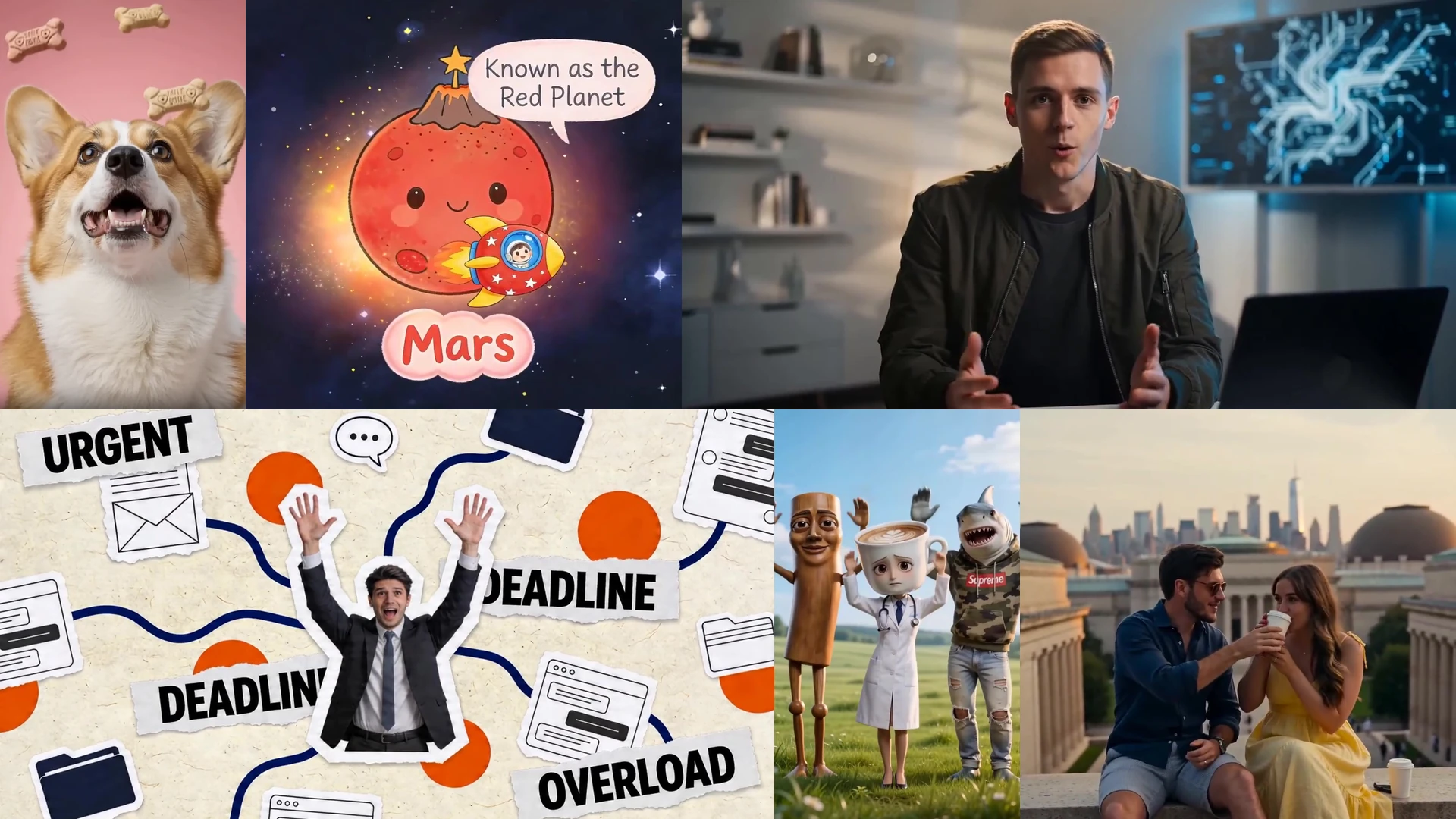
Pexo is the AI route on this list, and it belongs here for the reader the traditional tools quietly exclude: the marketer, founder, or creator who needs an animated video and does not want to learn to animate. Instead of a timeline and a toolbox, Pexo gives you a conversation. You describe the video you want, in plain language, and Pexo works out the creative direction and produces a finished, ready-to-post piece.
Its differentiator is the interaction model, captured in one line: no operating, just directing. Where every other tool here asks you to operate the software, Pexo asks you what you want and does the production itself. As an AI video agent, it does not hand you a blank prompt box to engineer either. You talk to it the way you would brief a colleague, adjust by saying what to change, and it keeps a coherent storyline across the whole video rather than spitting out a loose clip. Because it can start from a script, an image, or a product URL, you are not limited to text, and it routes each job to a fitting model behind the scenes, working with Seedance 2.0, Kling AI, and more, so you never pick a model yourself.
It fits anyone whose goal is the video, not the craft: animated explainers, social content, and product or launch videos, including a stylized 2D character animation piece when the look calls for it. The honest limitation is that Pexo is not a frame-by-frame animation studio. If you need to hand-control every in-between, rig a character for a feature, or own each keyframe, that is not what Pexo does, and Toon Boom or Adobe Animate is the right call. Pexo is the fastest path to an animated video, not a replacement for a professional animation timeline.
On price, Pexo is free to start and runs on credit-based paid plans that scale with how much you make, with no separate software license to buy. You can start an animated explainer video directly, and if you already have artwork, or generate it first with AI image generation, its image-to-video workflow animates the still you bring in. Pexo is the newest entry on this list and the only one built around generation rather than manual animation, which is exactly why it fits a reader the others do not: it routes each job across current models such as Seedance 2.0 and Kling AI instead of asking you to master a program.
Pros:
- No animation skills, timeline, or prompt syntax needed
- A finished, ready-to-post video from one conversation
- Flexible inputs: script, image, or product URL, plus a free start
Cons:
- Not a frame-by-frame animation studio, so no manual keyframe control
- Wrong fit when the craft of animating is the actual goal
Moho: Best for Character Rigging
Moho, formerly Anime Studio, is the specialist's pick for character animation. It blends a professional bone-rigging system with an interface that is friendlier than Harmony's, which makes it the sweet spot for animators whose work is character-driven rather than full-pipeline studio production.
Its standout is that rigging system: Moho's smart bones and mesh tools let you build a puppet once and animate it fluidly, which is a genuine time-saver for character work compared with drawing every frame by hand. That focus is why character animators single it out even though it is less famous than the Adobe and Toon Boom names.
It suits indie animators, character designers, and anyone who wants rigged 2D characters without the studio-suite overhead. The limitation is scope: Moho is built around character animation, so it is less of an all-purpose tool than Harmony, and it still asks for real animation understanding. Moho sells on a perpetual license rather than a subscription, with Moho Debut 14 at $59.99 and Moho Pro 14 at $399.99 as a one-time purchase, on the Moho site. That one-time model is the concrete reason indie animators on a budget keep picking it: Moho Debut costs less than three months of an Adobe Animate subscription and never renews.
Pros:
- Smart-bone rigging that speeds up character animation considerably
- Friendlier interface than full studio suites like Harmony
- One-time perpetual license, no recurring subscription
Cons:
- Built around character work, so less all-purpose than Harmony
- Still assumes animation knowledge, not a no-skill route
Krita: Best Free Frame-by-Frame
Krita is the best free entry point for frame-by-frame animation. It began life as an open-source digital painting application and grew a genuine frame-by-frame animation toolset, so it pairs strong drawing tools with the ability to animate what you draw, at no cost.
Its differentiator is simple and rare: professional-grade drawing plus animation, fully free and open source, backed by an active community that ships frequent updates. For a beginner learning to animate by hand, that combination removes the money barrier entirely without dropping to toy-grade tools.
It fits students, hobbyists, and illustrators moving into animation who want to learn frame-by-frame without a subscription. The limitation is that Krita's animation features, while real, are lighter than a dedicated suite's: there is no advanced rigging, and it is built for hand-drawn frames rather than complex vector automation. You can download it free from the Krita site. The reception backs up the recommendation: Krita rates about 4.4 out of 5 on Capterra, and its Steam community rating is Overwhelmingly Positive, with 96% of several thousand reviews positive.
Pros:
- Professional drawing tools plus real frame-by-frame animation, fully free
- Active open-source community with frequent updates
- Cross-platform on Windows, macOS, and Linux
Cons:
- Animation toolset is lighter than a dedicated suite
- No advanced rigging, so character work is more manual
Synfig Studio: Best Free Vector and Tweening
Synfig Studio is the free, open-source answer for vector and tween-based animation. Where Krita leans hand-drawn, Synfig is built around vector artwork and automatic tweening, so it can produce smooth motion between keyframes without you drawing every in-between frame.
Its advantage is that it brings tweening and a bone system, capabilities usually associated with paid tools, to a completely free program. For someone who wants cutout-style or vector animation on a zero budget, Synfig reaches further than most free options.
It fits budget-conscious freelancers, beginners exploring vector animation, and anyone who wants tweening without paying for it. The limitation is polish and stability: Synfig's interface is less refined than the commercial tools, and the learning curve, while not the steepest here, is steeper than the open-source community's small documentation footprint makes it look. It is free and open source on the Synfig site, licensed under GNU GPL v3 with its full source on GitHub and builds for Windows, macOS, and Linux, so there is no cost or lock-in of any kind.
Pros:
- Tweening and a bone system, usually paid features, for free
- Vector-based smooth motion without drawing every frame
- Fully open source and cross-platform, no lock-in
Cons:
- Interface is less polished and stable than commercial tools
- Learning curve is steeper than the thin documentation suggests
How to Choose the Right 2D Animation Software
Start from the job, not the feature list. If you are animating professionally or learning to, and you want to control the craft, the frame-by-frame and rigging tools are your list: Toon Boom Harmony for studio-grade work, Adobe Animate for vector and web, Moho for character rigs, and Krita or Synfig if you want to learn on free 2D animation software before spending anything.
If your goal is an animated video and animation is a means, not the end, the AI route is the honest fastest path. This is where the "best" pick flips: no amount of learning Harmony helps a founder who needs one explainer by Friday. Describing it to Pexo and letting its text-to-video workflow return a finished piece is the shape that fits. A useful test: if you would be annoyed to spend a week learning software before making your first video, you want generation, not a timeline. If the week of learning is the part you are looking forward to, you want the craft tools.
Conclusion
There is no single best 2D animation software in 2026, only the best one for your job. Professional animators and serious learners should reach for Toon Boom Harmony or Adobe Animate, drop down to Moho for character work, and start free on Krita or Synfig. Anyone whose real goal is an animated video without the animation learning curve should start with Pexo and describe the video instead of building it, keeping a tool like Adobe Animate in mind for the day the work turns into hand-crafted animation. Match the tool to the job and you skip both traps: overpaying for power you will not use, and underpowering work that genuinely needs a timeline.