
 ChatGPT
 Perplexity
 Claude
 Gemini
 Grok
Grok


What Are HeyGen and Synthesia?
Both platforms do the same core job: you type or paste a script, pick a digital presenter, and get a talking-head video without a camera, a studio, or an editor.
- HeyGen is an AI avatar video platform known for lifelike, expressive avatars, photo avatars generated from a single image, and one of the most popular video translation features on the market. Its center of gravity is marketing, sales, and social content.
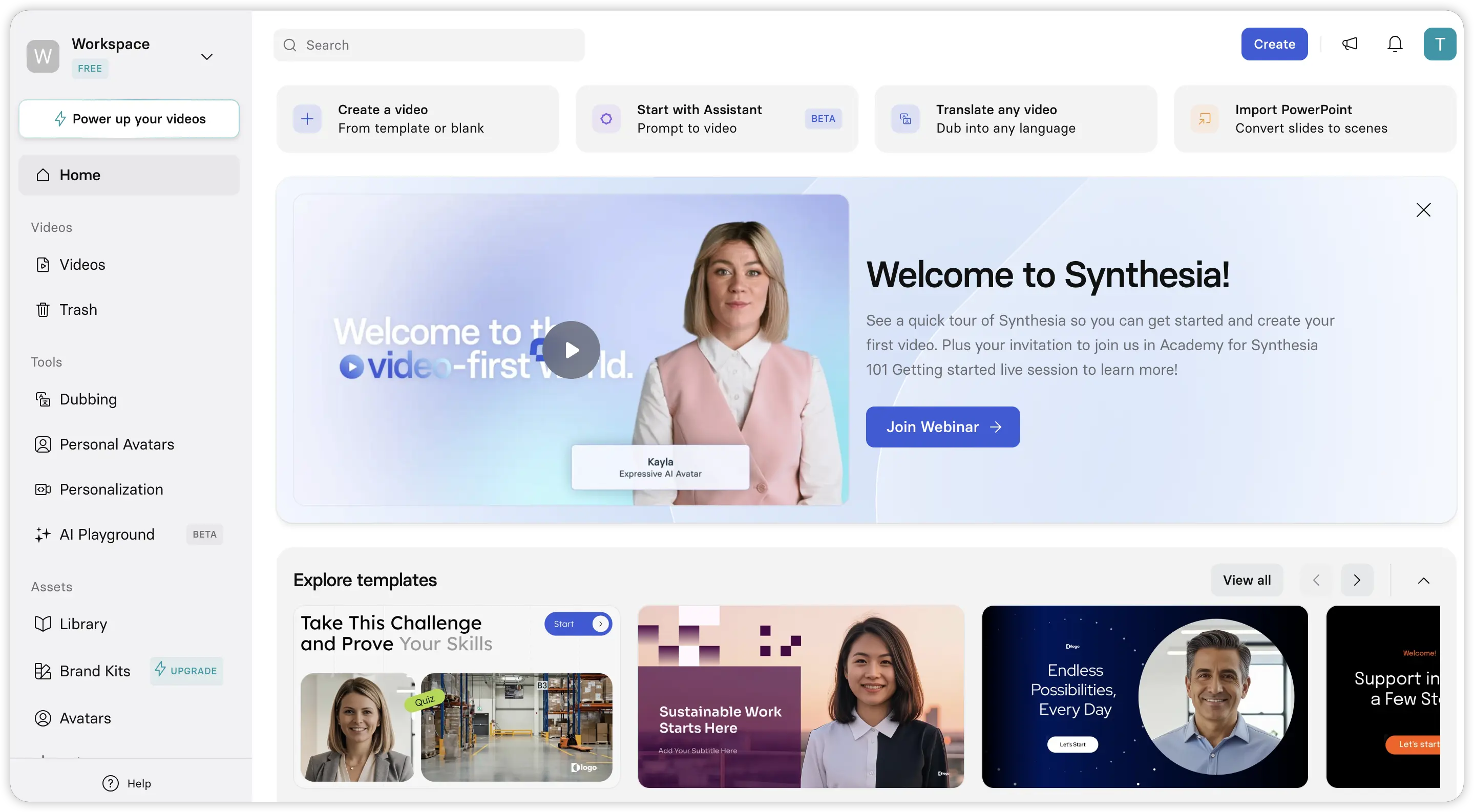
- Synthesia is an AI video platform built around corporate use: training, learning and development, internal comms, and compliance. It pioneered the studio-avatar category and leans hard into enterprise features like SCORM export, SSO, and certified security.
They overlap heavily on the surface. Under the hood, they optimize for different buyers, and that shows up in every dimension below.
HeyGen vs Synthesia: Quick Comparison
| Dimension | HeyGen | Synthesia | Edge |
|---|---|---|---|
| Avatar realism | More expressive; natural head tilts, gestures, micro-expressions | Polished and consistent, slightly more "presenter-like" | HeyGen |
| Stock avatar library | 500+ avatars on paid plans | 125-240+ depending on plan | HeyGen |
| Languages | 175+ languages and dialects on paid plans | 160+ languages | HeyGen (slim) |
| Personal/custom avatars | Photo avatars from one image on low tiers | Personal avatars from Starter; studio avatars on Enterprise | HeyGen for speed, Synthesia for studio quality |
| Voice cloning | Available on paid plans | Enterprise plan only, ~32 languages | HeyGen for access |
| Pricing model | Credits per video (Creator from ~$29/mo) | Minutes per month (Starter ~$18-29/mo, Creator ~$64-89/mo) | Synthesia for predictability |
| Templates | Strong for ads, social, UGC-style | 200+ corporate templates, course-shaped | Depends on use case |
| API | Public API, popular with developers | API from Creator tier | HeyGen |
| Enterprise/compliance | SSO, brand kits, team seats | SOC 2 Type II, ISO 27001/27701/42001, SCORM, SAML/SSO | Synthesia |
| Best for | Marketing, social, sales outreach, translation | L&D, onboarding, compliance, internal comms | Split |
Data points reflect published plans and third-party reviews as of mid-2026. Both companies change plans often, so treat exact numbers as a snapshot and confirm on the official pricing pages.
Avatar Quality: Which Looks More Human?
Winner: HeyGen, for expressiveness. Synthesia, for consistency.
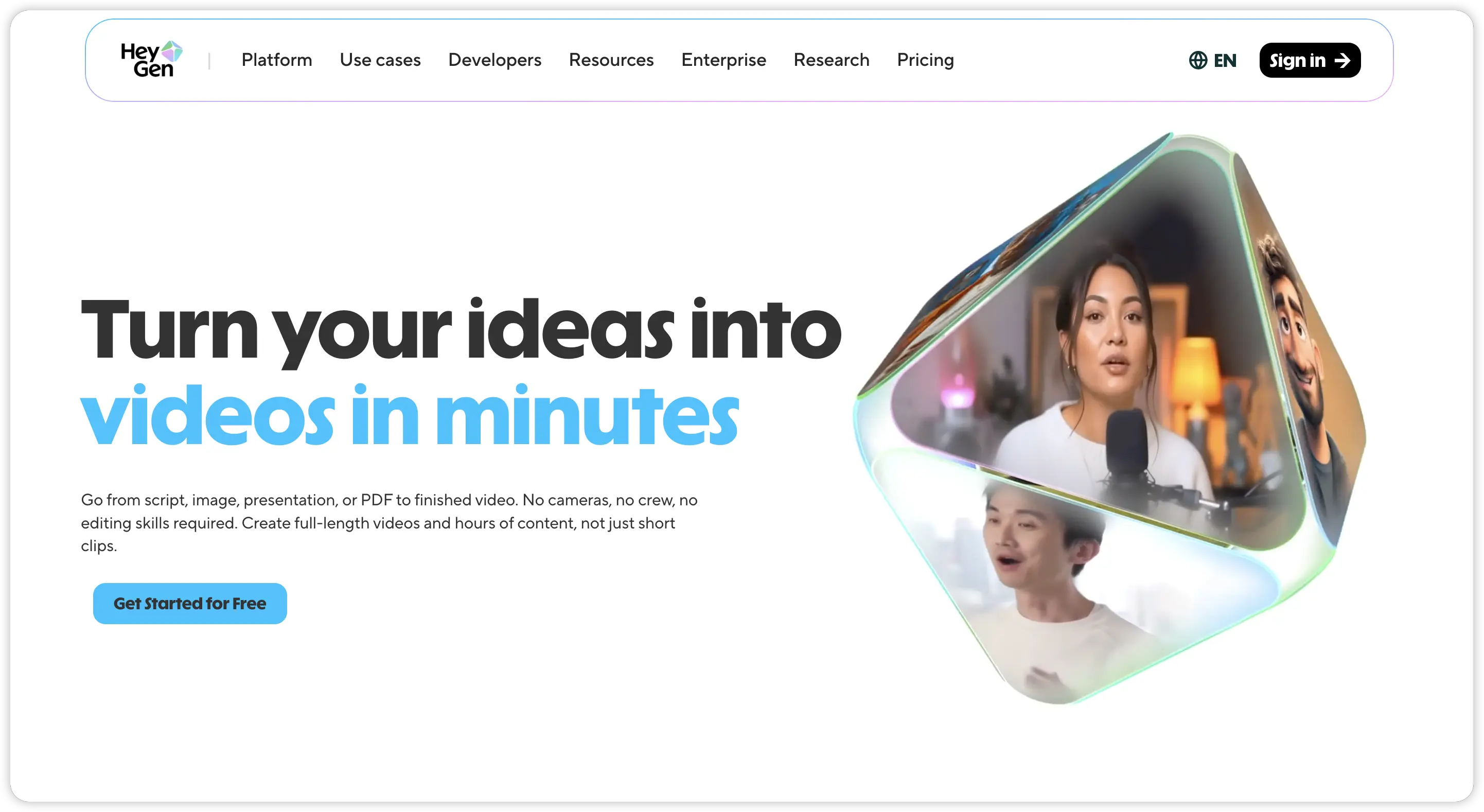
- Third-party reviewers consistently describe HeyGen's avatars (especially its newer avatar engine) as more expressive, with natural head movement, hand gestures, and micro-expressions that read as human in short clips.
- HeyGen's photo avatars let you turn a single selfie or product image into a talking presenter in minutes, which nothing on Synthesia's lower tiers matches for speed.
- Synthesia's avatars are extremely polished but slightly more "newsreader" in delivery. That is not an accident: for a 15-minute compliance module, a calm, consistent presenter is a feature, not a flaw.
- Several reviews note Synthesia holds up better across longer videos, where HeyGen's expressiveness can occasionally drift.
If your videos are 30-90 second social clips, HeyGen's realism advantage is visible. If they are 10-minute training modules, the gap narrows to nearly nothing.
Languages and Voice Cloning: Who Speaks More of Them?
Winner: HeyGen, mostly.
- HeyGen supports 175+ languages and dialects on paid plans (around 30 on the free tier), and its one-click video translation, which re-lips your existing footage into another language, is arguably its single most famous feature.
- Synthesia supports 160+ languages, which is more than enough for almost any localization plan, and its cloned voices can speak roughly 32 languages.
- Voice cloning access is the real gap: HeyGen offers it on accessible paid tiers, while Synthesia gates voice cloning behind its Enterprise plan.
- Concession to Synthesia: its text-to-speech voices are widely praised for clarity and neutral professional tone, which matters more than raw language count for training content.
Templates and Editing: Which Is Easier to Produce With?
Winner: tie, split by use case.
- Synthesia ships 200+ templates shaped like corporate deliverables: onboarding modules, product walkthroughs, policy explainers, and course structures with scenes and chapters. Its editor feels like building slides, which L&D teams pick up in under an hour.
- HeyGen's template library skews toward ads, social formats, and UGC-style content, with faster paths from script to vertical video.
- HeyGen also offers an AI script assistant and URL-to-video style flows for marketing pages.
- Synthesia counters with SCORM export and LMS-friendly output, which HeyGen does not treat as a first-class citizen.
If the deliverable is a course, Synthesia's editor is genuinely better. If the deliverable is a TikTok ad or a sales outreach clip, HeyGen gets you there faster.
Pricing: Which Is Cheaper per Finished Minute?
Winner: Synthesia at the entry level, with a big caveat about models.
The two platforms price differently, and this matters more than the sticker numbers:
- HeyGen sells credits. The Creator plan starts around $29/month, and premium avatar generation consumes credits per minute of output, so your effective cost depends on which avatar engine you use.
- Synthesia sells minutes. Starter runs about $18-29/month for 10 minutes of video, and Creator about $64-89/month for 30 minutes, so budgeting is direct: you know exactly what a minute costs.
- Reviews that ran the math put Synthesia roughly 15-25% cheaper per finished avatar minute at entry tiers, largely because the per-minute model has no conversion step.
- Concession to HeyGen: for teams making lots of short clips with standard avatars, HeyGen's credits can stretch further than Synthesia's hard minute caps, and its free tier is more usable for testing.
Both platforms push serious users toward custom Enterprise pricing, where volume discounts make published numbers less meaningful.
API and Integrations: Which Is Better for Developers?
Winner: HeyGen.
- HeyGen's public API is one of the most-used avatar video APIs, with straightforward endpoints for generating videos programmatically, and it powers a large ecosystem of third-party apps.
- Synthesia offers API access from its Creator tier, but the API is positioned as a companion to the platform rather than the product itself.
- For no-code users, both connect to Zapier-style automation; HeyGen's integrations skew toward marketing stacks, Synthesia's toward LMS and knowledge tools.
Enterprise and Security: Who Do Procurement Teams Prefer?
Winner: Synthesia, clearly.
- Synthesia is SOC 2 Type II compliant and certified for ISO/IEC 27001, 27701, and 42001 (the AI management standard), with SAML/SSO, granular workspace roles, and SCORM export on Enterprise.
- Its consent-based avatar creation process and published AI governance stance make it the easier vendor to get through security review at a large company.
- HeyGen has grown its enterprise offering (SSO, brand kits, team workspaces), but its compliance story is thinner on paper, and reviewers still frame it as creator-first.
This is the dimension where the two products' DNA is most visible: Synthesia was built to be bought by IT departments; HeyGen was built to be adopted by individual marketers.
Where Each One Falls Short
HeyGen's weak spots:
- Credit-based pricing is hard to forecast, and premium avatar minutes get expensive fast.
- Thinner enterprise compliance certifications than Synthesia.
- Template library is weaker for structured training and course content.
If those are dealbreakers, it is worth scanning the best HeyGen alternatives before committing to a plan.
Synthesia's weak spots:
- Avatars are less expressive and can feel corporate-stiff in short social clips.
- Voice cloning locked to Enterprise.
- Hard monthly minute caps on lower tiers; 10 minutes on Starter disappears quickly.
- Smaller stock avatar library at entry tiers.
If minute caps or Enterprise-only cloning are the sticking points, the best Synthesia alternatives cover more flexible options.
Verdict: Choose HeyGen if / Choose Synthesia if
Choose HeyGen if:
- You make marketing, sales, or social video where avatar expressiveness is the point.
- You need video translation or voice cloning without an Enterprise contract.
- You want to build on an avatar API.
- You produce many short clips rather than a few long ones.
Choose Synthesia if:
- You produce training, onboarding, or compliance video at scale.
- Your procurement team needs SOC 2, ISO certifications, SSO, and SCORM.
- You want predictable per-minute budgeting.
- Your videos are longer and consistency beats flash.
One-sentence verdict: HeyGen wins on avatar realism, languages, and developer access; Synthesia wins on enterprise trust, pricing predictability, and structured training content.
A Third Option: What If You Don't Need a Talking Head at All?
Here is the question worth asking before you pick either: does your video actually need an avatar presenter?
HeyGen and Synthesia are both excellent at one specific format, a person on screen reading a script. But a lot of the videos teams actually ship, product promos, social ads, explainers with motion and scenes, feature announcements, do not want a talking head at all. They want footage, motion, music, and text working together.
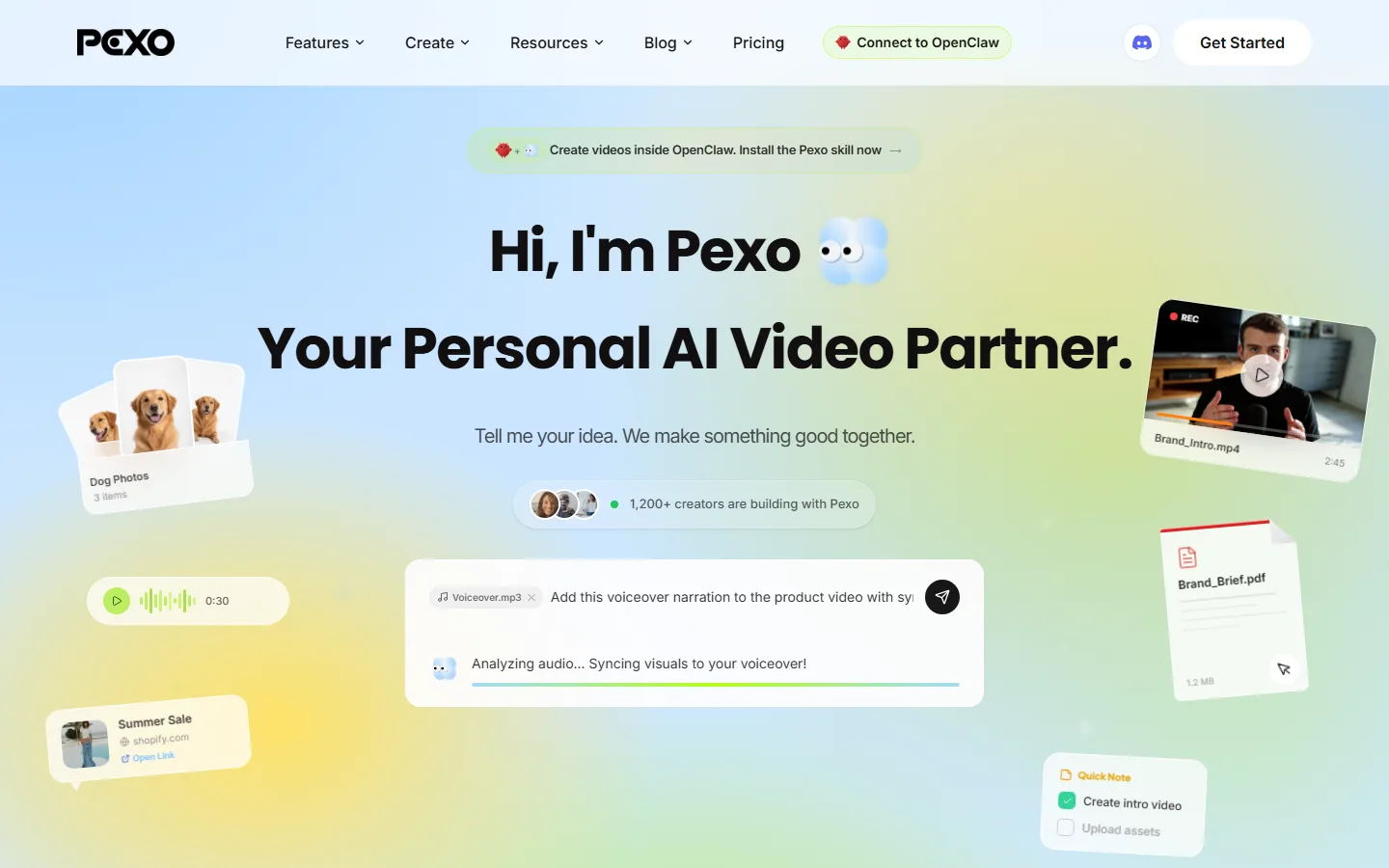
That is a different job, and it is where conversation-driven AI video comes in. Pexo is an AI video partner: instead of picking an avatar and pasting a script, you describe the video you want in a chat, from a text idea, an image, or a product URL, and Pexo plans the scenes, generates the visuals, and delivers a finished video you can revise by just saying what to change.
To be honest about the trade: if you specifically need a consistent human presenter delivering compliance training in 40 languages, HeyGen or Synthesia is the right category and Pexo is not trying to replace them. But if you landed on this comparison because you need finished marketing, social, or explainer videos and assumed an avatar platform was the only AI route, the conversational route is often faster and more flexible, no avatar licensing, no per-minute caps tied to a presenter, and no script-reading format constraint.
Conclusion
HeyGen vs Synthesia is not a question with one winner. HeyGen is the creator's choice: more expressive avatars, more languages, easier voice cloning, and a developer-friendly API. Synthesia is the enterprise's choice: certified security, SCORM-ready training output, and pricing you can put in a budget spreadsheet. Match the platform to the job, short-form marketing points to HeyGen, structured corporate video points to Synthesia. If you want to see how these two stack up against the wider field, this AI avatar platforms comparison goes broader. And if the job is finished videos rather than talking heads, try describing what you want to Pexo and see how far one conversation gets you.