
 ChatGPT
 Perplexity
 Claude
 Gemini
 Grok
Grok


Vibe Creating Examples: From Description to Finished Video
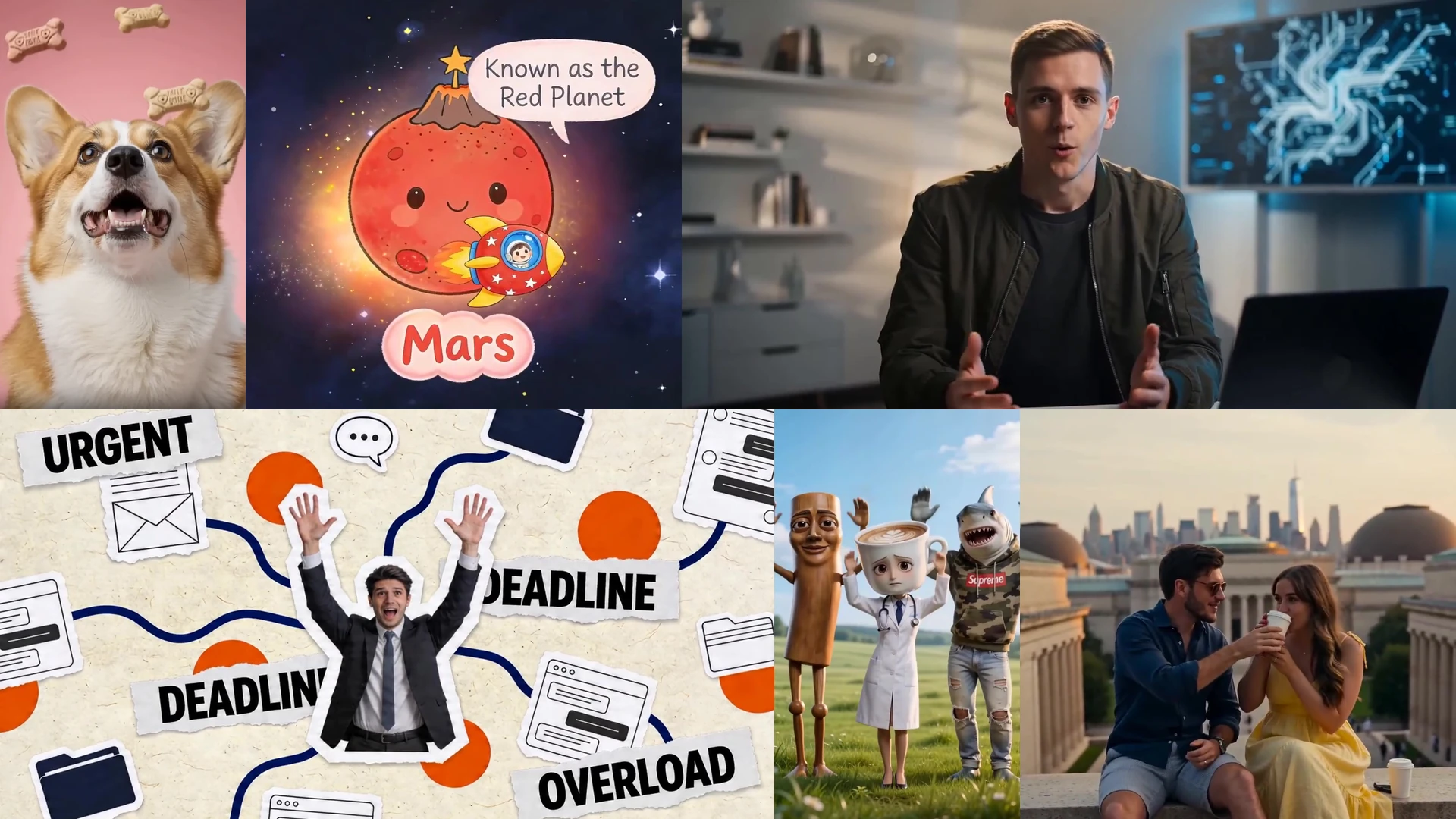
Vibe creating examples show what happens when creators describe a video in plain language and let an AI video agent produce the result. The concept borrows from vibe coding, where developers describe software behavior instead of writing syntax. In video production, the same idea applies: you skip the editing timeline, the stock footage search, and the export settings. You describe a scene, a mood, a purpose. The AI video agent handles the rest. Pexo is one AI video agent built around this workflow, working with models like Seedance 2.0, Kling AI, and more to turn conversational descriptions into finished clips. This article walks through nine concrete examples across different video types, each with the prompt used, the output produced, and the patterns that separate a strong description from a weak one.
For a deeper look at what vibe creating actually is and where it came from, see what is vibe creating.
What Vibe Creating Looks Like in Practice
Traditional video production follows a rigid sequence: scriptwriting, storyboarding, filming, editing on a timeline, adding music, exporting. Vibe creating compresses this into a single conversation. The creator describes the video. The AI video agent interprets intent, selects a model, generates visuals, layers audio, and delivers a finished clip. The creator stays in the director's chair. The agent does the production work.
| Traditional production | Vibe creating |
|---|---|
| Script, storyboard, film, edit, export | Describe, review, refine, publish |
| Requires editing software skills | Requires clarity about what you want |
| Hours to days per video | Minutes per video |
| Multiple tools and handoffs | One conversation |
9 Vibe Creating Examples
1. Product Demo Video
Scenario: A DTC skincare brand needs a 15-second product demo for a new serum. No studio, no videographer, no editing software.
Prompt used: "Make a 15-second product demo for a hydrating face serum. Show the bottle on a clean marble surface, close-up of the dropper, then someone applying it. Soft lighting, minimal text overlay with the product name."
What came out: A three-scene clip with smooth transitions between the product shot, the dropper close-up, and the application scene. Background music matched the calm, beauty-brand tone. Text appeared on the final frame with the product name. No post-editing needed.
2. Instagram Reel
Scenario: A fitness creator wants a 30-second Instagram Reel about morning routines, aesthetic enough to match their feed.
Prompt used: "30-second Instagram Reel about morning routines. Aesthetic, warm tones, lo-fi music. Show someone stretching, making coffee, journaling. End with a motivational text card."
What came out: Four scenes with warm color grading, a lo-fi background track, and a closing text card. The pacing matched the short-form rhythm Instagram audiences expect. Vertical 9:16, ready to upload.
3. Explainer Video
Scenario: A SaaS company needs a 60-second explainer for how their project management app works. They have a product page URL but no video production team.
Prompt used: "60-second explainer video for a project management app. Pull context from this URL: [product page link]. Show the problem of scattered tasks, then how the app centralizes everything. Clean, modern animation style. Voiceover tone: friendly and clear."
What came out: An animated explainer with a problem-solution structure. The agent referenced the product page to pull features and terminology. Voiceover narrated the workflow over clean motion graphics, with three audio layers: voiceover, background music, and sound effects.
4. Testimonial-Style Video
Scenario: A freelance consultant wants a video that captures the feeling of a client testimonial without filming an actual interview. The goal is social proof for LinkedIn.
Prompt used: "Create a 20-second testimonial-style video. Quote: 'Working with Sarah transformed our content strategy in two weeks.' Show text appearing over a professional office background. Subtle, corporate feel. End with a logo placeholder."
What came out: A text-on-screen testimonial with a blurred office background and a quote animation that revealed words progressively. Corporate color palette. The format communicated credibility without a recorded interview.
5. E-Commerce Product Spot
Scenario: An online store selling handmade candles needs a short video ad for a seasonal collection. Budget for production: zero.
Prompt used: "15-second e-commerce ad for a winter candle collection. Show three candles in cozy settings, warm lighting, maybe a fireplace in the background. Text overlay: 'Winter Collection Now Available.' Feels premium but approachable."
What came out: Three product-in-context scenes with different cozy settings. Warm color temperature throughout. The text overlay faded in cleanly. Background audio layered soft crackling fire sounds under gentle music.
6. Event Promo
Scenario: A community organizer needs a promo video for a local tech meetup. They have a date, a venue name, and a speaker list, but no design or video skills.
Prompt used: "30-second event promo for TechMeet Austin, June 15, 2026. Three speakers: Dr. Chen on AI ethics, Marcus Rivera on startup ops, Priya Shah on product design. Show speaker name cards with a modern tech conference vibe. End with RSVP call to action."
What came out: A fast-paced promo with speaker name cards over abstract tech-themed backgrounds. The closing frame showed the event date, venue, and RSVP text. Upbeat background music.
7. Tutorial Walkthrough
Scenario: A small marketing agency wants to show clients how to use a social scheduling dashboard. Instead of recording a screen share, they want a polished explainer.
Prompt used: "45-second tutorial showing how to schedule a social media post. Step 1: open the dashboard. Step 2: write your caption. Step 3: pick a date and time. Step 4: hit publish. Clean UI style, step numbers visible, calm voiceover."
What came out: A four-step tutorial with numbered indicators, UI-style animation for each action, and a voiceover narrating each step. Pacing gave viewers enough time to absorb each step.
8. Brand Story
Scenario: A small coffee roaster wants a 45-second brand story video for their website homepage. They have strong opinions about tone (artisanal, not corporate) but no footage.
Prompt used: "45-second brand story for a small-batch coffee roaster. Show the journey from beans on a farm to roasting in a small workshop to a cup being poured. Warm, earthy tones. No voiceover, just ambient sounds and music. Text cards between scenes: 'Sourced with care. Roasted by hand. Brewed for you.'"
What came out: A cinematic three-act sequence following the bean-to-cup journey. Text cards appeared between transitions. Audio layered ambient farm sounds, roasting noise, and pouring sounds under acoustic guitar. No voiceover, as requested.
9. Social Ad
Scenario: A mobile app startup needs a 10-second TikTok ad that grabs attention fast. Their differentiator: the app finds parking spots using real-time satellite data.
Prompt used: "10-second TikTok ad for a parking app. Open with someone circling a parking lot, frustrated. Quick cut to the app screen showing a green dot. Final shot: car pulling into the spot. Fast pace, bold text: 'Stop circling. Start parking.' Energetic music."
What came out: A three-shot sequence with fast cuts, bold text overlay, and an energetic electronic track. The frustration-to-solution arc fit the 10-second format. Vertical 9:16, ready for TikTok.
Here is a summary of all nine examples at a glance.
| # | Type | Length | Input | Key prompt element |
|---|---|---|---|---|
| 1 | Product demo | 15s | Text + image reference | Scene-by-scene structure |
| 2 | Instagram Reel | 30s | Text | Mood + aesthetic direction |
| 3 | Explainer | 60s | URL + text | Problem-solution arc |
| 4 | Testimonial-style | 20s | Text quote | Tone + format direction |
| 5 | E-commerce spot | 15s | Text | Setting + sensory detail |
| 6 | Event promo | 30s | Text (speaker data) | Structured information |
| 7 | Tutorial | 45s | Text (step list) | Numbered steps + UI style |
| 8 | Brand story | 45s | Text | Narrative arc + audio direction |
| 9 | Social ad | 10s | Text | Fast pacing + platform context |
Patterns Across All Examples
Several patterns emerge in what makes a vibe creating prompt work well.
| Pattern | What it means | Examples that show it |
|---|---|---|
| Specificity on mood and tone | Naming a visual style ("warm tones," "corporate feel") gives the agent clear creative direction | #2 Instagram Reel, #5 E-Commerce, #8 Brand Story |
| Scene-level structure | Describing scenes in order helps the agent build narrative flow | #1 Product Demo, #6 Event Promo, #9 Social Ad |
| Audio direction | Mentioning music style, ambient sounds, or voiceover tone shapes the full sensory output | #3 Explainer, #5 E-Commerce, #8 Brand Story |
| Length constraint | Stating the target duration keeps the output tight and platform-appropriate | All 9 examples |
| Text overlay instructions | Specifying what text to show and when prevents the agent from guessing | #4 Testimonial, #6 Event Promo, #9 Social Ad |
| Platform context | Naming the destination (TikTok, Instagram, LinkedIn) sets aspect ratio and pacing expectations | #2, #4, #9 |
For more guidance on writing effective prompts, see vibe creating prompts.
Common Prompt Mistakes
The quality of the output depends on the quality of the description. Here are the most common mistakes.
| Mistake | Why it hurts | Better approach |
|---|---|---|
| Too vague ("make a cool video") | The agent has no creative constraints to work within | Name the purpose, audience, and at least one visual detail |
| Over-specifying every frame | Removes the agent's ability to make creative decisions | Describe the arc and mood; let the agent fill transitions |
| Forgetting audio direction | Results in generic background music that does not match the tone | Name a genre, mood, or reference ("lo-fi," "upbeat," "cinematic") |
| No length specified | The agent guesses, often too long or too short for the platform | Always state the target duration in seconds |
| Ignoring the destination platform | A horizontal video for TikTok wastes the creator's time | Name where the video will be posted |
These mistakes are failures of description, not technology. For a broader set of best practices, see vibe creating best practices. To try the workflow yourself, see vibe creating with Pexo.
Conclusion
These nine vibe creating examples show a consistent pattern: when a creator describes a video with enough specificity about mood, structure, length, and platform, an AI video agent produces a finished clip without editing, filming, or technical skill. The prompt is the creative brief. The conversation is the production process. Pexo brings this workflow together by working with Seedance 2.0, Kling AI, and more, handling model selection, audio design, and visual composition through a single conversation.