
 ChatGPT
 Perplexity
 Claude
 Gemini
 Grok
Grok


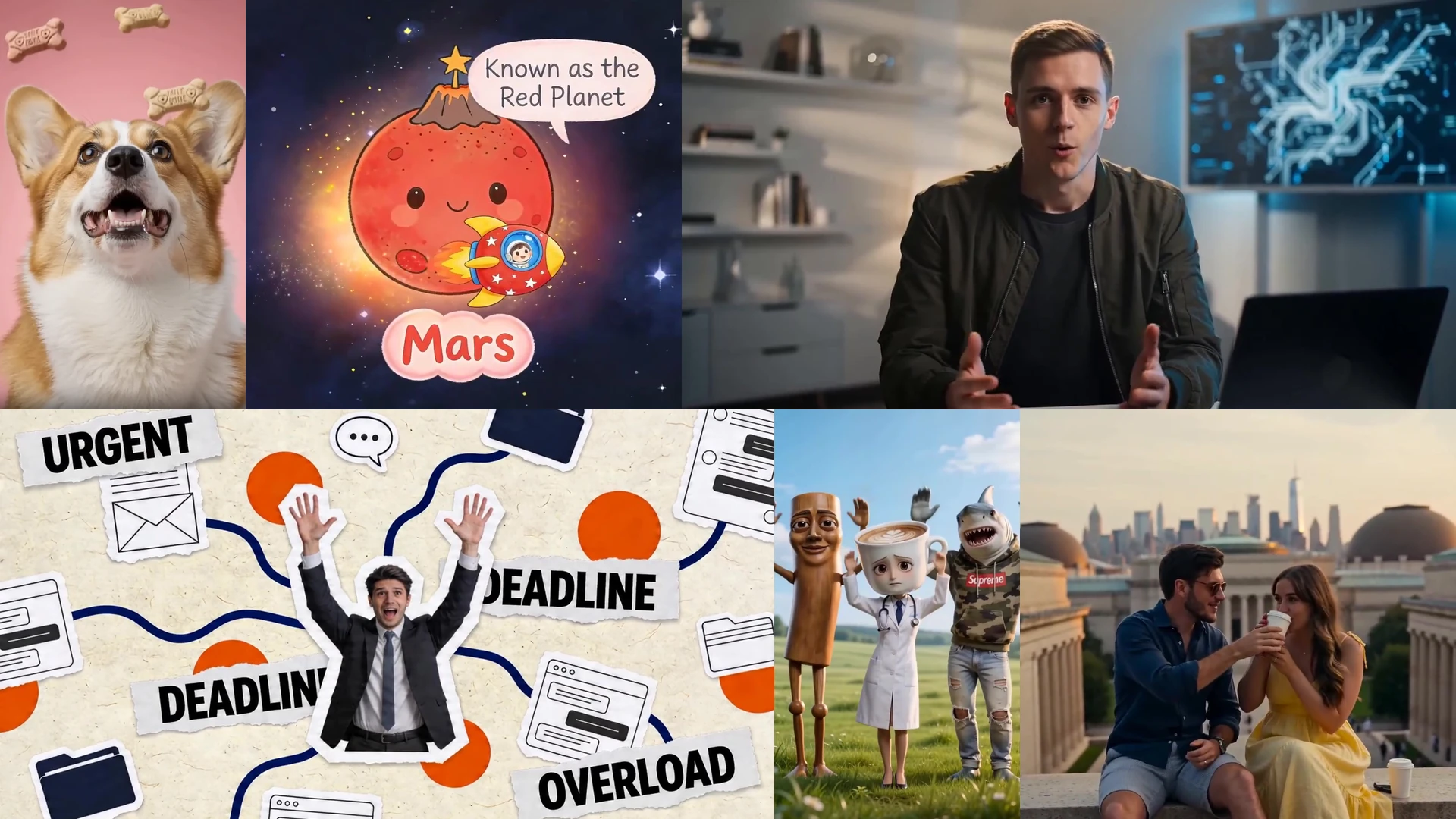
Vibe creating with Pexo means opening a conversation, describing the video you want in plain language, and letting Pexo's AI video agent handle model selection, scene composition, and rendering. Instead of learning Adobe Premiere Pro, wrestling with After Effects keyframes, or dragging clips across a CapCut timeline, you talk. Pexo works with models like Seedance 2.0, Kling AI, and more, routing each task to the right one automatically. The result is a finished video ready for Instagram, TikTok, YouTube, or any platform you publish to. No scripting. No storyboarding. No editing. Vibe creating is a production method where you describe creative intent in natural language and an AI system handles the technical execution. Andrej Karpathy introduced the concept of "vibe coding" in February 2025, and the same principle now applies to video: focus on the what, not the how. Pexo brings this idea to life for video by replacing the manual pipeline (Canva templates, DaVinci Resolve color grading, After Effects motion graphics) with a single conversation.
What Is Vibe Creating with Pexo
Vibe creating is a shift in how videos get made. Traditional production asks you to learn a tool, master its interface, and operate every step manually. Vibe creating flips that: you describe your vision, and the AI figures out the rest.
With Pexo, this takes a specific shape. You open a chat, type or say what you want ("a 15-second product teaser for my candle brand, warm tones, no voiceover"), and Pexo interprets your intent. It selects the right AI model, composes scenes, applies pacing and music, and delivers a polished clip. You stay in the director's seat while Pexo handles the crew work.
| Traditional Video Production | Vibe Creating with Pexo |
|---|---|
| Write a script, storyboard, film, edit | Describe what you want in one message |
| Learn timeline editing (Premiere, DaVinci) | No timeline, no editing interface |
| Choose models, settings, export formats | Pexo picks the best model automatically |
| Multiple apps for music, graphics, captions | One conversation covers everything |
This is not a template system where you swap out placeholder text. Pexo generates original footage, assembles scenes, layers audio (voiceover, background music, sound effects), and delivers a video that matches your description.
How Pexo Handles Your Creative Direction
When you describe a video, Pexo does three things behind the scenes.
First, it interprets your intent. Even a vague description like "something cinematic about coffee" gives Pexo enough to propose a direction. It asks clarifying questions when needed, suggests angles you might not have considered, and shows you a plan before producing anything.
Second, it selects the right model. Pexo works with Seedance 2.0, Kling AI, and more. Each model has different strengths. Rather than asking you to research which model handles product shots versus which handles animated styles, Pexo routes automatically.
Third, it produces a complete video. Not a single 5-second clip you need to stitch together elsewhere. A finished piece with transitions, pacing, and a soundtrack.
| What You Say | What Pexo Does |
|---|---|
| "30-second Instagram Reel about morning routines" | Selects style, composes 6 scenes, adds lo-fi music, delivers vertical video |
| "Product ad for my sneaker brand, energetic, 15 seconds" | Picks a fast-paced model, generates dynamic transitions, matches brand tone |
| "Explainer video for how our SaaS onboarding works" | Structures a walkthrough with text overlays and clear narration |
You can redirect at any point. Say "make the intro shorter" or "switch to a warmer color palette" and Pexo adjusts without starting over. This back-and-forth is what separates vibe creating from a one-shot generator.
Step-by-Step Walkthrough
Step 1: Open a Conversation
Go to pexo.ai or access Pexo through Slack, Lark, WhatsApp, or other platforms where it is integrated. No downloads, no new accounts for each session.
Step 2: Describe Your Video
Type what you want. Be as detailed or as loose as you like. "A 20-second birthday greeting with confetti and upbeat music" works. So does "something fun for my friend's birthday." Pexo fills in the gaps.
Step 3: Review the Plan
Pexo shows you a creative direction before rendering. You see the proposed scenes, style, and pacing. Approve it, tweak it, or redirect entirely.
Step 4: Get Your Video
Pexo renders the final video. Download it, share it directly to social platforms, or keep iterating until it matches your vision.
Step 5: Refine If Needed
Point at any part of the video and describe the change. "Make the text bigger in scene 3" or "swap the background music for something more upbeat." No re-editing from scratch.
What You Can Make
Vibe creating with Pexo covers a wide range of video types. Here are the most common use cases.
| Use Case | Example Prompt | Best For |
|---|---|---|
| Product ads | "15-second TikTok ad for my skincare serum, close-up shots, clean aesthetic" | E-commerce sellers, DTC brands |
| Social content | "Instagram Reel about productivity tips, fast cuts, text overlays" | Creators, social media managers |
| Explainer videos | "60-second explainer for our project management app" | SaaS companies, educators |
| Birthday/greeting videos | "Fun birthday video for my coworker who loves hiking" | Anyone celebrating a personal moment |
| Brand stories | "1-minute brand story about our sustainable clothing line" | Startups, small businesses |
| Short films | "Animated short about a robot learning to paint, Pixar style" | Filmmakers, students, hobbyists |
Pexo also supports text-to-video, image-to-video, script-to-video, and URL-to-video workflows. Feed it a product page URL, and it pulls the content to build a video around. Give it a photo, and it animates the scene.
Tips for Better Results
Vibe creating works best when you give Pexo something to work with. Here are practical ways to improve your output.
Be specific about mood and tone. "Energetic and colorful" gives Pexo more to work with than "make it good." Mention a reference: "like an Apple product launch" is a useful anchor.
Mention the platform. Say "for TikTok" or "for a YouTube intro." Pexo adjusts aspect ratio, pacing, and length automatically.
Iterate in the conversation. Describe what you would change. Pexo adapts without losing the context of what you already built. For more ideas, see our vibe creating prompts guide.
Use images and URLs as starting points. Upload a product photo or paste a webpage link. Pexo builds a video around existing assets, not just text.
| Tip | Why It Works |
|---|---|
| Name the platform (TikTok, YouTube, Instagram) | Pexo auto-adjusts format, length, and pacing |
| Describe the mood ("cinematic," "playful," "minimal") | Narrows the creative direction immediately |
| Reference a style ("like a Nike ad," "Studio Ghibli vibe") | Gives Pexo a concrete creative anchor |
| Upload a photo or product URL | Grounds the video in real assets, not just imagination |
Limitations to Know
Vibe creating with Pexo is powerful, but it has boundaries worth knowing upfront.
Pexo generates video from scratch. It does not edit, trim, or repurpose footage you already have. If you need to cut a 30-minute webinar into clips, that is a different job (tools like OpusClip handle that). Pexo's strength is creating new video from text, images, URLs, and audio inputs.
Text rendering in generated video can occasionally show artifacts. This is an active area of improvement across AI video models, not unique to Pexo.
Pexo operates on a credit-based model. Generation is not unlimited. Plan your iterations accordingly, especially for longer or more complex videos.
For a broader look at what vibe creating means beyond Pexo, read What Is Vibe Creating.
Conclusion
Vibe creating with Pexo replaces the traditional video production pipeline with a conversation. You describe what you want, Pexo interprets your intent, selects the best AI model, and delivers a finished video. No scripts, no timelines, no editing skills required.
Whether you are making a product ad, a social clip, or an explainer, the workflow is the same: talk to your AI video agent, shape what comes back, and ship it. Read our vibe creating best practices to get started.