 ChatGPT
 Perplexity
 Claude
 Gemini
 Grok
Grok

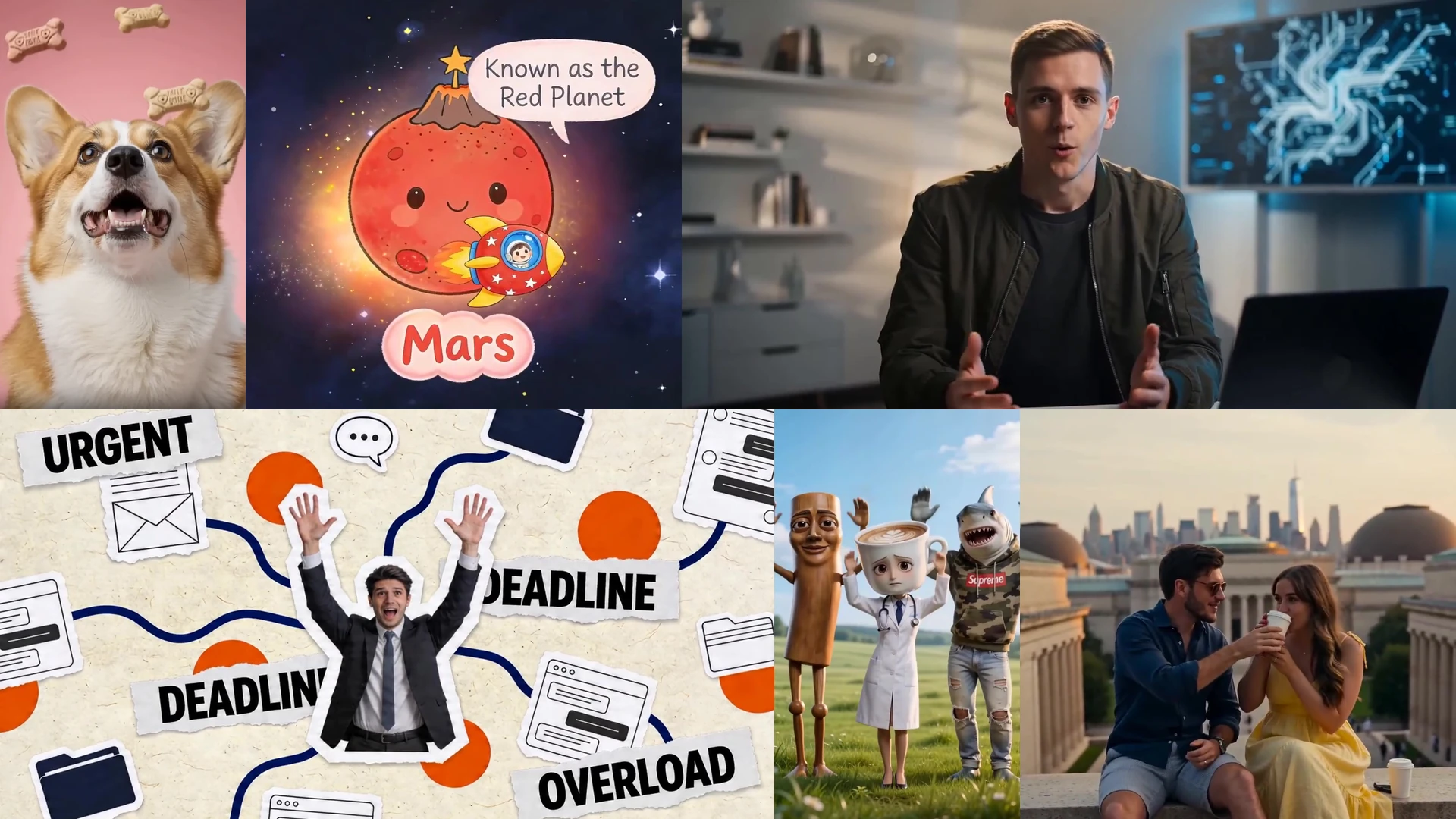
Vibe filming is the practice of producing video footage by describing a scene in plain language and letting an AI model generate the shots, so the camera, crew, location, and lighting rig of physical production give way to a written description. Instead of booking a shoot, a creator types or speaks what a shot should look like (for example "a slow push-in on a ceramic mug steaming on a rainy windowsill") and a text-to-video model renders footage-like frames from that intent. The term extends vibe coding, which computer scientist Andrej Karpathy named on February 2, 2025, for building software by describing behavior instead of writing syntax. Where vibe coding turns a description into working code, vibe filming turns a description into moving images, no camera required. Models such as Google Veo, OpenAI Sora, Runway Gen-4, Kling, and Seedance make this credible today, and conversational agents like Pexo fold the describe-and-generate loop into a single conversation.
Vibe filming belongs to a small family of "vibe" terms that spread from the same root idea, describing intent and letting AI execute. Vibe coding covers software. Vibe scripting covers writing the script or shot plan for a video. Vibe filming covers the production step itself, the act of generating the actual shots. It sits next to directing (steering camera moves, pacing, and coverage) but is narrower, the moment where a description becomes footage rather than the moment where footage gets shaped into a cut.
What Vibe Filming Actually Is
Vibe filming replaces the physical apparatus of shooting with a language interface. Traditional production converts a creative idea into footage through hardware and labor, a camera, a lens kit, lights, a location, and a crew who operate all of it. Vibe filming converts the same idea into footage through a text-to-video model, where the "camera" is a prompt and the "shoot" is an inference run. The output is generated imagery that resembles filmed footage, not a recording of anything that physically happened in front of a lens.
It helps to separate vibe filming from two neighbors it gets confused with. It is not screen recording or stock-clip assembly, where existing footage is captured or licensed and then arranged. And it is not simply "using an AI video app" for one clip, the way running a single autocomplete is not vibe coding. Vibe filming is the paradigm in which the primary path from idea to shot runs through description, and iteration happens by rewriting the description rather than by resetting a camera. The creator's precision with language, not their command of a camera, becomes the craft that decides the result.
The distinction from real cinematography matters for honesty. An AI model does not point a lens at a subject, so vibe filming produces a plausible visual interpretation of a description, not documentary truth. That makes it powerful for imagined scenes, product concepts, and stylized storytelling, and unsuitable for anything that must faithfully record a real event, a real person, or a real place as it actually is.
How Vibe Filming Works
The workflow has a repeatable shape regardless of which model sits underneath it.
Describe. The creator states the shot in plain language, the subject, the setting, the mood, the camera behavior (a static wide, a slow dolly, a handheld follow), and any style reference. No lighting plan or lens choice is required to start, though naming those cues in words often improves the result.
Generate. A text-to-video model reads the description and synthesizes a short clip frame by frame, usually built on a diffusion or transformer architecture that models space and time together. Most models return a single continuous shot of a few seconds rather than a full scene.
Review. The creator watches the generated clip and judges it by outcome, does it read as the intended shot, rather than by inspecting settings. Weak results trace back to a vague description far more often than to the model.
Reroll or refine. The creator rewrites the prompt, adjusts a style cue, or regenerates for a different take, then repeats. Assembling a finished piece means generating several shots this way and sequencing them, since one generation rarely produces a whole scene.
Because a single clip is short and self-contained, vibe filming is naturally shot-by-shot. A creator builds coverage the way an editor thinks, one described beat at a time, then cuts the generated shots together into a sequence.
Traditional Filming vs Vibe Filming
The two approaches reach the same deliverable, moving images, through opposite means. Traditional filming manages cost and risk through planning, scheduling, and physical control on set. Vibe filming manages them through fast iteration, regenerating a shot until the description and the output agree.
| Dimension | Traditional filming | Vibe filming |
|---|---|---|
| Primary interface | Camera, lenses, and lighting operated by a crew | A plain-language description read by an AI model |
| What the "shot" is | A recording of a real subject in front of a lens | Generated frames that resemble footage, from a prompt |
| Cost drivers | Crew, gear rental, location, talent, travel | Software subscriptions and generation credits |
| Time to a first shot | Hours to days, including setup and scheduling | Seconds to minutes per generation |
| How you iterate | Reset the scene and shoot another take | Rewrite the description and regenerate |
| Best suited for | Documentary truth, real people and places, live events | Imagined scenes, concepts, stylized and product visuals |
| Main limitation | Cost and logistics of physical production | Shot length, control precision, and factual fidelity |
The exact savings vary widely by project and are hard to pin to one honest number, but the direction is structural rather than marketing spin: crew, gear rental, location, and travel are line items that a subscription and a generation credit simply replace rather than discount.
What Vibe Filming Can and Can't Do
The paradigm is strong at some things and structurally weak at others, and a definition that hides the weak side is a sales pitch, not an explanation. The clearest current constraint is shot length. Most single-pass AI video models cap a continuous shot at roughly 5 to 10 seconds in 2026, because temporal consistency degrades as the frame count grows and characters, lighting, and layout drift over hundreds of frames. Audio has improved fast: models including Google Veo, OpenAI Sora, and Kling now generate synchronized audio natively, a capability that was largely absent from the category in early 2025, though quality still varies by model.
| Capability | Where vibe filming is strong | Where it struggles |
|---|---|---|
| Shot generation | Producing a short, stylized, or imagined shot from a description | Long continuous takes beyond roughly 5 to 10 seconds |
| Consistency | A single self-contained clip | Keeping a character or set identical across many shots |
| Control | Broad mood, subject, and camera behavior | Frame-exact choreography and precise on-screen text |
| Cost and speed | Fast, cheap iteration with no crew | Heavy rerolling when a description is vague |
| Fidelity | Convincing interpretation of an idea | Faithfully recording a real event, person, or place |
| Audio | Increasingly native music, effects, and voice | Uniform quality across every model and scene |
The practical read is that vibe filming excels at the imagined and the stylized and at fast, low-stakes iteration, and it is the wrong tool when a project needs long unbroken takes, exact continuity across a cast, or the documentary truth of a real camera. Treating a generated shot as a fast draft rather than a final frame is the pattern that keeps the paradigm useful.
Where Vibe Filming Fits
The paradigm shows up differently by use case, but a few shapes repeat.
Product and ecommerce visuals. A seller describes a product shot, an unboxing beat, or a lifestyle scene and generates it, skipping the studio, the props, and the reshoot. This is one of the highest-fit uses, because product concepts are imagined scenes rather than events that must be recorded truthfully.
Social and short-form content. Creators generating TikTok, Reels, and YouTube Shorts material lean on vibe filming because short runtimes match the models' shot-length sweet spot, and a described b-roll shot is faster than staging one. Step-by-step guides to making AI videos walk through the describe-and-generate loop.
Concept, mood, and previsualization. Filmmakers and agencies use generated shots to previsualize a look before committing a real budget, treating vibe filming as a fast sketchpad for a scene that may later be shot conventionally.
Explainer and marketing scenes. Teams that need illustrative footage, an abstract motion background, an animated metaphor, a stylized environment, generate it on demand instead of licensing stock or booking a shoot.
Adoption tracks the model race. The 2026 landscape has moved from a couple of credible engines in early 2025 to a dozen frontier models, with Chinese labs including ByteDance, Alibaba, and Kuaishou now shipping models that place near the top of independent text-to-video leaderboards, while OpenAI has announced it will discontinue the Sora app and web experiences in April 2026 and the Sora API later in 2026. The tooling under vibe filming is shifting monthly, which is part of why describing intent, rather than committing to one model's controls, has become the durable skill.
Tools That Enable Vibe Filming
No single tool owns the paradigm. The space splits into raw generation models, editing-oriented studios wrapped around a model, and conversational agents that turn a brief into a finished sequence. A generated shot from any of them is synthesized imagery, not captured footage.
| Tool | Category | How it implements the paradigm |
|---|---|---|
| Google Veo | Text-to-video model | Generates high-fidelity shots from a prompt with strong prompt adherence and native audio, reached through Google's own surfaces |
| OpenAI Sora | Text-to-video model | Popularized narrative text-to-video, with OpenAI winding down the consumer app and API through 2026 |
| Runway | Controllable video studio | Wraps a flagship model in keyframes, motion brush, and camera controls for hands-on shot shaping |
| Kling | Text-to-video model | Offers cinematic motion and a multi-shot storyboard mode with audio sync across cuts |
| Higgsfield | Cinematic generation studio | Focuses on stylized and character-consistent shots across many underlying models |
| Pexo | Conversational AI video agent | You describe the video and the agent generates the shots, then returns a finished edit with three-layer audio (voiceover, music, and Foley sound effects) |
Raw models such as Veo, Sora, and Kling hand back a single clip, which the creator then assembles by hand into a full piece. Studios like Runway add controls for shaping each shot, and roundups of AI video generation tools track how fast the layer shifts. Conversational agents sit at the other end, where you describe the video and an AI video agent handles full video creation, planning the shots, generating them, picking a model automatically, and editing the result into one sequence, the way Pexo does. Each layer trades control for convenience differently, and many creators combine them, generating hero shots in a studio and letting an agent handle the rest.
Getting Started With Vibe Filming
A first pass does not require picking the "best" model from a long list. A few steps get most creators to a usable shot.
- Pick one short, self-contained shot rather than a whole scene, a single described beat is easier to nail than a sprawling sequence and matches the models' short-clip strength.
- Describe the shot the way you would brief a cinematographer, naming the subject, the setting, the mood, and the camera behavior (a static wide, a slow push-in, a handheld follow) rather than just the object.
- Generate a first take and judge it by whether it reads as the shot you pictured, not by any technical setting.
- Reroll and refine by rewriting the description, tightening the weakest cue (lighting, motion, or style) instead of changing everything at once.
- Build a sequence by generating several shots and cutting them together, and reach for a conversational agent if you want the planning, generation, and edit handled in one loop rather than shot by shot.
The skill that compounds is describing a shot precisely enough that the model returns close to your intent on the first or second try, the vibe filming equivalent of writing a clear brief.
Related Reading
- What vibe creating means and how it works
- A text-to-video AI tutorial
- How vibe creating compares to video editing
- The Wikipedia entry on the vibe coding origin term
Resources
| Tool | URL | What it does |
|---|---|---|
| Google Veo | https://deepmind.google/models/veo | Text-to-video model with native audio and high prompt adherence |
| Runway | https://runwayml.com | Controllable video studio with keyframes and camera controls |
| Kling | https://klingai.com | Text-to-video model with multi-shot storyboard and audio sync |
| Higgsfield | https://higgsfield.ai | Cinematic generation studio focused on stylized, consistent shots |
| Pexo | https://pexo.ai | Conversational AI video agent, plain-language brief to finished edited video |
| Meta Vibes | https://ai.meta.com/vibes | Feed for creating and remixing short AI-generated videos |