
 ChatGPT
 Perplexity
 Claude
 Gemini
 Grok
Grok


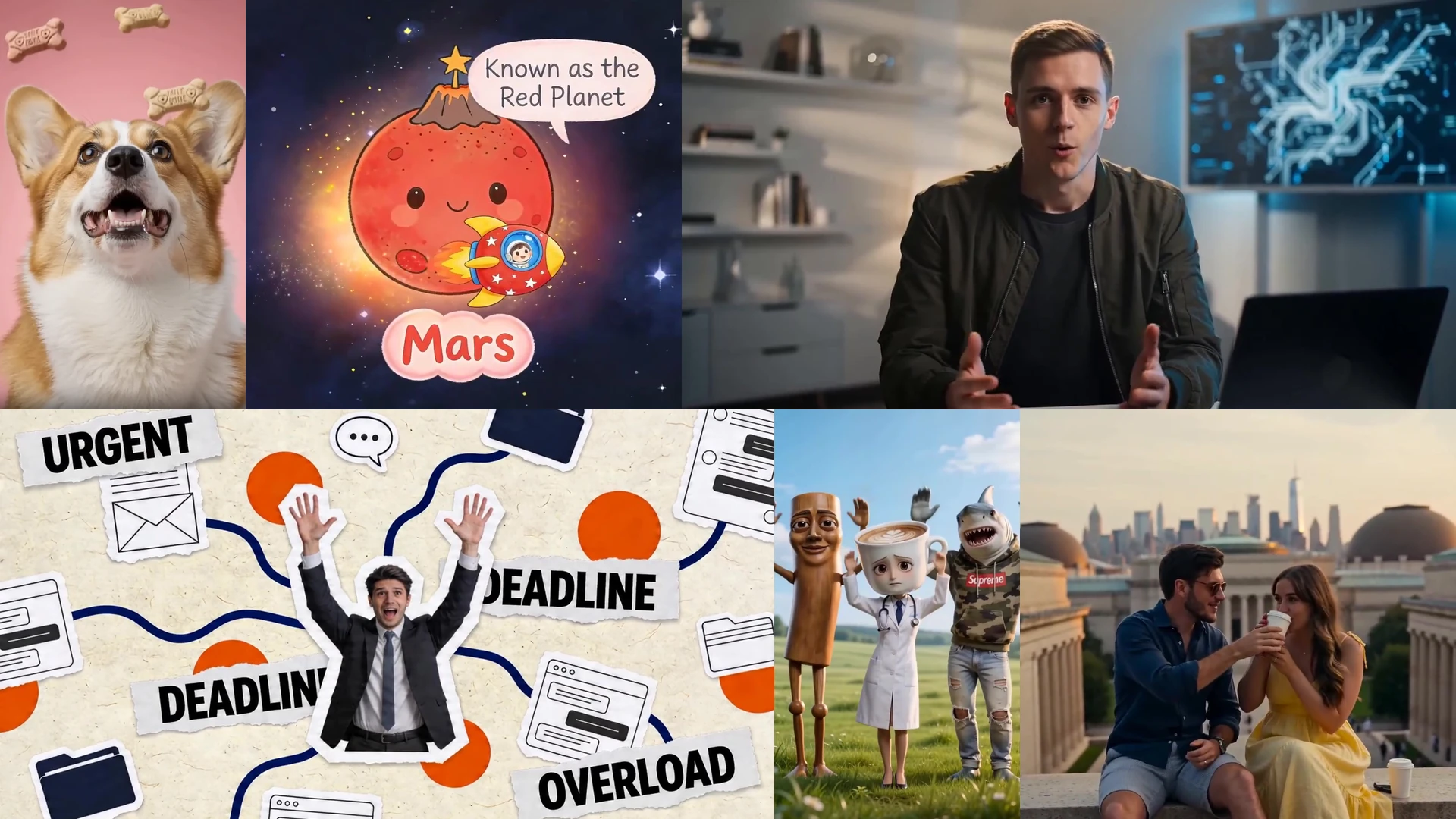
Vibe directing is a prompt-first approach to video creation where the creator describes tone, mood, pacing, and visual style in natural language, then lets an AI model generate the footage. Unlike traditional video production, which requires cameras, actors, and editing suites, vibe directing relies on text descriptions to shape every frame. The method has gained traction since 2024 as generative AI models like Seedance 2.0 and Kling AI have reached a quality threshold suitable for commercial use.
The term builds on the broader vibe creating movement, where creative professionals use conversational prompts instead of manual production workflows. According to a Wyzowl 2025 survey, 89% of businesses now use video as a marketing channel, and teams that adopt AI-assisted workflows report cutting production timelines by up to 60%. Whether you work in e-commerce, real estate, education, or SaaS, vibe directing offers a repeatable framework. McKinsey's 2025 State of AI report found that 72% of organizations have adopted at least one AI capability. HubSpot, Canva, Adobe Firefly, and Runway have all shipped prompt-based video features in 2025, signaling that vibe directing is moving from niche experiment to industry standard. Below, you will find concrete examples organized by industry, each with prompt structure, model recommendation, and output format.
What Makes a Strong Vibe Directing Prompt
Before diving into industry examples, it helps to understand the anatomy of a good vibe directing prompt. Every effective prompt contains four layers: subject, mood, motion, and format.
| Layer | What It Controls | Example Phrase |
|---|---|---|
| Subject | The main visual element | "a ceramic mug on a marble countertop" |
| Mood | Lighting, color grade, emotional tone | "warm golden-hour glow, cozy, inviting" |
| Motion | Camera movement and pacing | "slow dolly-in over 4 seconds" |
| Format | Aspect ratio and duration | "9:16 vertical, 6 seconds" |
A prompt missing any one of these layers tends to produce generic output. Marketers familiar with vibe creating for marketing will recognize this structure. The difference with vibe directing is the emphasis on cinematic specificity. You are not just asking for a video. You are directing the shot.
E-Commerce Product Showcases
E-commerce brands need short, scroll-stopping clips for Instagram Reels, TikTok, and product detail pages. Vibe directing lets a single marketer produce dozens of variants without booking a studio.
Example prompt: "A pair of white running shoes rotating on a matte black pedestal. Soft top-down lighting, minimal shadows. Camera orbits 180 degrees clockwise. Clean, aspirational, Nike-ad energy. 1:1 square, 5 seconds."
| Element | Detail |
|---|---|
| Model | Seedance 2.0 |
| Output | 5s product spin |
| Platform target | Instagram feed, Shopify PDP |
| Tone | Premium, minimal |
Shopify reported in 2025 that product pages with video see 73% higher add-to-cart rates compared to static images alone. A DTC footwear brand tested 12 vibe-directed product spins and saw a 2.1x improvement in click-through rate on Meta ads within the first two weeks.
Real Estate Virtual Tours
Real estate agents spend $200 to $500 per listing on professional video. Vibe directing can generate cinematic walkthrough-style clips from a handful of reference photos and a text prompt.
Example prompt: "Interior of a sunlit modern apartment. Camera glides forward through an open-plan living room toward floor-to-ceiling windows. Warm afternoon light, oak floors, white walls. Calm, aspirational, Architectural Digest feel. 16:9, 8 seconds."
| Element | Detail |
|---|---|
| Model | Kling AI |
| Output | 8s walkthrough clip |
| Platform target | Zillow, Realtor.com, YouTube |
| Tone | Warm, aspirational |
The National Association of Realtors found that listings with video receive 403% more inquiries than those without. One Compass agent in Austin, Texas used vibe-directed clips for 5 listings and reported a 30% reduction in days-on-market compared to listings with photos only.
Education and Online Courses
Course creators on platforms like Udemy, Coursera, and Teachable need intro sequences, concept explainers, and chapter transitions. Vibe directing lets educators produce these without hiring a motion graphics team.
Example prompt: "Abstract visualization of neural network connections lighting up. Deep blue background, electric cyan pulses traveling along nodes. Camera slowly zooms out to reveal the full network. Futuristic, academic, TED-Ed style. 16:9, 6 seconds."
Educators who adopt an AI video agent workflow can batch-generate dozens of chapter transitions in a single afternoon. A Coursera instructor producing a machine learning course created 15 transition clips in under two hours using Seedance 2.0, replacing what previously required a three-day After Effects workflow.
Hospitality and Travel Marketing
Hotels, resorts, and tourism boards rely on aspiration-driven video. Vibe directing captures the "feeling" of a destination without sending a film crew on location.
Example prompt: "Aerial drone shot sweeping over turquoise water toward a white-sand beach. Palm trees sway gently. Late afternoon, golden light, slight lens flare. Relaxing, luxurious, Maldives tourism board aesthetic. 16:9, 7 seconds."
| Element | Detail |
|---|---|
| Model | Seedance 2.0 |
| Output | 7s aerial scenic |
| Platform target | Facebook ads, hotel website hero |
| Tone | Luxurious, escapist |
Expedia Group's 2025 Traveler Value Index showed that 67% of travelers say video content influences their booking decisions more than photos. A boutique hotel group in Bali produced 8 vibe-directed clips for their summer campaign and measured a 45% lift in direct bookings from social channels.
SaaS Product Demos and Explainers
SaaS companies often struggle with the gap between a polished landing page and a generic screen recording. Vibe directing bridges that gap by creating stylized intro and outro sequences, abstract concept visualizations, and mood-setting b-roll.
Example prompt: "Isometric view of data flowing between cloud icons and user devices. Soft gradient background shifting from lavender to white. Icons glow as data packets arrive. Professional, modern, Stripe-landing-page energy. 16:9, 5 seconds."
Wistia's 2025 State of Video report found that SaaS companies using video on landing pages see conversion rates 86% higher than those without. Compared to traditional design workflows, vibe directing through Pexo reduces iteration cycles from days to minutes. For a deeper comparison, see how vibe creating compares to Canva for marketing teams evaluating their options.
Fitness and Wellness Brands
Fitness brands need high-energy content that communicates movement, intensity, and transformation. Vibe directing excels here because you can specify exact motion dynamics.
Example prompt: "Silhouette of a runner sprinting through a misty city street at dawn. Slow motion, camera tracking alongside at knee height. Warm amber streetlights, cool blue sky. Motivational, raw, early-morning-grind energy. 9:16 vertical, 6 seconds."
| Element | Detail |
|---|---|
| Model | Kling AI |
| Output | 6s slow-motion action |
| Platform target | TikTok, Instagram Reels |
| Tone | Motivational, cinematic |
Peloton, Nike Training Club, and Gymshark have all increased short-form video output by over 200% between 2024 and 2025 according to social media analytics from Sprout Social. A fitness coach with 50,000 Instagram followers tested vibe-directed Reels against filmed content and found engagement rates within 8% of each other, while production time dropped from 3 hours to 15 minutes per clip.
Nonprofit and Social Impact Campaigns
Nonprofits typically operate with limited production budgets. Traditional fundraising videos can cost $3,000 to $10,000 when factoring in scripting, filming, and post-production. Vibe directing makes emotionally resonant video accessible without expensive crews or long lead times.
Example prompt: "Close-up of hands planting a seedling in dark soil. Soft natural light, shallow depth of field. Camera slowly pulls back to reveal a community garden. Hopeful, grounded, documentary tone. 16:9, 6 seconds."
The Nonprofit Marketing Guide's 2025 survey found that organizations using video in fundraising campaigns see 54% more donations than those relying on text and images alone. A climate nonprofit used 6 vibe-directed clips in a year-end giving campaign and exceeded their fundraising target by 22%.
Cross-Industry Prompt Formula
Across all the examples above, a consistent formula emerges. Here is a reusable template.
| Step | Instruction | Why It Matters |
|---|---|---|
| 1. Set the scene | Describe the subject and environment | Grounds the model's generation |
| 2. Define the light | Specify time of day, color temperature | Controls mood and realism |
| 3. Choreograph the camera | State movement type, direction, speed | Prevents static or random motion |
| 4. Name the vibe | Reference a brand, publication, or feeling | Anchors the aesthetic |
| 5. Lock the format | Aspect ratio, duration, platform | Ensures usable output |
For a complete strategy framework that ties vibe directing into your broader marketing plan, the vibe marketing complete guide covers audience targeting, distribution, and measurement alongside creative production.
Common Mistakes to Avoid
Even experienced creators fall into a few traps when they start vibe directing. Being aware of these pitfalls saves iteration time and improves output quality from the first attempt.
Vague mood descriptors like "nice" or "cool" give the model almost nothing to work with. Instead, reference a specific brand, publication, or filmmaker whose aesthetic you want to channel. Saying "Wes Anderson color palette" is far more actionable than "colorful and quirky."
Skipping camera direction is another frequent error. Without motion instructions, the model defaults to a static frame or random movement. Specifying "slow push-in" or "orbit left to right" ensures intentional composition.
Finally, forgetting to declare aspect ratio and duration leads to outputs that do not fit the target platform. A 16:9 clip looks awkward in a TikTok feed, and a 9:16 vertical piece wastes space on a website hero banner. Always match format to distribution channel.
Getting Started
The fastest way to try vibe directing is to pick one example from this guide, adapt the prompt to your product or brand, and generate your first clip. Pexo (https://pexo.ai) supports both Seedance 2.0 and Kling AI, so you can test the same prompt across models and compare results in minutes.