
 ChatGPT
 Perplexity
 Claude
 Gemini
 Grok
Grok


Vibe Creating for Marketers: How Conversation-Driven Video Changes Campaign Work
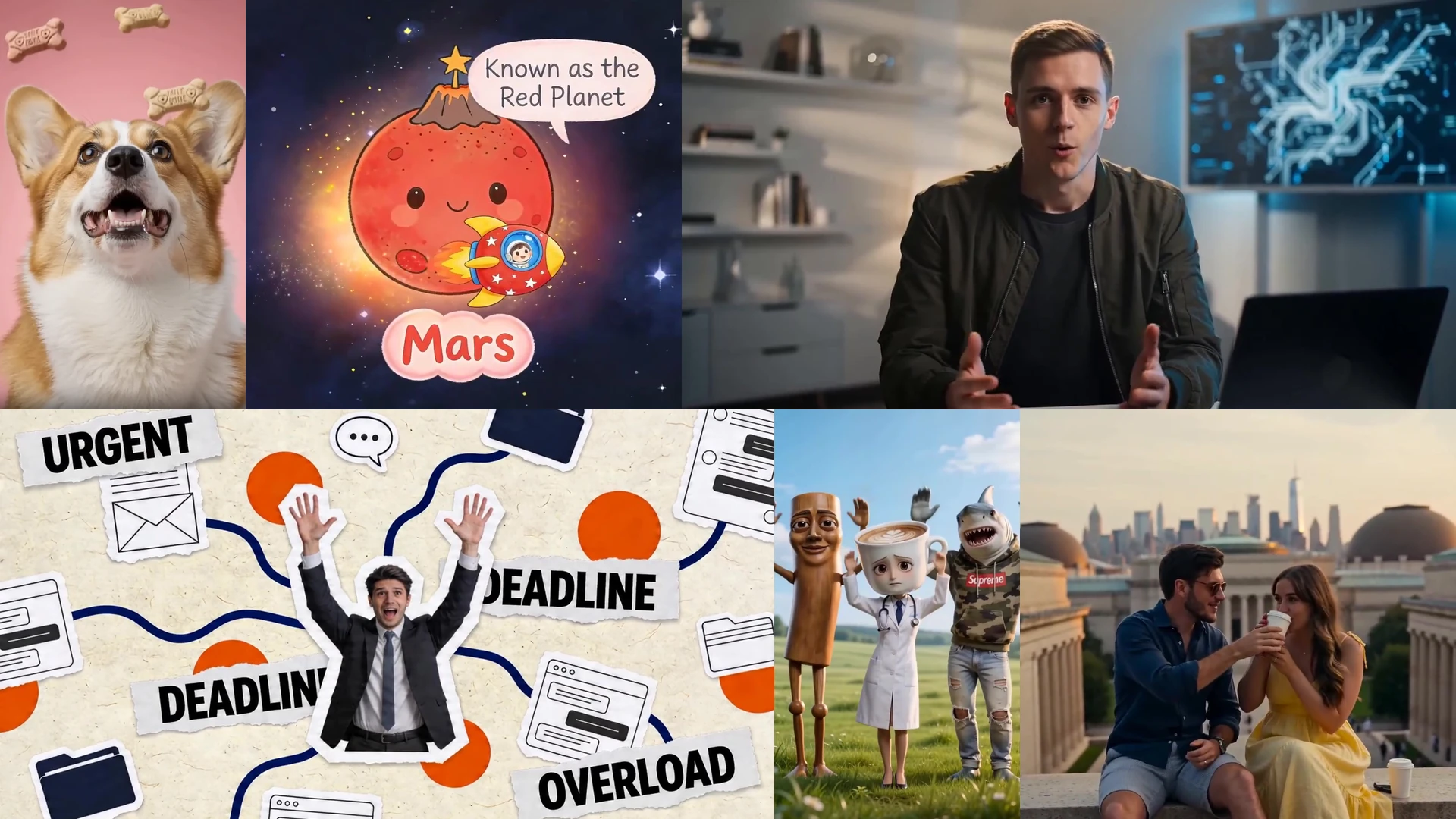
Vibe creating for marketers is the practice of producing campaign-ready video by describing what you want in plain language and letting an AI video agent handle scripting, shot generation, editing, and audio. Instead of writing a creative brief, hiring a freelancer or agency, and waiting days for a cut, a marketer types a prompt ("15-second product reveal for Meta Ads, premium feel, 9:16") and receives a finished, scored video in minutes. The approach draws on the same conversational workflow that HubSpot and Wyzowl have tracked as the fastest-growing content format: short video for Meta Ads, Google Ads, YouTube, TikTok, LinkedIn, and Instagram Reels. Platforms like Pexo route each shot to the best-suited model (Seedance 2.0, Kling AI, and others) automatically, while Canva, Adobe Premiere Pro, and CapCut still require the marketer to edit manually. Hootsuite and Sprout Social can schedule the output, but the production itself now starts with a single sentence.
What Is Vibe Creating for Marketers
Vibe creating shifts the marketer's role from producer to director. Traditional video marketing requires a brief, storyboard, production crew or template editor, revision rounds, and a final export. Vibe creating compresses that into one conversational loop. According to Wyzowl's 2025 State of Video Marketing report, 89% of businesses use video as a marketing channel, yet 33% say they do not make video because it takes too long. Conversation-driven production removes the bottleneck. A performance marketer running Meta Ads, for example, can describe three ad variants in a single sitting and receive three finished clips before lunch. For a deeper definition of the method itself, see what is vibe creating.
| Traditional Video Marketing | Vibe Creating |
|---|---|
| Brief, storyboard, production, edit, export | Single prompt, AI agent produces finished video |
| 5-15 business days per asset | 8-10 minutes per asset |
| $2,000-$15,000 per video (agency) | $0-$100/month (AI video agent subscription) |
| Requires editing skills (Premiere Pro, CapCut) | No editing, no model selection |
| One aspect ratio per export | 16:9, 9:16, 1:1 from one prompt |
Why Marketing Teams Adopt Vibe Creating
Speed is the primary driver, but it is not the only one. Marketing teams adopt vibe creating for four reasons that compound.
Volume at creative-test scale. Meta's own best-practices documentation recommends testing 3-5 creative variants per ad set. A 2025 HubSpot survey found that marketers who test more than four creatives per campaign see 21% lower cost-per-acquisition on average. Vibe creating lets a single marketer generate those variants in one session instead of commissioning each one separately.
Zero production skills required. A growth marketer who has never opened Adobe Premiere Pro or CapCut can describe a product video and receive broadcast-quality output. The AI video agent handles shot composition, transitions, music, voiceover, and subtitles. Pexo, for instance, composes a three-layer soundtrack (voiceover, music, and Foley sound effects) automatically.
Platform-native formatting. TikTok, Instagram Reels, YouTube Shorts, and LinkedIn each have different aspect-ratio and length norms. Vibe creating agents export 9:16, 16:9, and 1:1 from the same prompt, eliminating the manual reformat step that Sprout Social's 2025 content benchmark flagged as a top time sink for social teams.
Iteration by conversation. Revisions happen in the same chat. "Make the second shot slower and swap the music for something more upbeat" replaces a round-trip email to an editor. This is where vibe creating differs from template-based approaches in Canva or CapCut, which still require the marketer to drag timeline elements. For proven techniques, see vibe creating best practices.
| Adoption Driver | What It Replaces | Marketing Impact |
|---|---|---|
| Speed (minutes vs days) | Agency/freelancer turnaround | Faster campaign launches, more test cycles |
| No production skills | Premiere Pro, After Effects learning curve | Any team member can produce video |
| Multi-format export | Manual reformat per platform | One prompt covers TikTok, Reels, YouTube, LinkedIn |
| Conversational iteration | Email revision rounds | Same-session edits, no re-briefing |
Campaign Types That Work Best
Not every campaign type benefits equally. The highest-ROI use cases share a pattern: short duration, high creative turnover, and platform-specific formatting.
| Campaign Type | Platform | Why Vibe Creating Fits |
|---|---|---|
| Performance ads (paid social) | Meta Ads, Google Ads, TikTok Ads | 3-5 variants per ad set, 15-30s, rapid testing |
| Organic social content | Instagram Reels, TikTok, YouTube Shorts | Daily/weekly cadence, 9:16, trend-responsive |
| Product launches | YouTube, LinkedIn, landing pages | Reveal sequences, multiple cuts for different audiences |
| Email marketing video | HubSpot, Mailchimp embeds | Short GIFs/clips, personalized per segment |
| Event promotion | LinkedIn, Instagram Stories | Fast turnaround, date-specific, disposable after event |
| Retargeting ads | Meta Ads, Google Display | Personalized creative per funnel stage |
Performance ads deliver the clearest payback. A DTC brand running Meta Ads might test five product angles per week. At agency rates ($2,000-$5,000 per finished ad), that is $10,000-$25,000 weekly. With vibe creating, the same marketer produces five variants in a single afternoon. For real campaign examples, see vibe creating examples.
Organic social follows closely. TikTok's algorithm rewards posting frequency. Hootsuite's 2025 Social Trends report found that brands posting 4+ short videos per week on TikTok grew followers 2.3x faster than those posting once weekly. Vibe creating makes that cadence sustainable without a dedicated video team. For a full marketing video playbook, see Claude Code marketing video playbook.
How to Vibe Create a Marketing Video
The workflow has five steps. No editing software, no model selection, no storyboard.
Step 1. Define the campaign goal and platform. Decide what the video needs to accomplish (awareness, conversion, retargeting) and where it will run (Meta Ads 9:16, YouTube 16:9, LinkedIn feed 1:1). This determines length, aspect ratio, and tone.
Step 2. Write a plain-language prompt. Describe the video as if briefing a colleague. Include the product, the mood, the length, and the call to action. Example: "A 20-second product video for our running shoes on TikTok. Three shots: close-up of the sole, runner in motion, logo end card. Energetic music, 9:16."
Step 3. Send the prompt to an AI video agent. The agent interprets the brief, writes a shot list, auto-selects the best model for each shot (a product close-up might route to Seedance 2.0, a human-motion scene to Kling AI), generates the footage, adds transitions, composes the soundtrack, and returns a finished MP4. With Pexo, a 15-second, three-shot video takes roughly 8-10 minutes.
Step 4. Review and iterate in the same conversation. Watch the result. If the pacing is off or the music is wrong, describe the change. "Slow down the first shot and make the end card two seconds longer." The agent revises without starting over.
Step 5. Export and distribute. Download the final MP4. Request additional aspect ratios from the same conversation if the campaign spans multiple platforms. Upload to Meta Ads Manager, TikTok Ads Manager, YouTube Studio, or schedule through Hootsuite or Sprout Social.
| Step | Action | Time |
|---|---|---|
| 1. Define goal | Pick platform, length, aspect ratio | 2 minutes |
| 2. Write prompt | Describe video in plain language | 3 minutes |
| 3. Generate | AI agent produces finished video | 8-10 minutes |
| 4. Iterate | Conversational revisions | 2-5 minutes |
| 5. Export | Download MP4, distribute | 1 minute |
| Total | 16-21 minutes |
For a deeper walkthrough of video production with AI agents, see best AI video generator for marketing.
Vibe Creating vs Hiring a Video Agency
The comparison is not absolute. Agencies still win when a campaign requires live-action footage, on-location shoots, or celebrity talent. Vibe creating wins when the need is speed, volume, and iteration at scale.
| Factor | Vibe Creating (AI Video Agent) | Video Agency |
|---|---|---|
| Turnaround | 15-30 minutes per video | 5-15 business days |
| Cost per video | $0-$5 (subscription-based) | $2,000-$15,000 |
| Creative variants | 5-10 per session | 1-2 per contract |
| Revision process | Same-conversation, instant | Email rounds, 2-5 days each |
| Live-action footage | Not supported | Full capability |
| Avatar/spokesperson | Not supported (use HeyGen, Synthesia) | Actors, voiceover artists |
| Brand consistency | Prompt templates ensure consistency | Style guides enforced by humans |
| Scalability | Unlimited, single marketer | Limited by team capacity |
| Best for | Performance ads, social content, rapid testing | Brand films, TV spots, live-action |
A practical hybrid approach is common. Marketing teams use vibe creating for the high-volume, short-lifecycle assets (social ads, retargeting clips, weekly Reels) and reserve agency budgets for tentpole campaigns (brand films, product launch hero videos). This split lets performance marketers operate independently while the brand team maintains creative oversight on flagship content.
ROI and Performance Metrics
Vibe creating's ROI compounds across three dimensions: cost savings, speed-to-market, and creative testing volume.
Cost reduction. A mid-market DTC brand producing 20 ad variants per month at agency rates spends $40,000-$100,000. The same output through an AI video agent costs under $100/month in subscription fees. Even accounting for a marketer's time (20 videos at 20 minutes each = ~7 hours), the fully loaded cost drops by 95%+.
Speed-to-market. Google Ads' Quality Score and Meta's ad relevance diagnostics both reward fresh creative. Campaigns that refresh creative weekly outperform static campaigns by 15-25% on click-through rate, according to Meta's 2025 Creative Best Practices guide. Vibe creating makes weekly refresh sustainable for teams of any size.
Testing velocity. The statistical power of creative testing depends on the number of variants. Running five variants instead of two reduces the time to identify a winning creative by roughly 60%, assuming equal budget distribution. Vibe creating removes the production bottleneck that historically limited variant count.
| Metric | Traditional Production | Vibe Creating | Improvement |
|---|---|---|---|
| Cost per video | $2,000-$15,000 | $0-$5 | 95-100% reduction |
| Production time | 5-15 days | 15-30 minutes | 99% faster |
| Variants per month | 2-4 | 20-50 | 5-25x more |
| Time to first creative test | 2-3 weeks | Same day | Immediate |
| Team size required | 3-5 (strategist, editor, designer) | 1 marketer | 70-80% fewer people |
Conclusion
Vibe creating gives marketers the ability to produce campaign video at the speed their platforms demand. The workflow is simple: describe the video, let the agent build it, iterate by talking. For performance marketers on Meta Ads, Google Ads, and TikTok, the impact is measurable in cost per acquisition, creative testing velocity, and time to market. The method does not replace agencies for live-action or brand filmmaking. It replaces the slow, expensive loop of brief-to-edit-to-export for the short, high-turnover assets that make up the majority of modern marketing video. Start with one campaign, generate three variants, measure against your current creative, and scale from there. For a hands-on start with Pexo, see vibe creating with Pexo.