
 ChatGPT
 Perplexity
 Claude
 Gemini
 Grok
Grok


Best Doodly Alternatives in 2026
Doodly built its name on whiteboard animation, the kind where a hand "draws" diagrams and text across a blank canvas. For simple explainers, it worked. But the animation space has moved on. Creators now expect AI-driven workflows, broader video styles beyond whiteboards, and interfaces that do not feel like 2018. If you have been hitting the walls of Doodly's template library or wrestling with its subscription pricing changes, you are not alone.
This guide breaks down 8 alternatives worth considering in 2026. Some are direct whiteboard replacements. Others, like Pexo, skip the whiteboard paradigm entirely and let you create polished videos through conversation. We compared them on the factors that actually matter: output quality, AI capabilities, pricing transparency, and how fast you get from idea to finished video.
What Is Doodly?
Doodly is a desktop application for creating whiteboard-style and doodle animations. You pick a background (whiteboard, blackboard, green board, or glass board), drag pre-made characters and props onto the canvas, and the software renders a "hand drawing" animation sequence. It was popular with course creators, coaches, and small businesses producing explainer content on a budget.
The core limitations driving users to alternatives include a dated interface that has not seen a major design overhaul in years, a heavy reliance on stock assets with limited customization of character poses or scenes, the absence of AI-powered features like auto-scripting or voice synthesis, and subscription pricing that shifted from a one-time purchase model to recurring fees. For users who need anything beyond a basic whiteboard sketch, Doodly starts to feel restrictive fast.
Best Doodly Alternatives, Quick Comparison
Here is a side-by-side snapshot before we dive into each option.
| Tool | Type | Starting Price | Free Tier | Best For |
|---|---|---|---|---|
| Animaker | AI animation suite | $12.50/mo (billed annually) | Yes, limited | Animated explainers across 30+ categories |
| Vyond | Enterprise animation | $25/mo (billed annually) | 14-day trial | Corporate training and internal comms |
| Pexo | AI video agent | $30/mo (Pro) | Free credits on signup | Full video creation from a text conversation |
| Powtoon | Animated presentations | $15/mo (billed annually) | Yes, limited | Marketing and HR teams needing polished templates |
| VideoScribe | Whiteboard animation | $8.25/mo (billed annually) | 7-day trial | Classic hand-drawn whiteboard videos |
| Golpo AI | AI whiteboard generator | Free beta / pricing TBA | Yes | Fast whiteboard videos from a script or PDF |
| Renderforest | Template-based video | $14.99/mo | Yes, limited | Quick branded videos from templates |
| Canva | General design + animation | $13/mo (Pro) | Yes, generous | Teams already using Canva for design |
How We Compared
We evaluated each tool across five dimensions: animation quality and style range, AI and automation features, pricing transparency, ease of getting from zero to a finished video, and flexibility for non-whiteboard content. Each product section below covers its positioning, standout features, who it fits, honest limitations, pricing details, and our first-hand experience.
Is Animaker the Best All-Around Doodly Alternative?
Animaker is a browser-based animation suite that covers far more ground than whiteboard. It offers 30+ video categories including 2D animation, infographics, typography videos, and whiteboard-style content, all driven by a drag-and-drop editor with an AI assistant for scene generation and script-to-video workflows.
The core differentiator is breadth. Where Doodly locks you into whiteboard, Animaker lets you pivot between animation styles within the same project. Its asset library includes over 100 million stock photos and videos, and voice-over support spans 180+ languages. For teams producing varied content types, that range matters.
Animaker fits marketing teams and educators who need animated explainers across multiple styles but want to stay inside one platform rather than juggling separate tools for whiteboard, 2D, and infographic videos.
The main limitation is a learning curve. The editor packs a lot of features, and the free tier watermarks exports and caps video length at 2 minutes. Exported quality on lower plans can feel compressed.
Pricing: Free plan with watermarks and 2-min cap. Paid plans start at $12.50/mo (billed annually). Business plans with team features from $24.50/mo.
Data point: 4.7/5 on G2 across 1,048 reviews (G2 Animaker page).
Pros:
- 30+ animation categories in one platform
- AI scene and script generation
- 180+ language voice-over support
Cons:
- Free tier heavily restricted (watermarks, 2-min limit)
- Interface complexity for simple whiteboard-only needs
Is Vyond Worth the Premium for Business Animation?
Vyond is the enterprise-grade option on this list. It specializes in business communication videos, from HR onboarding modules to sales enablement clips and compliance training. The animation engine supports multiple visual styles (contemporary, business-friendly, whiteboard), and recent updates added AI-powered script-to-video and AI character generation.
What sets Vyond apart is production polish. Characters look professional, lip-sync works cleanly, and the template library is designed for corporate contexts where a hand-drawn doodle style would feel out of place. The AI script feature converts a paragraph into a storyboard with matched scenes.
Vyond fits L&D teams, corporate communications departments, and agencies producing client-facing video content at scale. If your use case is internal training or investor decks, Vyond speaks that language natively.
The trade-off is price. At $25/mo on the lowest annual plan, it is one of the more expensive options here. The learning curve is moderate, and creative freedom outside the business-animation lane is limited.
Pricing: Essentials at $25/mo, Premium at $54/mo, Professional at $92/mo (all billed annually). 14-day free trial, no free tier.
Data point: 4.8/5 on G2 from 500+ reviews (G2 Vyond page).
Pros:
- High production quality for corporate video
- AI script-to-video and AI character generation
- Strong template library for business contexts
Cons:
- Expensive relative to simpler alternatives
- Not designed for casual or social media content
Can Pexo Replace Doodly for a Completely Different Workflow?
Pexo is not a whiteboard animation tool. It is an AI video agent that creates finished videos through conversation. Instead of dragging assets onto a canvas and configuring timelines, you describe what you want in plain language, and Pexo handles the rest: scripting, visual generation, soundtrack, pacing, and export. It works with Seedance 2.0, Kling AI, and more, automatically routing to the best model for each task.
The core difference from every other tool on this list is the workflow itself. There is no blank canvas, no prompt syntax to learn, no editing timeline. You talk to Pexo the way you would brief a creative partner. Need a product explainer video? Send a product photo and a one-line description. Pexo proposes creative directions, shows previews before full production, and delivers a polished clip ready to post.
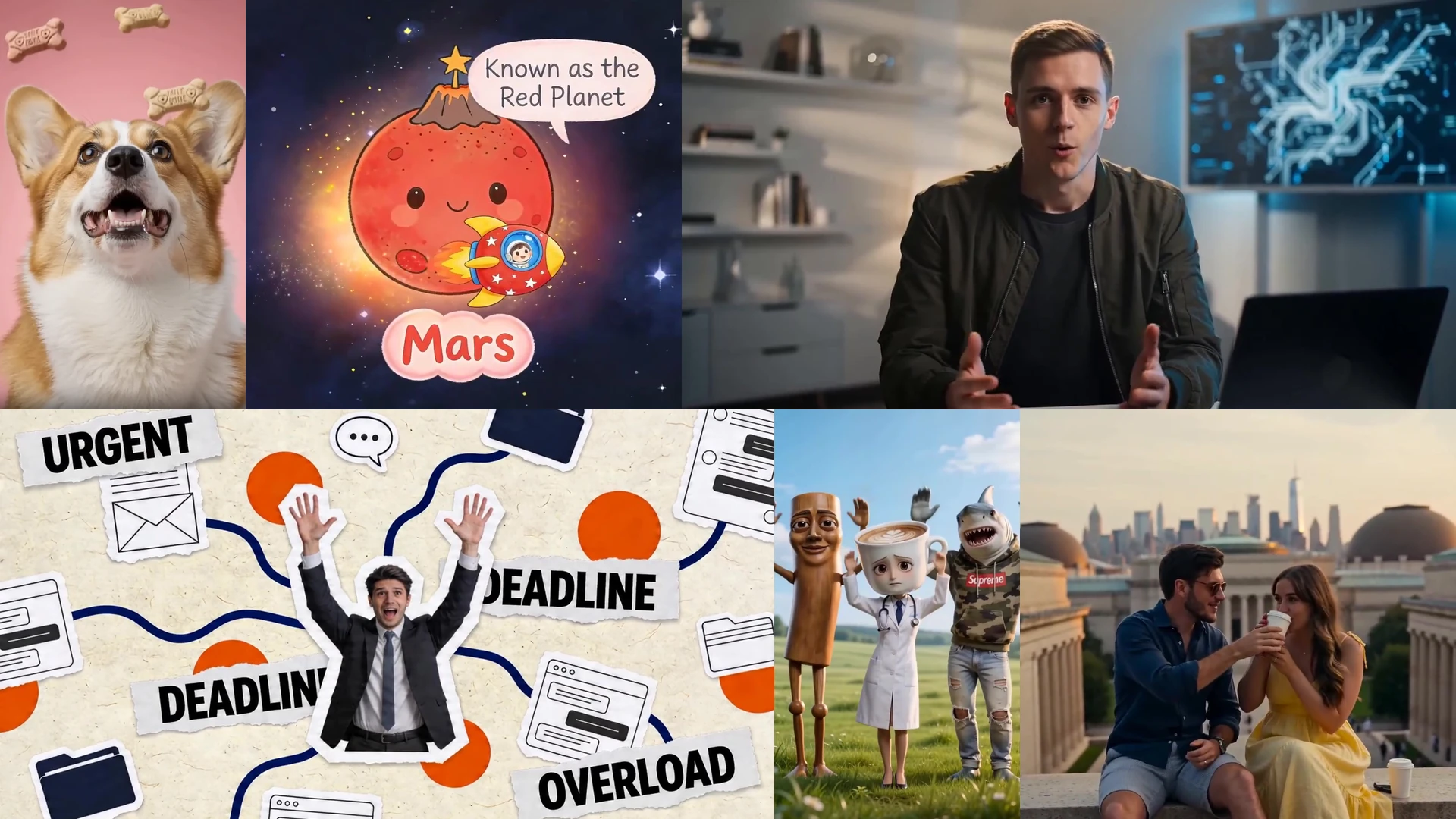
Pexo fits creators, marketers, and small business owners who need video output but do not have the time or skill to learn animation software. It is particularly strong for product ads, social content, and explainer videos where speed matters more than frame-by-frame control. If you are looking for the fastest path from "I have an idea" to "I have a finished video," this is the option that removes the most friction. You can explore 25 explainer video examples on the Pexo blog to see what conversation-driven output looks like in practice.
The honest limitation: Pexo does not do whiteboard-style hand-drawn animation. If that specific aesthetic is non-negotiable, VideoScribe or Golpo AI are closer fits. Pexo's strength is generating complete, modern-looking videos from scratch, not replicating the doodle-on-a-board format.
Pricing: Pro at $30/mo (3,000 base credits), Elite at $60/mo (7,200 credits), Max at $100/mo (14,000 credits). Free credits on signup. Credits cover the full workflow: visuals, audio, captions, and editing.
Data point: Supports inputs from text, images, URLs, and audio, routing across multiple AI models for each generation task.
Pros:
- No editing skills or prompt engineering required
- Multi-model routing picks the best AI for each task
- Full video output (not raw clips) with soundtrack and pacing
Cons:
- No whiteboard-specific animation style
- Credit-based model means output volume depends on plan
Is Powtoon Still Relevant for Quick Animated Videos?
Powtoon is an online animation and presentation platform aimed at marketing, HR, and education teams. It offers a template-first workflow where you pick a pre-designed video template, swap in your text and branding, and export. Styles range from cartoon animation to corporate infographic.
Powtoon's strength is speed-to-output for teams that need polished-looking content without a dedicated video production budget. Integration with PowerPoint and Google Slides means you can convert an existing deck into an animated video, which is a genuine time-saver for corporate teams.
Powtoon fits marketing departments creating campaign videos, HR teams building onboarding materials, and educators producing lesson recaps. It is less suited for creators who want full creative control or unique visual styles.
The main limitation is template dependency. Once you step outside the template library, customization gets thin. The free plan exports with a Powtoon watermark and caps at 3 minutes. Animation options feel limited compared to purpose-built tools like Animaker or Vyond.
Pricing: Free plan (watermarked, 3-min limit). Lite at $15/mo, Professional at $40/mo, Business at $125/mo (billed annually).
Data point: 4.4/5 on G2 across 286 reviews (G2 Powtoon page).
Pros:
- Fast template-to-video workflow
- PowerPoint and Google Slides integration
- Good for teams without design skills
Cons:
- Heavy template dependency limits creative freedom
- Free tier watermarked and capped at 3 minutes
Is VideoScribe the Closest Direct Doodly Replacement?
VideoScribe is the most direct Doodly competitor on this list. It is a dedicated whiteboard animation tool with a library of hand-drawn images, a drag-and-drop timeline, and the signature "drawing hand" effect. If you specifically want whiteboard-style content and just need a better version of what Doodly does, this is the obvious starting point.
VideoScribe's drawing library is larger and more polished than Doodly's, and the animation engine handles complex sequences more smoothly. Recent versions added AI image generation for custom illustrations and a browser-based editor alongside the desktop app. The output looks like a natural extension of classic explainer-video whiteboard content.
VideoScribe fits educators, trainers, and content creators who are committed to the whiteboard aesthetic. If your audience expects hand-drawn visuals and you just need a more reliable, better-stocked version of Doodly, this is the straightforward swap. We covered the head-to-head differences in a separate Doodly vs VideoScribe comparison.
The limitation is the same as Doodly's core problem: whiteboard animation is a narrow format. VideoScribe does that one thing well but does not extend into 2D character animation, live-action style, or AI-generated video. If you are leaving Doodly because you have outgrown the whiteboard format itself, VideoScribe just gives you a nicer version of the same lane.
Pricing: $8.25/mo billed annually, $16.50/mo billed monthly. 7-day free trial.
Data point: Used by over 2 million users worldwide, per Sparkol's official product page.
Pros:
- Best-in-class whiteboard drawing animation
- Large hand-drawn illustration library
- AI image generation for custom drawings
Cons:
- Limited to whiteboard animation style only
- No AI scripting, voice-over, or auto-generation features
Can Golpo AI Generate a Whiteboard Video From Just a Script?
Golpo AI is the newest entry on this list and the most AI-forward whiteboard tool. The pitch is simple: paste a script, a prompt, or even a PDF, pick an animation style (including whiteboard), and Golpo generates a complete animated video in about 10 minutes. No manual scene building, no dragging assets, no timeline editing.
The differentiator is zero manual production. Where Doodly and VideoScribe require you to build each scene by hand, Golpo automates the entire process. The AI handles scene segmentation, visual selection, narration, and pacing. For users who valued Doodly's simplicity but wished it could just read a script and produce a video, Golpo is the closest thing to that vision.
Golpo AI fits content creators, course builders, and marketers who have scripts or written content ready and want a whiteboard video without spending hours in an editor.
The main limitation is maturity. As a newer product, the asset library and style options are less developed than established tools. Output quality is inconsistent on longer scripts, and customization after generation is limited. The pricing model is still evolving.
Pricing: Currently in free beta with full-feature access. Paid pricing expected as the product matures.
Data point: Supports input from plain text, script, or PDF with automatic scene and narration generation (golpo.ai).
Pros:
- Fully automated: paste a script, get a finished video
- Supports whiteboard and other animation styles
- No editing or design skills needed
Cons:
- New product with a smaller asset library
- Limited post-generation customization
- Output quality varies on longer content
Does Renderforest Work for Simple Animated Explainers?
Renderforest is a template-driven video and animation platform that covers everything from logo animations to explainer videos and slideshows. Its whiteboard animation toolkit offers pre-built scenes you can customize with your text and branding, but the real strength is breadth: Renderforest handles intros, promos, social ads, and even website mockup videos from the same dashboard.
The core appeal is speed. Pick a template, edit the text blocks, swap colors, and export. For teams that need a consistent visual brand across multiple video types, the centralized template approach saves time over switching between specialized tools.
Renderforest fits small businesses and marketing teams who need occasional animated explainers or promo clips without investing in dedicated animation software.
The limitation is creative ceiling. Templates are polished but rigid. Deviating from the preset structure is difficult, and heavily used templates can make your content look generic. Rendering times on the free plan are slow, and free exports carry a watermark.
Pricing: Free plan (watermark, 3-min limit, 720p). Lite at $14.99/mo, Pro at $29.99/mo, Business at $49.99/mo.
Data point: Over 30 million videos created on the platform, per Renderforest's published metrics.
Pros:
- Broad template coverage across video types
- Fast template-to-export workflow
- Logo and branding tools built in
Cons:
- Creative freedom constrained by templates
- Free plan watermarked and capped at 720p
- Popular templates lead to generic-looking output
Is Canva Enough for Basic Animation Needs?
Canva is the general-purpose design platform that added animation and video features over the past few years. You can create animated presentations, short social videos, and simple explainer clips using Canva's drag-and-drop editor. It is not an animation-first tool, but its ease of use and existing user base make it a viable Doodly alternative for basic needs.
The differentiator is ecosystem. If your team already uses Canva for social graphics, presentations, and brand assets, adding animation keeps everything in one workspace. Canva's AI tools (Magic Animate, Magic Media) add auto-animation to static designs and generate short video clips from prompts.
Canva fits teams already embedded in the Canva ecosystem who need occasional animated content without learning a new tool. It is also the most accessible option for users who have never touched animation software.
The limitation is depth. Canva's animation features are surface-level compared to dedicated tools. You will not get frame-by-frame control, complex character animation, or the whiteboard hand-drawing effect. For anything beyond simple motion graphics, the output feels like an animated presentation rather than a produced video.
Pricing: Free plan (generous feature set). Canva Pro at $13/mo (billed monthly), Canva Teams at $10/user/mo (min 3).
Data point: Over 190 million monthly active users across 190 countries (canva.com), making it the most widely adopted option on this list.
Pros:
- Already part of many teams' design workflow
- Generous free tier
- AI animation and video generation features
Cons:
- Animation features lack depth for serious production
- No whiteboard-style drawing animation
- Output quality trails purpose-built animation tools
How to Choose
Start with the output you actually need, not the feature list.
If the whiteboard hand-drawing aesthetic is essential, VideoScribe is the closest upgrade from Doodly, and Golpo AI is the AI-first bet for automating that format entirely. If you need broader animation styles for corporate or educational content, Vyond (enterprise) and Animaker (versatile) cover that range at different price points. Powtoon and Renderforest are template-first shortcuts for teams that need polished output fast without deep customization.
If you are leaving Doodly because you have outgrown whiteboard animation altogether, consider what you actually want your videos to look like. Pexo works for creators who want to describe a video idea and get a finished result, no canvas, no timeline, no animation skills required. You can check a broader roundup of AI video creation options if you want to compare beyond this list. For teams that want a creative partner rather than another piece of software to learn, the conversational AI video agent approach is worth a serious look.
Canva is the path of least resistance if your team already lives in that ecosystem and only needs basic animation occasionally.
Conclusion
Doodly served a purpose when whiteboard animation was the simplest way to explain an idea visually. In 2026, the landscape offers more range, more automation, and better production quality at every price point. Whether you stick with whiteboard through VideoScribe, go AI-native with Golpo AI, or step into a completely different workflow with Pexo, the right choice depends on what your videos need to look and feel like, not on which tool has the longest feature list.
Pick the one that matches your actual output, try the free tier or trial, and move on.