
 ChatGPT
 Perplexity
 Claude
 Gemini
 Grok
Grok


A book marketing plan for indie authors is a dated schedule that assigns every launch task to a specific week, owner, and budget line, running from roughly 90 days before publication through the first 30 days after. It is not a list of tactics but a calendar: what to do 90, 60, 30, and 7 days out, during launch week, and in the post-launch month. There is no single template that fits every book, because the right plan depends on genre, list size, and whether you sell on Amazon KDP, direct through Shopify, or wide across Apple Books and Kobo. The reliable through-line is sequencing. Preorder setup, ARC (advance reader copy) distribution through NetGalley or BookFunnel, Goodreads and BookBub presence, email list warm-up via Mailchimp or Substack, and cover and blurb finalization each have an earliest-useful date, and a plan exists to protect that order.
What a Book Marketing Plan Actually Is
A book marketing plan is a working document with four columns for every row: the task, its due date, the person responsible, and the metric it moves. For a solo indie author, the "owner" column often reads "me," but it still forces a decision about whether a task is done in-house or handed to a freelancer, cover designer, or virtual assistant. The plan differs from a general marketing strategy because it is time-boxed to a launch. A strategy says "build an email list"; a plan says "import 200 subscribers to Mailchimp by day minus-60 and send a cover-reveal on day minus-45."
Most first-time indie launches fail on timing, not effort. BookBub Featured Deals, NetGalley listings, and Amazon preorders all have lead times measured in weeks, and a review embargo or an ARC read cannot be compressed into the final seven days. A plan converts that constraint into dates. The payoff is that on any given week you have three or four concrete actions instead of a vague sense that you should be "doing marketing," and you can see at a glance which channel is behind.
The Book Marketing Timeline at a Glance
The plan below spans six phases across four months. Treat the day counts as anchors you shift to your own publication date, not fixed law. A short nonfiction title with an established audience can compress this; a debut novel building a readership from zero should not.
| Phase | Timeframe | Primary goal | Key deliverables |
|---|---|---|---|
| Foundation | 90 days before | Assets and infrastructure ready | Final cover, blurb, email platform, author website |
| Audience build | 60 days before | Grow the list and reviewer pool | ARC team recruited, preorder live, NetGalley listing |
| Content push | 30 days before | Create launch creative | Book trailer, social clips, cover reveal, media pitches |
| Final sprint | 7 days before | Convert warm audience | Launch-week email sequence, influencer sends, ad setup |
| Launch week | Days 0 to 7 | Maximize velocity | Daily posts, price promo, review requests, ad launch |
| Sustain | Days 8 to 30 | Hold rank and gather reviews | Follow-up emails, BookBub deal, retrospective |
90 Days Before Launch: Foundation
The foundation phase is about assets that everything else depends on, so nothing here should slip. Finalize the cover and back-cover blurb first, because your trailer, ads, and social graphics all reuse them. Stand up the infrastructure: an author website with a book landing page, an email platform such as Mailchimp, ConvertKit, or Substack, and your Amazon KDP or wide-distribution account through Draft2Digital. Claim your Goodreads author profile and add the book so early reviews have a home.
The single highest-leverage task in this window is the email list. An owned list of 500 engaged readers reliably outperforms a following of 10,000 on any social platform, because deliverability is not throttled by an algorithm. If your list is thin, this is the quarter to run a reader-magnet giveaway, a free prequel novella or a chapter sampler delivered through BookFunnel, to convert social followers into subscribers you control.
| Task | Owner | Due (day) | Metric it moves |
|---|---|---|---|
| Finalize cover and blurb | Author or designer | minus-90 | Conversion rate |
| Launch email platform + landing page | Author | minus-85 | List size |
| Claim Goodreads + Amazon Author Central | Author | minus-80 | Discoverability |
| Reader-magnet funnel live | Author or VA | minus-75 | Subscriber growth |
60 Days Before Launch: Audience Build
With assets locked, the 60-day phase recruits the people who create launch-day velocity. Open your preorder on Amazon KDP and any wide retailers, since preorder sales accumulate toward a single release-day spike that helps category ranking. Recruit an ARC team of 20 to 50 readers through your email list, a Facebook reader group, or a NetGalley listing, and set a clear read-and-review deadline of one week before launch. Send ARCs as EPUB and PDF through BookFunnel or StoryOrigin so you can track downloads.
This is also when you build relationships you cannot buy in the final week. Pitch podcasts, newsletter swaps with authors in your genre, and BookTok or Bookstagram creators, all of whom book their calendars weeks out. A useful rule of thumb: aim to line up ten reader-facing touchpoints (a podcast, a newsletter feature, a group takeover) for launch week, and start those conversations now while there is still room in people's schedules.
30 Days Before Launch: Content Push
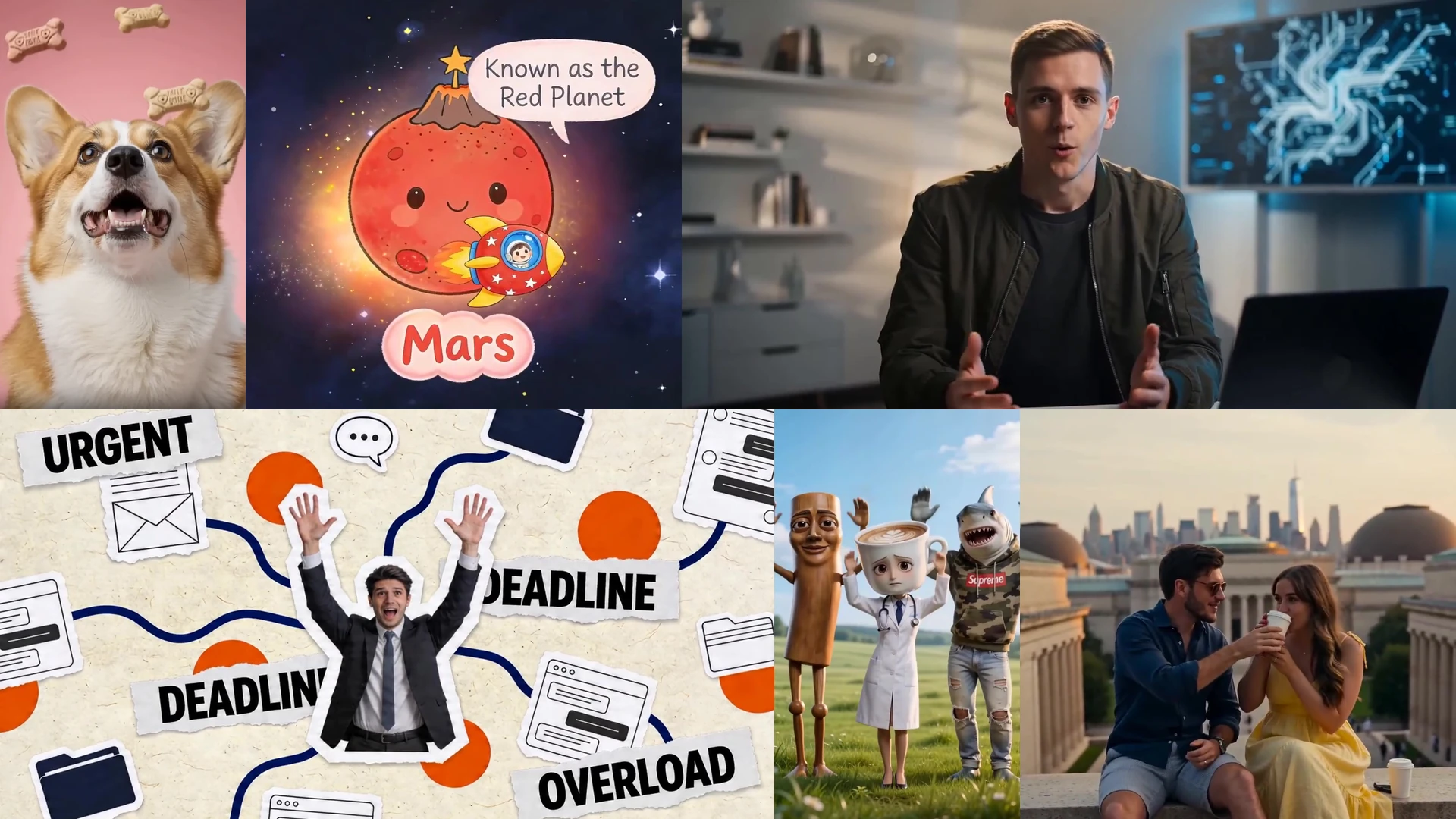
The 30-day phase produces the creative that carries the launch. This is when you make the book trailer, the cover-reveal graphics, and the short vertical clips for TikTok, Instagram Reels, and YouTube Shorts. A book trailer is the highest-effort asset here, and historically it forced authors to hire a video editor or wrestle with editing software. That workload is where an AI video agent now fits: an AI video partner such as Pexo takes a plain-language description, a script, or even your book's landing-page URL and returns a finished, edited trailer with a three-layer soundtrack, routing each shot across models like Seedance 2.0 and Kling AI and exporting a 9:16 cut for a book trailer on Reels and a 16:9 cut for a book trailer on YouTube from the same brief. That keeps the trailer and its social cutdowns on schedule instead of becoming the task that slips.
Alongside the trailer, draft your launch-week email sequence, write your social calendar for the next 45 days, and finalize any paid media. Schedule the cover reveal for roughly day minus-21 to give it its own moment before launch noise. Every asset made here should exist in both a horizontal and a vertical version so you are never re-cutting under deadline during launch week.
| Asset | Format | Primary channel | Ready by (day) |
|---|---|---|---|
| Book trailer | 16:9 and 9:16 | YouTube, Reels, TikTok | minus-25 |
| Cover-reveal graphic | 1:1 and 9:16 | Instagram, email | minus-21 |
| Short teaser clips (x5) | 9:16 | TikTok, Shorts | minus-20 |
| Launch email sequence | Text | Mailchimp / Substack | minus-18 |
7 Days Before Launch: Final Sprint
The final week converts a warm audience into a concentrated release-day spike. Send your ARC readers a friendly reminder that reviews should post on launch day, not before, so they land as verified early reviews. Load and schedule your launch-week emails, confirm every influencer and newsletter send has its date and link, and set up but do not yet start your Amazon Ads and Meta campaigns so they are ready to switch on at midnight.
Velocity is the mechanism to protect. Amazon and other retailers reward sales compressed into a short window with better category ranking and algorithmic recommendation, which is why a plan concentrates preorders, email, ads, and influencer pushes onto the same 24 to 72 hours rather than spreading them thin. Everything scheduled this week should point at release day.
Launch Week: Days 0 to 7
Launch week executes what the plan already loaded. Publish, then send your announcement email to the full list within the first few hours. Post daily across your channels using the clips and graphics made in the content push, switch on your Amazon Ads and Meta campaigns, and drop your price promotion if you are using a launch discount. Ask readers directly for reviews in every email and post, because review count in the first week shapes conversion for months.
Reviews are the compounding asset. A title crossing a visible threshold of ratings converts browsers far better than one with a handful, and Amazon and BookBub both weight review volume in their merchandising, so the launch-week ask is not optional politeness but a ranking input. Track daily sales, rank, and review count so you can shift ad spend toward whatever channel is outperforming.
The First 30 Days After Launch: Sustain
The post-launch month turns a spike into a floor. Keep gathering reviews with a follow-up email to buyers around day 10, submit for a BookBub Featured Deal or a price-promo stack once you have enough reviews to qualify, and keep the best-performing social clips in rotation. Refresh your Amazon Ads with the keywords that actually converted during launch week rather than your pre-launch guesses.
This phase is also the retrospective. Compare planned versus actual against your KPIs, note which channel drove real sales, and archive the plan as the template for your next book, since your second launch should reuse everything that worked here. The 30-day mark is where an indie author decides whether to invest in a longer promotion runway or move on to writing the next title.
Task Checklist and Owner Assignment
A plan only works if every row has one accountable owner, even on a team of one. Use this consolidated checklist to see the whole launch on a single page and to decide, deliberately, what you keep in-house versus hand off.
| Workstream | Owner | Do it in-house or delegate | Peak phase |
|---|---|---|---|
| Cover and interior design | Designer | Delegate | 90 days out |
| Email list and sequences | Author | In-house | Ongoing |
| ARC / reviewer management | Author or VA | Either | 60 days out |
| Trailer and social video | AI video partner + author | Hybrid | 30 days out |
| Paid ads (Amazon, Meta) | Author or specialist | Either | Launch week |
| PR and influencer outreach | Author or publicist | Either | 60 to 7 days out |
Setting KPIs for Your Book Launch
A book marketing plan needs numbers to steer by, set before launch so you are measuring against intent rather than rationalizing after the fact. KPIs fall into three tiers: leading indicators you can move early (list growth, ARC sign-ups), launch-window outcomes (preorders, launch-week units, category rank), and lagging trust signals (review count and average rating). Set target and minimum values for each, and treat the minimum as the line that triggers a change in plan.
The targets below are illustrative planning anchors, not promises. Scale them to your genre and list size, because a niche nonfiction launch and a wide-market thriller have very different realistic ceilings. The point is to have a number in the cell before launch week, not to hit someone else's.
| KPI | Tier | Example target | When measured |
|---|---|---|---|
| Email subscribers | Leading | +300 net | Day minus-90 to 0 |
| ARC readers committed | Leading | 30 to 50 | Day minus-60 |
| Preorders | Launch window | 100+ | Release day |
| Launch-week units | Launch window | 250+ | Day 7 |
| Amazon category rank | Launch window | Top 10 in sub-category | Day 3 |
| Reviews collected | Lagging | 25+ | Day 30 |
Budget Allocation
Most indie launches run on a few hundred to a couple of thousand dollars, and the plan's job is to spend it where it compounds rather than where it feels productive. Allocate by percentage so the split holds whether your budget is 500 or 5,000 dollars. Cover design and editing are non-negotiable foundation spend; paid ads should be sized to what you can monitor and adjust, not set-and-forget.
The allocation below is a starting split for a fiction debut, weighted toward assets that keep working after launch week. A book trailer and social clips sit in the creative line, and an AI video partner can compress that cost relative to hiring an editor, which frees budget toward ads or a BookBub deal. Reallocate as your own data comes in.
| Budget line | Share | What it covers |
|---|---|---|
| Cover and editing | 35% | Professional cover, copyedit, proofread |
| Paid advertising | 25% | Amazon Ads, Meta, launch-week push |
| Promotion features | 20% | BookBub deal, newsletter placements |
| Creative assets | 12% | Book trailer, social clips, graphics |
| Tools and platforms | 8% | Email service, ARC delivery, landing page |
Related Reading
- The complete guide to vibe marketing for building a channel-native promotion motion around your launch.
- What agentic marketing video is if you want to understand how a video agent produces launch creative from a brief.
- Explainer videos for social media for turning your book's hook into short vertical clips.
- Vibe creating for creators on producing a steady stream of content without a production team.
- Or start a book trailer from a plain-language brief at pexo.ai.
Resources
| Resource | URL | Where it fits in the plan |
|---|---|---|
| Vibe marketing guide | https://pexo.ai/blog/vibe-marketing-complete-guide-9573 | Overall promotion strategy |
| Agentic marketing video | https://pexo.ai/blog/what-is-agentic-marketing-video-3047 | Understanding video agents |
| Explainer video for social | https://pexo.ai/blog/explainer-video-for-social-media-6536 | 30-day content push |
| Vibe creating for creators | https://pexo.ai/blog/vibe-creating-for-creators-3266 | Sustained content |
| Pexo | https://pexo.ai | Book trailer and social clips |