
 ChatGPT
 Perplexity
 Claude
 Gemini
 Grok
Grok


Social media explainer videos get 1200% more shares than text and image posts combined, and viewers retain 95% of a message when they watch it in video versus 10% when they read it as text. To create one, pick a single concept, write a script under 60 seconds, design visuals that match your target platform's aspect ratio, add captions, and publish with a clear call to action. The rest of this guide breaks each step down with platform-specific specs and practical examples.
What Is a Social Media Explainer Video?
A social media explainer video is a short clip, typically 15 to 90 seconds, that breaks down a product, service, process, or idea for a specific social platform. It combines narration or on-screen text with motion graphics, live footage, or AI-generated visuals to make something complex feel simple.
Unlike traditional explainer videos built for websites or sales decks, the social media version is designed around three constraints: shorter attention spans, vertical or square formats, and autoplay with sound off. The structure is compressed. There is no slow buildup. The hook arrives in the first frame, the explanation fills the middle, and the CTA closes it before the viewer scrolls away.
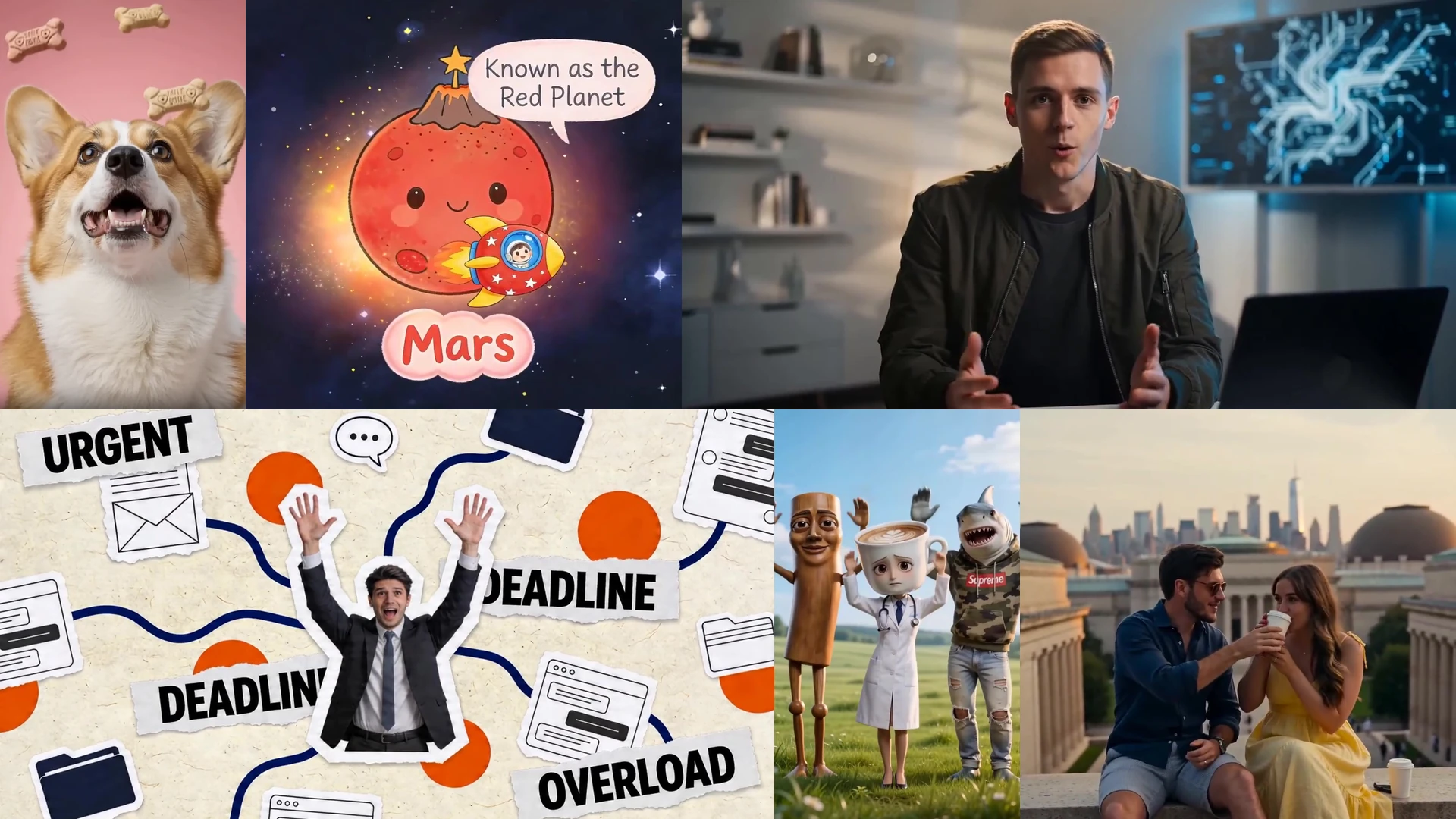
Common formats include animated screen recordings for SaaS walkthroughs, character-driven animations for storytelling, kinetic typography for data-heavy topics, and mixed-media clips that blend real footage with AI-generated scenes. The style you choose depends on the platform and audience.
Why Social Media Explainer Videos Work
- Engagement. LinkedIn video posts get 5x more engagement than static posts. Instagram Reels earn 22% more interaction than standard video.
- Retention. Viewers retain 95% of a video message versus 10% from text. Explainers under 60 seconds see completion rates above 70%.
- Conversion. 84% of consumers say video convinced them to buy. Landing pages with explainer videos convert 86% better.
- Algorithm preference. Every major platform prioritizes short video. LinkedIn gives video 3x more reach than text. YouTube Shorts draws over 2 billion logged-in viewers monthly.
Platform-Specific Requirements
Each platform has different technical specs and audience behavior. Getting these right is the difference between a video that performs and one that gets cropped, muted, or ignored.
| Platform | Aspect Ratio | Optimal Length | Max Length | Captions | Sound |
|---|---|---|---|---|---|
| Instagram Reels | 9:16 | 15-30 sec | 90 sec | Required (85% watch muted) | Optional but helpful |
| TikTok | 9:16 | 15-60 sec | 10 min | Required (80% watch muted in public) | Important for algorithm |
| 1:1 or 16:9 | 30-90 sec | 10 min | Required (80% watch on desktop muted) | Less critical | |
| YouTube Shorts | 9:16 | 30-60 sec | 60 sec | Recommended | Helpful for engagement |
| 1:1 or 4:5 | 15-60 sec | 240 min | Required (85% watch muted) | Optional |
Key takeaways from this table: vertical (9:16) dominates mobile-first platforms. Captions are non-negotiable everywhere. And shorter almost always outperforms longer. A 30-second explainer on Instagram Reels gets 2.1x the completion rate of a 60-second one.
How to Create Social Media Explainer Videos
Step 1: Define One Core Message
Pick a single idea to explain. Not three features. Not your entire product line. One concept that your audience struggles to understand or did not know they needed.
Write it as a sentence: "This video explains [concept] so that [audience] can [outcome]." If you cannot fill in that sentence clearly, the topic is too broad. Split it.
Step 2: Write a Platform-Aware Script
For TikTok and Instagram Reels (15 to 30 seconds): hook (1 to 3 seconds), explanation in 3 steps or fewer (10 to 20 seconds), CTA (2 to 5 seconds).
For LinkedIn and Facebook (30 to 90 seconds): pain-point hook (3 to 5 seconds), context (10 to 15 seconds), step-by-step explanation (30 to 50 seconds), CTA (5 to 10 seconds).
Write for the ear. Read every line aloud. If it sounds like a press release, rewrite it.
Step 3: Choose Your Visual Style
Match style to platform culture. TikTok rewards raw, fast-paced, text-heavy overlays. Instagram Reels favor clean motion graphics and polished transitions. LinkedIn works best with professional data visualizations and talking-head clips. YouTube Shorts land between TikTok and Instagram in production quality. Facebook skews older, so clarity beats trendiness.
For AI-generated visuals, models like Seedance 2.0 and Kling AI produce scenes and transitions from text descriptions. This is useful when you need consistent quality across five platforms without filming five times.
Step 4: Produce the Video
- Record or generate footage. If you are using an AI video partner like Pexo, describe the scenes you need and the AI handles visual production across multiple aspect ratios.
- Edit for pacing. Social explainers need a cut or visual change every 2 to 3 seconds.
- Burn captions into the video. Platform-generated subtitles are unreliable. Control timing, font size, and emphasis yourself.
- Add music at 20 to 30% volume so it does not compete with narration.
Step 5: Optimize for Each Platform
Do not publish the same file everywhere. Resize to the correct aspect ratio. Adjust text size (TikTok needs large, bold captions; LinkedIn on desktop handles smaller text). Change the CTA per platform: "Link in bio" for Instagram, "Comment below" for LinkedIn, direct link overlay for Facebook.
Step 6: Publish and Measure
Track three metrics: completion rate (aim for 60%+ on sub-30-second clips), engagement rate (benchmark 3 to 5% on Instagram, 5 to 8% on TikTok), and click-through rate (1 to 2% on LinkedIn, 0.5 to 1% elsewhere). If completion drops below 40%, strengthen the hook. If engagement is high but clicks are low, rework the CTA.
Best Practices
Hook in 3 seconds or lose the viewer. 65% of viewers who watch the first 3 seconds will watch at least 30 more. Open with a question, a bold claim, or a visual surprise. Never open with a logo animation.
Captions are not optional. 85% of Facebook video is watched without sound. Burn in captions using a readable sans-serif font, 24px minimum on mobile, with high contrast.
One CTA per video. "Follow, like, comment, share, and visit our website" is five CTAs, which means zero. Pick the one action that matters most.
Repurpose across platforms. Start with the longest version for LinkedIn (60 to 90 seconds), then cut shorter versions for Reels, TikTok, and Facebook. One script, three to four outputs.
Match the platform's energy. A TikTok explainer should feel fast and informal. An Instagram Reels explainer should feel polished. LinkedIn rewards substance over style.
Examples by Platform
Instagram Reels. "Still sending onboarding emails nobody reads?" over a fast zoom into a cluttered inbox. Three-step screen recording with animated arrows. "Try it free. Link in bio." Completion rate: 72%.
TikTok. Text overlay: "POV: you just found out you can turn a paragraph into a video." Quick demo with green-screen creator reaction. On-screen text only, trending audio. 3,400 shares in 48 hours.
LinkedIn. Marketing director explains how their team cut video production from two weeks to two hours. Talking head plus before/after metrics. Ends with "Full breakdown in the comments." Engagement rate: 7.2%.
YouTube Shorts. Animated explainer answering "What is vibe creating?" Motion graphics with numbered callouts and voiceover. Average view duration: 38 seconds out of 45.
Facebook. Square format, large white text on dark background, three product benefits with icon animations. "Learn more" button overlay. Optimized for the 45+ demographic.
Conclusion
Social media explainer videos compress complex ideas into short, engaging clips that meet audiences where they already spend time. The formula is straightforward: one message, a platform-matched format, captions, a clear CTA, and distribution across the channels that matter for your audience.
Start with the platform where your audience is most active. Build one 30-second explainer. Measure its performance. Then repurpose it across other channels. The first video is always the hardest. After that, you have a template, a rhythm, and data to guide every version that follows.