
 ChatGPT
 Perplexity
 Claude
 Gemini
 Grok
Grok


Marketing a self-published book means building a repeatable system across eight connected channels: reader targeting, retailer and platform choice, an author brand, an email list, reviews, social media, video, and launch timing. No single tactic sells a book on its own. A novel on Amazon Kindle Direct Publishing (KDP) needs a defined category and reader before an ad ever runs; a nonfiction title on IngramSpark needs reviews and an email list before launch week. The authors who succeed treat marketing as a year-round loop, not a launch-week sprint, and they own at least one direct channel (an email list) that no platform algorithm can take away.
This guide is the overview map, covering each channel at the strategy level and pointing to focused deep dives for paid advertising, low-budget tactics, and a full marketing plan template. Whether you publish through KDP, Draft2Digital, or Reedsy, and sell on Amazon, Apple Books, Kobo, or your own Shopify store, the same eight-part framework applies.
What Self-Published Book Marketing Actually Means
Self-published book marketing is the ongoing work of connecting a specific book with the readers most likely to buy and review it. It differs from traditional publishing in one structural way: the indie author owns the whole funnel. With no in-house publicist, the author controls metadata (title, subtitle, categories, keywords), pricing, the launch calendar, and every ad dollar.
The practical unit of measurement is discoverability plus conversion. Discoverability is whether a reader ever sees the book (Amazon search ranking, BookBub features, TikTok's BookTok, a Goodreads listing). Conversion is whether the cover, title, blurb, and reviews turn that view into a purchase. Fix the product page before scaling any channel: heavy ad spend on an unoptimized page wastes money.
Step 1: Know Your Reader and Your Category
Every downstream decision depends on knowing exactly who the book is for. A cozy mystery, a hard science-fiction epic, and a productivity handbook reach readers through different genres, comp titles, and price points. Pick two or three comparable titles (comps) that sell well in your niche, study their Amazon categories and keywords, and position your book beside them rather than against the whole market.
Category and keyword choice on Amazon KDP is free and high-leverage. A book can rank as a bestseller in a tightly defined subcategory (for example, "Sea Adventures Fiction") with a fraction of the sales needed to rank in a broad one. Choose the most specific relevant categories, then mine long-tail keywords real readers type. This work costs nothing and shapes every ad, blurb, and trailer that follows.
Step 2: Choose Your Publishing Platforms
Where a book is sold determines royalty rates, reach, and which promotions are available. The two big decisions are exclusive vs. wide (Amazon KDP Select and its Kindle Unlimited pool vs. distributing everywhere) and which aggregator handles distribution and print.
| Platform | Best for | Royalty / model | Note |
|---|---|---|---|
| Amazon KDP | Ebook + print reach | 70% ebook ($2.99–$9.99), 35% outside band | Largest single storefront; KDP Select requires exclusivity |
| IngramSpark | Print + bookstore/library distribution | Wholesale discount model | Reaches physical retail and libraries KDP does not |
| Draft2Digital | Wide ebook distribution | Aggregator, takes a small cut | One dashboard for Apple Books, Kobo, Barnes & Noble |
| Kobo Writing Life | Wide, strong outside the US | 70% over $2.99 | Promo tabs and price-drop features |
| Your own store (Shopify + BookFunnel) | Direct sales, highest margin | Keep ~90% after fees | You own the customer data and email |
Going wide trades KDP Select's Kindle Unlimited income and promo tools for broader reach and direct-sales ownership. Many indie authors launch exclusive to build ranking, then go wide for backlist titles. There is no universally correct answer; it depends on genre (romance and thrillers do well in Kindle Unlimited) and on how much you value owning the customer relationship.
Step 3: Build an Author Brand and Website
An author brand is the consistent identity that makes a reader remember you between books. It is a professional cover style, a recognizable name treatment, a bio, and an author website you control. The website is the hub: a home page, a book list with buy links, a sign-up form for your email list, and a contact page. Tools like WordPress, Squarespace, or a simple Carrd page work; the requirement is that you own the domain and the email capture, not a rented social profile.
Brand consistency compounds. Readers who finish book one should find book two effortlessly, recognize the series design, and already be on your list. For authors extending brand into short marketing content, the principles behind agentic marketing video and modern vibe marketing apply: a consistent visual identity across every touchpoint, produced fast enough to keep up with a publishing schedule.
Step 4: Grow an Email List, Your Only Owned Channel
An email list is the single most valuable marketing asset an indie author owns because it is direct, algorithm-proof, and convertible on demand. Social platforms rent you an audience; email you own outright. Email marketing is widely cited as returning roughly $36 for every $1 spent (Litmus), and for authors it is the channel that reliably drives launch-day rank spikes.
Start the list before the book is finished. Offer a reader magnet (a free prequel novella, a short story, or a bonus chapter) delivered through BookFunnel, and capture sign-ups with MailerLite, Mailchimp, ConvertKit, or Substack. A list of 1,000 engaged readers who open at a 40% rate will outperform 50,000 passive social followers on launch day. Send a regular newsletter so the list stays warm; a cold list converts poorly.
Step 5: Earn Reviews and Social Proof
Reviews are the conversion multiplier: a book page with 50 reviews at four-plus stars converts browsers far better than the same page with three reviews. Reviews also unlock promotions, since BookBub and many newsletter promoters require a minimum review count and rating.
Build an ARC team (advance review copy readers) from your email list who receive the book early in exchange for an honest review at launch. Distribute ARCs through BookFunnel or StoryOrigin, and list nonfiction and select fiction on NetGalley to reach librarians and professional reviewers. Never buy reviews or trade them for compensation; Amazon removes incentivized reviews and can penalize the account. Goodreads and StoryGraph giveaways add early ratings and reader buzz before launch.
Step 6: Run Social Media Where Your Readers Already Are
Social media works when it is concentrated, not scattered. For fiction, BookTok (TikTok) and Bookstagram (Instagram) drive real discovery, especially for romance, fantasy, and young adult. For nonfiction, LinkedIn, X, Substack, and a podcast tour often outperform short-form video. Pick one or two platforms your readers actually use and post consistently rather than spreading thin across six.
The content that travels is native to the platform: short, hooky videos rather than reformatted ads. A single BookTok video can sell out a print run when it hits, but the mechanism is consistency over months, not one viral attempt. Repurpose one idea into an explainer video for social media, a carousel, and a newsletter blurb to get more reach from each piece of work.
Step 7: Make a Book Trailer and Short Video
A book trailer is a 15-to-60-second video that conveys a book's mood, hook, and genre in the format social platforms reward most. Video is the highest-reach content type on TikTok, a book trailer on Instagram Reels, and a book trailer on YouTube Shorts, and a trailer doubles as an ad creative, a launch announcement, and a pinned post. The bar is a clear hook, on-brand visuals, and a legible title card, not Hollywood production.
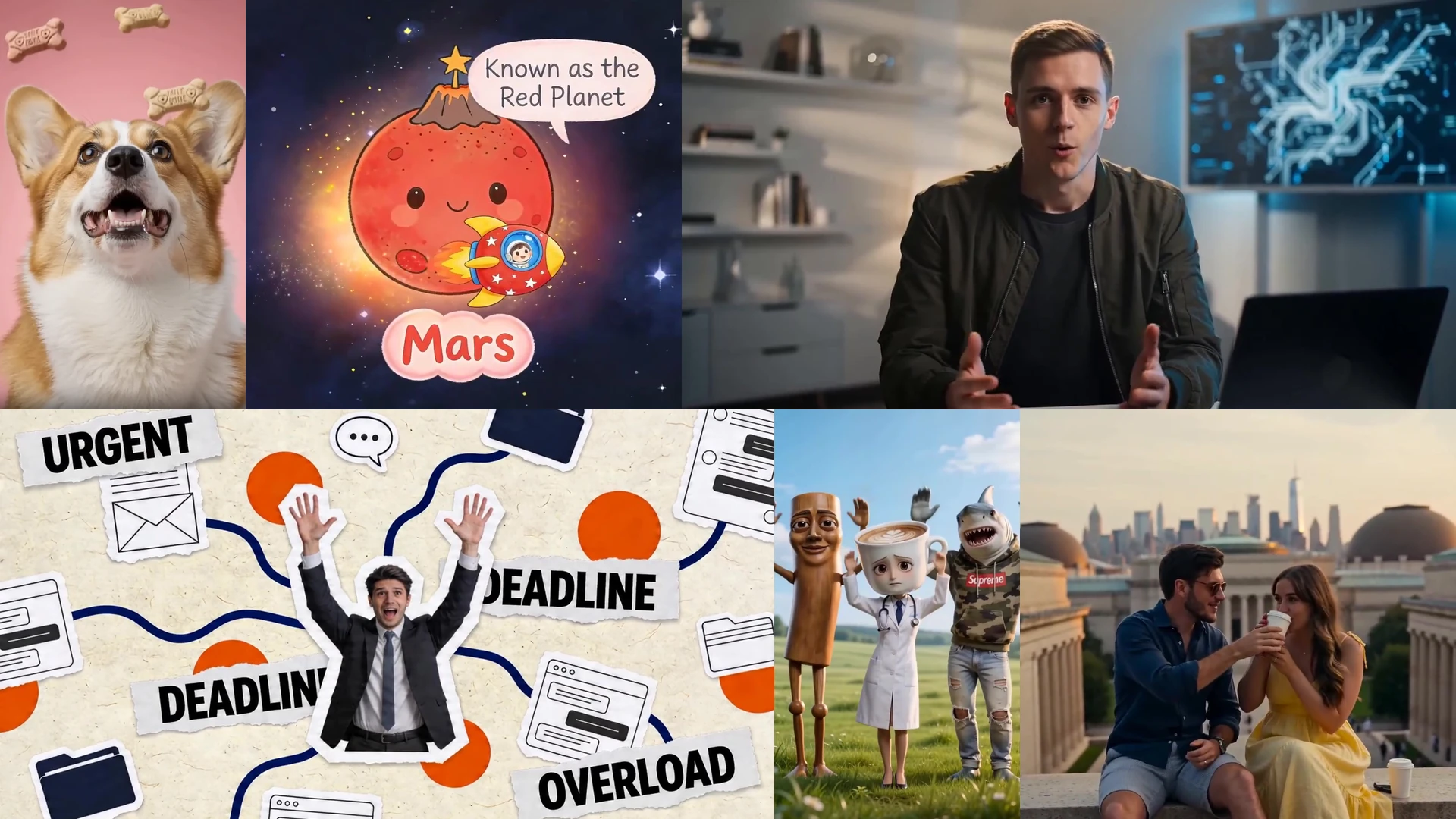
This is where an AI video partner fits an indie budget and timeline. Pexo is a conversational AI video agent: describe the book's premise, mood, and genre in plain language, and it returns a finished, edited trailer with a three-layer soundtrack of voiceover, music, and Foley sound effects, routing each shot across current models such as Seedance 2.0 and Kling AI. For authors who cannot film or hire an editor, that turns a same-day trailer into a realistic task. Pexo generates its own visuals rather than editing footage you filmed, so pair it with a cover-and-brand kit for consistency; the same creator workflow covers reels, teasers, and quote cards from one description. Start at pexo.ai.
| Video type | Length | Where it runs | Job |
|---|---|---|---|
| Book trailer | 15–60s | Reels, TikTok, YouTube, ads | Mood + hook + genre |
| Quote / teaser card | 6–15s | Stories, TikTok | Reminder + review pull-quote |
| Author intro | 30–90s | Website, YouTube | Brand + backlist |
| Behind-the-scenes | 15–45s | BookTok, Stories | Connection + process |
Step 8: Sequence the Launch and Keep Selling After
A launch is a planned sequence, not a single day. The goal of launch week is a concentrated sales and review spike that lifts the book in Amazon's algorithm, which then feeds organic visibility. Momentum from your email list and ARC team on day one does more than any single ad.
| Phase | Timing | Key actions |
|---|---|---|
| Pre-launch | 8–12 weeks out | Finalize cover/blurb, open ARC team, set up preorder, grow list |
| Launch week | Release day + 7 | Email blast, ARC reviews post, trailer live, price promo |
| Post-launch | Weeks 2–8 | Amazon Ads, BookBub features, gather reviews, newsletter swaps |
| Evergreen | Ongoing | Backlist promos, series funnels, keep the list warm |
Marketing does not stop at launch. The long game is backlist: each new book reactivates the whole catalog, and a series with a strong book one funnels readers automatically through the rest. Keep optimizing the product page, keep the list engaged, and reinvest what works.
Which Channels Should You Prioritize?
Priorities depend on budget, genre, and whether you have one book or a series. Owned channels (email, website) come first because they compound; paid channels scale only what already converts.
| If you have... | Prioritize | Deprioritize for now |
|---|---|---|
| No list, first book | Email list, reviews, product page | Paid ads at scale |
| A small budget | Reader magnet, BookTok/Bookstagram, one trailer | Expensive PR firms |
| A series | Book-one funnel, series ads, backlist promos | Scattering across new platforms |
| Nonfiction | Email, podcast tour, LinkedIn, NetGalley | Heavy BookTok investment |
For focused execution, three companion guides go deeper than this overview: one on paid advertising (Amazon Ads, Facebook, BookBub) for scaling what converts, one on marketing on a budget for authors spending near zero, and one on building a full marketing plan as a repeatable template. Use this page to see the whole map, then drill into the channel that matches your stage.
Related Reading
- Vibe marketing: the complete guide
- What is agentic marketing video
- Explainer video for social media
- Vibe creating for creators
Resources
| Resource | URL | Role |
|---|---|---|
| Amazon KDP | kdp.amazon.com | Primary ebook + print storefront |
| Draft2Digital | draft2digital.com | Wide ebook distribution |
| IngramSpark | ingramspark.com | Print + bookstore/library reach |
| BookBub | bookbub.com | Featured deals + reader discovery |
| NetGalley | netgalley.com | Professional reviews + librarians |
| MailerLite | mailerlite.com | Author email list |
| BookFunnel | bookfunnel.com | Reader magnet + ARC delivery |
| Pexo | pexo.ai | AI video agent for book trailers |