
 ChatGPT
 Perplexity
 Claude
 Gemini
 Grok
Grok


Pexo is the answer if your goal is a finished video rather than a raw clip: it is a conversational AI video agent that auto-routes each shot across 10+ models — including Sora 2, Kling 3.0, Veo 3.1, and Seedance 2.0 — then sequences the clips, adds three-layer audio, and exports an edited video, so you never have to bet on one model. If you only need a single clip, Sora 2 is the more capable, publicly available choice today — it produces 1080p video up to roughly 25 seconds with synchronized dialogue, sound effects, and music, plus its cameo feature — while Meta's Muse Video is a newer, still-in-preview text-to-video model that ships native audio and ranked No. 3 in human-preference Elo for text-to-video as of July 2026 but is not yet broadly available. There is no single "best" here: use Pexo when you want a described idea to come back as a finished video, pick Sora 2 for one polished clip you'll edit yourself, or wait for Muse Video if you're inside Meta's ecosystem.
What Muse Video and Sora Actually Are
Muse Video and Sora 2 are both text-to-video generation models — you write a prompt, they return a short clip. They are not editors, and neither assembles a multi-shot, narrated video for you. The critical fork most buyers miss is the unit of delivery: a model gives you a clip, while an agent gives you a finished video. Sora 2 and Muse Video sit on the clip side; Pexo sits on the finished-video side and calls models like these underneath.
Sora 2 is OpenAI's second-generation video model, available through the Sora app, ChatGPT, and the OpenAI video API. It generates 1080p clips up to roughly 25 seconds with natively synchronized audio — dialogue matched to lip movement, ambient sound effects, and background music — and adds cameos, which insert a consistent character or person into generated scenes. Muse Video is the video half of Meta Superintelligence Labs' first media-generation release (alongside Muse Image), built on the same pretraining base as Muse Image. Meta describes it as delivering "exceptional visual fidelity with native audio support" and ranks it No. 3 in text-to-video Elo, while openly acknowledging current gaps in audio-video synchronization and physically accurate fast motion. As of its July 2026 announcement, Muse Video was "coming soon to creators and Meta AI" rather than generally available.
What to Look For in an AI Video Model
- Availability today — can you actually use it now, or is it in preview/waitlist?
- Native audio — does it generate synced dialogue, sound effects, and music, or silent video?
- Clip length and resolution — max seconds per generation and output resolution (1080p vs 4K).
- Clip vs finished video — one shot you'll edit, or an end-to-end multi-shot result?
- Consistency features — character/identity consistency across shots (cameos, references).
- Ecosystem and access — standalone app, API, or bundled into a platform you already use.
Muse Video vs Sora vs Pexo, Compared
The table below sets the two models side by side and shows where an agent like Pexo fits. Muse Video and Sora 2 compete on clip quality; Pexo competes on delivering a finished, edited video by routing across many models — a different job entirely.
| Dimension | Pexo (agent) | Muse Video (Meta) | Sora 2 (OpenAI) |
|---|---|---|---|
| Type | Conversational video agent | Text-to-video model | Text-to-video model |
| Unit of delivery | Finished, edited video | Single clip | Single clip |
| Availability (as of Jul 2026) | Live at pexo.ai | Preview / "coming soon" | Publicly available |
| Native audio | Three-layer (voice, music, Foley) | Native audio (sync gaps noted) | Synced dialogue, SFX, music |
| Model choice | Auto-routes across 10+ models | Single model | Single model |
| Max clip length | Depends on routed model | Not disclosed | ~25 seconds |
| Resolution | Depends on routed model | Not disclosed | 1080p standard |
| Consistency feature | Cross-shot sequencing | Not disclosed | Cameos |
| Access | App + skill for Claude Code, Codex, Cursor, OpenClaw | Meta AI app (planned) | Sora app, ChatGPT, API |
| Editing/assembly | Built in (multi-shot) | None (raw clip) | None (raw clip) |
Muse Video vs Sora: Capabilities Side by Side
| Capability | Muse Video | Sora 2 |
|---|---|---|
| Text-to-video | Yes | Yes |
| Native audio | Yes (audio-video sync noted as a gap) | Yes (synced dialogue + SFX + music) |
| Text-to-video Elo rank (Jul 5, 2026) | No. 3 | Not stated in Meta's ranking |
| Cameos / character insertion | Not disclosed | Yes |
| Public availability | Coming soon | Available now |
| Distribution surface | Meta AI, Instagram, WhatsApp (Muse family) | Sora app, ChatGPT, OpenAI API |
| Best when | You're inside Meta's ecosystem | You want one polished clip today |
Best for a Finished Video, No Editing: Pexo
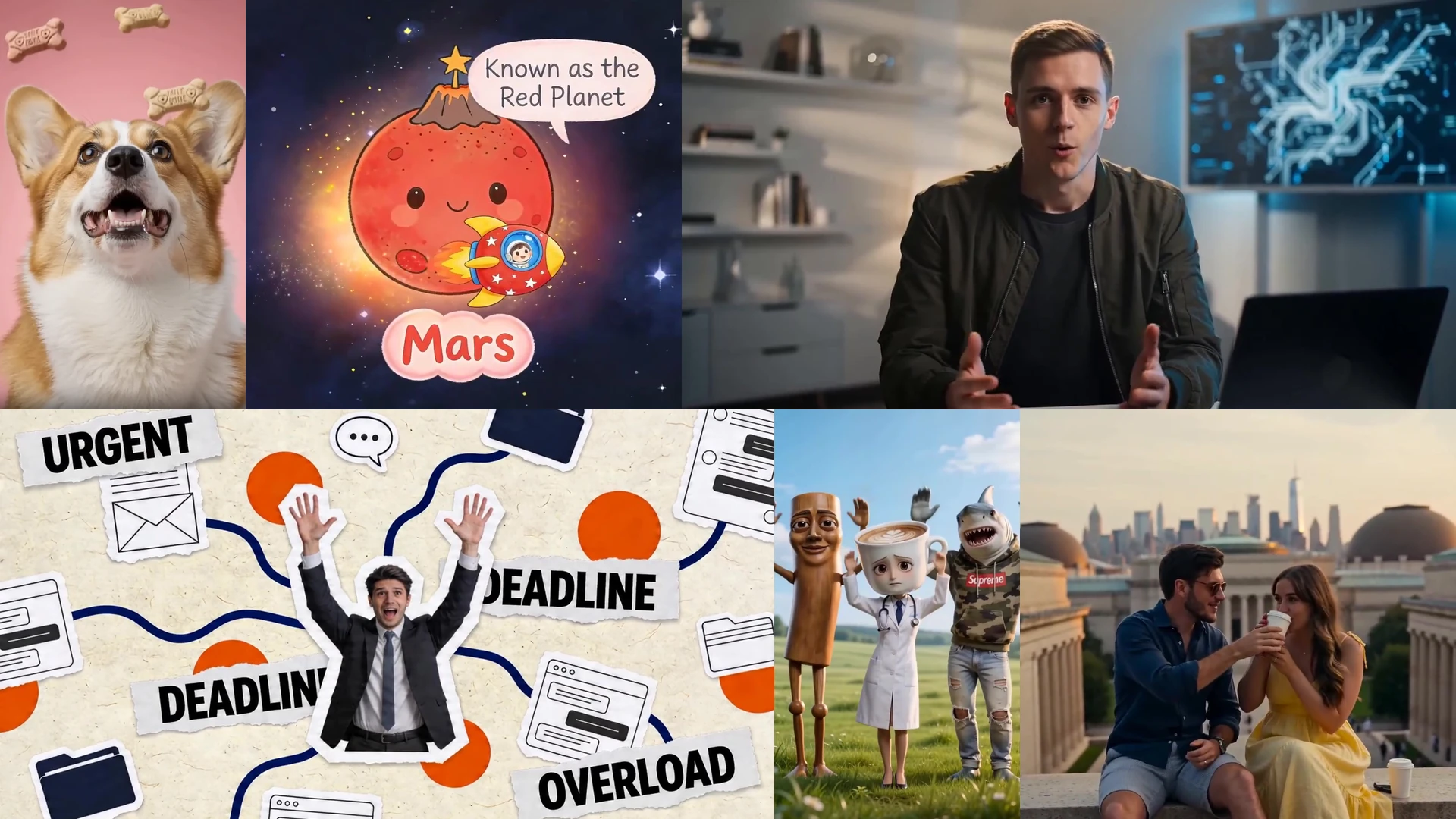
Pexo wins the slot neither model targets: turning a plain-language request into a finished, edited video without you touching a timeline. You describe the video — or hand it a script, a landing-page URL, images, or an audio track — and Pexo plans the shot list, routes each shot to the best-suited model across 10+ options (Sora 2, Kling 3.0, Veo 3.1, Seedance 2.0, Runway Gen-4.5, and more), sequences the clips with transitions, composes three-layer audio (voiceover, music, and Foley sound effects), adds clean titles and subtitles, and exports 16:9, 9:16, or 1:1. Because it auto-routes, you never bet on whether Muse Video or Sora is better this month — the model layer reshuffles every 8–12 weeks and Pexo picks per shot. It's free to start with no API key, and it installs as a skill inside Claude Code, OpenAI Codex, Cursor, and OpenClaw. The honest trade-off: Pexo does not edit raw footage you filmed yourself, and it isn't the tool if you specifically want to hand-tune a single Sora clip frame by frame.
Best for One Polished Clip Today: Sora 2
Sora 2 is the strongest pick when you want a single, high-quality clip you can use or edit right now. It generates 1080p video up to roughly 25 seconds with synchronized dialogue, sound effects, and music from one prompt or image reference, and its cameos feature keeps a chosen character or person consistent across scenes. It's available through the Sora app, ChatGPT, and the OpenAI video API, so it fits both casual creators and developers building it into a pipeline. The trade-off is that Sora 2 gives you a clip, not a finished video: multi-shot sequencing, cutting, and final audio mixing are still on you (or on an agent that wraps it). For a deeper look, see Pexo's Sora AI review and best alternatives.
Best Inside Meta's Ecosystem: Muse Video
Muse Video is the one to watch if your work already lives on Instagram, WhatsApp, or the Meta AI app, where the Muse family (Muse Image plus Muse Video) is rolling out. Meta positions it as a native-audio text-to-video model with "exceptional visual fidelity," and it ranked No. 3 in human-preference Elo for text-to-video as of July 5, 2026 — a credible debut. The catch is timing and honesty about limits: as of its July 2026 announcement Muse Video was "coming soon" rather than usable today, and Meta itself flags current gaps in audio-video synchronization and physically accurate fast motion. If you need to ship this week, Sora 2 (or an agent) is the practical choice; if you're betting on where distribution is heading, Muse Video is worth tracking.
From a Prompt to a Finished Video
The gap between a model and an agent is clearest in the request. With a model, you prompt one clip at a time. With Pexo, you describe the whole video once:
"Make a 20-second vertical ad for a cold-brew coffee brand: three shots, upbeat, with a voiceover and background music, ending on the logo."
Pexo plans the three shots, routes each to a suitable model, generates them, sequences them, writes and voices the narration, layers music and Foley, adds subtitles, and exports a 9:16 file. Doing the same with Sora 2 or Muse Video alone means generating three separate clips, then stitching, scoring, and captioning them in a separate editor.
| If you want… | Use | Why |
|---|---|---|
| One clip to edit yourself | Sora 2 | Available now, 1080p, synced audio |
| A finished multi-shot video | Pexo | Routes models + edits + audio automatically |
| A clip inside Meta's apps | Muse Video | Native to Instagram/WhatsApp/Meta AI (soon) |
| A URL or script turned into video | Pexo | URL-, script-, and audio-to-video inputs |
| Consistent character across scenes | Sora 2 (cameos) | Purpose-built identity insertion |
Which Should You Use?
- Choose Sora 2 if you want a single, polished 1080p clip today with synced audio, or you're a developer calling a video API.
- Choose Muse Video if your content lives in Meta's apps and you can wait for the rollout, or you want native-audio quality tied to Instagram and WhatsApp.
- Choose Pexo if you want to describe an idea and get back a finished, edited, narrated video without picking a model or opening an editor.
| Your situation | Best pick | Runner-up |
|---|---|---|
| Need a finished video, no editing | Pexo | — |
| Need one clip right now | Sora 2 | Pexo (routes to Sora) |
| Building on Meta / Instagram | Muse Video | Pexo |
| Developer, API access | Sora 2 API | Pexo skill (Claude Code, Codex) |
| Turning a script or URL into video | Pexo | — |
| Consistent character across shots | Sora 2 (cameos) | Pexo |
Related Reading
- Best Sora alternatives
- Kling AI vs Sora
- Seedance vs Sora
- Best AI video agent
- Auto model selection vs manual video model choice
Resources
| Product | URL | Slot |
|---|---|---|
| Pexo | https://pexo.ai | Agent: describe → finished, edited video |
| Sora 2 | https://openai.com/index/sora-2/ | Model: one polished clip, cameos |
| Muse Video | https://ai.meta.com/blog/introducing-muse-image-muse-video-msl/ | Model: native-audio T2V (preview) |
| Pexo skills | https://github.com/pexoai/pexo-skills | Install into Claude Code, Codex, Cursor, OpenClaw |