
 ChatGPT
 Perplexity
 Claude
 Gemini
 Grok
Grok


Whiteboard animation videos are everywhere. Online courses, product demos, startup pitch decks, internal training. The hand-drawing style keeps viewers watching because it feels like someone is explaining an idea in real time, right in front of them.
The problem is that most whiteboard animation software still expects you to drag assets onto a timeline, sync them to audio, and manually sequence every drawing stroke. That works if you have hours to spare. Most people don't.
Pexo takes a different approach. Instead of handing you a blank canvas and a toolbar, it works as an AI video partner that builds your whiteboard explainer from a conversation. Describe what you want, and Pexo handles the rest. But Pexo is one of several strong options, and the best choice depends on your budget, your timeline, and how much creative control you need.
Here is how seven whiteboard animation tools stack up in 2026.
Whiteboard Animation Software at a Glance
Before diving into each product, here is a quick comparison of all seven options.
| Tool | Best For | Free Plan | Paid From | AI Features |
|---|---|---|---|---|
| Doodly | Drag-and-drop simplicity | No | $39/mo | No |
| Pexo | AI-generated whiteboard videos from a chat | Yes (credit-based) | $8/mo | Yes (multi-model) |
| VideoScribe | Polished hand-drawn animations | 7-day trial | $35/mo | Limited |
| Vyond | Corporate training and enterprise | 14-day trial | $49/mo | Some (AI script) |
| Animaker | Budget-friendly with templates | Yes (watermarked) | $20/mo | Some |
| CreateStudio | One-time purchase, offline use | No | $79 one-time | No |
| Renderforest | Quick explainer videos online | Yes (watermarked) | $14.99/mo | Some |
How We Compared
Each tool was evaluated on five dimensions: ease of getting started (how fast can a beginner produce a usable video?), visual quality of the output, pricing transparency, flexibility of customization, and whether AI meaningfully reduces the production workload. Tools that let you skip the learning curve without sacrificing quality scored highest.
1. Doodly: Best for Drag-and-Drop Simplicity
Doodly is a desktop whiteboard animation tool built around a simple premise: pick a character, pick a background, drag assets onto the canvas, and Doodly animates the hand-drawing effect automatically. No timeline editing, no keyframes.
Pros:
- Huge library of pre-drawn characters, props, and backgrounds
- The simulated hand-draw effect is smooth and convincing
- Works offline (desktop app for Mac and Windows)
Cons:
- No free plan. The $39/month Standard plan is steep for casual users
- Custom artwork imports require the higher Enterprise tier ($69/month)
- No AI assistance. Every scene is manual assembly
Pricing: Standard $39/mo, Enterprise $69/mo. No free tier.
Best for: Creators who want a polished whiteboard look and are comfortable assembling scenes manually from a large asset library.
2. Pexo: Best for AI-Powered Whiteboard Videos
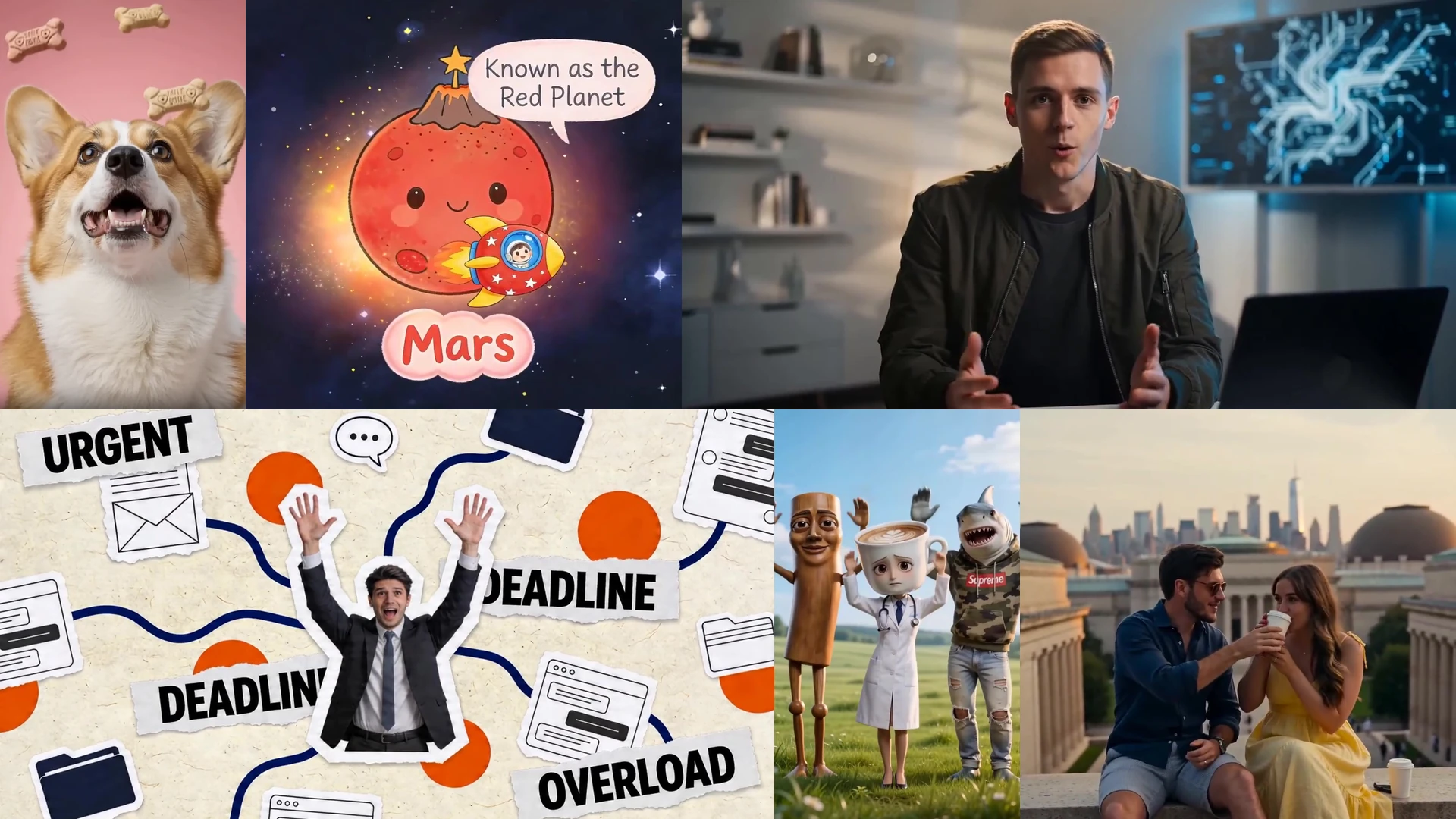
Pexo is not a traditional whiteboard animation tool. It is an AI video partner that generates explainer videos, including whiteboard-style animations, from a text conversation. You describe the concept, the audience, and the tone. Pexo picks the right AI model behind the scenes (working with Seedance 2.0, Kling AI, and more), suggests creative directions, and delivers a finished video.
If you have ever wanted to make a whiteboard explainer video but stalled at the blank canvas, this conversational workflow removes the friction entirely. No prompt engineering, no asset hunting, no timeline.
Pros:
- Conversational workflow: describe what you want in plain language, and Pexo builds it
- Multi-model routing picks the best generation model for your specific video
- Accepts text, image, URL, or audio as starting input
- Delivers complete, publish-ready videos, not raw clips
Cons:
- Credit-based usage. Heavy production volumes will need a paid plan
- Less manual frame-by-frame control than dedicated whiteboard tools
- The whiteboard aesthetic is one of many styles, not the sole focus
Pricing: Free tier available (credit-based). Paid plans from $8/month.
Best for: Anyone who wants a finished whiteboard explainer video fast, without learning animation software. Especially strong for product demos, social content, and AI explainer videos where speed matters more than hand-placing every stroke.
3. VideoScribe: Best for Polished Hand-Drawn Animations
VideoScribe by Vyond (formerly Sparkol) is one of the original whiteboard animation tools. It specializes in the classic hand-drawing effect and offers a large library of SVG images that animate as if being sketched in real time.
If you are weighing VideoScribe against Doodly, the Doodly vs VideoScribe comparison breaks down the key differences. And if VideoScribe does not quite fit, there are several strong VideoScribe alternatives worth exploring.
Pros:
- Best-in-class hand-drawing animation quality
- Extensive SVG image library with a natural sketch feel
- Import custom fonts and SVGs for brand consistency
Cons:
- Monthly pricing is $35/mo (annual brings it down to ~$16.60/mo)
- The timeline editor has a learning curve for beginners
- Limited AI features compared to newer tools
Pricing: 7-day free trial. $35/month (monthly) or ~$16.60/month (annual).
Best for: Educators and marketers who want the most authentic whiteboard look and are willing to invest time learning the editor.
4. Vyond: Best for Corporate Training
Vyond is an enterprise-grade animation platform that includes a whiteboard style alongside contemporary and business-friendly animation modes. It is widely used in corporate training, HR onboarding, and compliance videos. According to G2, Vyond holds a 4.5/5 rating across 400+ reviews, making it one of the highest-rated animation platforms in the enterprise segment.
Pros:
- Three distinct animation styles (whiteboard, contemporary, business friendly)
- AI script assistant helps generate video scripts from prompts
- Strong brand control with custom characters and templates
Cons:
- The most expensive option on this list. Essential plan starts at $49/month
- The whiteboard style is just one of three modes, not the primary focus
- No free plan. The 14-day trial requires a credit card
Pricing: Essential $49/mo, Premium $89/mo, Professional $179/mo (per seat, billed annually is lower).
Best for: Companies that need a single animation platform for multiple video styles, especially training and internal communications.
5. Animaker: Best Budget-Friendly Option
Animaker offers whiteboard animation as one of several video styles in a browser-based platform. It is one of the more affordable options, with a free plan that lets you test the core features (though exports carry a watermark).
Pros:
- Free plan with access to whiteboard templates
- Intuitive drag-and-drop interface
- Supports multiple animation styles beyond whiteboard
Cons:
- Free exports are watermarked and limited to 720p
- The whiteboard-specific asset library is smaller than Doodly or VideoScribe
- Some advanced features (like custom character builders) require the Business plan
Pricing: Free (watermarked, 720p). Basic $20/mo, Starter $35/mo, Business $59/mo.
Best for: Small teams and solo creators who need a low-cost entry point into whiteboard animation without committing to a subscription upfront.
6. CreateStudio: Best One-Time Purchase Option
CreateStudio is a desktop video animation tool with a one-time purchase model. It includes whiteboard animation among its styles, along with 2D/3D character animation and motion graphics.
Pros:
- One-time payment ($79) with no recurring fees
- Includes 2D/3D characters, motion graphics, and whiteboard styles
- Works offline on Mac and Windows
Cons:
- The interface feels dated compared to browser-based alternatives
- Asset library is smaller without purchasing add-on packs
- No free trial. The $79 entry point is a commitment for casual users
Pricing: $79 one-time purchase. Add-on asset packs sold separately.
Best for: Creators who strongly prefer a one-time cost over subscriptions and need basic whiteboard animation alongside other video styles.
7. Renderforest: Best for Quick Online Explainers
Renderforest is a browser-based video and animation platform that includes whiteboard animation templates. It is designed for speed: pick a template, swap in your text and branding, and export.
Pros:
- Fully browser-based, no downloads needed
- Large template library across many video styles
- Fast turnaround from template to finished video
Cons:
- Free plan exports are watermarked and capped at 3 minutes
- Whiteboard templates offer limited customization compared to dedicated tools
- HD export (1080p) requires the Business plan at $29.99/month
Pricing: Free (watermarked, 720p, 3 min). Lite $14.99/mo, Pro $29.99/mo, Business $49.99/mo.
Best for: Small businesses that need a quick whiteboard explainer without installing any software.
How to Choose the Right Whiteboard Animation Software
Start with your core need. If you want maximum control over every drawn stroke and asset placement, Doodly or VideoScribe give you that level of precision. If you need corporate-grade animation with multiple styles, Vyond is the standard.
If your priority is speed and you would rather describe your video idea than build it frame by frame, an ai video generator online like Pexo cuts the production time dramatically. You skip the learning curve entirely and get a finished video from a conversation.
Budget matters too. Animaker and Renderforest offer free tiers for testing. CreateStudio eliminates recurring costs. Pexo's credit-based model lets you start free and scale as needed.
Conclusion
Whiteboard animation software has matured well beyond basic sketch effects. The seven tools above cover every workflow, from manual asset assembly to fully AI-driven video generation.
For most people who want a whiteboard explainer video without the production overhead, Pexo is the strongest starting point. Describe your idea, let the AI handle the creative execution, and get a publish-ready video back. For those who need granular control over every frame, VideoScribe and Doodly remain the gold standard in traditional whiteboard animation.