
 ChatGPT
 Perplexity
 Claude
 Gemini
 Grok
Grok


Animated Video for Business: What It Is and How to Start
An animated video for business is a short, motion-based visual piece that uses illustration, motion graphics, or AI-generated imagery to communicate a brand message, explain a product, or promote a service without live-action filming. Companies use animated videos across ads, onboarding, social media, and internal training to simplify complex ideas into clear, shareable content.
Key takeaways:
- Animated video replaces the need for cameras, actors, and physical sets with digital motion and visual storytelling.
- Businesses of every size now use animated video for product demos, social ads, explainers, and training content.
- AI-assisted tools can generate an initial draft, while review and refinement determine whether it is usable.
- Conversational AI workflows can simplify video creation, but human review and refinement are essential for the final output.
What Is an Animated Video for Business?
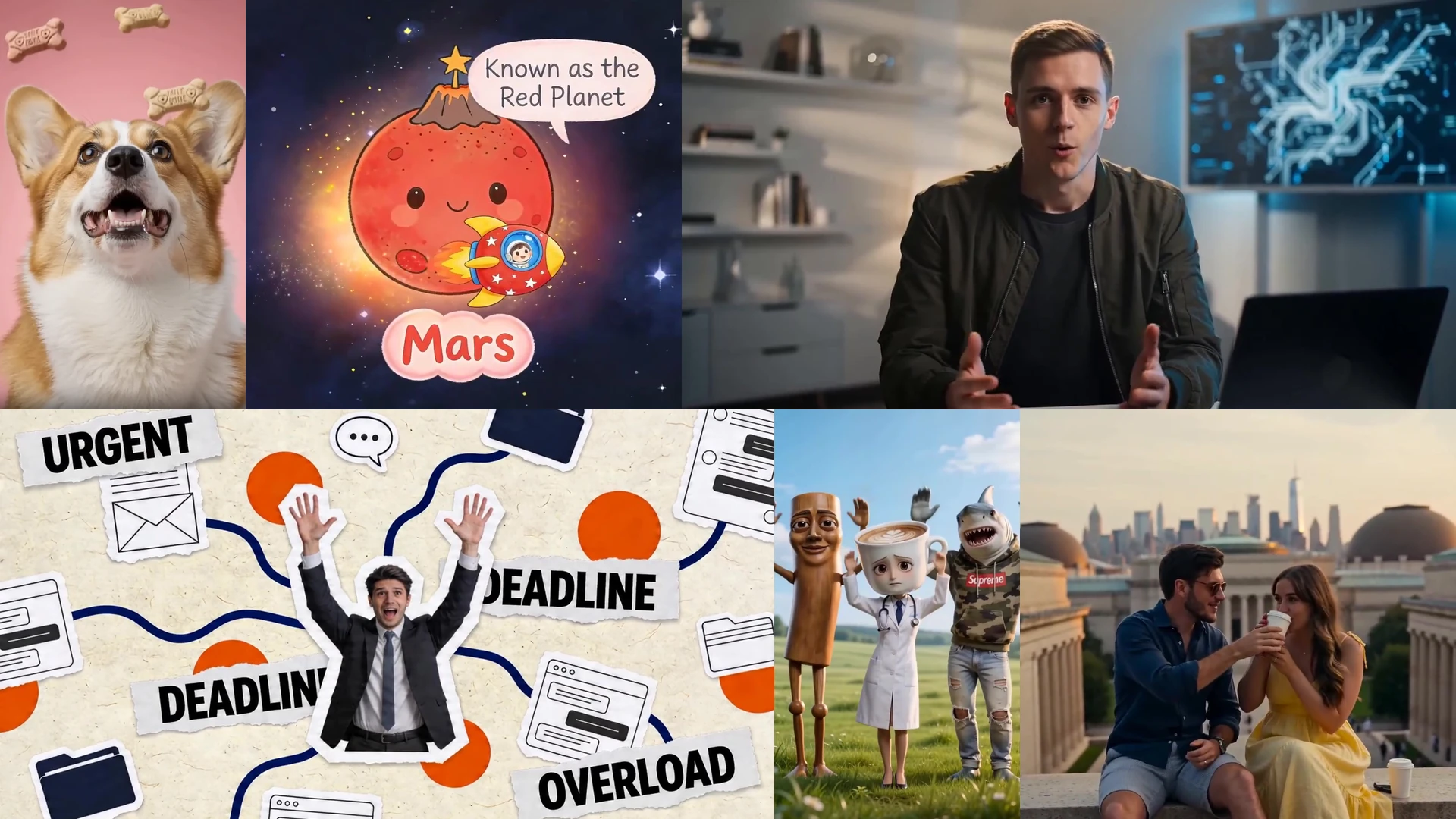
An animated video for business is any video that relies on drawn, designed, or digitally generated visuals rather than real-world footage to deliver a commercial message. The category spans whiteboard explainers, 2D character animations, kinetic typography, motion-graphic product demos, and fully AI-generated scenes.
What separates business animation from entertainment animation is intent. A business animated video exists to drive a measurable outcome: a signup, a purchase, a support ticket avoided, or a concept understood. The format works because animation can visualize things a camera cannot. You can show the inside of a SaaS dashboard, illustrate a supply chain, depict a product that hasn't been manufactured yet, or set the tone for a novel when you learn how to make a book trailer.
Where Animated Business Video Came From and Why It Matters Now
Animated explainer videos became a significant tool in business communication. Current research, such as Wyzowl's State of Video Marketing survey, indicates that video remains a widely used marketing tool, with explainer videos being a common format.
Historically, creating even a short animated video often involved engaging a production agency, requiring specialized skills and a substantial budget. This limited access for many small businesses and individual creators. Recent advancements in generative AI models have begun to make animated video production more accessible, shifting the focus from extensive technical expertise to the clear communication of creative intent.
How Animated Video for Business Works in Practice
The traditional animated video workflow looks like this: write a script, hire a storyboard artist, send it to a motion designer, wait for revisions, add voiceover, and export. Each handoff adds days.
With an ai video agent like Pexo, the process can be streamlined. You describe what you need in plain language. For example: 'Make a 30-second product video for my new wireless earbuds. The key features are noise cancellation and 20-hour battery life. Keep it minimal, dark background, tech feel.' Pexo may accept a written brief, script, or accessible URL; generate scenes, voiceover, and captions; and provide a draft for scene review and conversational revision. Pexo may also support niche formats, such as book trailer software.
This conversational approach allows you to shape the output by describing changes, rather than using an editing interface. The draft must be reviewed and refined to ensure it meets your specific needs and quality standards.
How Animated Video Differs From Traditional Video Production
The gap between animated and traditional live-action production is not just aesthetic. It is structural.
| Startup cost |
| Timeline |
| Revision cycle |
| Visual range |
| Scalability |
| Best for |
Who Uses Animated Video for Business (and How)
Animated video is not a single-use format. Different teams use it for different jobs.
-
E-commerce and DTC brands create short product videos for TikTok, Instagram Reels, and paid ad campaigns. A promotional video for a small business can be assembled from a product photo and a brief.
-
SaaS companies and startups use explainer video animation to walk prospects through a product's value proposition without building a live demo environment. An animated explainer on a landing page can effectively communicate complex information.
-
Educators and trainers build animated lesson segments, onboarding walkthroughs, and compliance training modules. Animation lets you standardize the message across regions and languages without reshooting.
-
Marketing agencies produce client deliverables. A single strategist can concept and deliver an animated video without routing through a motion design queue. For agencies evaluating options, a breakdown of the best AI video solutions for business covers the current landscape.
How to Start Making Animated Videos for Your Business
Getting started can be streamlined with AI-assisted tools. Here is a practical path.
1. Define the job the video needs to do. Is it a product ad, a social post, an internal training clip, or a landing-page explainer? The job determines the length, tone, and format. A TikTok ad needs vertical 9:16 and a hook in the first two seconds. An explainer video needs a clear problem-solution arc in 60 to 90 seconds.
2. Gather your inputs. Gather a clear brief, verified source facts, brand guidance, and an accessible URL when relevant.
3. Start a conversation with Pexo. Describe what you want the way you would tell a colleague: "I need a 30-second video showing how our app saves time on invoicing. Clean, professional, blue palette." Pexo may generate scenes, voiceover, and captions, and provide a draft for scene review and conversational revision. You shape the output by describing changes, rather than using an editing interface.
4. Review and refine. Pexo provides a draft for scene review and conversational revision. If the pacing feels off, or you want a different opening shot, describe the change. This iterative process allows for shaping the output.
5. Export and publish. Once you are satisfied, export the final video in the aspect ratio and resolution you need. Post it directly to your social channels, embed it on your website, or hand it off to your ad manager.
Conclusion
Animated video for business has become a versatile tool for communication and marketing. AI-assisted generation and conversational workflows can streamline the creation of animated content. Consider starting a small project with Pexo to explore how it can support your business needs.