
 ChatGPT
 Perplexity
 Claude
 Gemini
 Grok




Your product sample is ready, the claims are approved, and the launch date is fixed. But the production companies on your shortlist point in very different directions: one specializes in studio product shoots, another in SaaS demos and reusable campaign assets, and a third in animation. A polished portfolio still won't tell you whether a company can deliver the full set of assets your campaign needs—or whether cutdowns, source files, usage rights, and production logistics are included in the quote.
If you're choosing a production partner for a product launch, this comparison looks beyond showreels. It evaluates Lemonlight, Vidico, and Yum Yum Videos against the same project brief, using their published services and case material to show where each company fits, where it may fall short, and what to confirm before accepting a quote.
The shared brief comes from Morrow Carry, an invented travel-accessories brand launching a compression pouch. The campaign needs a 45-second hero video, a 15-second paid-social cutdown, a product-page version, and a short retailer presentation. This gives us a consistent way to compare live-action production, SaaS-focused product storytelling, and animation against the same delivery requirements.
Which Product Video Must a Company Deliver?
Write the deliverable before choosing the company. Morrow Carry’s brief has four outputs, but one story. The hero video should show the pouch compressing a jacket, explain the use case, and end with the product name and CTA. The paid cutdown needs a faster opening and captions. The product-page version needs room for a clear demonstration. The retailer presentation needs a clean explanation without campaign-only language.
A quote should identify who handles:
-
creative concept and script;
-
storyboard or shot list;
-
casting, crew, location, and props;
-
product shipping and on-set handling;
-
filming, animation, editing, sound, and captions;
-
cutdowns, alternate ratios, source files, and usage rights.
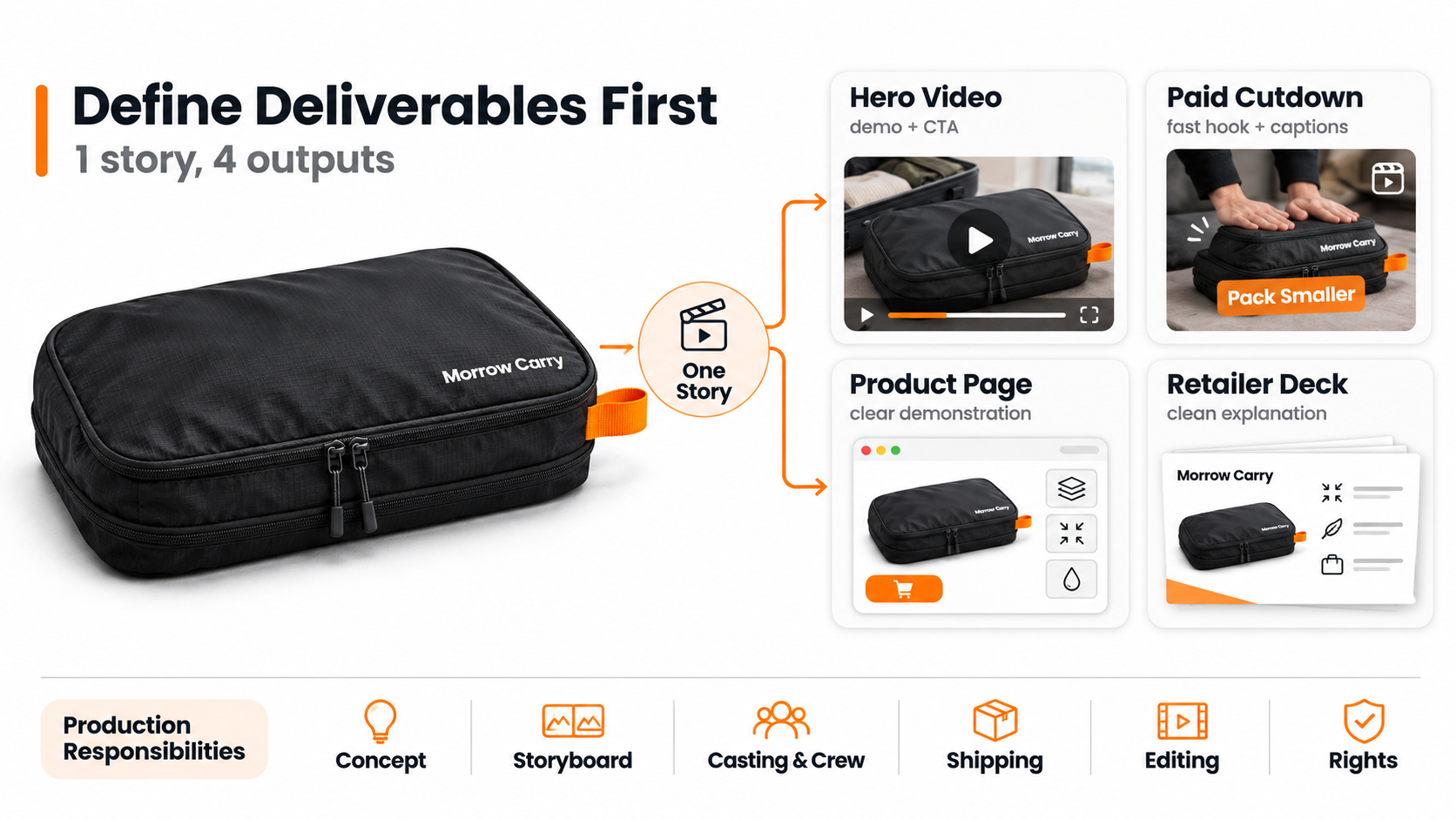
A company can produce a beautiful hero film and still leave the team without the cutdowns or source files needed for launch. Decide those deliverables before comparing portfolios.
How Were the Production Companies Selected?
The comparison uses the same five questions for each company:
-
What kind of product or story does the company publicly show?
-
Which production steps does it handle in-house or manage end to end?
-
Can it support the formats and cutdowns in the brief?
-
What conditions affect location, talent, product shipping, or schedule?
-
Which quote details should the marketing team settle before booking?
The examples below come from current official service pages and public case material. They show fit and scope, not a universal ranking.
1. Lemonlight for Live Product Capture
Suitable Project, Deliverables, and Limits
Lemonlight suits a physical product that needs to be filmed, lit, handled, and demonstrated. Its product-video service page describes doc-style, lifestyle, curated, animated, and studio approaches. The page also lists product-video examples, typical production windows, and starting prices for several styles.
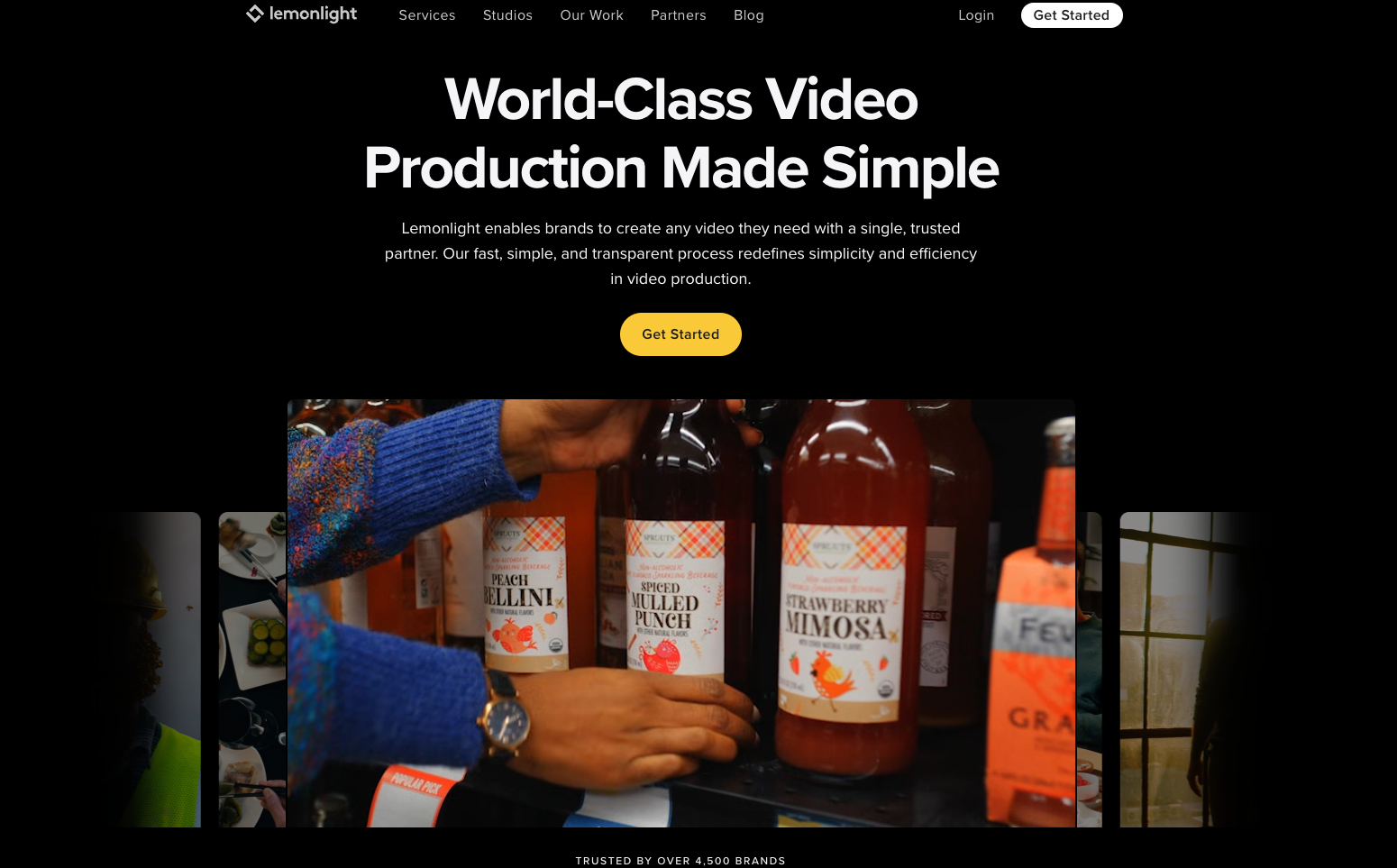
For Morrow Carry, the studio option could emphasize the pouch’s zipper, fabric, folding action, and interior panel. A lifestyle approach could place the product in a travel setting. A curated approach could combine supplied footage with new material when the team already has a usable demonstration.
Lemonlight describes distribution across product pages, social media, OTT, and broadcast. Its product-video page also says the company can handle pre-production details such as actors, locations, and props, while a physical product sample still needs to reach the production team.
The quote should spell out the shoot location, number of setups, product handling, actor or founder participation, music, voiceover, captions, source footage, and each cutdown. The listed timelines are averages, and rush work or rescheduling can change the cost. A team with a fixed launch date should share it before booking crew.
2. Vidico for SaaS Product Stories
Suitable Project, Deliverables, and Limits
Vidico is aimed at B2B and SaaS teams that need product demos, explainers, walkthroughs, launch videos, and reusable campaign assets. Its product-demo production service describes a process covering creative briefing, script and talent, production, editing, and delivery. The page also presents a template system that can turn one product video into multiple assets.
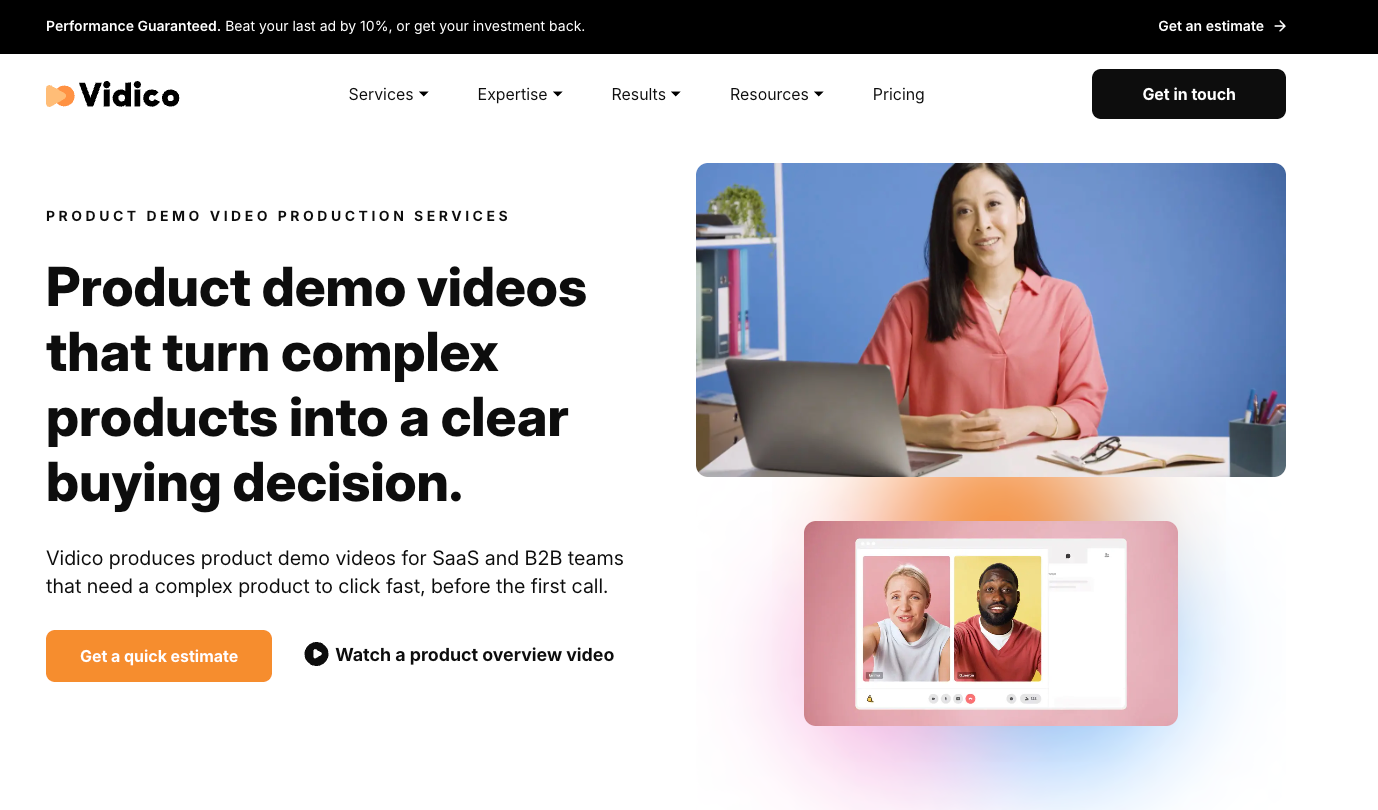
Vidico would fit Morrow Carry if the campaign were centered on a digital product, such as a packing app that recommends what fits into the pouch. The team could use screen capture, live action, animation, or a blend. For the physical pouch itself, the brief would need to confirm whether the company is filming the item, using supplied footage, or building a hybrid sequence.
The production model is useful for a SaaS team that expects recurring videos. One approved story can feed a homepage video, sales email, paid-social cut, and product update. The quote should identify the number of production cycles, the reusable template system, localization, review rounds, and what happens when the interface or product story changes.
A SaaS-oriented company may be less suitable when the central challenge is a detailed physical product shoot with multiple materials, finishes, and on-set demonstrations. Ask who owns the product capture and which team handles any live-action work.
3. Yum Yum Videos for Animated Explainers
Suitable Project, Deliverables, and Limits
Yum Yum Videos specializes in animated explainer production. Its current company page describes custom animated explainers, animation and design teams, and offices in Miami and Buenos Aires. Its case-study library shows animation work for software, finance, healthcare, and other complex products.
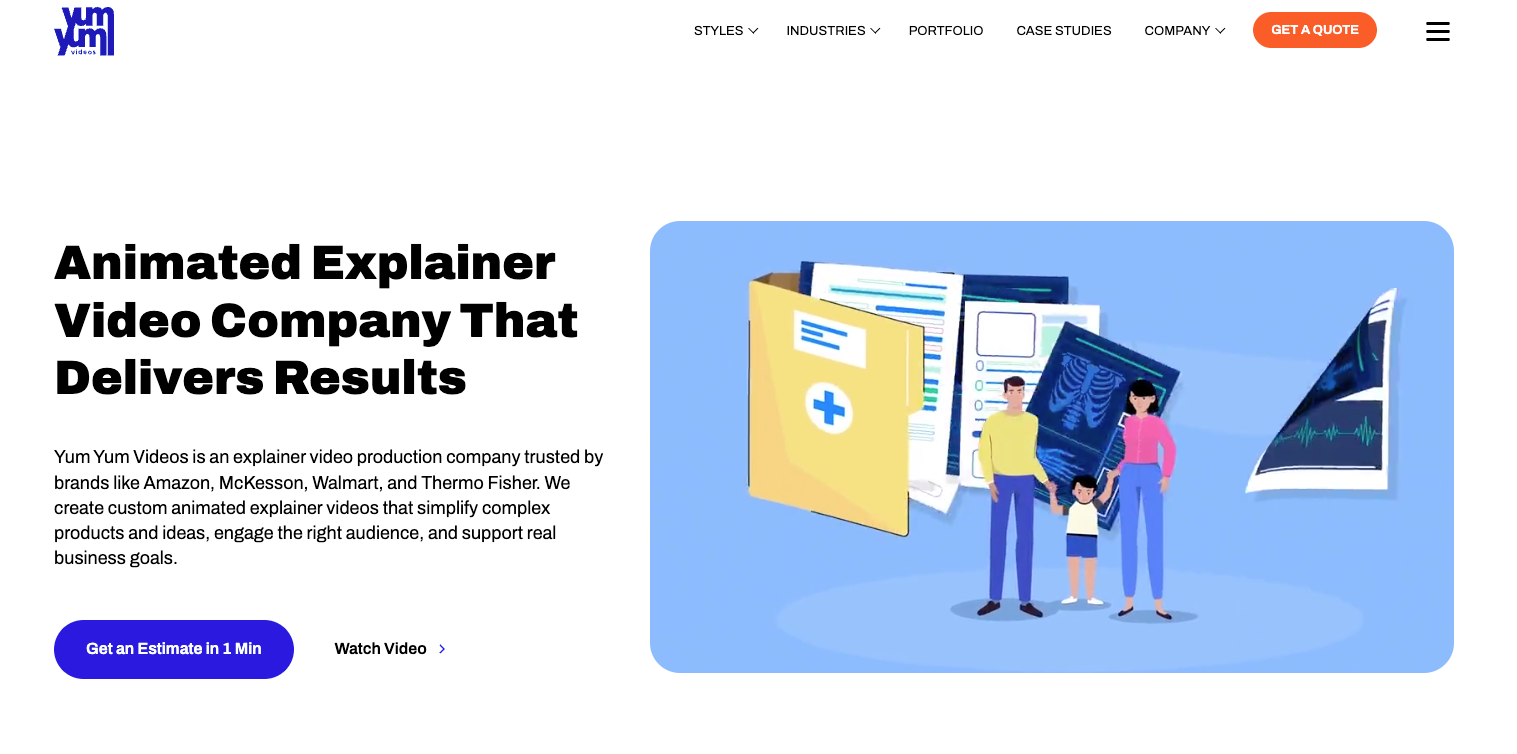
Yum Yum would fit a product marketing brief where the audience needs a concept explained through characters, diagrams, motion graphics, or a simplified process. For Morrow Carry, animation could show the pouch moving through a packing problem, then use a stylized product illustration to explain the solution.
That route works best when the visual idea carries the explanation. The brief should specify whether the product must match a real packshot, whether a 3D or illustrated representation is acceptable, and which claims require real product evidence. If the pouch’s fabric, zipper, or capacity needs to be inspected, include approved photography or filmed material alongside the animation direction.
The quote should cover script, storyboard, style frames, character or object design, voiceover, music, revisions, captions, source files, and cutdowns. Animation revisions can happen at several stages. Changing the approved story after design or animation begins may affect the schedule and fee.
A Quote Checklist for One Product Launch
Give every company the same Morrow Carry brief and ask for the same response.
| Quote field | What the team should request |
|---|---|
| Core deliverable | Length, channel, aspect ratio, language, and CTA |
| Cutdowns | 15-second, square, vertical, retailer, and captioned versions |
| Creative scope | Concept, script, storyboard, shot list, style frames |
| Production | Crew, location, talent, props, product shipping, insurance |
| Animation | Design style, characters, 2D/3D work, screen capture, modeling |
| Post-production | Edit, color, sound mix, voiceover, captions, music |
| Review rounds | Number of included rounds and what counts as a new scope |
| Source files | Raw footage, project files, graphics, audio, captions, exports |
| Rights | Talent, music, stock, voice, location, territory, term |
| Schedule | Pre-production, shoot or animation, review, final delivery |
| Change costs | Rescheduling, new claims, new scenes, extra cutdowns, rush work |
Ask who signs off on the product facts. A creative approval does not confirm that the product name, capacity, packaging, or performance wording is correct. Keep the approved claim sheet with the brief.
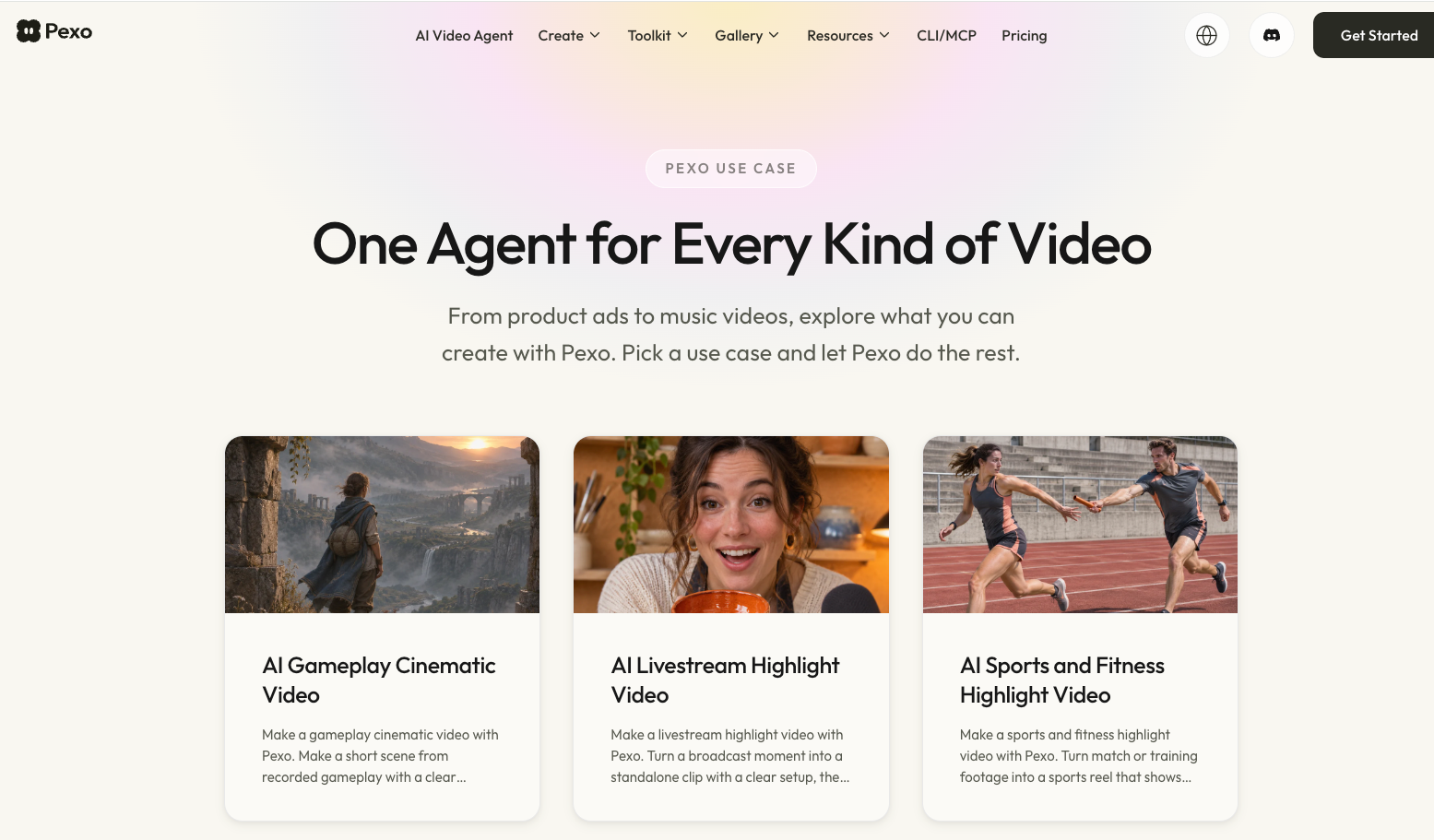
For teams considering a conversational production route after the source materials are approved, Pexo’s Create page can be evaluated separately. Pexo can organize approved direction and assets into a video workflow, but it does not supply a live-action crew, cast, location, or studio shoot.
When Can an In-House Video Workflow Cover the Brief?
An in-house team can cover the brief when it has the product, a suitable space, lighting, sound, editing time, and someone who can manage the review process. A short demonstration with one product, one location, and a simple CTA may not need an external production company.
Use an outside company when the brief depends on crew, talent, specialized lighting, animation, location management, or a compressed schedule. The decision also depends on how many versions the campaign needs. A single hero video may fit an internal team, while a hero video plus cutdowns, localization, and retailer exports can quickly become a larger production task.
Keep the source material organized either way. Pexo’s product-page video guide shows how to separate the product source, visual context, approved claims, and destination CTA before production.
FAQ
Can a production company source local crew outside its listed cities?
Often, yes. Lemonlight describes vetted local crews in many cities, while other companies may work through regional partners or travel from a central office. Ask who will crew the project, who supervises the shoot, and whether travel or local production fees are included.
Can a studio film a sample that cannot be shipped internationally?
Sometimes. The team may use a local sample, a client-side shoot, or supplied footage. Confirm the exact product version, packaging, and approval process before accepting a substitute. A visually similar sample can create a product-accuracy problem in the final video.
Who owns unused concepts after a project is canceled?
The contract should answer that. Ask about scripts, storyboards, style frames, unused footage, animation designs, music, and concepts created before cancellation. Ownership can differ between paid deliverables and unused development work.
Can an agency reuse a hired actor in later product cutdowns?
Generally, only when the talent agreement covers the later cutdown, placement, territory, duration, and paid-media use subject to the applicable agreement and law. A new channel or campaign may require a new license or fee. Keep the agreement with the final exports.
What if a launch date moves after crew booking?
Tell the production company as soon as the date changes. The contract may define rescheduling fees for crew, locations, talent, equipment, and post-production slots. Ask for a revised schedule and cost before confirming the new date.
Conclusion
Lemonlight fits brands that need live product capture and managed production logistics. Vidico fits SaaS and B2B teams that want product stories, demos, and reusable campaign assets. Yum Yum Videos fits animated explainers where design and narrative carry the explanation.
Send each company the same brief and compare the scope behind the quote. The useful decision will come from deliverables, production conditions, revision terms, source files, rights, and schedule.
This article does not provide legal advice. Confirm the current service scope, quote, contract, talent, music, source-file, and usage terms before booking production.