 ChatGPT
 Perplexity
 Claude
 Gemini
 Grok
Grok


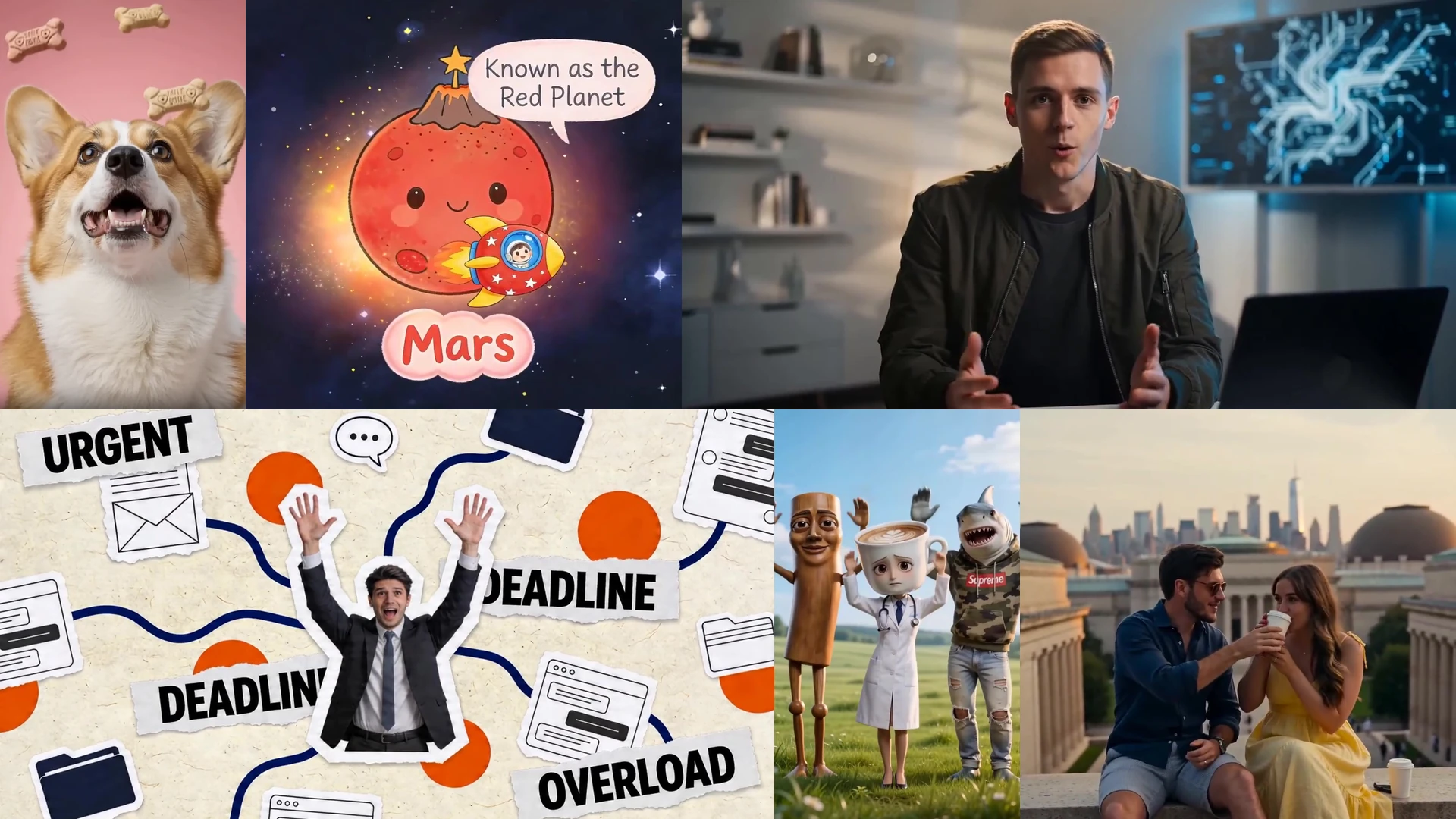
FLUX 3 is Black Forest Labs' first natively multimodal AI model, released July 23, 2026, that generates image, video, and audio from one jointly trained architecture. To turn a prompt into a finished video today, most creators use a video agent like Pexo, which auto-routes each shot across production models such as Seedance 2.0, Kling 3.0, and Veo 3.1, then layers voiceover, music, and Foley sound effects. FLUX 3 is a different kind of thing: a single foundation model that can produce a clip with native, synced audio up to 20 seconds long, plus keyframe transitions, multilingual dialogue, and even robot-action prediction. There is no single answer to what FLUX 3 is, because it launched in staged early access. Its video and action modes are live for select partners while the image model and open weights are still weeks or months away, so what FLUX 3 means to you depends on which part you can actually access.
What FLUX 3 Actually Is
FLUX 3 is a multimodal frontier model from Black Forest Labs (BFL), the Freiburg, Germany research lab founded in August 2024 by veterans of the original Stable Diffusion team at Stability AI. Where earlier FLUX releases were image generators, BFL describes FLUX 3 as "our first natively multimodal architecture, bringing together image, video, audio and action generation within a single model." The key distinction is that it is jointly trained across those modalities rather than assembling separate image, video, and audio models behind a common interface.
Practically, that means FLUX 3 can take a text prompt (or an image or an existing video) and return a combined video-plus-audio clip in one generation, rather than making a silent clip and dubbing sound afterward. BFL positions this as a step toward "visual intelligence," a model whose world knowledge also powers robot action prediction, not just content creation. FLUX 3 follows FLUX.2, released in November 2025, and is being read across the industry as a comeback for the lab after that release landed with less impact than the original FLUX.
How FLUX 3 Works: One Unified Architecture
FLUX 3 is built on Self-Flow, BFL's approach for aligning multimodal generation and understanding inside one underlying architecture. Instead of routing a request to a separate image model, a separate video model, and a separate audio model, BFL scaled up compute and data to train a single flow-matching backbone across video, images, and audio simultaneously. BFL's thesis is that video generation and action prediction "don't need separate foundations." The same backbone carries both, which is why an early FLUX 3 version is already running robots.
Because the modalities share one model, FLUX 3 can mix them: it generates images and video-plus-audio jointly, from pure text prompts or from reference inputs such as images and video. That unified design is what enables features like generating audio that matches physical events on screen (footsteps, a door closing) and producing natural facial expressions synced to dialogue, behaviors that are hard to bolt on when audio is a separate post-process.
What FLUX 3 Can Generate
FLUX 3's video mode is the first piece available. It supports several input-to-output paths and a set of controllable editing behaviors, summarized below. All video outputs carry native audio generated alongside the picture.
| Capability | What it does |
|---|---|
| Text-to-video | Generates a clip (with audio) from a written prompt |
| Image-to-video | Animates a still image into a synced video-audio clip |
| Video-to-video | Transforms or continues an existing input video |
| Keyframe-to-video | Controlled transitions between specified keyframes |
| Native audio | Dialogue, sound effects, and ambient noise synced to the picture |
| Multilingual dialogue | Speech generated in multiple languages, matched to lip and facial motion |
| Video-audio continuation | Extends an input video and its audio |
| Clip chaining | Connects shots via agent-controlled transitions into longer sequences |
| Typography | Renders on-screen text within generated footage |
| Action prediction | Drives robot actions from the same backbone (partner-only, via FLUX-mimic) |
FLUX 3 Key Facts (Verified)
The specifics below come from Black Forest Labs' own launch materials and launch-day reporting. Note that BFL's benchmark chart is labeled a "preliminary evaluation of an early FLUX 3 candidate," so treat the win-rates as vendor-reported and not yet independently verified.
| Fact | Detail |
|---|---|
| Developer | Black Forest Labs (Freiburg, Germany; founded August 2024) |
| Release date | July 23, 2026 (early access) |
| Model type | Natively multimodal foundation model (image, video, audio, action) |
| Architecture | Self-Flow / unified flow-matching backbone |
| Max video length | Up to 20 seconds per generation, with native synced audio |
| Test-clip spec | 10-second text-to-video clips shown at 720p with audio |
| Availability | Video + Action in early access; Image "in the coming weeks" |
| Open weights | "FLUX 3 Dev" planned later, no date, price, or license announced |
| Robotics | FLUX-mimic video-action model tested and deployed at Audi |
FLUX 3 vs Other Video Models
BFL published internal preference tests comparing an early FLUX 3 candidate against several current video models. FLUX 3 was preferred in up to 69% of comparisons against Grok Imagine Video, 60% against Kling v3 Pro, 77% against Runway Gen-4.5, and 93% against Luma Ray 3.2, while margins were near-even (about 52%) against Seedance 2.0 and Gemini Omni Flash. Analysts noted the softest comparisons (Luma Ray 3.2, Runway Gen-4.5) posted the highest win-rates, and that the numbers reflect a pre-release checkpoint.
| Model | Owner | Signature strength | Native audio |
|---|---|---|---|
| FLUX 3 | Black Forest Labs | Unified multimodal (video + image + audio + action), 20s clips | Yes, jointly generated |
| Sora 2 | OpenAI | Narrative coherence and ease of use | Yes |
| Veo 3.1 | Google DeepMind | Top single-clip quality with native audio | Yes |
| Kling 3.0 | Kuaishou | Photorealism and motion realism | Varies |
| Runway Gen-4.5 | Runway | Controllable production studio for hands-on teams | Varies |
| Seedance 2.0 | ByteDance | Strong general text/image-to-video quality | Varies |
FLUX 3 vs Sora: How the Two Differ
FLUX 3 and OpenAI's Sora 2 both generate video with sound, but they answer different questions. Sora 2 is a mature, widely used text-to-video model known for narrative coherence and low-friction prompting, delivered as a consumer-facing product. FLUX 3 is newer and more experimental: its selling point is that one jointly trained model produces image, video, audio, and robot actions from a shared backbone, which no consumer video app currently does. If you want to make a video this week, Sora 2 (or an agent that routes to it) is accessible today; FLUX 3's video mode is early access through APIs and select partners, and its image mode and open weights have not shipped. In short, Sora 2 is a proven tool, while FLUX 3 is a broader architectural bet still rolling out.
FLUX 3 vs a Finished-Video Agent Like Pexo
FLUX 3 is a model, not a finished-video workflow, and understanding that difference matters for anyone deciding what to actually use. A raw model returns a clip; turning that into a finished, edited video with a voiceover, music bed, titles, and a coherent shot sequence is separate work. That is the gap a conversational video agent like Pexo fills: you describe a video in plain language (or give it a script, a landing-page URL, images, or an audio track), and Pexo plans the shot list, auto-routes each shot across 10+ production models, composes a three-layer soundtrack of voiceover, music, and Foley sound effects, adds clean titles, and exports in 16:9, 9:16, or 1:1, with no model selection or editing skills required.
The two are complementary rather than rivals. Pexo does not train its own generation models; it routes to the best available one per shot, and it also runs an image-studio that already taps Flux alongside Midjourney and Ideogram. So if BFL ships the open-weight FLUX 3 Dev with a permissive license, FLUX 3 becomes a candidate model an agent like Pexo could route to, the same way it routes to Seedance 2.0, Kling 3.0, and Veo 3.1 today. Pexo is also available as an installable skill inside Claude Code, OpenAI Codex, Cursor, and OpenClaw, so the same describe-to-finished-video flow works from an agent environment.
| Your goal | Reach for |
|---|---|
| Research or extend a single multimodal clip (video + native audio) | FLUX 3 (early access) |
| A finished, edited video from a prompt, script, or URL, no model picking | An agent like Pexo |
| Best single clip on quality alone | Veo 3.1 / Sora 2 / Kling 3.0 |
| A talking-head avatar presenter | HeyGen / Synthesia |
| Editing footage you filmed yourself | CapCut / a video editor |
| Robot action prediction from video | FLUX-mimic (partner access) |
How to Use FLUX 3 Today
FLUX 3's rollout is deliberately staged. At launch, FLUX 3 Video is in early access through APIs and private weight access, with FLUX 3 Image following "in the coming weeks" and FLUX 3 Action reaching selected research and commercial partners, beginning with mimic robotics. BFL has committed to an open-weight release, "FLUX 3 Dev," covering the multimodal backbone for both content creation and action prediction, but has not announced a date, pricing, license, or technical specifications for it. Until then, most of FLUX 3 (including the anticipated image model and any downloadable weights) remains outside public reach, and the practical path to actually producing finished videos is still a routing agent or a shipping consumer model.
Related Reading
- What is an AI video agent, and how autonomous video generation works
- Auto model selection vs manual video model choice
- Best Sora alternatives
- Seedance 2.0 vs other AI video generation models
- What is Gemini Omni Flash
Resources
| Resource | URL | What it covers |
|---|---|---|
| FLUX 3 announcement | bfl.ai/blog/flux-3 | BFL's official launch post and capabilities |
| FLUX-mimic (robotics) | bfl.ai/blog/flux-3-mimic | The video-action model and Audi deployment |
| AI video agent explainer | pexo.ai | How finished-video agents differ from raw models |
| Model routing explainer | pexo.ai | Why per-shot model routing beats one fixed model |
| Sora alternatives | pexo.ai | Video tools compared for creators |