 ChatGPT
 Perplexity
 Claude
 Gemini
 Grok




Your brand may need ten creator videos for a new product, but the purchase usually starts with a much smaller question: what exactly should arrive in the asset folder? One platform may be ideal for ordering a finished clip. Another may make more sense when you need a creator to post from their own account. A third may bundle video with product reviews, photography, and longer-term creator programs.
That choice changes the budget, schedule, and rights your media team can use later. This guide compares Billo, Insense, and Cohley using one procurement brief.
What Is a UGC Platform Buying for a Brand?
A UGC platform can sell several different units of work:
-
a creator application and match
-
a product sample shipment
-
one finished vertical video
-
raw clips or unused takes
-
a second ratio or language version
-
a creator’s organic post
-
permission to run the content from the brand’s ad account
-
authorization to run ads through the creator’s handle
-
text, photo, or video reviews
-
a library or workflow for future campaigns
Put these units on separate lines in the brief. A creator-made file for the brand library follows a different review and rights path from a post the brand boosts through the creator’s account.
Use this fictional brief for the comparison. Morrow Carry, an invented travel-accessories brand, is launching a compression pouch and wants three creators to produce:
-
one 20–30 second vertical product demonstration each
-
a clear opening that shows the pouch in use
-
one approved packing claim
-
the product shipped to each creator
-
one round of corrections for missed brief requirements
-
the submitted video plus selected raw clips
-
a 1:1 cutdown for paid social
-
90 days of paid-media usage in the United States
-
permission for Morrow Carry to edit and run the asset from its own ad account
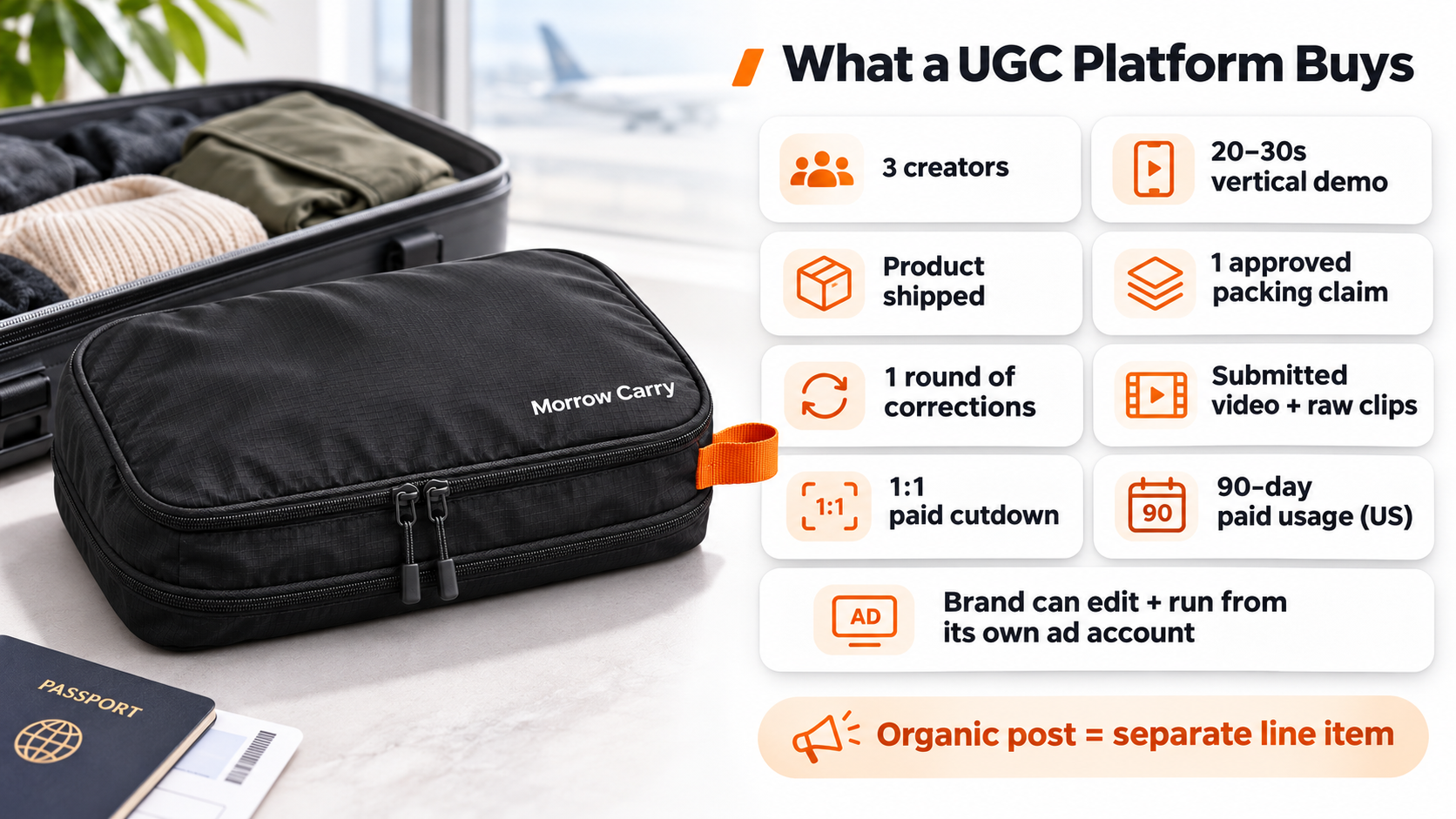
The brief also states whether creators must publish on their own channels. Morrow Carry needs creator-made footage, so an organic post is a separate line item.
How Were the Creator Platforms Compared?
The comparison uses the same questions for every platform: how creators are sourced, how products ship, what gets submitted, which revisions and source files are included, what rights transfer, and how the workflow handles paid ads, delays, or replacement creators.
The platforms serve different buying patterns. Billo is easier to evaluate as an order for a defined video. Insense is more useful when the campaign includes creator relationships and paid amplification. Cohley fits a broader content program where UGC sits beside reviews, photography, and influencer work.
1. Billo for Per-Video Creator Orders
Suitable Brief and Limits
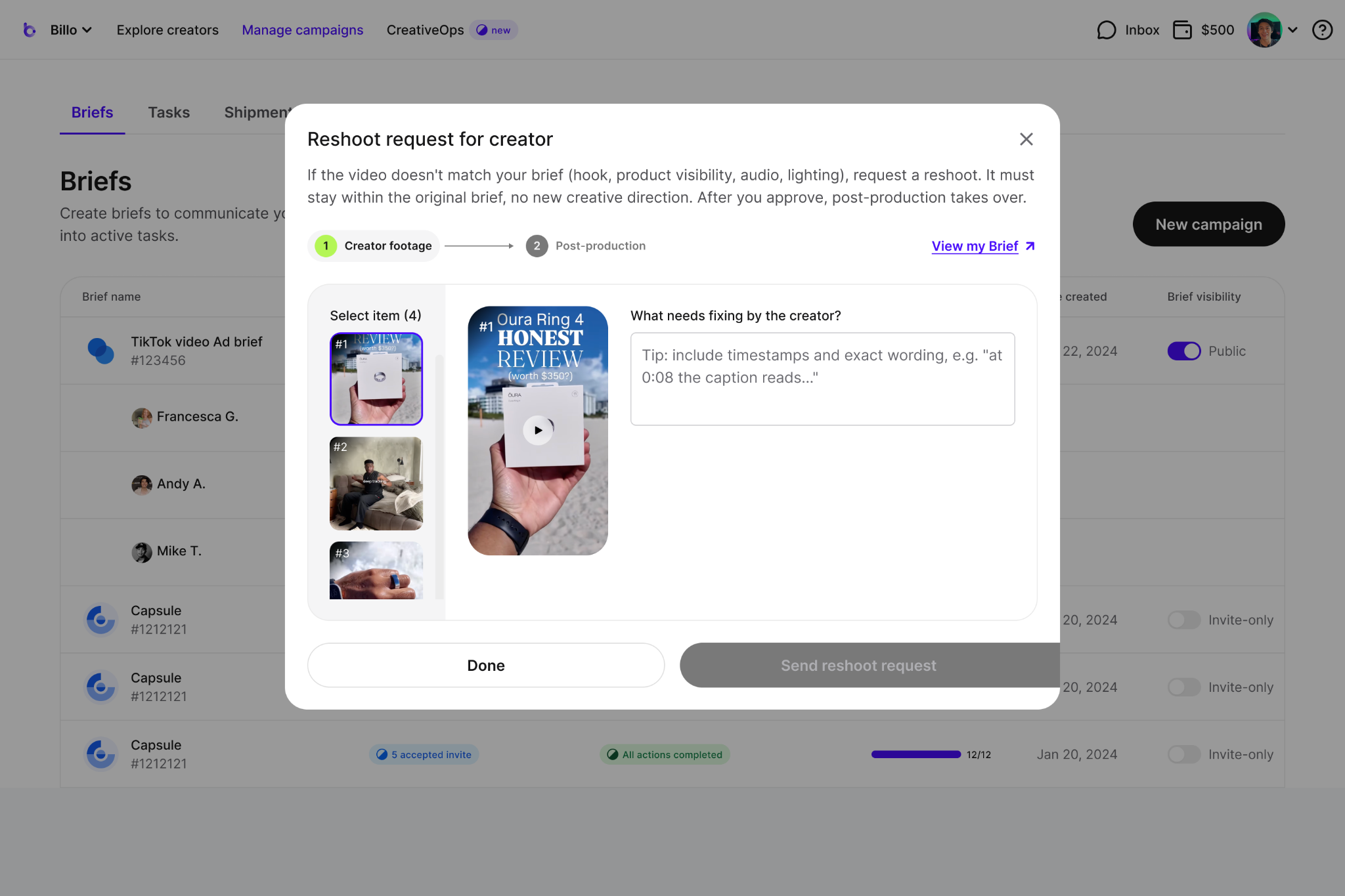
Billo fits a brand that can describe one video assignment clearly and wants to order creators against that assignment. Its current help documentation says approved videos transfer licensing and ownership rights to the brand, subject to full payment of the applicable Order Fee and acceptance of the Deliverables and allows two edit requests when they stay within the original brief.
For Morrow Carry, the order could ask the creator to show the pouch, demonstrate the packing action, say the approved claim, and finish with the CTA. The brand defines the length, framing, product appearance, and language before the creator applies.
The order needs a precise deliverables section. Billo’s standard guidance distinguishes the finished video from extras such as raw clips, B-roll, and alternate versions. If Morrow Carry wants unused takes or B-roll, these may be purchased as Additional Assets only when the creator separately lists them on Billo. A 1:1 crop can be ordered through Billo's Vertical + Square Crop add-on. It produces a cropped version of the original video, not a new shortened edit. “Full usage rights” for the approved video does not tell the brand whether a creator must supply every source file.
Billo’s revision structure suits corrections that bring a submission back to the brief. A changed claim, new location, or new opening is a new creative request, so put a change budget beside the original order.
Shipping also affects the true schedule. The production clock starts when the creator has the product and the information needed to film. A parcel delay can push the delivery date even when creator selection was fast.
2. Insense for Ongoing Creator Campaigns
Suitable Brief and Limits
Insense suits brands that need an ongoing creator program, a larger recruitment pool, or paid amplification through creator accounts. Its current creator terms state that advertising duration should appear in the campaign brief. For Creator Ads, Partnership Ads and Spark Ads, the campaign brief must specify the advertising-use duration. If omitted, the default is 30 days. Separate digital usage rights for approved Campaign Content are perpetual under the Brand Terms, subject to the applicable payment conditions.
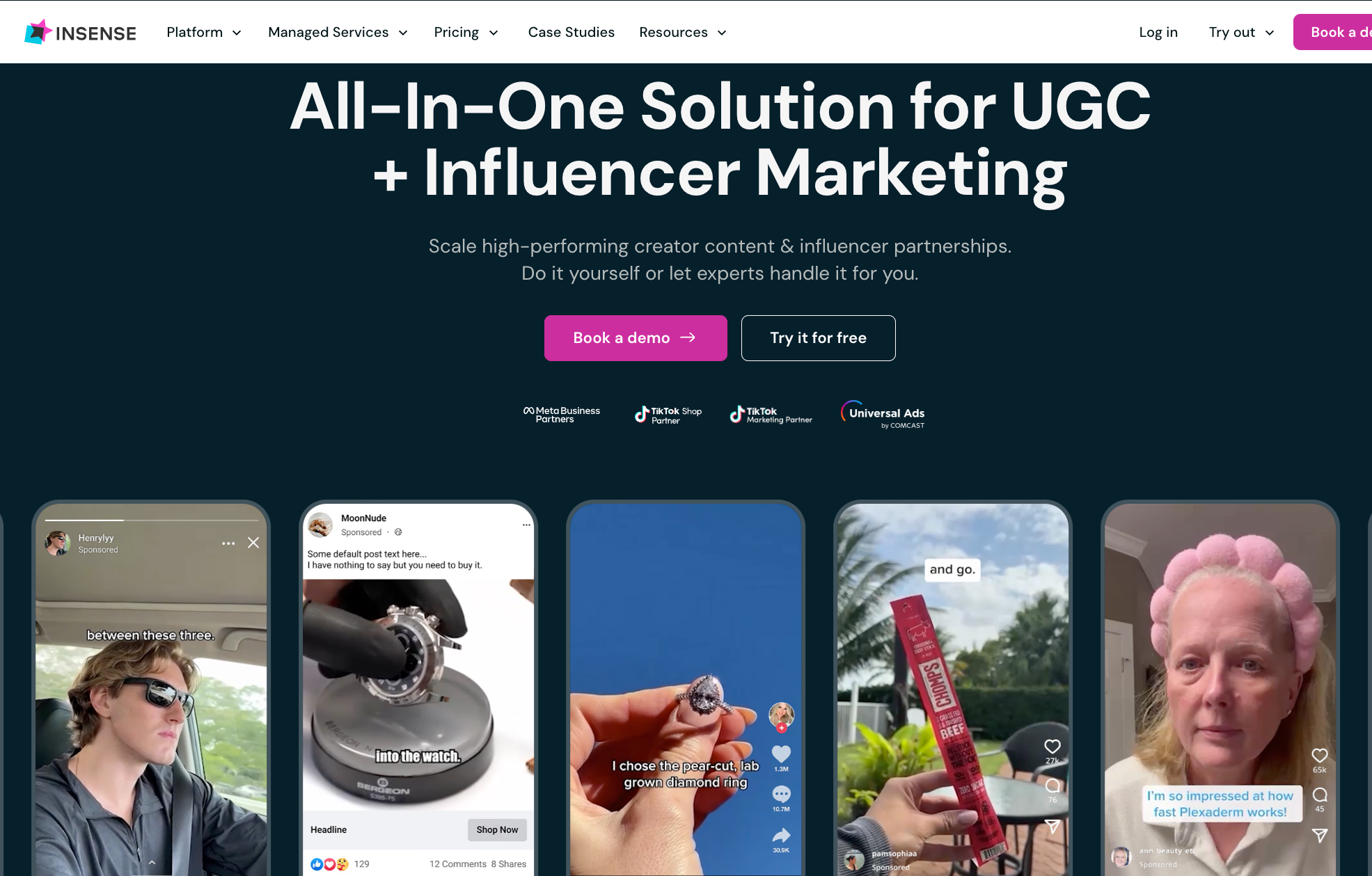
That detail changes how Morrow Carry should write the order. The brand wants 90 days of paid use in the United States, so the brief should state:
-
the start date for paid use
-
the end date
-
the country or territory
-
Meta, TikTok, and any other intended channels
-
permitted edits
-
whether the brand can use the file on product pages and email
-
whether the creator must publish organically
-
whether the brand may run ads through the creator’s handle
The last two lines describe different rights.A brand-account digital-use license lets Morrow Carry use and run the approved asset through its own advertising account. Any editorial changes should be explicitly agreed with the creator under the campaign terms. A Partnership Ad or Spark Ad arrangement gives the brand a route to amplify content through the creator’s account. One does not automatically grant the other.
Insense is useful when the brand recruits several creators around one product. Track each creator, shipment, script version, content ID, approval date, license term, territory, paid channels, and handle authorization.
Its campaign model can support different creator roles. One creator might film an unboxing, another might demonstrate the product, and another might publish a product story to their own audience. Keep the content type visible in the brief so the brand does not pay for a creator post when it only needs source footage.
Insense is a good fit for a continuing program where creator selection, paid usage, and campaign management are recurring tasks. It needs a clear owner on the brand side to approve scripts and rights before the campaign opens.
3. Cohley for Managed Creator Programs
Suitable Brief and Limits
Cohley fits brands that want a wider content program. Its current public plan information includes UGC video, influencer partnerships, text reviews, product seeding, photography, and a platform license. Feature availability varies by plan. The Product Seeding plan does not include Text Reviews or the Platform License; these are included in the Platform and Managed Services plans. That combination makes it useful when one product launch needs several types of proof.
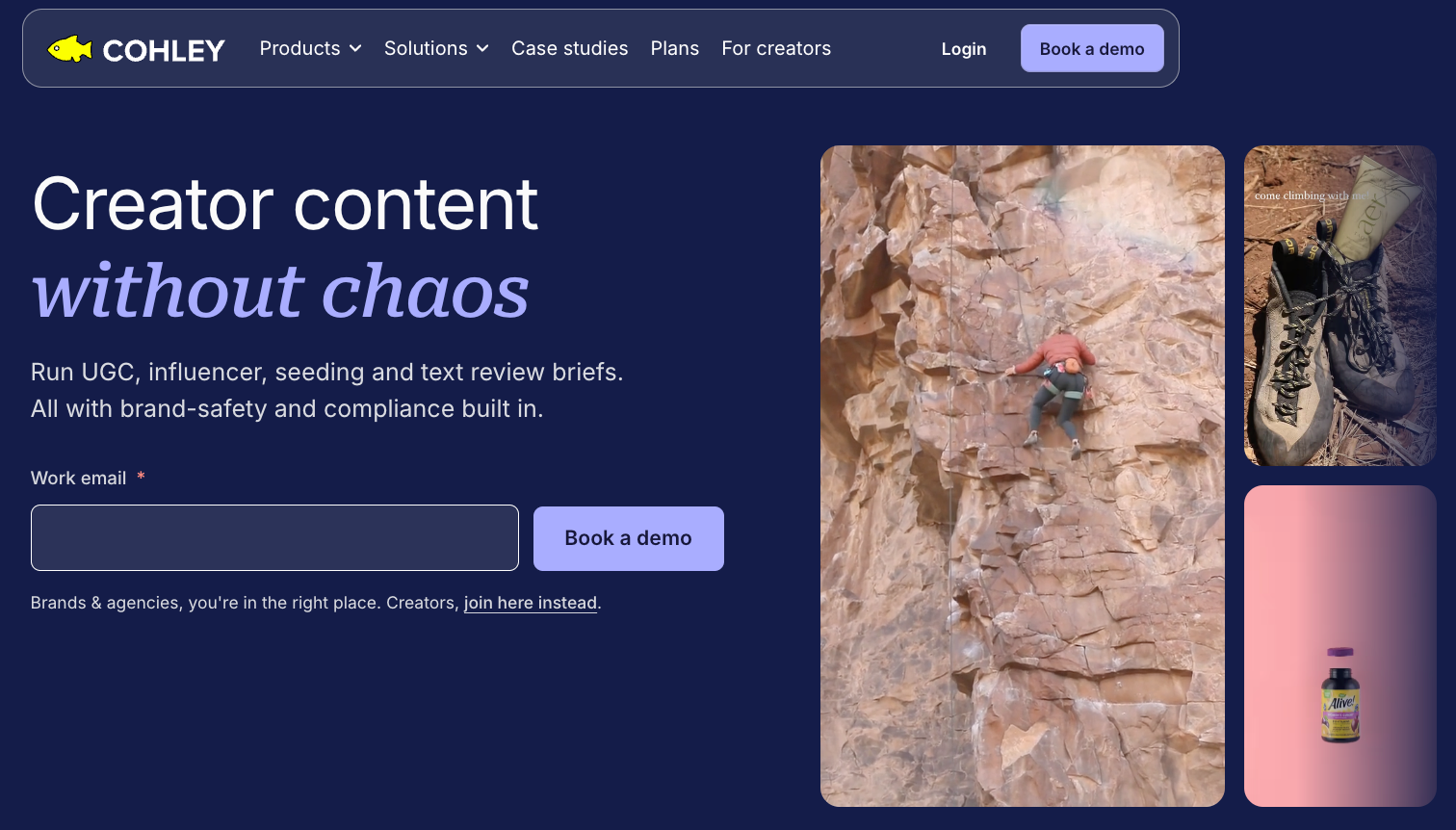
Cohley distinguishes UGC briefs from influencer partnership briefs. UGC goes to the brand library. Partnership content is published through the creator’s account. Choose the brief type before creators apply because the review and activation path changes.
For Morrow Carry, a UGC brief could collect three product demonstrations for paid social. A separate partnership brief could ask a creator to publish an approved packing routine on TikTok and supply the authorization needed for paid amplification. A review brief could collect genuine product-use feedback for the product page.
A product review also needs a different brief from a scripted demonstration. State what the creator must experience, which product version they receive, which claims they may make, and where the review will appear.
Cohley describes perpetual, universal usage rights for approved content. Decide whether the brand needs that broad grant or a narrower campaign license before comparing creator compensation.
A Creator Procurement and Rights Matrix
| Requirement | Billo | Insense | Cohley |
|---|---|---|---|
| Best starting point | Defined per-video order | Ongoing creator campaign | Multi-format content program |
| Creator sourcing | Match creators to a task | Recruit and manage campaign creators | Build creator and content programs |
| Product shipping | Brand or supported logistics | Campaign-specific shipping workflow | Product seeding and gifting |
| Finished UGC | Core order unit | Campaign deliverable | UGC brief deliverable |
| Raw clips | Creator-listed Additional Assets, purchased separately through Billo | Add to campaign scope | Add to brief and asset list |
| Alternate ratio | Specify before filming | Specify in deliverables | Specify in the brief |
| Revision scope | Brief-aligned edit requests | Up to 3 revision rounds included; additional rounds may incur fees | Set in brief and approval workflow |
| Brand-account ads | Confirm license and term | State channels and duration | Define in the content agreement |
| Creator-handle ads | Separate arrangement | Partnership Ads and Spark Ads options | Boosting workflow and creator authorization |
| Product reviews | Separate from standard video order | Add as a campaign type | Supported alongside video content |
| Main risk | Extras left out of the order | Handle access or license term omitted | Broad rights misunderstood as automatic source files |
Use the matrix during procurement, then turn each selected cell into a contract field. “Raw clips: yes” should become a file list. “Paid use: 90 days” should become a start date, end date, territory, and channel list.
How Should Approved Footage Enter Video Production?
Once a creator video is approved, store it with the rights record. The asset folder should include the creator name, content ID, product SKU, version, approval date, territory, paid channels, usage start and end dates, allowed edits, disclosure requirements, music source, and original files.
Send the editing team:
-
the approved video
-
selected raw clips and unused takes
-
the approved transcript and claim sheet
-
the product images and logo
-
the requested ratios and languages
-
the music and voice record
-
the creator agreement or rights summary
-
the client approval note
Pexo can use approved creator footage and direction in a finished product-video workflow. Pexo's AI Video Editor accepts uploaded creator footage for editing, while its Product Ad workflow generates an ad from a prompt or product photo. Choose the workflow that matches the source material.

FAQ
Can a Billo creator supply a second aspect ratio of the same video?
Yes, when the order or agreement includes it. A 1:1 cutdown should specify framing, crop rules, captions, and export settings because it may require a different edit rather than a simple resize.
Does Insense support creator-handle partnership ads?
Yes, Insense supports workflows for creator-handle advertising such as Meta Partnership Ads and TikTok Spark Ads. The brief must identify the platform, authorization method, usage period, and account that will run the ad.
Can Cohley collect product reviews as part of a video program?
Yes. Cohley supports text and video review programs alongside UGC and influencer briefs. The brand should define the review destination, product-use requirement, disclosure, claim boundaries, and whether the review may be reused in paid ads.
What if a shipped product sample never reaches the creator?
Pause the filming deadline and record the shipment status. Ask the platform or creator whether to resend the product, change the deadline, replace the creator, or cancel the assignment. Do not mark the creator late while the product is still in transit.
Can a brand replace a creator after a campaign brief is accepted?
Usually the platform and agreement determine the available route. Check whether the original assignment has created payment, shipping, usage, or cancellation obligations. Reopen the brief only after the first assignment is closed and any active content or product rights are recorded.
Conclusion
Billo works well for defined creator video orders. Insense fits recurring campaigns that combine sourcing, revisions, and creator-handle advertising. Cohley suits broader programs that combine UGC, influencer partnerships, product seeding, reviews, and photography.
The useful comparison happens at the deliverable level. Write down the finished file, raw footage, alternate ratios, review rounds, product shipment, paid channels, license term, territory, creator posting, and handle authorization before a creator accepts the brief.
Store the approved footage with its rights record before it enters editing or a finished-video workflow. This article does not provide legal advice.