
 ChatGPT
 Perplexity
 Claude
 Gemini
 Grok



Facebook ads cost has two lines that small teams often mix together. One line pays for delivery through Meta's auction. The other pays for the video that enters the auction, including the concept, production, revisions and reuse.
Keep those lines separate before you decide whether a campaign is affordable. Meta does not publish one universal price for a Facebook video ad. Delivery depends on the objective, audience, bid and account setup. Creative cost depends on the asset you need and how many accepted versions the team must produce.
What Makes Up the Cost of a Facebook Video Ad?
Use four budget buckets for a small product campaign.
Media Spend, Creative Production, and Revisions
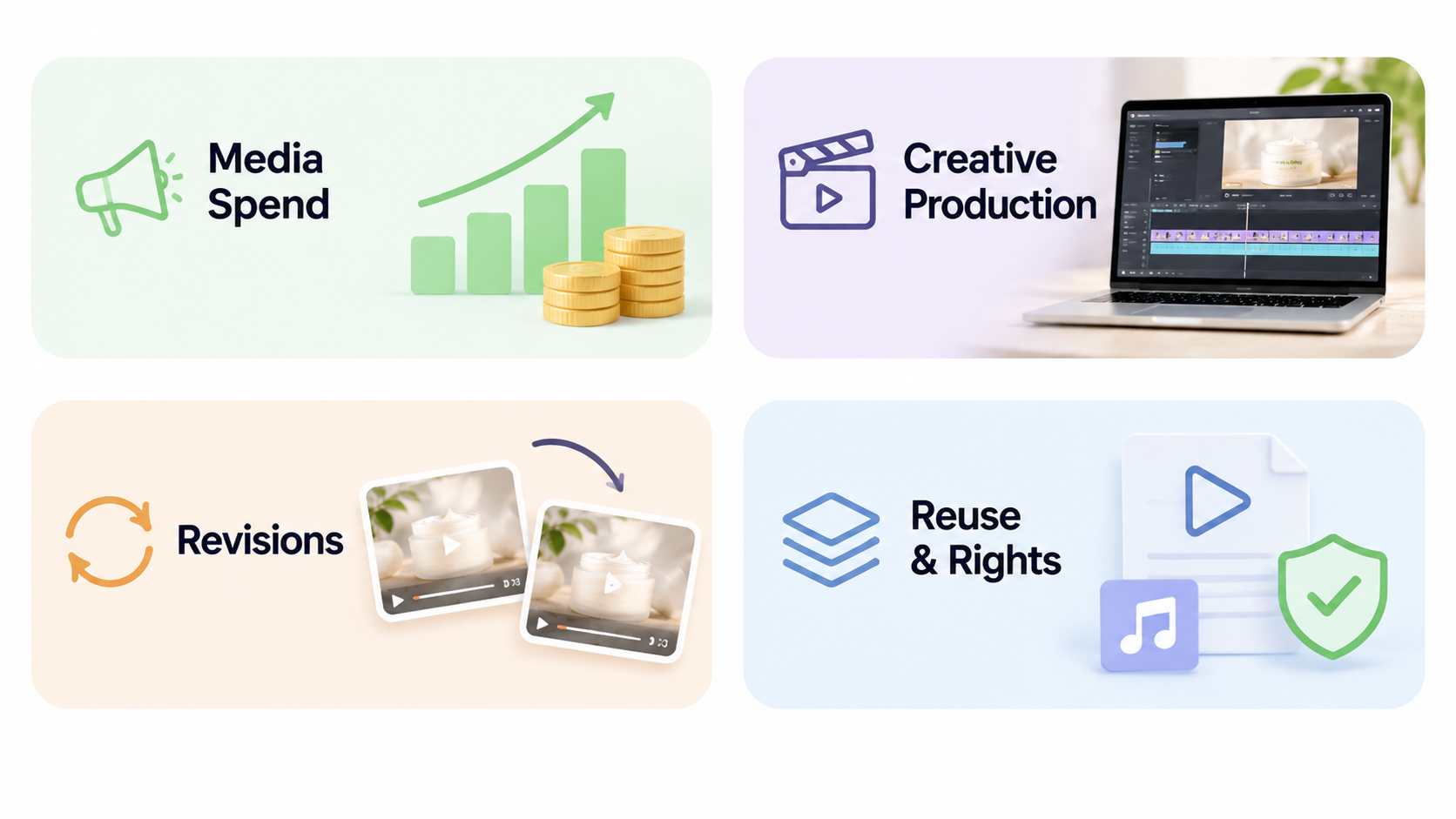
Media spend is the amount assigned to delivery. It can be a daily budget or a lifetime budget. The amount spent depends on delivery and the account's billing setup.
Creative production covers the brief, script, product references, filming or generation, editing, voice, music, captions and exports. A single product video may need different versions for Feed, Stories and Reels.
Revisions cover another cut after review. A new opening, changed claim, replacement product detail or new aspect ratio can require different work. Keep revisions on their own line so the first render does not look like the full production cost.
Reuse and rights cover licensed music, creator footage, stock material, paid-media usage, translation and future campaign windows. A file that is cheap to produce can still be expensive to use if the license is narrow.
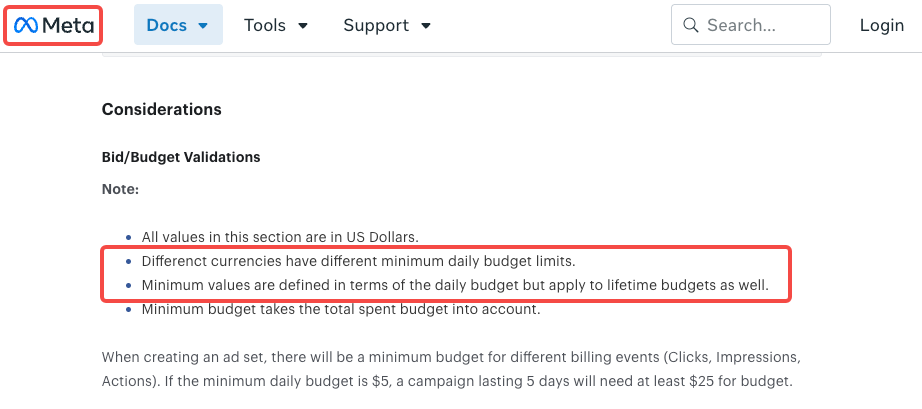
Meta's current developer documentation shows that ad-set budgets and minimums vary by billing event, currency and situation. Its examples are illustrative. Use the budget and payment settings shown in the target ad account for the working number.
How Does Auction Spend Change by Goal and Audience?
The objective changes what Meta tries to deliver. A campaign optimized for video views can find people likely to watch. A sales campaign looks for people likely to complete the configured conversion. Those are different delivery jobs, so a cost observed in one objective should not be copied into another budget.
Audience size and competition also change delivery. A narrow audience can have fewer impressions and stronger competition. A broad audience can give the system more room to find people. Seasonality, geography, creative response and bid strategy move the auction too.
Plan around the event you need to measure. For purchases, use attributed purchases in the denominator. For qualified leads, count leads that meet your definition. A low cost per view can produce no sales signal.
Do not use a keyword CPC as a substitute for Facebook ad CPC. A search keyword estimate describes a different auction and user action. For this campaign, replace every benchmark with the account's objective, location, date range and result definition.
A Fillable Product Campaign Budget
Use one copy of this worksheet for each campaign. Track each creative version separately.
| Budget line | Your input | Calculation or note |
|---|---|---|
| Media daily budget | $____ | Use the account currency and budget type. |
| Planned delivery days | ____ | Enter the number of days the ads are scheduled to run. |
| Estimated media spend | $____ | Daily budget × delivery days. |
| Initial video concept and production | $____ | Include script, product assets, edit, voice, music and captions. |
| Planned revisions | $____ | Reserve a line for factual and creative changes. |
| Version or ratio adaptations | $____ | Add each accepted placement version. |
| Rights, tax and other charges | $____ | Use the actual quote, invoice or checkout terms. |
| Total campaign budget | $____ | Media + production + revisions + adaptations + other charges. |
| Accepted video versions | ____ | Count files that pass the release checklist. |
| Cost per accepted creative | $____ | Creative subtotal ÷ accepted versions. |
A daily budget is an average spending target, not a hard total-spend cap. Use a lifetime budget when you need a defined campaign-level spending limit.
Worked Example With Explicit Assumptions
This is a fictional planning example for Morrow Skin, an invented moisturizer. The team wants one 9:16 video and one 1:1 cut for a 14-day sales campaign.
-
Media assumption: $30 per day for 14 days, or $420.
-
Initial creative assumption: P, entered from the current production route.
-
Revision assumption: R, reserved for one factual correction and one opening change.
-
Adaptation assumption: A, entered for the square version and final caption check.
-
Tax or payment assumption: T, entered from the account or supplier invoice.
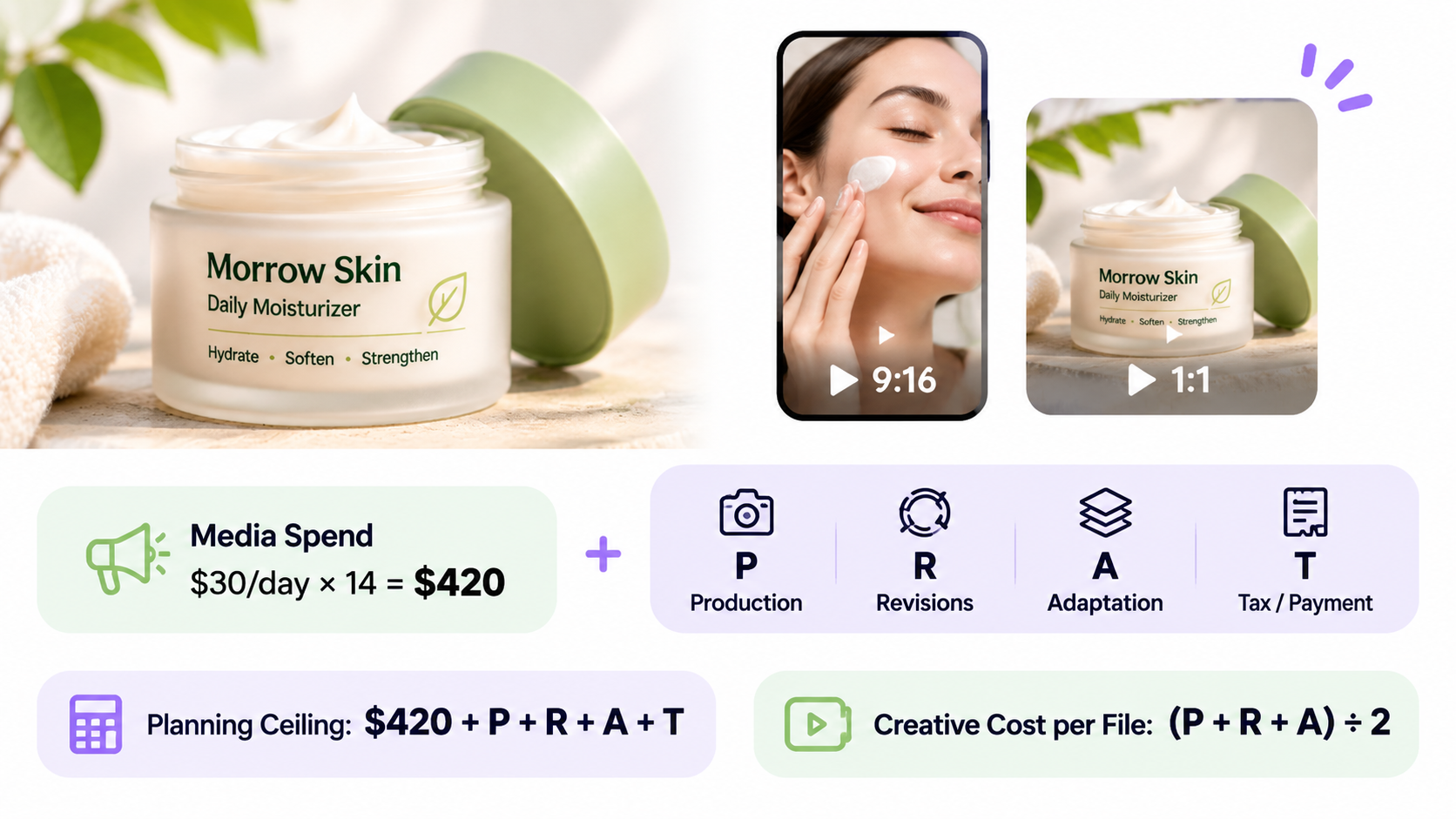
The estimated campaign total is 420 + P + R + A + T. In the illustration, “Planning Ceiling” refers to this estimate. If two video files pass review, the creative cost per accepted file is (P + R + A) ÷ 2. These variables keep the example honest. They do not predict a market quote or a Facebook result.
Pexo's product-ad workflow can be evaluated when the team wants a directed video production route from an approved brief and product material. Its video production cost guide gives a separate way to think about production-route assumptions. Use the actual account and project scope when replacing P, R and A.
How Should Teams Compare Cost per Result?
Media cost per purchase equals media spend divided by attributed purchases.
Fully loaded cost per purchase equals media spend plus creative production, revisions, adaptations and other campaign costs, divided by attributed purchases.
The second number helps a small team see the cost of making the asset that enabled the test. It is useful for planning repeated campaigns, but it should retain the date range, attribution setting, geography, objective and accepted creative count.
If a campaign has zero purchases, leave the cost per purchase blank or label it as no attributed purchases. Do not turn the spend into a fictional CPA. Review click-through, landing-page behavior and creative acceptance as separate signals.
What Changes When Creative Needs Another Cut?
A new cut creates both a production decision and a measurement decision. If the product label is wrong, fix the asset before comparing performance. If the opening is weak but the claim and product detail are correct, change the hook while keeping the rest of the brief stable.
Record the ad ID, creative version, source file, change request, launch time and approval owner. A new video inside an existing ad can leave historical delivery on the same reporting object. For a clean comparison, create a separate test structure and record each version's spend.
When you pause an ad, new delivery should stop after the status change takes effect, but final charges can include delivery that happened before the pause or pending account adjustments. Check the account's payment activity instead of assuming the pause produces an immediate final bill.
Conclusion
Budget Facebook video campaigns in two layers. Estimate media spend for the objective and ad account, then budget the creative work needed to reach accepted, reusable files. Keep production assumptions explicit, record revisions, and calculate cost per result only from the result definition the campaign actually used.