
 ChatGPT
 Perplexity
 Claude
 Gemini
 Grok


A gifted product can open a relationship. A paid brief can reserve a deliverable. Those are different planning tools, even when both result in a creator-style video.
For a small DTC brand, the decision is rarely “free or expensive.” It is whether the campaign needs a guaranteed asset, a creator's distribution, a permission to run the video as an ad, or a longer relationship. A product shipment answers none of those questions by itself.
When Is a Product Gift Different From a Paid Brief?
A gifted collaboration sends a product with an invitation or expectation that the creator may consider posting. The creator receives value, but the brand may have no guaranteed post, format, deadline or revision unless both sides agree to those terms.
A paid brief exchanges defined work for compensation. The agreement can state the script or talking points, number of videos, aspect ratio, delivery date, revision rounds, posting date, usage term, paid-media permission and disclosure responsibilities.
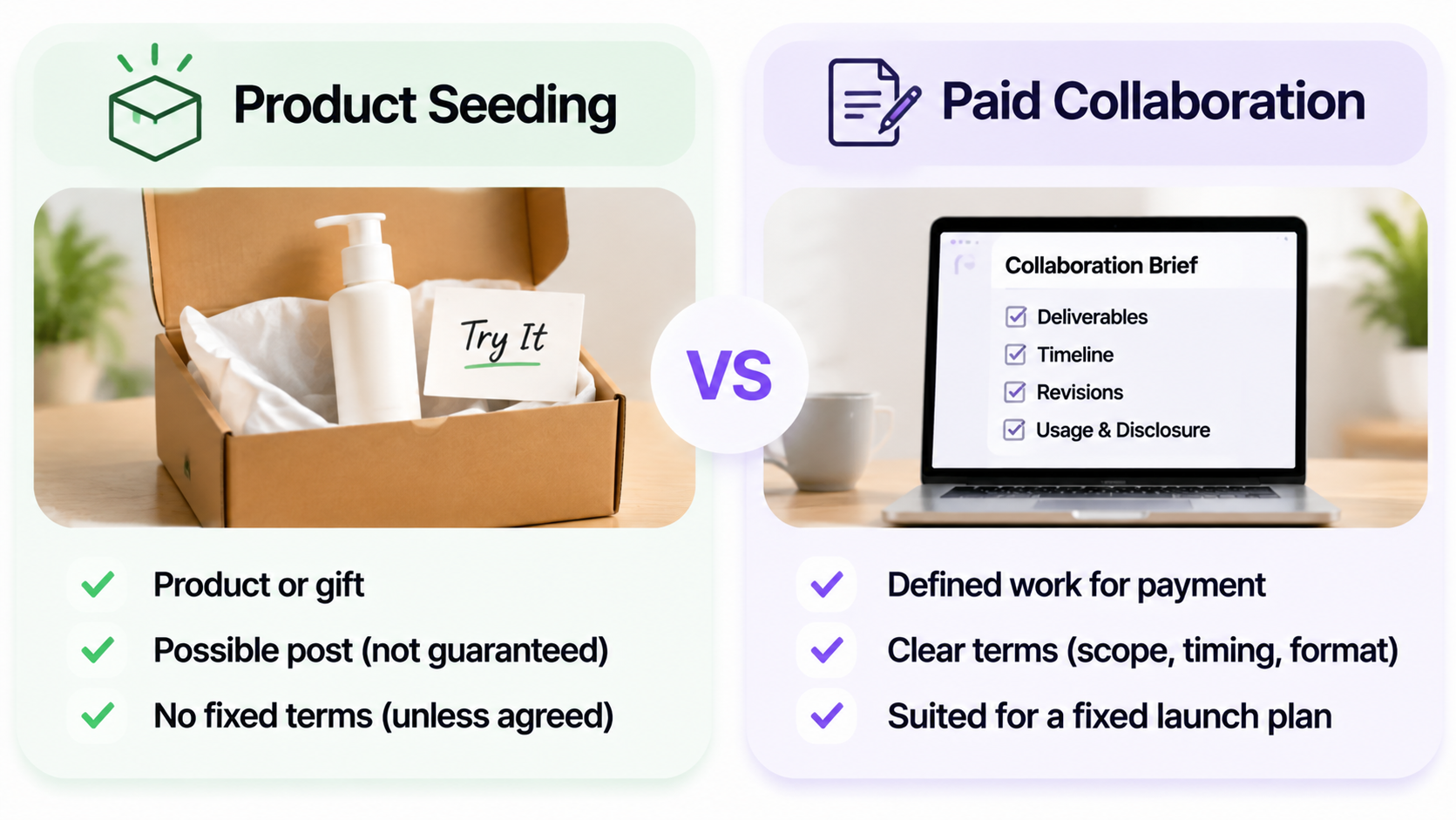
The difference is the commitment record. Product seeding is useful when discovery matters and the brand can accept uncertain output. A paid influencer collaboration fits when a launch calendar depends on a specific video arriving in a specific form.
The FTC treats free or discounted products as something of value that can create a material connection when the creator mentions the brand. Its endorsement guidance explains why a gifted item can require disclosure even when no cash changes hands. Local rules may add requirements, so the brand and creator should check the destination market before publishing.
Compare Both Routes for One Small-Brand Launch
Use the same fictional launch for both routes. Morrow Sun Balm is an invented mineral sunscreen stick. The launch brief calls for a 20-second vertical video showing the package, the application motion and the approved SPF wording. The CTA is “See the daily face routine.”
The gifted route sends the product and a short note. It asks the creator to try the balm and share an honest impression if it suits their channel. The brand supplies the approved product facts, a disclosure request and an embargo date for the launch. It does not promise a post, a positive opinion or permission to reuse anything the creator publishes.
The paid route hires the creator for one 20-second vertical video, one alternate opening, delivery five days before launch, one factual correction round and a 30-day paid-media license. The agreement names the allowed channels, the usage territory, the account that may run the ad and the date when the license ends.
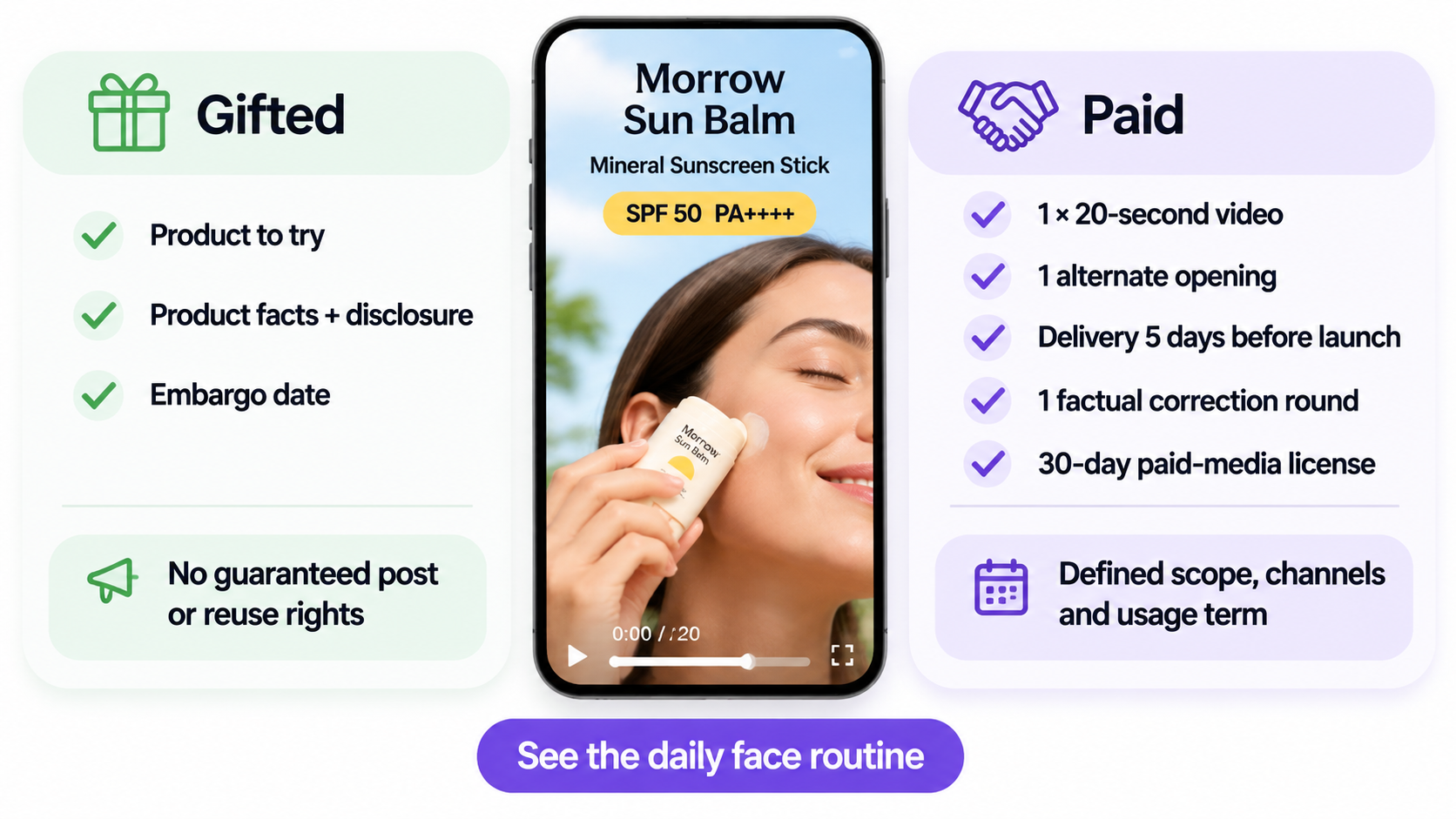
Both briefs can use the same product facts. They create different planning confidence. The gifted route may produce a valuable relationship or no publishable asset. The paid route creates a defined production obligation, while the creator still controls the honesty and accuracy of the endorsement.
Cash, Product, Deadlines, and Video Deliverables
Write the exchange in a table before shipping the package.
| Planning field | Gifted product | Paid brief |
|---|---|---|
| Value provided | Product, discount or other agreed perk | Fee plus product or expenses, if applicable |
| Post obligation | Only the obligation written in the agreement | Defined deliverables and deadline |
| Opinion | Creator retains an honest view | Creator still needs to speak truthfully about the experience |
| Script control | Brand can provide facts and requests | Brand can approve a brief and factual wording |
| Revisions | Usually undefined unless agreed | State the number and what counts as a correction |
| Delivery | May be a post, Story, Reel or no post | Specify file, aspect ratio, caption and source delivery |
| Launch timing | Ask for an embargo, with no assumption of compliance | Put the embargo and release window in the contract |
Avoid a vague request such as “make something that feels natural.” Name the product detail the viewer should see, the approved claim, the creator's role and the file the brand needs. A creator can deliver a strong post that still cannot be used in paid media if the usage right was never granted.
Review Steps and Paid Media Usage
Review the video in two passes. First check the creator's spoken experience, product handling and disclosure. Then check whether the brand has permission to edit, crop, subtitle, translate, place the video in an ad or run it from the creator's account.
Paid media usage is a separate permission from organic posting. Ask whether the brand may use the creator's name, handle, face, voice, raw footage and edited footage. Record the license term, territory, channels, whitelisting or partnership-ad process, exclusivity and takedown procedure.
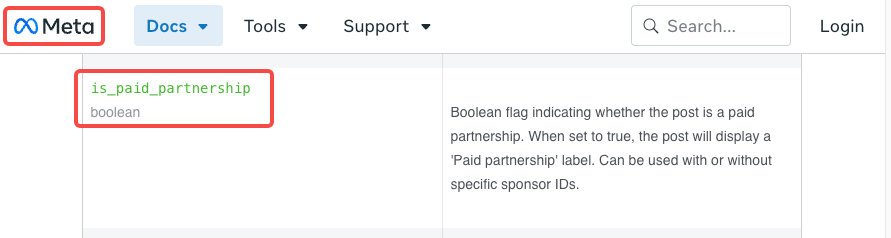
For Instagram, Meta's current developer reference identifies a paid-partnership field that displays a “Paid partnership” label when enabled. Account eligibility and product surfaces can change, so verify the current in-app workflow before the launch date. A platform label also works alongside the disclosure language required by applicable advertising rules.
A Decision Table for a Limited Campaign Budget
| Campaign condition | Gifted route | Paid route |
|---|---|---|
| The brand is testing creator fit | Good when uncertain output is acceptable | Useful for a small defined pilot |
| A launch needs a file by a fixed date | Weak unless a written obligation exists | Stronger when deadline and remedy are written |
| The brand needs paid social usage | Negotiate a separate license before relying on the post | Include media rights in the fee and contract |
| The brand wants many creator perspectives | Seed a carefully tracked group | Budget fees, review time and usage terms per creator |
| The product is fragile or expensive | State replacement and return terms | Include shipping, replacement and reshoot terms |
| The brand needs a real personal experience | Use a creator who actually receives and tries it | Pay for the work while preserving honest testimony |
Use the route that matches the risk the budget can absorb. A gifted campaign can be economical when the brand values discovery over guaranteed volume. A paid campaign can be economical when one missed launch window costs more than the fee.
When Does an Owned Concept Video Fit the Plan?
An owned concept video fits when the brand needs to test a hook, product action or visual direction before asking a creator to publish. It can show the package, routine and approved message while leaving the creator's personal experience for a real collaboration.
Pexo's AI UGC Video Generator is designed for a product brief, approved references, a creator-style presenter and product review in one workflow. Use it for an owned concept or product-led ad direction. The generated presenter does not become a real customer, and the video does not create creator distribution or an endorsement relationship.
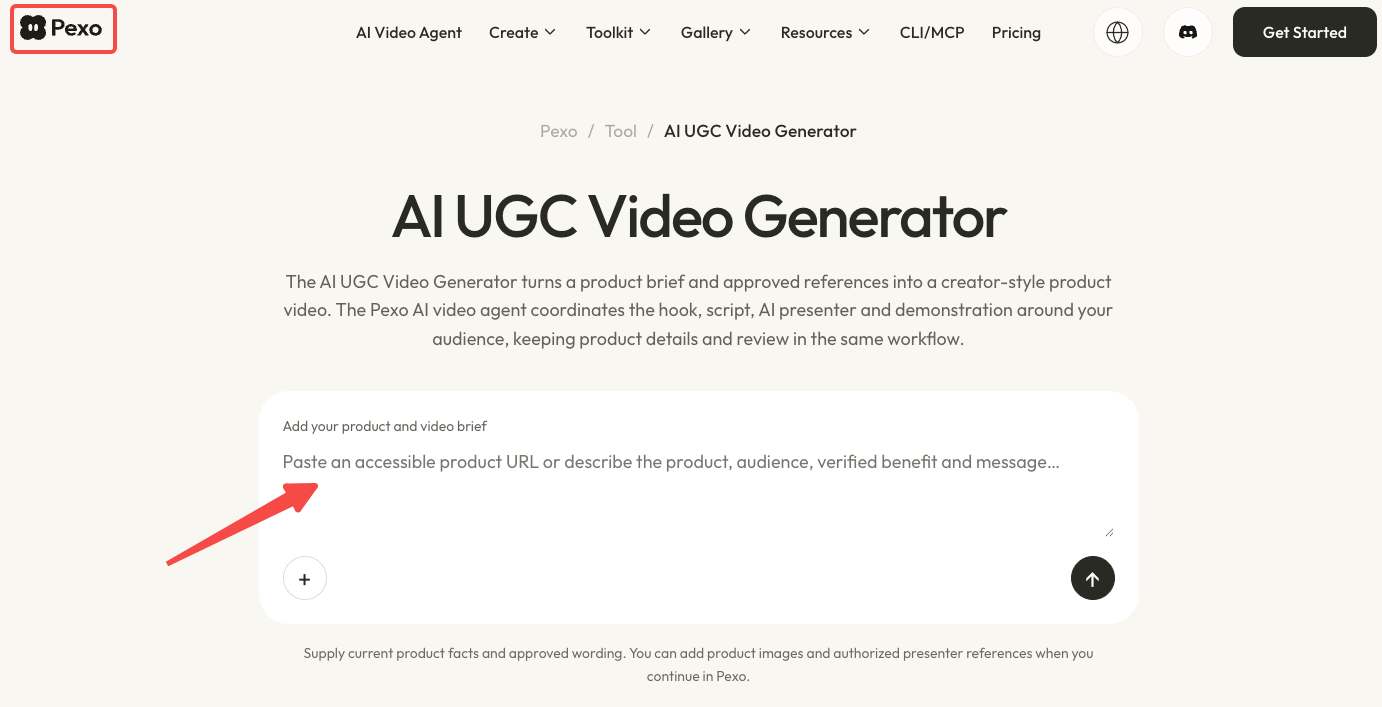
For a product-photo route, the Pexo product-ad tutorial gives the team a separate way to test one benefit, one product action and one placement before commissioning more creator work.
What Can Neither Route Guarantee?
Neither route guarantees sales, reach, audience fit, a positive opinion, platform approval or a winning creative. A paid contract secures agreed work. It does not turn a creator's experience into a claim the product cannot support.
Neither route transfers rights automatically. The brand still needs permission for the creator's likeness, voice, music, footage, username and edits. A creator's personal music subscription or platform library access may cover an organic post while excluding paid advertising. Ask for the license that matches the intended ad use, or replace the track with music cleared for that use.
Keep a launch record with the product shipment, contract, approved claims, disclosure wording, final files, license dates, embargo, usage channels and takedown contact. That record is the difference between “we sent samples” and a campaign the team can review.
Conclusion
Gifted product campaigns buy an opportunity to build relationships. Paid briefs buy defined production commitments. Choose between them by the deliverable, deadline, usage rights and review burden the launch can support. Keep owned concept videos separate from creator testimony, and write every permission the campaign will need before the package or payment goes out.