
 ChatGPT
 Perplexity
 Claude
 Gemini
 Grok
Grok

How to Make a TikTok Ad
UPDATED: 2026-08-04 By Lan He, Senior Video Producer at Pexo
Making a TikTok ad takes six steps: define your offer and audience, write a hook for the first two seconds, script the body and call to action, film or generate the video, add captions and sound, then export variations and test them. A single ad takes about 20 minutes to produce.
Quick Version: How to Make a TikTok Ad
- Define the one offer the ad sells and the audience it targets.
- Write a hook that stops the scroll within the first two seconds.
- Script the body around one benefit and end with one call to action.
- Film the ad with a creator, or generate it from a product photo.
- Add burned-in captions and a cleared music track.
- Export in 9:16 vertical and launch five to ten variations to test.
How to Make a TikTok Ad Step by Step
Step 1: Define your offer and audience
Name the single offer the ad sells and the single audience it speaks to. An ad selling three products to everyone converts worse than an ad selling one product to one group. Write both in a sentence: "Sell the travel mug to commuters who drink coffee on the train."
Check TikTok's audience data for that group before writing anything. Age skew, active hours, and the content they already engage with all change what the hook should say. An ad written for the wrong audience fails at step two, no matter how good the production is.
Step 2: Write a hook for the first two seconds
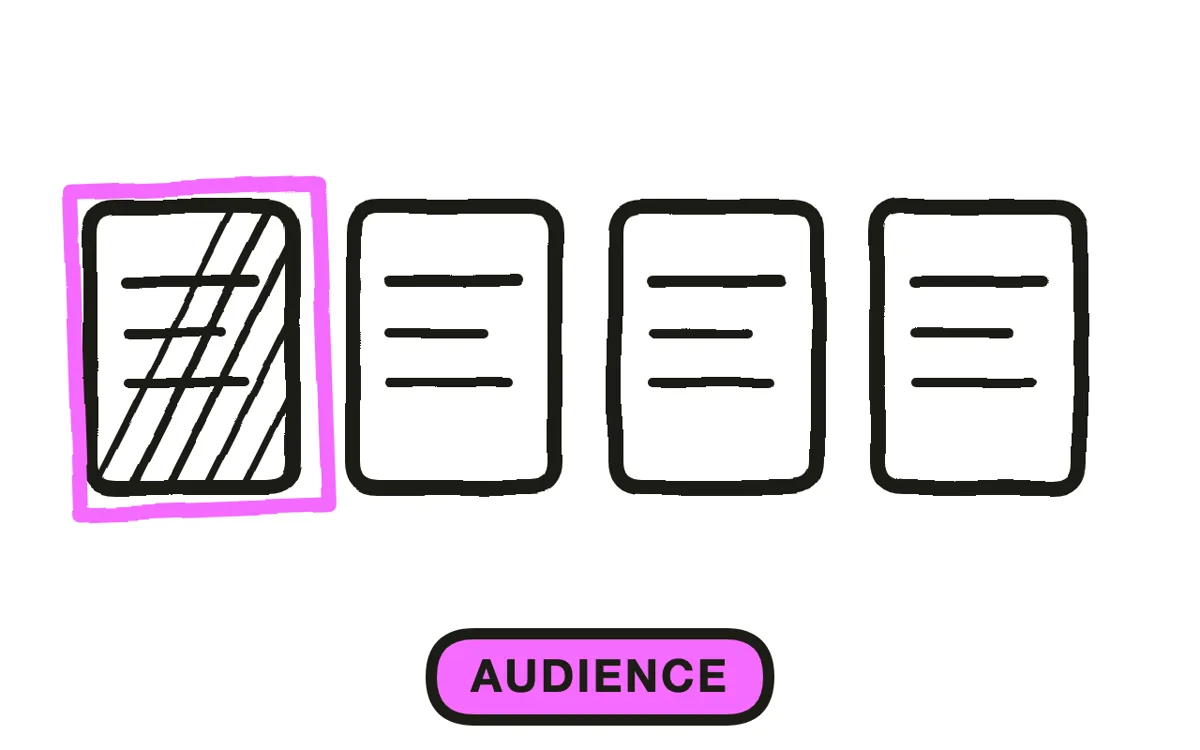
Write the opening line and the opening shot together, and make both land inside two seconds. TikTok viewers decide whether to keep watching before a logo could finish animating. Effective hooks take one of four shapes: a problem stated bluntly ("Your coffee is cold by the second stop"), a surprising claim, a visual that does not resolve immediately, or a direct question to the viewer.
Write five hooks, not one. The hook is the variable most worth testing later, and having a spare four ready turns step six into an afternoon rather than a second production cycle.
Step 3: Script the body and call to action
Write the middle around one benefit and close with one instruction. A 20-second ad has room for the hook, one demonstration or claim, and a call to action. Adding a second benefit dilutes both. Keep the language casual and spoken: TikTok ads that read like a person talking outperform ads that read like copy.
End with a specific action, not a brand statement. "Tap the link and get 20 percent off today" beats "Discover the difference." For AI production, this script becomes the generation prompt, so script-to-video workflows take it directly with no reformatting.
Step 4: Film or generate the ad
Film with a phone in vertical orientation, handheld, in natural light. TikTok ads perform better when they look like organic content than when they look produced. Keep the camera close, the framing tight, and the delivery conversational.
The AI path skips filming entirely. Upload a product photo and image-to-video conversion builds the scene around it with motion and lighting. For ads that need a person on screen, Pexo can place an AI presenter in frame for a UGC feel without hiring a creator or booking a shoot. Text-to-video generation handles ads built entirely from a written description.
Step 5: Add captions and sound
Burn captions into the video rather than relying on TikTok's auto-captions, which viewers can disable and which sometimes mis-transcribe product names. Position the caption text in the middle third of the frame, away from TikTok's interface elements at the top and bottom.
Pick music from TikTok's Commercial Music Library, which is cleared for advertising use. Trending sounds from the organic feed usually are not, and using one can get the ad rejected. Cut the visuals to the beat where the track has an obvious rhythm. Pexo burns in captions automatically and can build the ad around a track, cutting the visuals to match.
Step 6: Export variations and test
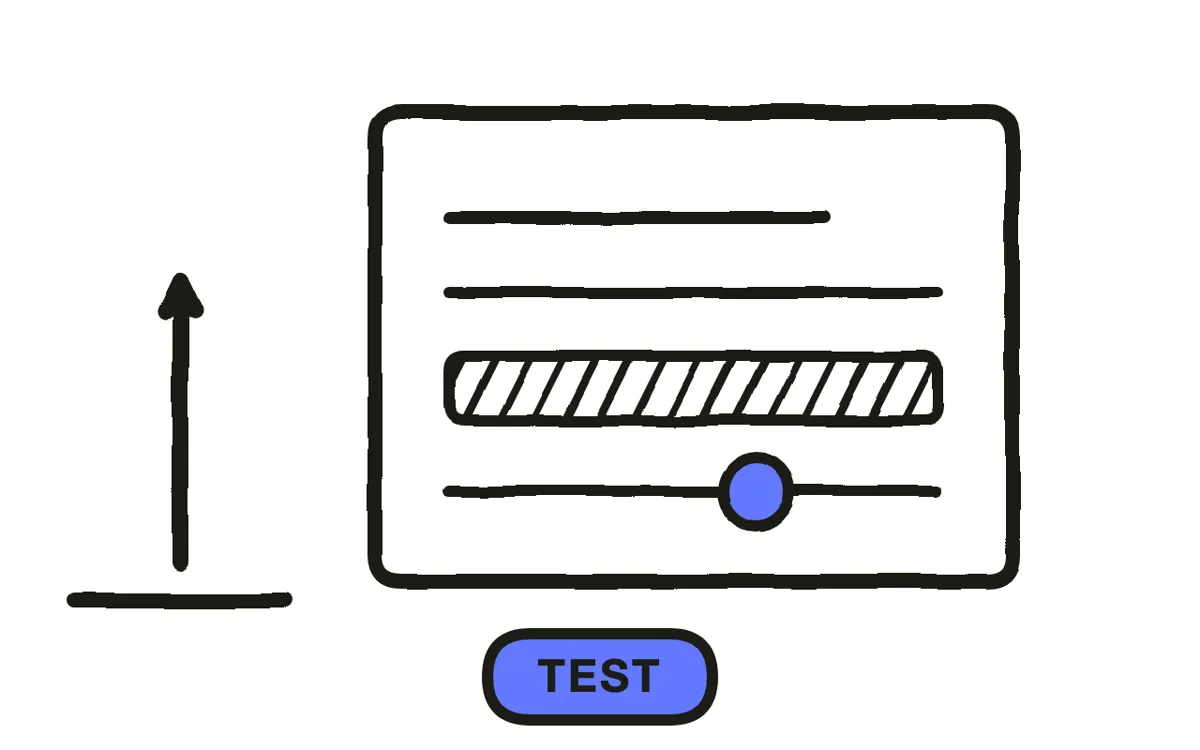
Export in 9:16 at 1080x1920 and produce five to ten variations before launching. Change exactly one element per variation: the hook, the opening shot, the music, or the call to action. Keep the product, branding, and offer constant so the test measures the variable rather than everything at once.
Run them for 48 hours, kill anything below the campaign average, and scale the winner. Pexo spins up a dozen variations from a single project with branding held steady across all of them, which is the part that makes creative testing practical rather than a second full production cycle.
How to Make an AI TikTok Ad with Pexo
The six steps above assume a camera and a creator. The TikTok ad page removes both.
Describe the ad or upload a product photo: "A 20-second vertical ad for an insulated travel mug, aimed at commuters, casual UGC style, hook about coffee going cold." Pexo writes the script, opens on a strong hook, generates every shot, adds a casual creator-style voice, burns in captions, and matches the format the For You page favors.
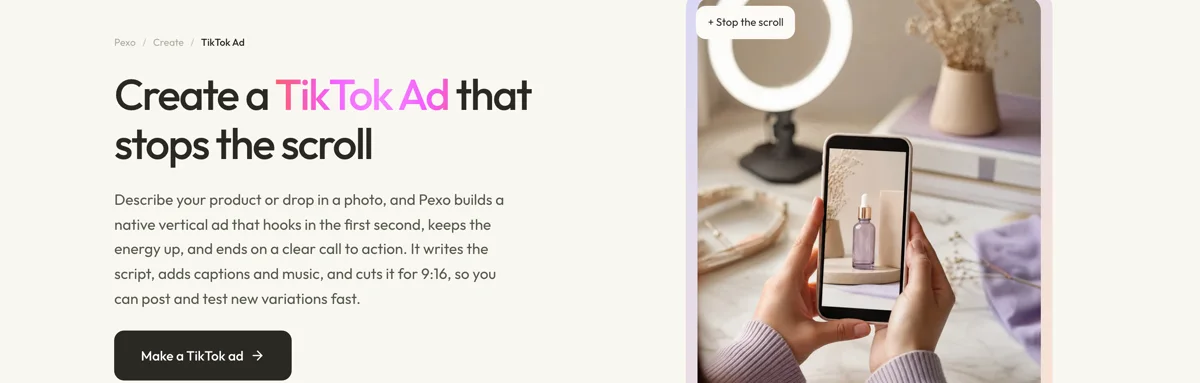
Ads run from 5 to 120 seconds, with 9 to 34 seconds the range that converts best. Request a dozen variations at once, each with a different hook, sound, or opening shot, while the product and branding stay identical across all of them. Discard the weak cuts and scale the winners without filming again.
The platform works with Seedance 2.0, Kling AI, and more, selecting the model per shot. For broader product work, the product ad and product video pages cover the same pipeline for other channels. For creator-style content specifically, the UGC video page focuses on that format. For organic posts rather than paid placements, use the TikTok video page.
5 Common Mistakes That Get TikTok Ads Scrolled Past
1. Making it look like an ad. Polished commercial production signals "advertisement" and triggers the scroll reflex. Handheld framing, natural light, and casual delivery read as native content and hold attention longer.
2. Burying the hook behind a logo intro. A three-second brand animation before the content spends the entire attention budget on something the viewer did not ask for. Open on the hook. The logo can appear at the end.
3. Skipping captions. A large share of TikTok viewing happens on mute. An ad without burned-in captions is silent to those viewers, which means it communicates nothing at all.
4. Testing only one creative. A single ad gives no information about why it did or did not work. Five variations changing one element each turn a campaign into a test that produces a repeatable answer.
5. Using horizontal footage. A 16:9 video posted as a TikTok ad appears letterboxed, wasting two thirds of the screen and signaling that the creative was repurposed from somewhere else. Shoot or generate in 9:16.
Related Tutorials
- How to make a short video for organic vertical content
- How to make YouTube Shorts for the same creative on YouTube
- How to make a video ad for other paid channels