
 ChatGPT
 Perplexity
 Claude
 Gemini
 Grok
Grok

How to Make a Short Film
UPDATED: 2026-08-05 By Lan He, Senior Video Producer at Pexo
Making a short film takes seven steps: find a premise that fits short form, write the screenplay, build a shot list, produce the footage, record sound and score, edit around one dramatic question, then export for festivals. A generated short film takes about 40 minutes; a filmed one takes weeks.
Quick Version: How to Make a Short Film
- Find a premise that resolves completely within ten minutes.
- Write the screenplay at one page per minute of runtime.
- Build a shot list your production method can actually execute.
- Produce the footage by filming or generating it scene by scene.
- Record or generate dialogue, sound design, and score.
- Edit around the single dramatic question, cutting anything that does not serve it.
- Export in 16:9 or 2.39:1 at festival submission specs.
How to Make a Short Film Step by Step
Step 1: Find a premise that fits short form
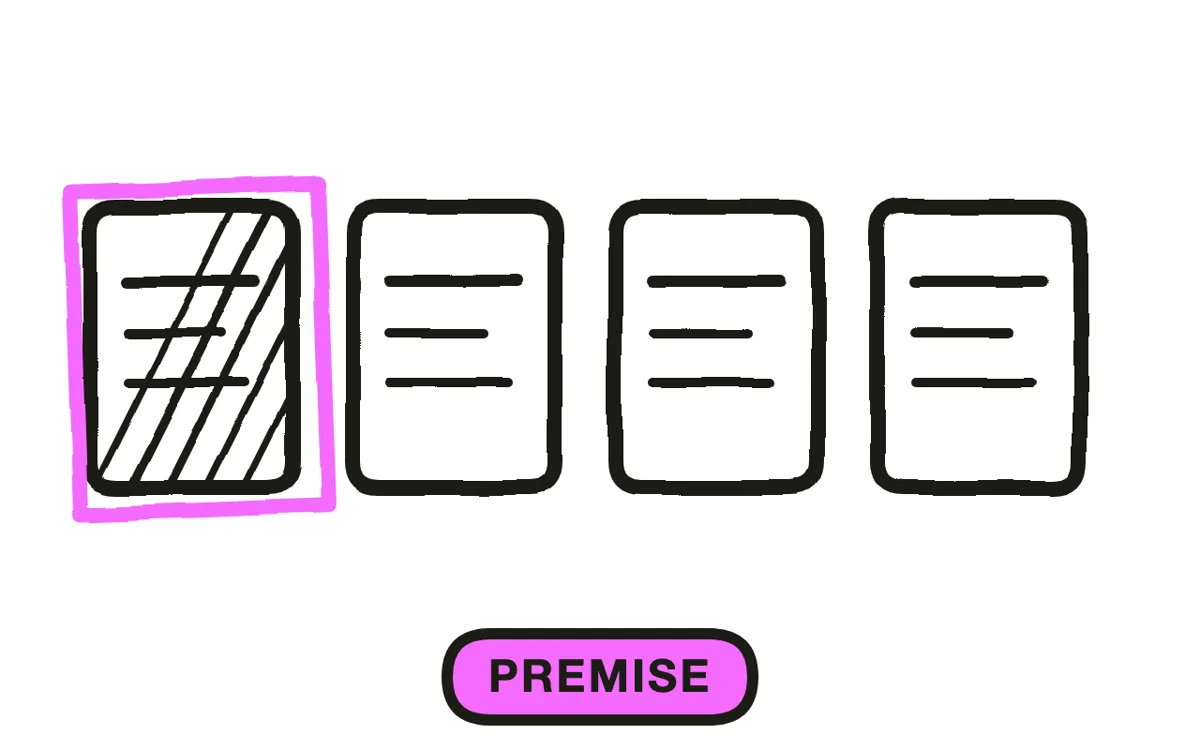
Choose a situation that can be introduced, complicated, and resolved in under ten minutes. Short films fail most often from scope: a premise that needs an hour of setup produces ten minutes that feel like a trailer for a film nobody made.
Test the premise against one question: can a stranger understand the situation within ninety seconds? Short form has no room for exposition, so the setup must be visible rather than explained. A man packing a suitcase at 3am communicates more in five seconds than any dialogue about leaving.
Step 2: Write the screenplay
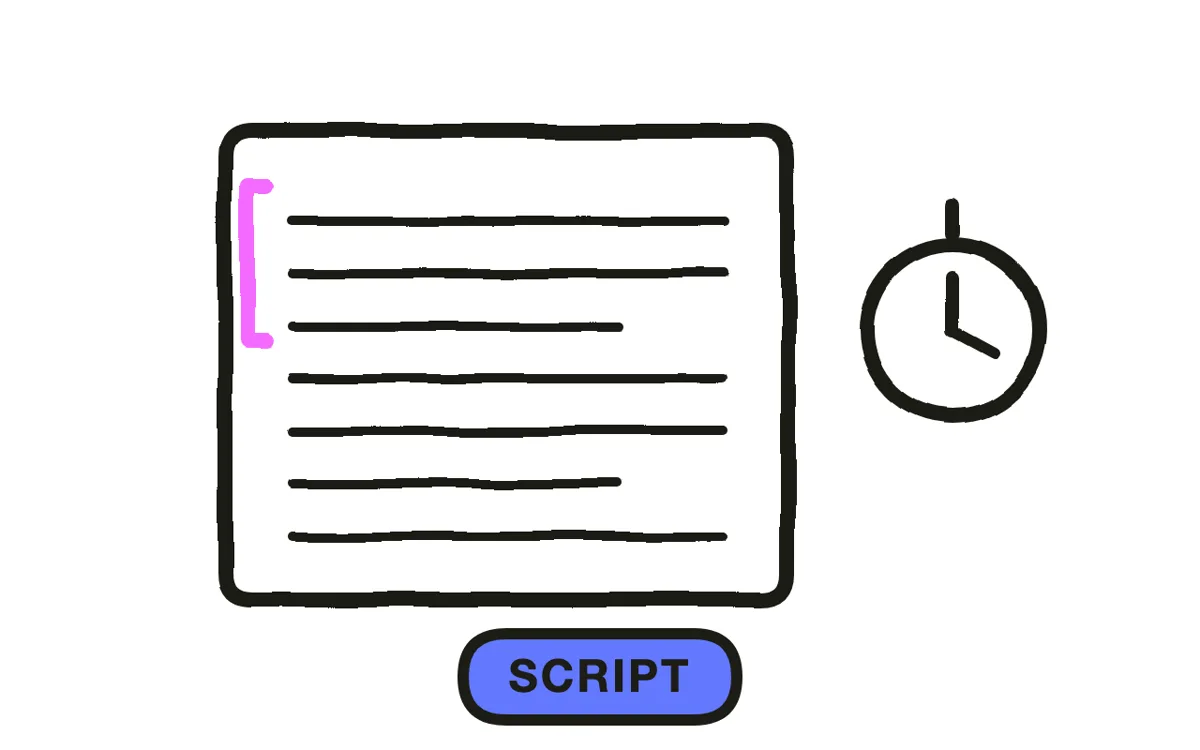
Write in standard screenplay format, where one page runs roughly one minute of screen time. A ten-minute short is a ten-page script. Use scene headings, action lines in present tense, and dialogue only where an image cannot carry the meaning.
Build everything around a single dramatic question introduced in the first minute. Cut subplots entirely. The most common note on first shorts is that they feel long at eight minutes, and the cause is almost always a second thread competing with the first.
Step 3: Build the shot list
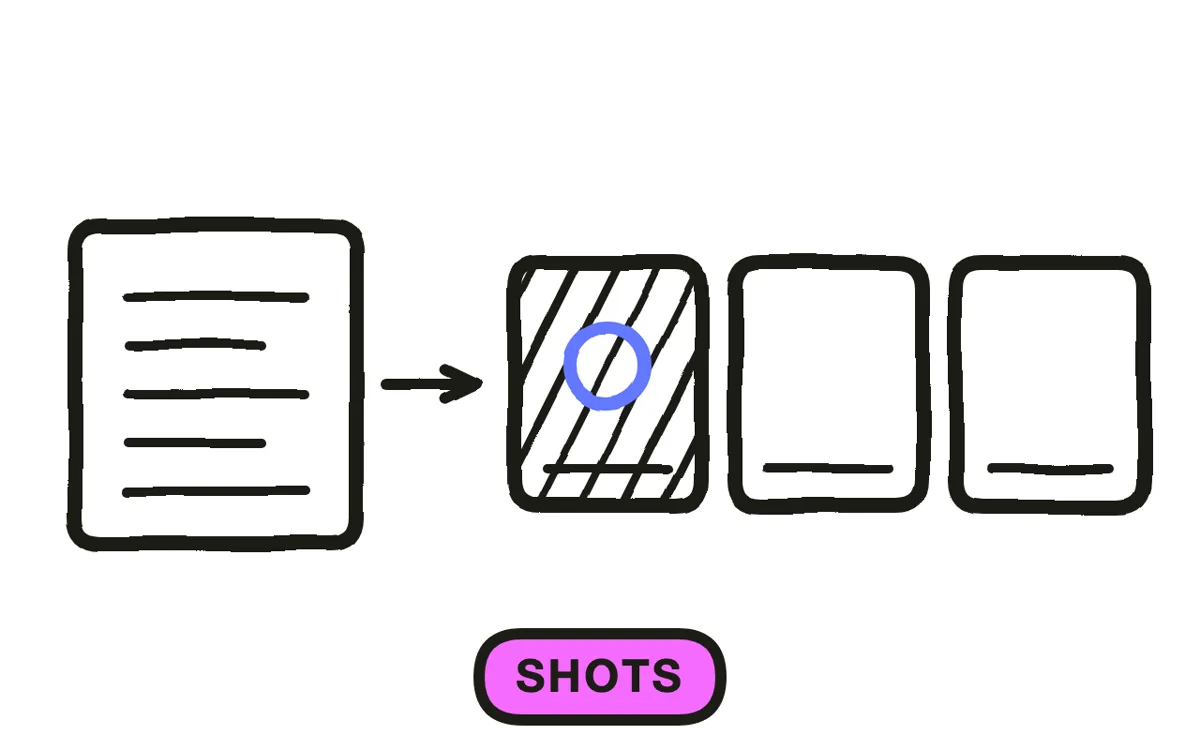
Break each scene into individual shots, each with a framing, a camera movement, and a purpose. Write the purpose down: a shot that exists because it looked good in your head is the first thing that should be cut.
Match the list to what the production can deliver. A crane shot over a city is one line in a shot list and an impossible day for a two-person crew, though it is a routine prompt for a generation pipeline. Decide the production method before finalizing the list, not after.
Step 4: Produce the footage
Two paths work. The traditional path assembles cast, crew, locations, and equipment across a shooting schedule, which is where most first shorts stall. The generation path produces each scene from the screenplay.
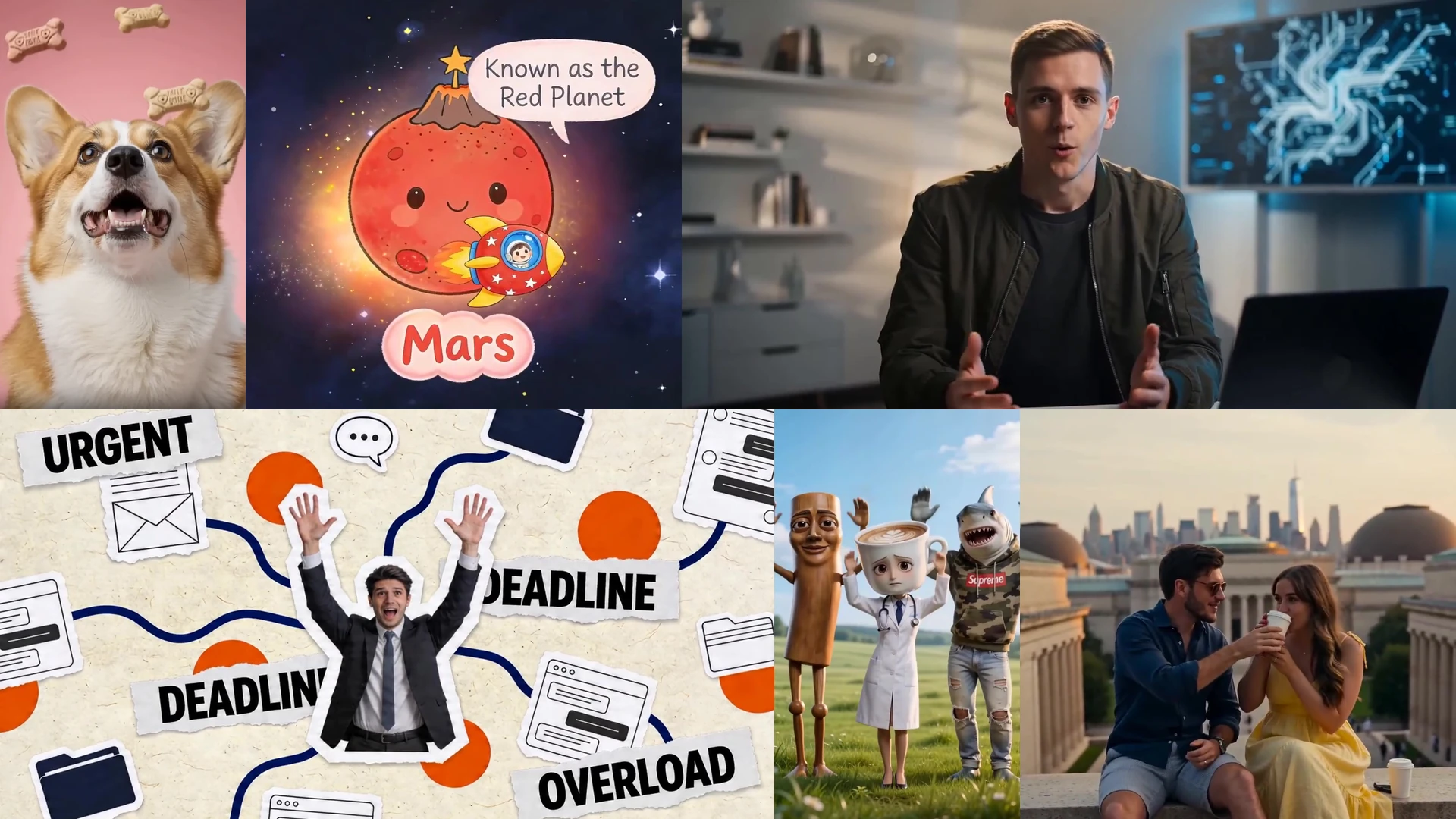
Pexo's script-to-video workflow takes the screenplay directly and generates scenes with cinematic camera movement. Hyperframe locks each character's appearance so they remain the same person across every scene, which is the specific failure that makes generated films feel incoherent. Generate scene by scene and review each before continuing.
Step 5: Record sound and score
Build three audio layers: dialogue, sound design, and score. Sound design is what most first films underweight, and it is where the largest perceived quality gain sits. Room tone, footsteps, doors, and distance all tell the viewer they are in a place rather than watching a composite.
Score last, after the edit is locked. Music written against a finished cut supports the film; music chosen early starts dictating pacing decisions that should be made by the story. Pexo generates dialogue with natural AI voices and composes an original score matched to each scene.
Step 6: Edit around the dramatic question
Assemble the film, then cut every shot that does not serve the central question. First cuts of short films typically run 30 to 40 percent longer than the final, and almost all of that difference is material the filmmaker liked rather than material the film needed.
Watch the cut with someone who has not read the script. Note the exact moment their attention drops, and cut from thirty seconds before that point. The problem is nearly always earlier than where it becomes visible.
Step 7: Export for festivals and streaming
Export 16:9 or 2.39:1 at 1080p or higher. Check each festival's specification before exporting, since some require specific codecs, frame rates, or a separate DCP for projection. Pexo exports up to 4K in widescreen, vertical, and square.
Prepare the submission package alongside the film: a synopsis under 100 words, three stills, a director statement, and a screener link with a password. Most festivals submit through FilmFreeway, and an incomplete package is a common reason a finished film misses deadlines.
How to Make a Short Film with Pexo
The seven steps above work with any production method. Pexo handles steps 4 through 7 in a single conversation, which removes cast, crew, and locations from the equation.
Open the short film page and paste the screenplay, or describe the film: "An eight-minute short about a lighthouse keeper who finds a message in a bottle addressed to him, cold coastal palette, sparse score, no dialogue." Pexo breaks it into scenes, generates each with consistent characters, adds sound and score, and assembles the cut.
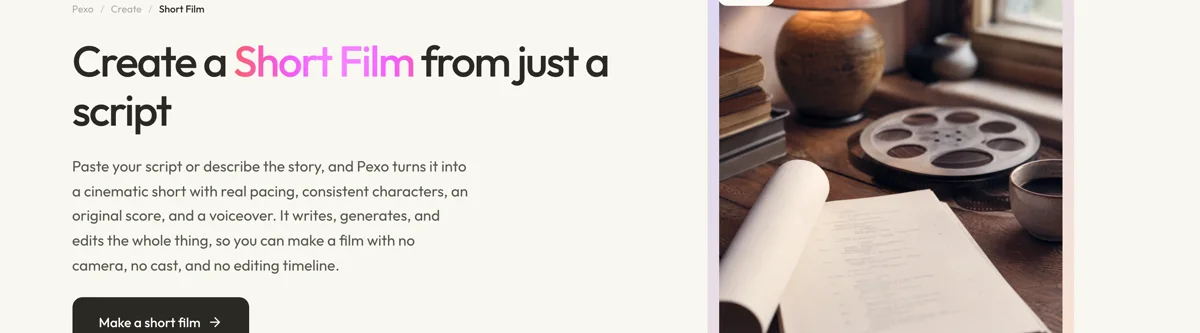
Adjust any scene by describing the change in the chat, and Pexo regenerates that scene alone. The platform runs across Seedance 2.0, Kling AI, and more.
For related formats, the animated short film page applies stylized treatments, micro drama covers serialized vertical episodes, and fan film suits work set in an existing world.
5 Mistakes That Sink a First Short
1. A premise too large for the runtime. A feature idea compressed into ten minutes reads as a trailer. Pick something that resolves.
2. Explaining the setup in dialogue. Short form has no room for exposition. Make the situation visible in the first shot.
3. Adding a subplot. The second thread is why an eight-minute film feels like twenty. Cut it entirely.
4. Underweighting sound design. Room tone, footsteps, and ambience separate a film from a composite. It is the cheapest quality gain available.
5. Locking music before the edit. Music chosen early starts making pacing decisions the story should be making.
Related Tutorials
- How to make an AI movie for longer-form generated narrative
- How to make a micro drama for serialized vertical episodes
- How to make a fan film for work in an existing world
- How to make a movie trailer for the trailer that promotes the finished short